Hunting Field Cave
Hunting Field Cave

The territory of the mountains around Gorga is characterized by intense karstic phenomena that have given rise to geological peculiarities such as the Hunting Field - Campo di Caccia cave.

The cave is located near the summit of Mount Saint Marin in the locality of Le Fosse (which already from the name reveal the geological peculiarities of the area. The Campo di Caccia cave has a horizontal course while the Campo Caccia abyss is one of the deepest of the Lepini Mountain and reaches a depth of 610 meters.

Inside you can admire some stalactites and stalagmites and a source of water (the same that has fed the city aqueduct since the 19th century) with small pools of water.

powered by social2s
Trout fishing
Trout fishing

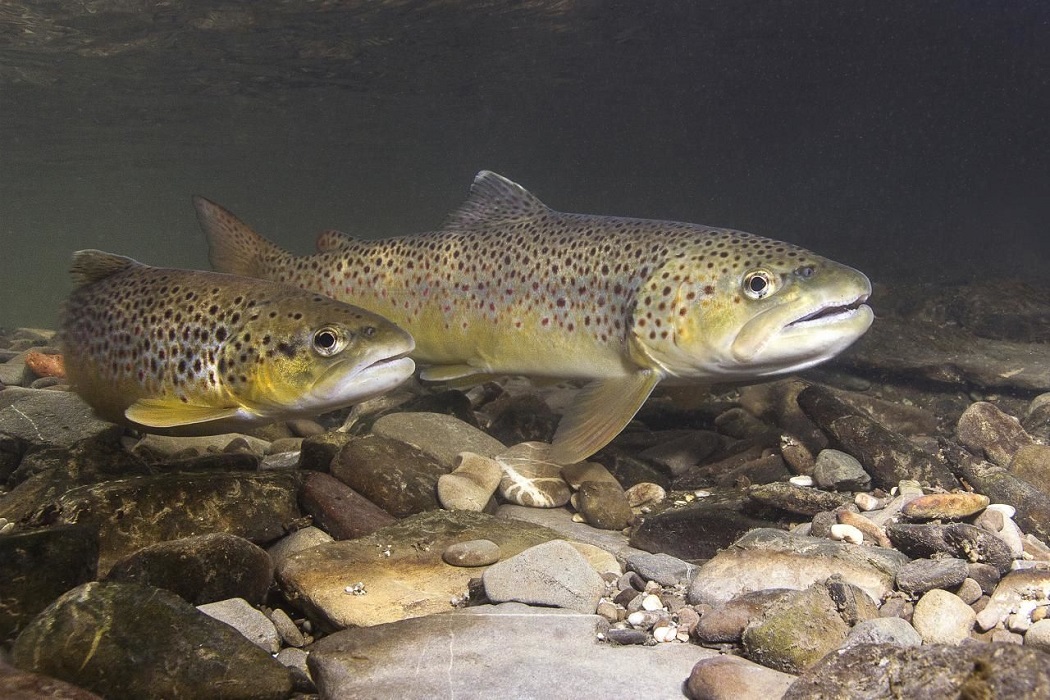
In Vallepietra it is possible to go fishing in a sustainable way in the Simbrivio river according to the "catch & release" technique. This allows us to safeguard the Mediterranean trout, the only trout native to these areas of the Apennines Mountains of central Italy.

Fishing takes place in the small lake created by the dam on the Simbrivio river.

powered by social2s
Palazzo Moretti
Palazzo Moretti

The overhanging rocky walls of the Ruffi Mounts, and in particular of the highest peak of the Costasole, have been equipped for the practice of rock climbing.

On two of the largest walls, the Pantema Roscia and San Michele, 6 different climbs have been prepared with different degrees of difficulty.

The peculiarity of these routes is such that Rocca Canterano has become the point where the mountain rescue teams train.


powered by social2s
Trekking and MTB in Prato del Merro

The long ridge of the summit of the Ruffi mountains lends itself to long panoramic walks with low/medium difficulty.

The path starts from the village of Rocca Canterano and reaches Prato del Merro, a small plateau with a small lake where you can meet animals that go to drink at the fountain which was once also one of the main points of the transhumance paths. An area equipped with tables and benches has been set up here.

Along the way, you pass by the remains of the church of Saint Michael, built on an ancient observation point, and by the other equipped area of Prato Marano.

The path can be traveled on both on foot and by MTB and the total journey time is approximately 5 and a half hours.


powered by social2s
ph. Sirio Santodonato
Nazzano. Boat trip

One possible way to visit the reserve of Lake Nazzano is on the ecological boats: with which you can choose a short itinerary inside the park (Nazzano and Torrita Tiberina) or a longer route to reach the landing of Sant'Oreste, and to enjoy the beautiful landscape of the Tiber Valley.

From the boat you can see all the castles, which rise above the promontories of the surrounding municipalities, and the steep slopes of Ripa Bianca where the geological stratification is clearly visible and fossils of marine mollusks shells can be identified.

powered by social2s
Parabocio and Rocchetta waterfalls

Ciciliano is immersed in luxuriant nature and full of water with streams and waterfalls of remarkable beauty. Among these, the most important and beautiful is the Parabocio waterfall not far from that of the Rocchetta.

To get there you have to take the pilgrims' path, the same route that from the Middle Ages connected the ancient hospital of the church of Saint Mary Magdalene with the sanctuary of Mentorella on Monte Guadagnolo, in the Prenestini mountain range.

The waterfalls are formed precisely by streams coming from the Prenestini Mountains.

powered by social2s
Albano Laziale. Lake of Albano

Lake Albano, also known as Lake of Castel Gandolfo, after the other town that overlooks its shores and which houses the papal summer residence, has a typical circular shape and is the deepest volcanic lake in Italy with its 168 meters.

On its shores, important prehistoric archaeological remains have been found, such as the Village of the Millstones on stilts, which reveal how these places have been inhabited since the Bronze Age.

Around the lake there were also many Roman remains with Doric nymphaeums and that of Bergantino, an integral part of the complex of the great villa of Domitian which occupied a large area that today includes the historic centre of Castel Gandolfo (the Pope's villa was built on the ruins of the Villa of Domitian) and of Albano Laziale. The villa was so sumptuous that its marbles were used for the construction of the Cathedral of Orvieto.

The bottom of the lake is rich in artifacts because, during the Roman period, here "naumachies" took place, that is, shows in the form of naval battles. On this lake you can practice rowing and the rowing competitions of the 1960 Rome Olympics took place there.

Among the freshwater fishes of the lake are the rovella, the pike, the barbel, the chub, the eel, the trout, the tench, the stickleback and the bream. Recently the following have been introduced: the carp, the perch, the agone, the royal perch, along with numerous species of salt water such as mullet and smelt.

Today on the shores of Lake Albano there are numerous restaurants of excellent quality and it is possible to sunbathe on one of its beaches during the summer.

For lovers of trekking or outdoor sports, it is possible to make a circular route around the lake partly on the road and partly on country paths.

powered by social2s

Recommended

Subscribe to Newsletter

Discover a territory through the emotions of the people that have lived it.