Ascoli Piceno. Ancient Roman Bridge

The great importance of Ascoli Piceno during the period of the Roman Empire is also evidenced by the imposing Solestà Bridge that crosses the Tronto river.

It was built by Emperor Augustus during the first century AD. its position corresponds to the Porta Solestà, the entrance to the city.

The bridge is an outstanding engineering work that has been in operation for over 2000 years and which had an interesting engineering restoration in the early twentieth century.

The bridge has a single arched span with a height of 25 meters above the river level. The arch of the bridge has a diameter of 22.20 meters and in total the bridge is 62 meters long.

These measurements make it one of the most important bridges in Roman history, only three other bridges were as large or larger. But the Ponte Solestà of Ascoli Piceno is definitely the one that is best preserved, and can still be walked on today.

In 1938, a reinforced concrete intervention was carried out to allow the passage of cars by reinforcing the bridge inside the ancient Roman structure.

The bridge can be visited by going inside of it through a corridor and by observing the structure you can recognize the engineering techniques of the Romans and the ancient layers of flooring.

An exceptional restoration and recovery work that has united past and future.

powered by social2s
Ascoli Piceno.Most Beatiful square in Italy

Piazza del Popolo is the most beautiful Italian square, and for millennia it has represented the social and administrative heart of Ascoli Piceno. Probably the ancient Roman Forum was located here, then it was the center of the medieval city where all the events of the Giostra della Quintana were also held, today it still is “the living room” of the city with its restaurants and traditional shops.

It has a rectangular shape, with the dimensions of 29 meters x 87 meters, and on one of its long sides there is the imposing Palazzo dei Capitani del Popolo with the characteristic tower, while the Church of San Francesco occupies one of the short sides. You’ll be surprised to know that its bell tower is a sculpture that represents the male organs, probably as a sign of luck.

Its current arrangement with marble dates back to the 1400’s while the doorways around the two sides date back to the Renaissance period (1509) when the final architectural form of the square was established.

The administrative life of the city takes place in the nearby Piazza Arringo where the Town Hall of Ascoli Piceno is still located.

powered by social2s
Ascoli Piceno. Medieval Town

Looking at the Valle del Tronto where Ascoli Piceno is located, one is immediately surprised by the large number of towers that characterize it.

At the height of its splendor in the Middle Ages, in Ascoli Piceno there were about 200 towers each built by rich families who wanted to show their power.

Today about 50 remain, some of which have been lowered to become part of houses, and 2 of them have become church bell towers.

The city is divided into 6 Sestrieri each of which has its own rider who competes in the Giostra della Quintana.

The heart of the medieval city was called La Piazzarola and was located around the Church of Sant’Angelo Magno. To this day, it is still an experience to get lost in the alleys between towers and ‘gardens surrounded by walls’. Until a century ago in this district there were the stables of the charcoal burners, who delivered the coal to the houses, and the laundry places.

Do not miss Rua di Stelle which runs along the Tronto river, and whose high up position is used by lovers for their romantic moments.

powered by social2s
Tai’an. Underground Dragon Palace

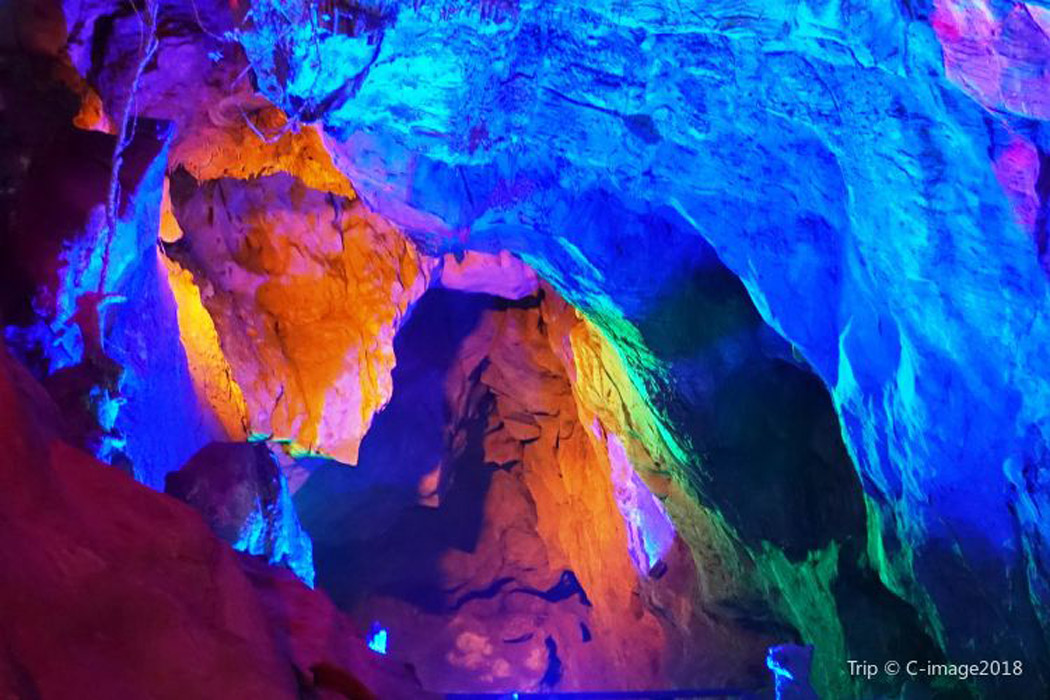
The Taishan underground rift is a secret zone between the two mountains of Mt. Tai and Lushan. In 2003, the ground collapsed with 100 m in diameter and the geological change was so important that a nearby village was safely relocated.

Few years later, a farmer lost his drill while digging a well in his backyard and an official exploration started to check the underground situation.

The Baotailong Underground Rift Valley officially opened in April 2016. The size is so gigantic that it needs a 28-minute rafting to fully appreciate its beauty.

The rift is hundreds of meters deep and a rich groundwater resource in the cave provides the base to water-raft.

The Guinness World Records certified it as the longest unpowered underground river rafting.

powered by social2s
Tai’an. Dawenkou Culture

Dawenkou culture is a relic of the late Neolithic period in primitive society, which can be dated back to 6,300 4,400 years ago. It is a brilliant ancient civilization of the Yellow River basin.

Dawenkou Culture and Hemudu Culture in the Yangtze River basin is called the origin of Chinese civilization.

The Dawenkou cultural site is located in Dawenkou town of Tai’an. Its discovery not only reveals the origin of Longshan culture in the Shandong area, but also provides important clues in cultural research of the Huang Huai River basin, Shandong and Zhejiang coastal areas.

powered by social2s
Tai’an. Dai Village Dam

Dai village dam, located in Dongping county, is a provincial- level cultural relics protection unit. It is a masterpiece of Chinese ancient water conservancy project, which can be dated back more than 600 years.

The dam designed to regulate the water flow of Dawen River is one of important water conservancy projects along the Beijing-Hangzhou Grand Cannel, the longest artificial canal in China. Dai Village Dam Museum which shows the dam’s long history and superb design is one of China’s major museums on water conservation culture.

powered by social2s
Tai’an. Bixia Goddess

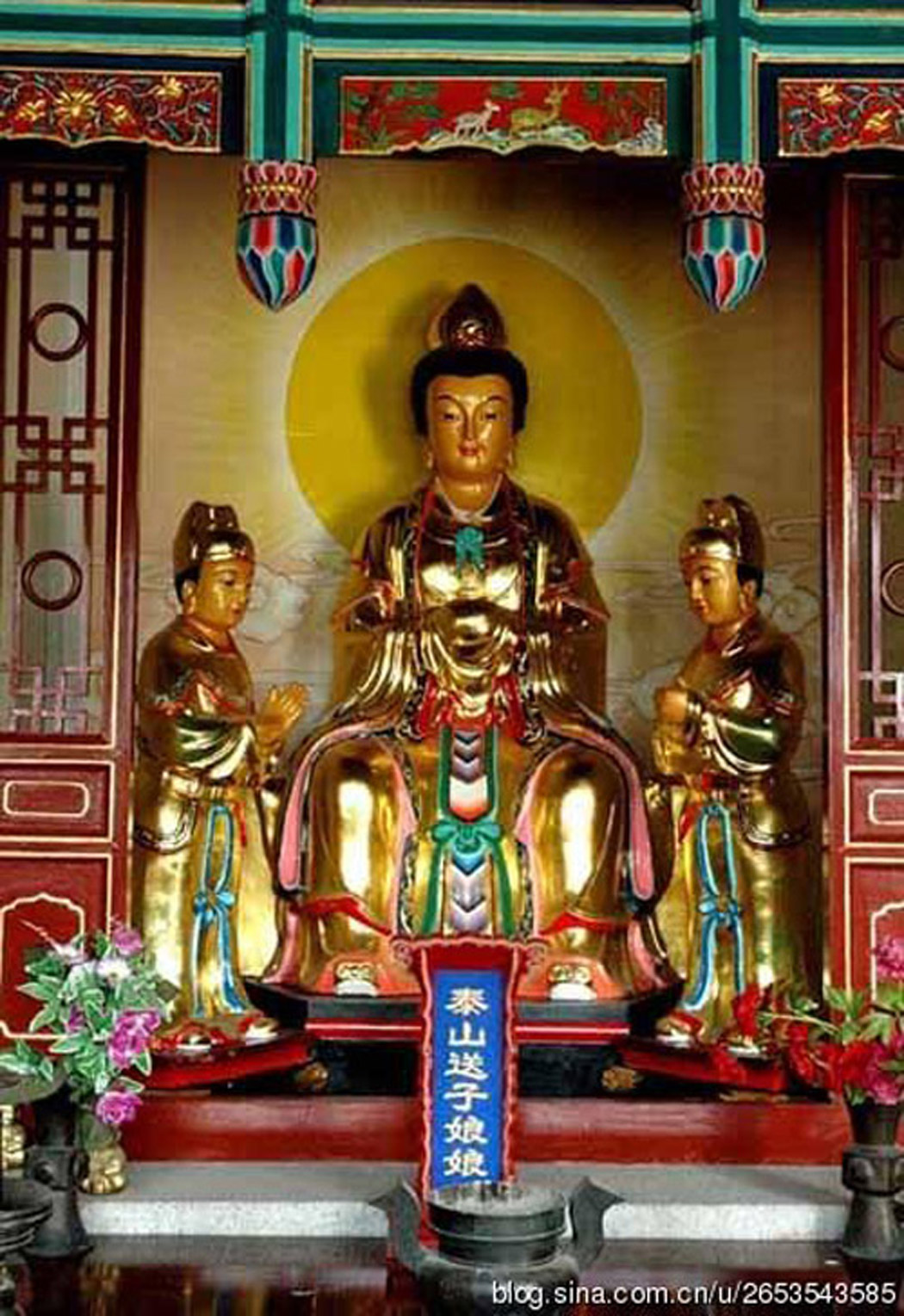
Bixia Yuanjun, also known as Fairy Lady Taishan Bixía Yuanjun, is commonly referred to as the Taishan Queen, Taishan Godmother or Taishan Mother.

Daoists believe that Bixia Yuanjun can bless human beings and affect the whole universe.

Bixia Yuanjun can also master the mountain’s military power and observe virtues and evils all over the world. Bixia Yuanjun is an important goddess in Daoism. She has also had a big impact on Chinese history.

powered by social2s
Tai’an. Dai Temple One of China’s Four Ancient Architectures

Dai Temple (also called Dongyue Temple) is located in the north of Tai’an city and south of Mount Tai. The temple was a place where ancient Chinese emperors held the Fengshan ceremony and worshipped the god of Mount Tal.

It is the largest and best-preserved ancient architectural complex in the Mount Tai area.

Dal Temple was built during Han Dynasty (206 BC – AD 220), it was renovated by emperors and became prosperous In the Tang Dynasty (AD 618-907). Emperor Zhenzong In the Song Dynasty (960-1279) built Tiankuang Palace, the main structure of the temple.

The temple is majestic and consists of 186 ancient buildings, 184 stone steles, 48 stone portraits, 212 ancient cypresses and other trees, and 292 ornamental plants. The temple contains many steles, which are referred to as “the forest of steles in Dai Temple”.

Tlankuang Palace is one of the “Top Three Ancient Chinese Palatial Architectures” and has great historic and artistic value. It contains a mural named The Painting of the God of Mount Tal Faring Forth and Returning to Palace, which is a superior work among Daoist murals.

The temple is regarded as one of the four major ancient architectural complexes in China, along with the Imperial Palace in Beijing. Confucius Complex (Confucius Family Mansion, Temple, and Cemetery) in Qufu of Shandong and Chengde Mountain Summer Resort.

The ultimate authority of the Dai Temple rest with emperors at the Grand Hall of Harmony in the Forbidden City of Beijing.

powered by social2s

Recommended

Subscribe to Newsletter

Discover a territory through the emotions of the people that have lived it.