Church of St. Leo the Great

The Church of St. Leo the Great was built in 1882 by architect Francesco Fontana at the behest of Pope Leo XIII, it is located on the square in Carpineto Romano that bears the name of the Pontiff.

In neoclassical style, it has three entrances with a tetrastyle portico topped by a pediment: the interior is a basilica structure with three naves and a barrel vault, supported by Corinthian columns on which rests the blacony for women.

On the sides of the aisles are four chapels with altarpieces by Perugia painters.

On the main altar is the marble Pietà by Sosnowski and in the rotunda stands the Madonna of the Rosary, with the titled saints (St. Leo the Great and St. Nicholas) and devotionals of the Pope (St. Joseph and St. Joachim).
 

powered by social2s
Carpineto Romano. Collegiate of the Sacred Heart

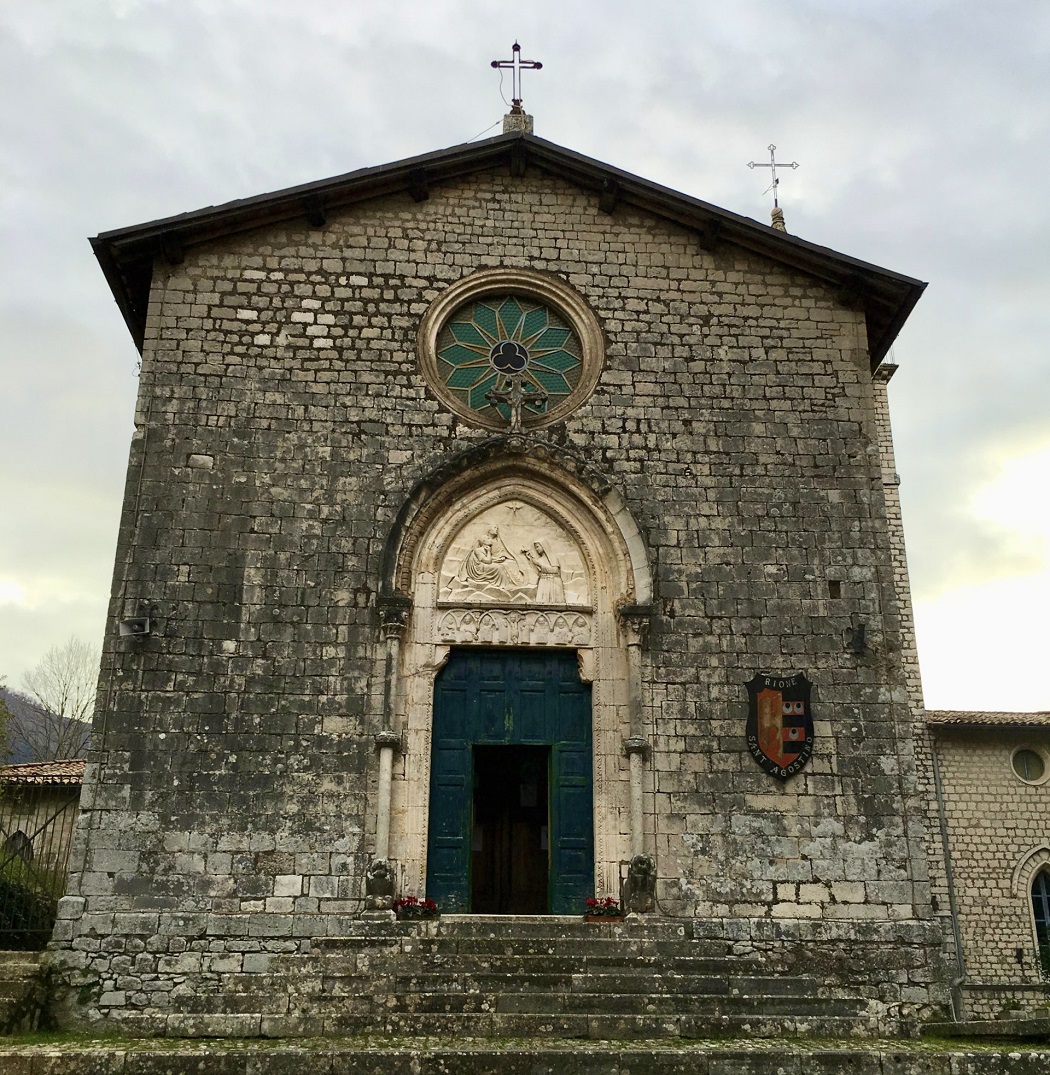
Also known as the Church of the Sacred Heart, it is dedicated to St. John the Baptist and St. John the Evangelist and was built in 1753.

The church is located in the heart of Carpineto Romano in Piazza Regina Margherita, and presents a massive and imposing structure with three limestone portals, made by local stonemasons.

The interior has a Greek cross design, and a single nave with side altars. To the right stands a marble statue of Leo XIII, by Giuseppe Lucchetti.

There is also an altarpiece recently restored representing the flagellation of Christ, attributed to Giulio Romano, the greatest disciple of Raffaello.

In the sacristy there is an ancient bell, donated by a certain Messer Matteo to the Valvisciolo Abbey in 1249 and considered the best expression of a Lazio bell fromthe Middle Ages.

In the church there is also an organ with a very particular sound, courtesy of Leo XIII.

powered by social2s
Carpineto Romano. Church of Santissima Annunziata

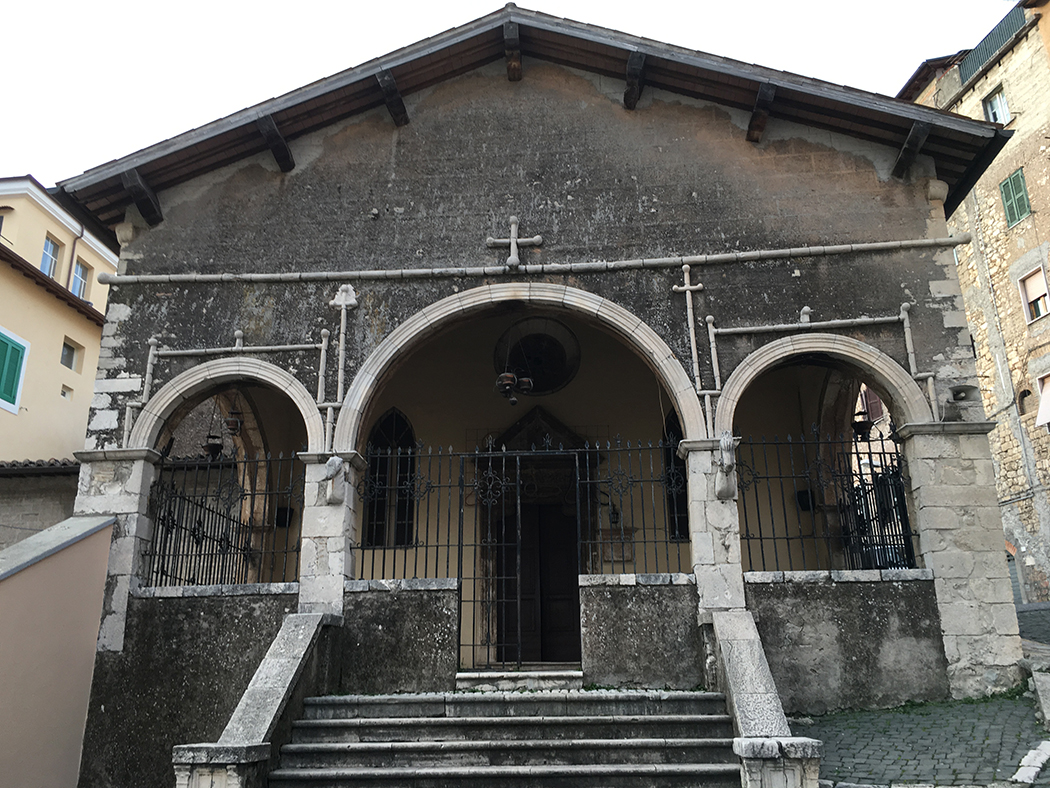
The small rural church of Santissima Annunziata in Carpineto Romano was built by private citizens in 1786, on the ruins of an ancient hermitage destroyed in the seventeenth century.

It has a single nave, roof trusses, and the altar has paintings by Gaetano Nenci.

The church is accessed by a large limestone staircase with a portico on which there are inscriptions, including a carving by the hand of the young Gioacchino Pecci, the future Pope Leo XIII.

Alongside is a beautiful limestone steeple.

powered by social2s
Bike Trail Paliano-Fiuggi

The bike trail Paliano - Fiuggi path is 20 km long running from La Forma (Serrone) to reach Fiuggi and stretches along the ancient route of the narrow-gauge railway that connected Rome to Fiuggi in 1930.
In many places the route passes by the main road and you can enjoy an incredible view over the valley of the Sacco and, in the stretch before the town of Acuto, it is superimposed on the European path E1.
Since it is made from a rail network its slopes are not excessive and are well distributed along the way. This makes the track also particularly suitable for the less experienced.

powered by social2s
Paliano Strada del Vino Cesanese

Acuto is in the Cesanese DOC area, where this type of vines are grown, and it is crossed by the Strada del Cesanese.

The association is established precisely to promote enograstronomic culture and beauty of the area.

Along the way the road passes producers in whose cellars you can taste the Cesanese red wine and the Passerina Frusinate, the PGI white wine, accompanied by typical local dishes.

The Cesanese wine of Acuto has a particular taste and quality thanks to all the south facing vineyards on the slopes of Mount Ernici.
 

powered by social2s
Acuto. Volubro Lake

The Volubro lake is of karst origin and is near the village of Acuto.

The lake was formed in a sinkhole, a funnel on the bottom of which the  earth and clay settle and make the hole waterproof.

The area around the lake is pristine, but equipped for walkers and lovers of nature, and the peculiarities of the vegetation are explained on wooden boards.

powered by social2s

Recommended

Subscribe to Newsletter

Discover a territory through the emotions of the people that have lived it.