Paliano- Santuario Santa Maria Pugliano by Roberta Gabrielli

Perhaps the Church and Monastery of Santa Maria Pugliano were founded around a small church dedicated to the Virgin, that was a home for hermits who were guarding it.

The image of the Madonna was called 'The Puglianella' because it was thought that it had been brought from the Puglia region by two soldiers.

In the area of Santa Maria Pugliano also stood a castle built to protect local people.

In 1559 Father Santo from Piglio turned the church into a convent which was ceded to the Order of Friars Minor Conventual. It was later closed in 1652 due to lack of religious interest.

In 1750 it was assigned to the Passionist Fathers who still have care. The Passionists enlarged it, and they added one and then other altars in 1823.

During the Second World War, the monastery was occupied by the Germans and in 1946 the church was rebuilt and enlarged.

On the high altar there is a painting of the Madonna that replaced the statue of Puglianella which is now inside the convent.

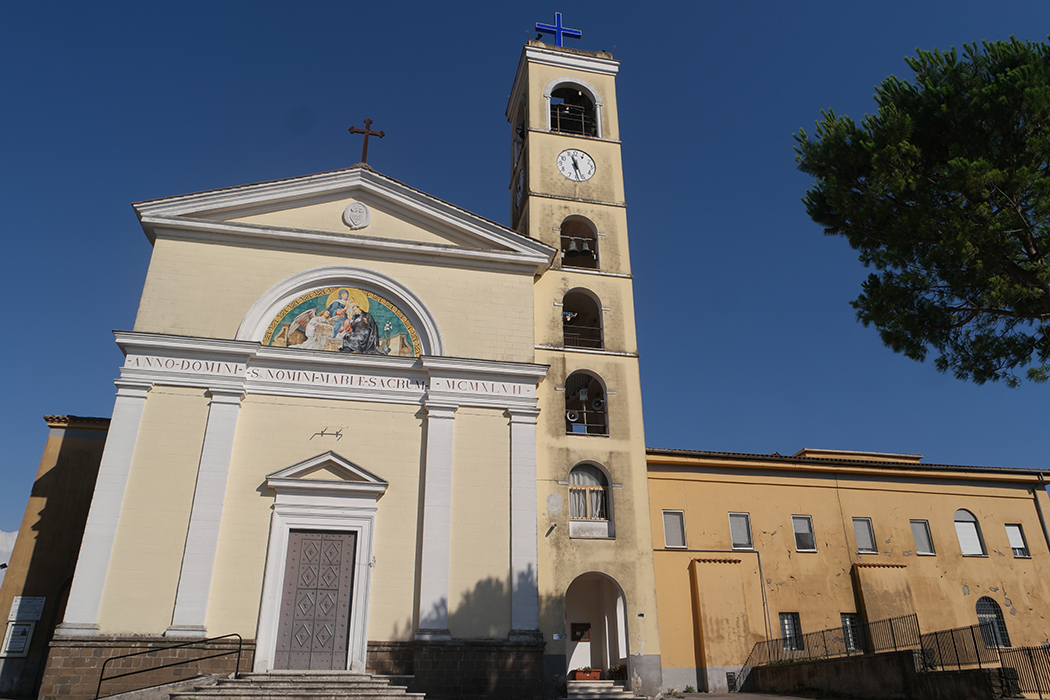
The facade is in eighteenth-century style, and on the tympanum is a drawing of the Virgin and St. Paul of the Cross made of majolica (clay).

The interior has a nave with a side chapel, dedicated to St. Paul of the Cross, and is decorated with faux marble plaster.

Under the altar lie the relics of San Teodoro martyr, supported by columns of porphyry and over the entrance is found the organ and the choir.

The new bell tower dates back to 1967 and on top of which is a clock and bells, while the old bell dates back to 1486, as can be seen by an inscription engraved in bronze.
powered by social2s
Paliano Church and Convent of St Peter by Fabrizio Alberti

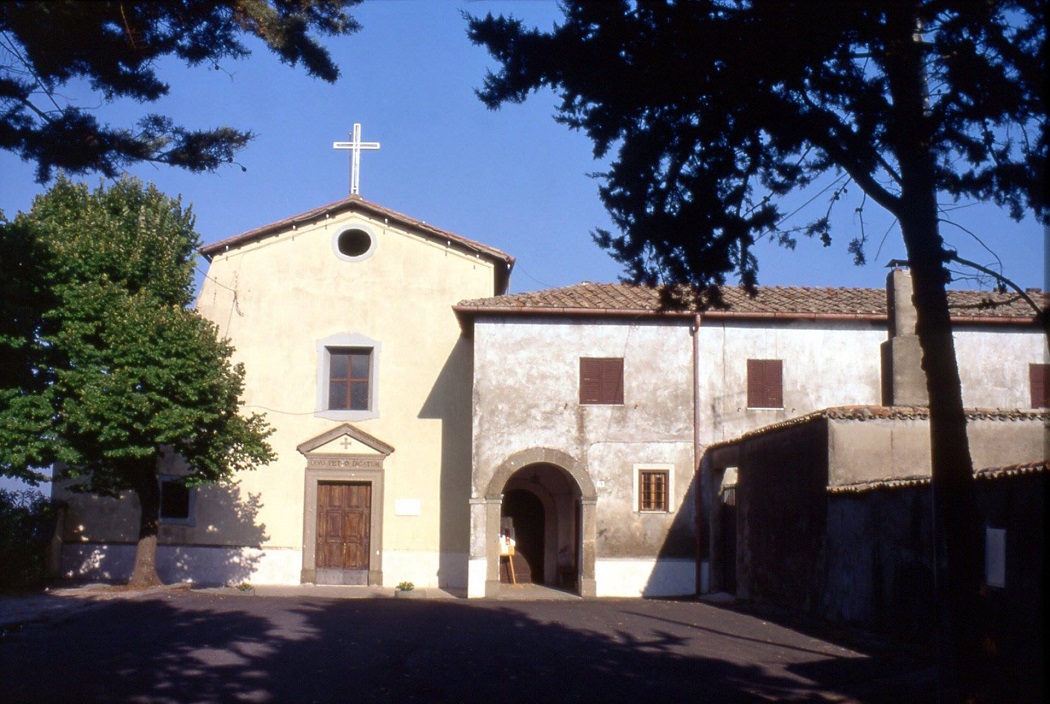
The Church of St Peter was consecrated in 1619 and, with the adjoining monastery.

It was named after a former monastery built in 1243 by the bishop of Palestrina, targeted the Cistercian nuns who dedicated it to St. Peter the Apostle.

In 1300 Pope Boniface VIII closed the monastery that then between the thirteenth and sixteenth centuries became a Benedictine monastery entrusted to the Cistercian monks.

In 1582 the assets of the monastery were transferred to the Collegiate of St. Andrew and the monastery was sold to the Capuchins who built a new facility in 1598 nearby. The Capuchins have run the monastery until 1981.

The church has a single nave and two side altars and, inside, there are two altarpieces: a crucified Christ and Our Lady who appears to Saints Peter, Barbara and Francis, attributed to Stefano Pozzi (1699-1768).

The church was also used for the burial of the dead until 1880, the opening year of the municipal cemetery.

powered by social2s
Paliano Chiesa santa Rosa-Fabrizio Alberti
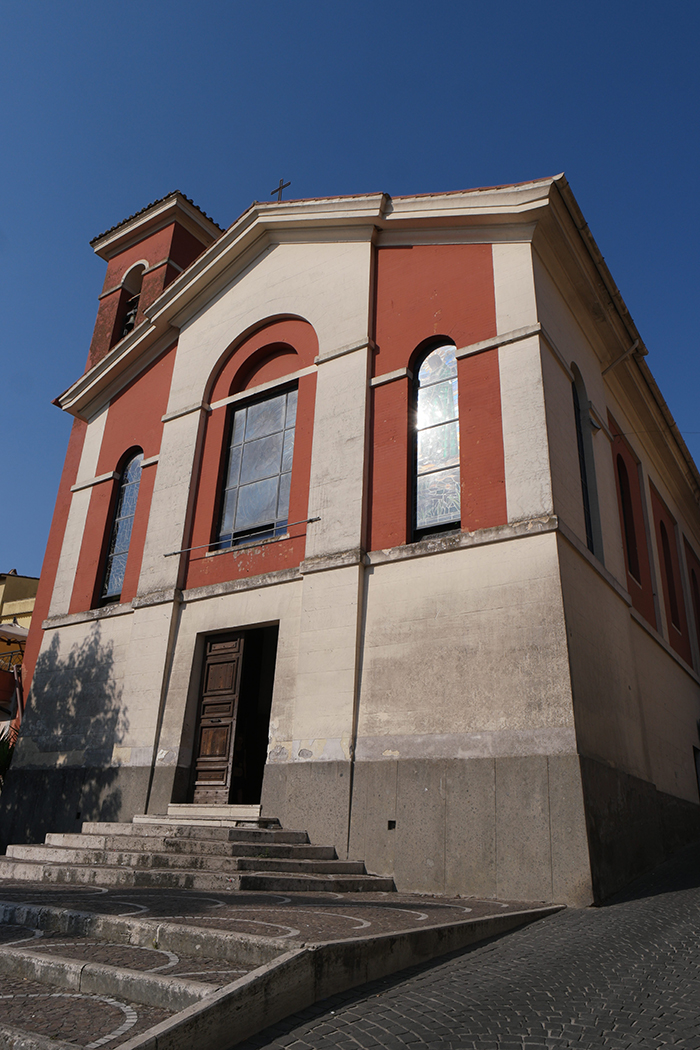
Paliano. Church of Santa Rosa

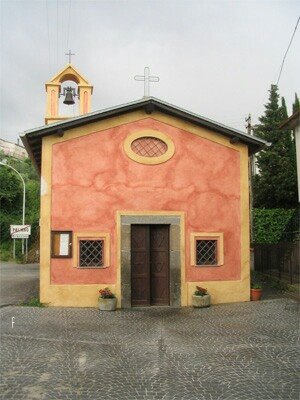
The Church of Santa Rosa in Paliano is a chapel with a small altar and a mural of large dimensions that depicts the Madonna and Child, two angels and four figures.

The chapel was built in the sixteenth century by Marcantonio D'Azzia, a soldier serving the Colonna family and in 1754 was named after Santa Rosa and Saint Eleuterio Pope Martyr.

It was partially destroyed during World War II and later rebuilt.

Inside is a painting by Giacomo Lisia depicting Santa Rosa of Viterbo with the following inscription: "Santa Rosa of Viterbo, a gift for the church of  Santa Rosa  in Paliano".

powered by social2s
Paliano- Chiesa dellImmacolata Concezione by Benedicta Lee
Paliano. Church of Immaculate Conception - La Cona

The Church of Immaculate Conception - La Cona was founded in the sixteenth century by expansion of a country chapel dedicated to St. Michael.

Despite its original name, it has always been called the church of Santa Maria of Colleberto La Cona. This name comes from 'icon' indicating an image on an altar. The Church of Paliano is small on a single aisle.

The church was run by the Brotherhood of Santa Maria del Ricorso, and inside it is a painting of the Virgin with a white dress of the eighteenth century. 

Beside the altar there are two paintings by Giacomo Lisia representing Saint Lucia and San Biagio, patron saint of the throat.

Like many places of worship, in the past this church was used as a burial place.
 

powered by social2s

The Church of Saint Sebastian in Paliano was purchased in 1083 by the abbot of Subiaco Giovanni V, who at that time bought several rural churches with the purpose to obtain annuities.

The purchase is reported in Subiaco Chronicles showing precisely the activity of the abbot who, in Paliano, had already bought the monasteries of Santo Stefano and San Pancrazio (perhaps the San Rocco church).

Next to the church there was a Benedictine monastery that had for a long time been used to bury the dead.

The church was destroyed by the bombings of World War II and then rebuilt.

The building consists of a single room and inside there is a painting by Giacomo Lisia representing the martyrdom of Saint Sebastian.

powered by social2s

The small Church of Saint Rocco built outside the perimeter of the walls in the eighteenth century appears to be dedicated to three saints: St. Rocco, the Blessed Virgin and St. Sebastiano.

The small Church of San Rocco consists of one room and has only one altar with a 1780 altarpiece by Giacomo Mango.

The dedication to San Rocco was probably made after the plague epidemic because he is really the patron saint protecting from the plague.

The church has a small bell that is rung on August 16 in honour of the celebrations of the saint in Paliano.

powered by social2s
Paliano- Chiesa di SantAnna by Benedicta Lee

The present Church of St Anne in Paliano was built in 1931 after the collapse of the previous one dedicated originally to Santa Maria della Neve (Mary of the Snows) and finally to St. Anna.

On that date the building was extended by ten meters, the facade was re-oriented and the bell tower was added.

The new orientation of the church is facing the road to Anagni which had been made by knocking down a section of the perimeter walls.

powered by social2s
Paliano- Chiesa Collegiata di SantAndrea by Benedicta Lee

The original Church of Saint Andrew Apostle in Paliano was built in 1224 and then has been completely rebuilt by Prince Marcantonio Colonna II.

From 1569 the prince spent his time to the urban reorganization of Paliano building his Palace Colonna. The prince died in 1584 and at that time in the church there was only an underground crypt especially for the burial of the Colonna family.

The family tomb was finished in the early seventeenth century by Philip I, who transformed the church into a huge mausoleum and moved some bodies there.

The facade and the final internal arrangement dates from the late seventeenth century under the care of the architect Antonio Del Grande.

The Collegiate Church of Saint Andrew Apostle has three naves with side chapels and the main apse with a portrait of St. Andrew painted by Tommaso Conca in 1789. The ceiling of the nave is coffered Baroque.

In the left aisle is the baptismal font with a painting of Giacome Lisia.

The chapel of Saint Andrew was dedicated to the wife of Philip I and also was dedicated to St. Charles Borromeo, St. Filippo Neri and Saint Lucrezia.

Inside there is a cupola with the coats of arms of Colonna and Tomacelli families and a wooden sculpture of St. Andrew the Apostle with the cross behind.

In the chapel dedicated to Our Lady of Zancati is preserved a wonderful fresco found in the cave chapel in Zancati, in Paliano countryside.

powered by social2s

Recommended

Subscribe to Newsletter

Discover a territory through the emotions of the people that have lived it.