Soriano nel Cimino


Coat of arms of Soriano nel Cimino
During the Etruscan era Soriano was already a thriving city and its name derives from the Etruscan "Surus", the woods, and "ianus", place, and that is "wooded location".
In 310 BC the Romans developed it by building roads to cross the Cimina.

And thanks to these roads the Goths immediately came, followed by the Lombards and the Saracens before Soriano was ruled by the monks and the Papal States.

In fact, since the third century AD, the area was affected by the Christian evangelism and was in the list of possessions of the Roman Benedictine abbeys of San Silvestro in Capite and St. Lawrence Outside the Walls.

In the thirteenth century, the fiefdom was granted by Benedictine monks to Guastapane and then to Pandolfi. It had a period of splendour when the church gave it to the Orsini and it seems that Nicholas III Orsini died in Soriano in 1280.

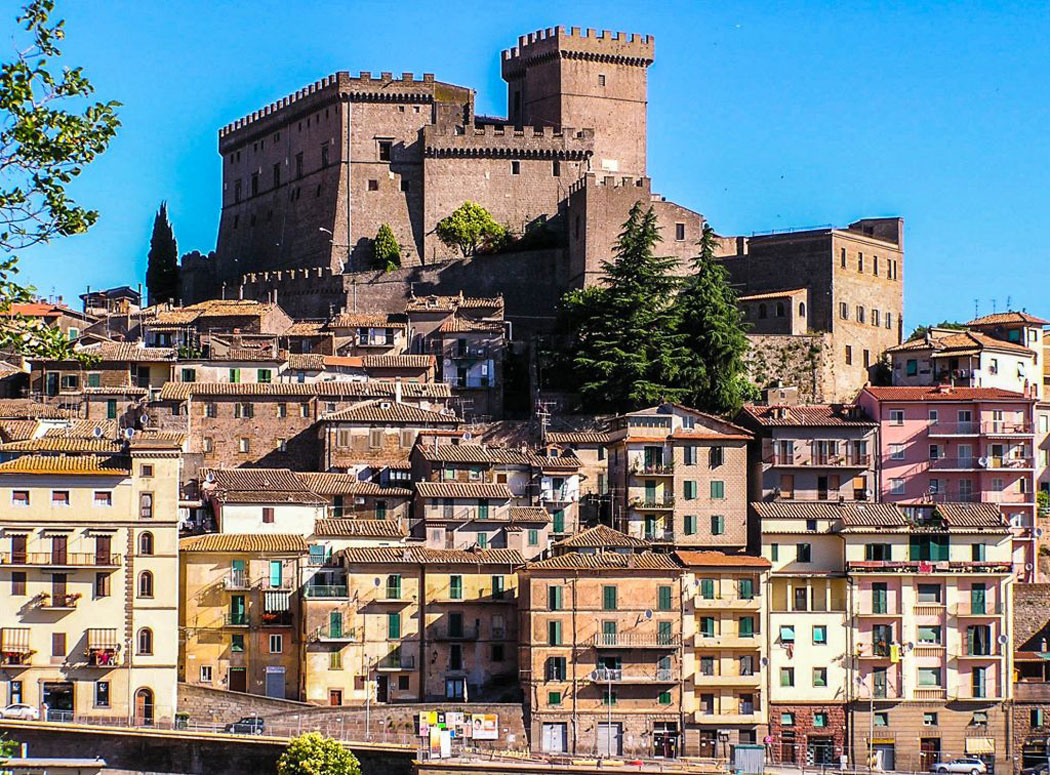
Nicholas III built the castle, now a symbol of the city, in the thirteenth around an ancient castle of the Guastapane - Pandolfi, who had been expelled because accused of heresy.

After a difficult period with the anti-pope, the estate came under the control of the Apostolic Chamber and was later owned by the Di Vico, the Colonna and the Sforza who were always competing with the pope. In fact, in 1435 Pope Eugene IV gave the fiefdom to cardinal Giovanni Vitelleschi who beheaded Giacomo Di Vico on the cathedral forecourt. In 1440 Soriano came among the possessions of the Holy See.

In 1489 it repelled the troops of neighboring Vignanello that intended to seize the fiefdom and who had assassinated the castellan of Soriano. For its loyalty to the church it was awarded by Pope Innocent VIII with the proceeds allocated to the Apostolic Chamber and with the authorization to add to the coat of arms the word 'Fidelitas'.

Innocent VIII gave the fiefdom to the Borgias that were followed by the Della Rovere, the Caraffa and Madruzzo. Then, during the period of the Albani family it became a principality and had another period of splendour.


powered by social2s

Typical products 

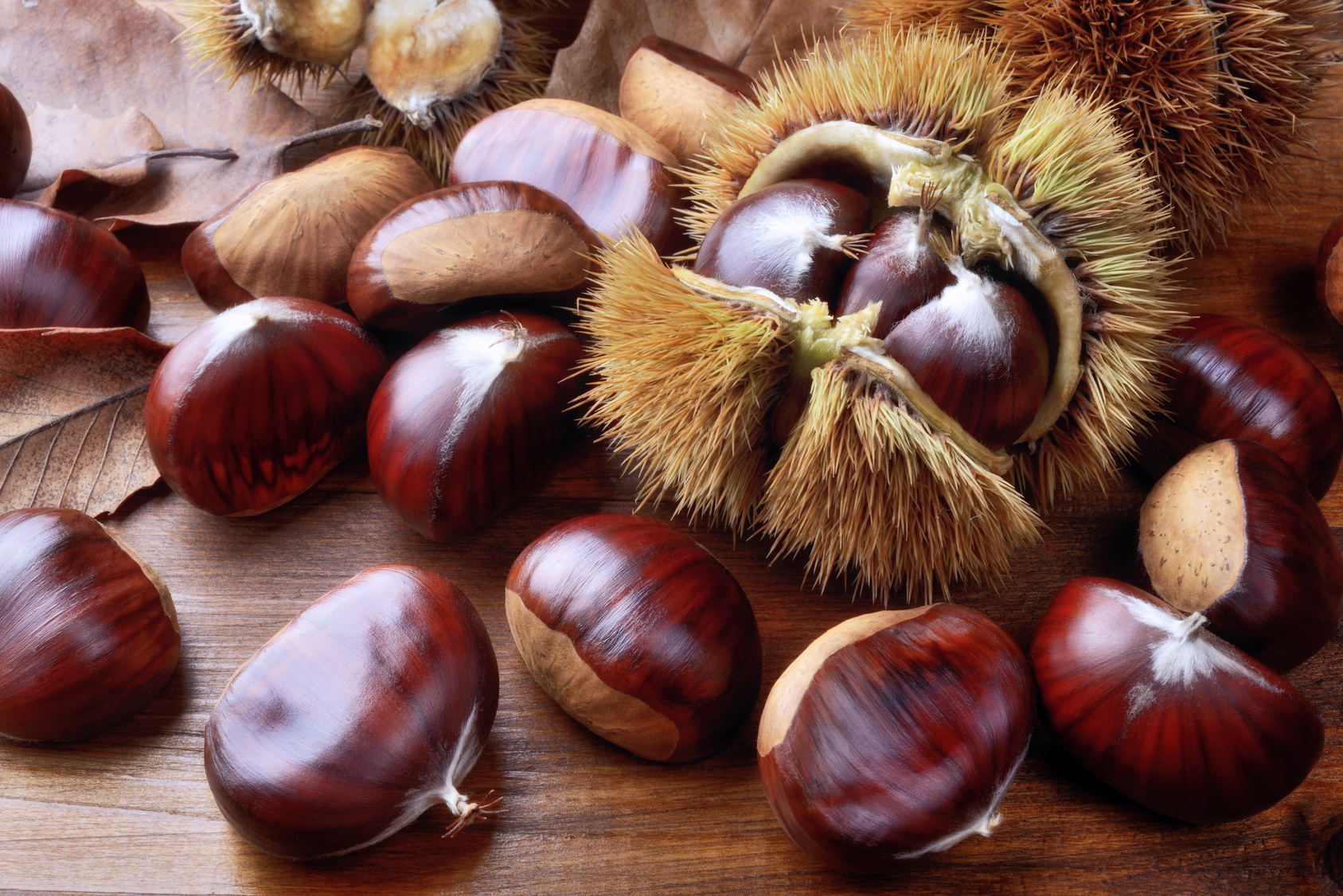
The Monti Cimini is a Marrone chestnut of the Florentine quality and is grown between 500 and 700 meters above sea level. In Soriano nel Cimino, the...

Parks and Gardens 

Mount Cimino, at 1053 meters high, is the highest in the province of Viterbo and the summit overlooking the town of Soriano nel Cimino. On its summit is a...
Archeotourism 

Chia is a village on a small hill overlooking the Tiber Valley and is part of the city of Soriano nel Cimino.  Its original nucleus dates back to 1100 AD....

The necropolis of Corviano in Soriano nel Cimino  lies to the left of the Martelluzzo stream in a place inhabited since prehistoric times. It can be seen...
Religious Celebrations 

On the last Sunday of August is celebrated the Madonna from the days when the painting "Madonna of SS. Trinity "was brought to Soriano nel Cimino in 1516,...

Churches & Places of Worship 

In Soriano nel Cimino, next to the cathedral there is the small church of St. Anthony of Padua. It dates back to the mid-seventeenth century in a Baroque...

The neoclassical cathedral of St. Nicholas of Bari in Soriano nel Cimino was erected in the late 1700s to a design by Giulio Camporese. The facade, in brick,...
Archaeological areas 

The Archaeological Area of ​​Selva Malano in Soriano nel Cimino is of ​​great interest and is dotted with tombs of various shapes and sizes in the forest of...
Art museums 

The Pinacoteca di Lucio Ranucci is located in the stables of the Palazzo Chigi in Soriano nel Cimino, one of the most beautiful medieval town in Tuscia, the...
Architecture and monuments 

The Chigi-Albani palace of Soriano nel Cimino was started in 1561 when the estate belonged to the Madruzzo. It was Cardinal Cristoforo Madruzzo who set to...

The fountain Papacqua of Soriano nel Cimino is by Vignola who built it at the behest of Cardinal Madruzzo in the sixteenth century to beautify the terrace...

Blog 

This Thursday we met Fabio Menicacci, mayor of Soriano nel Cimino, the ancient village in the province of Viterbo under Monte Cimino and overlooking the...
Town Ambassador
Discover your italian Roots


Subscribe to Newsletter

Discover a territory through the emotions of the people that have lived it.