Panata
Panata

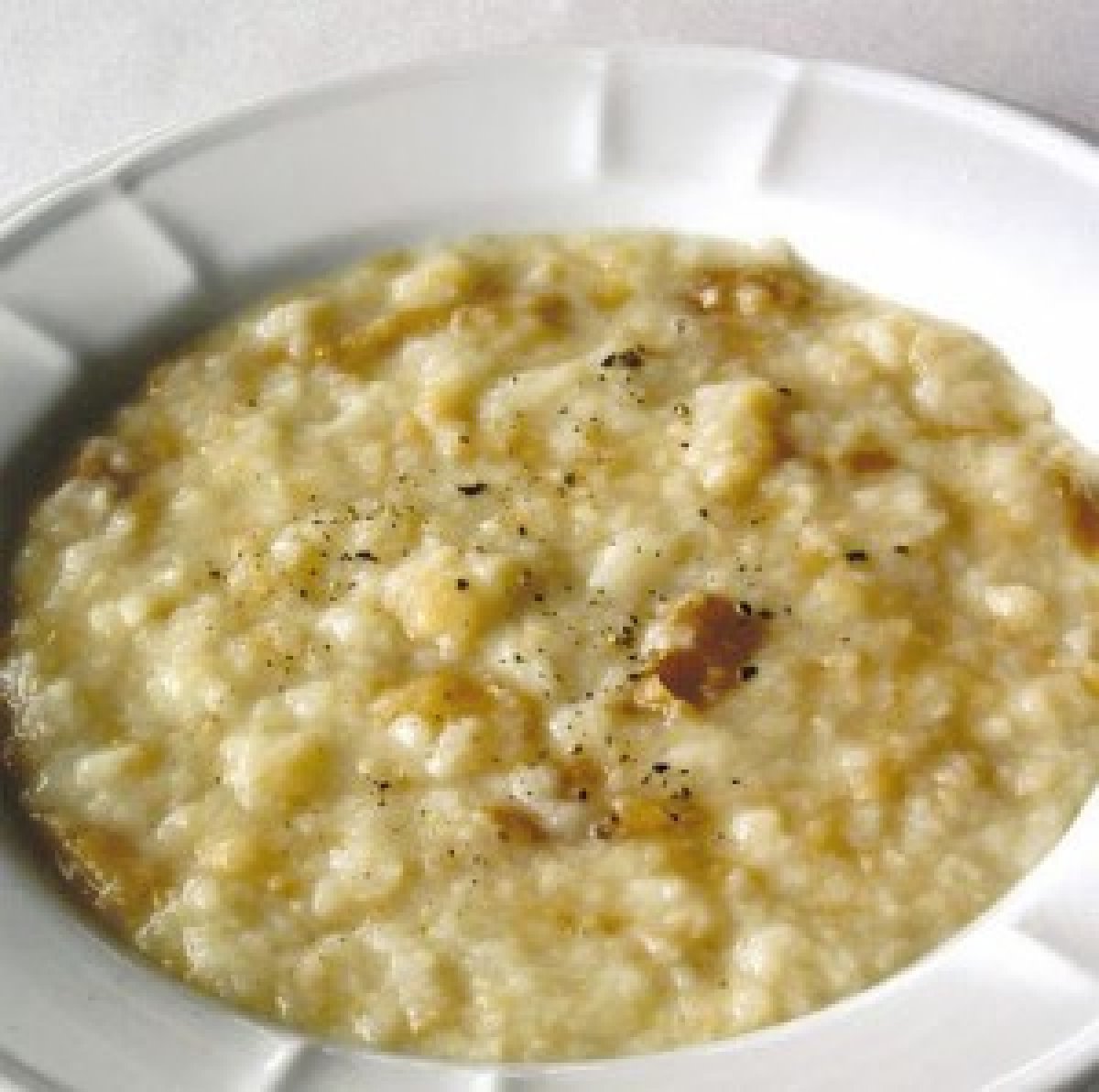
Panata is an anchovy-based soup that is served with a loaf of bread and accompanied by a glass of red wine.

In Fumone, on the occasion of the Feast of San Sebastiano (January 20) and the Monday following Pentecost, the ancient rite of the Panata is repeated.

In these days, the soup is distributed to the population and consumed together in the grottoni della Panata.

The bread is prepared following the ancient recipe. A "wolf's eye" pasta dough is prepared with soft wheat flour.

After cooking the pasta in water and salt, it is seasoned with a tomato sauce prepared in a pan with garlic, oil, parsley and boned salted anchovies.

Everything is then garnished with abundant red pepper.
powered by social2s
Fumone- La Taverna del Barone

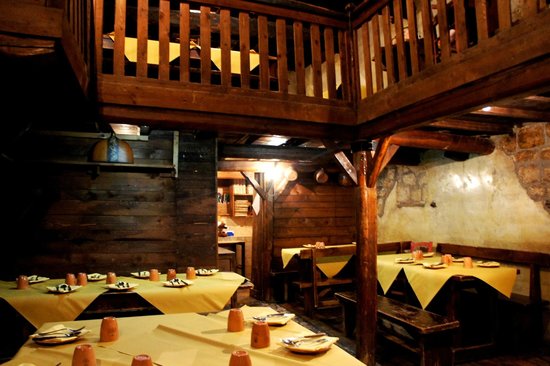
Just past Porta Romana in the old town, on the left is the Baron's Tavern. Suddenly, by opening the door, one is catapulted back in time with wooden tables and benches worn by time, damsels, carafes and ancient relics that furnish a room of history.

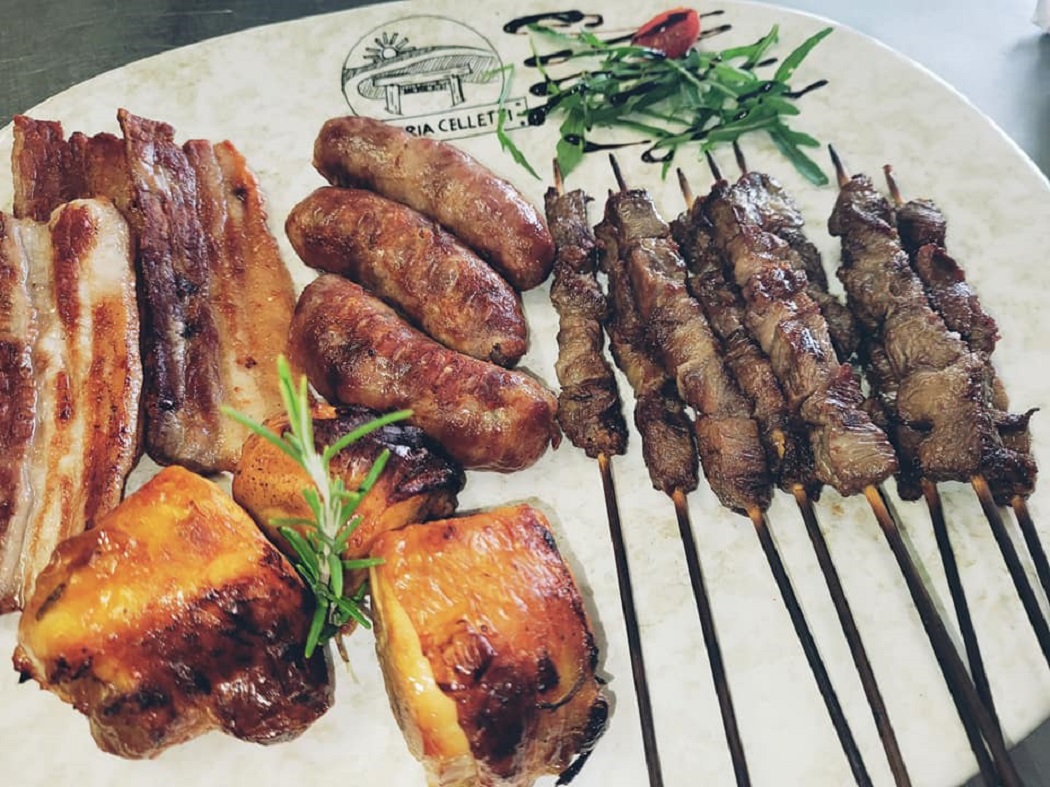
A perfume of roast meat wraps us completely.

On the last Friday of the month there is a "medieval dinner" where waiters serve a dinner in a perfect medieval style. Newly-polished glasses and dishes, hand-rolled pasta and roasts, hand-cured cold cuts and roasted bread, olives sweetened with lime as it used to be done in the past.

It ends with anise dumplings and dried fruits, but dinner is enlivened by traditional music and 'dramatic' effects as wayfarers and merchants invade the tavern with swords.
 

powered by social2s
Timballo di Bonifacio VIII

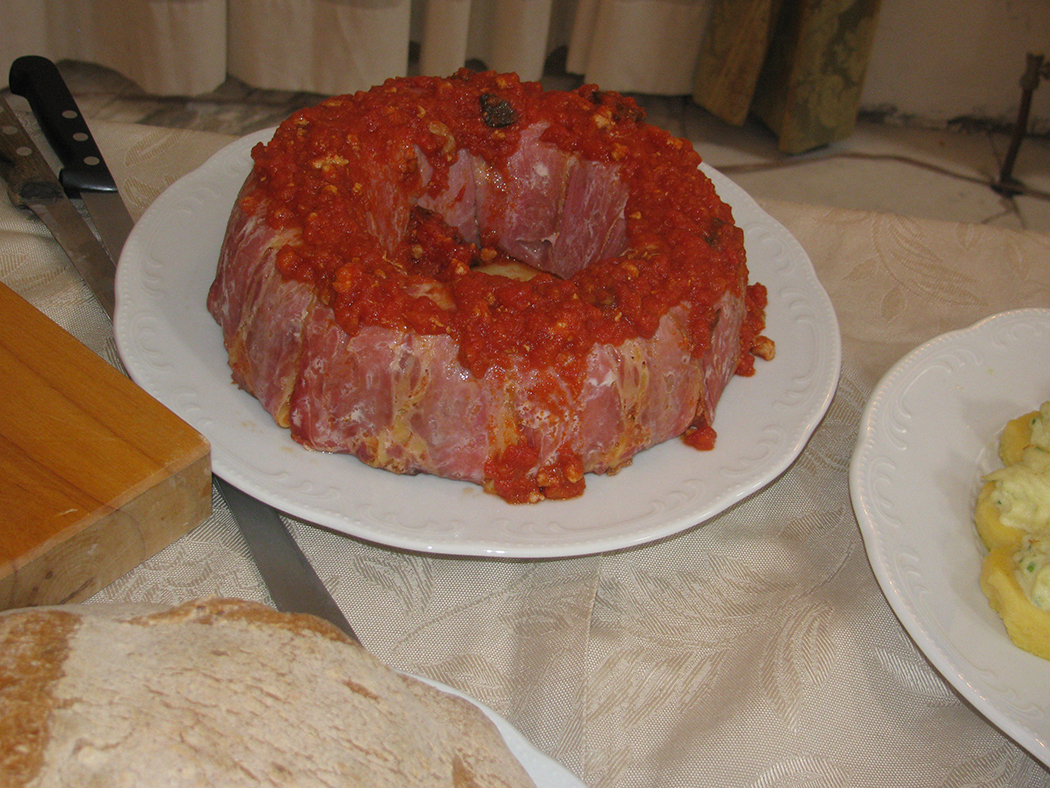
Timballo of Boniface VIII (timballo alla Bonifacio VIII) is one of the traditional dishes of Anagni, the famous City of the Popes where this pope lived.

In fact, it seems that it was one of the favorite dishes of Pope Boniface VIII and for this reason it was named in honor of him.

The timballo is a pasta pie made with thin noodles and a beef ragout with the addition of pork sausages. The ragù is cooked in the traditional way scented with carrots, celery, onion, peeled tomatoes and bay leaf.

Once cooked al dente, the pasta is seasoned with the sauce and cheese and placed in a pan, round or in the shape of a donut.

The pan is lined with slices of ham and the timbale is ready after a short passage in the oven for about 30 minutes.

The real secret of the recipe is the cooking time of the timbale so as not to dry out the ham.

powered by social2s
Polenta con i Tanni
Polenta con i Tanni

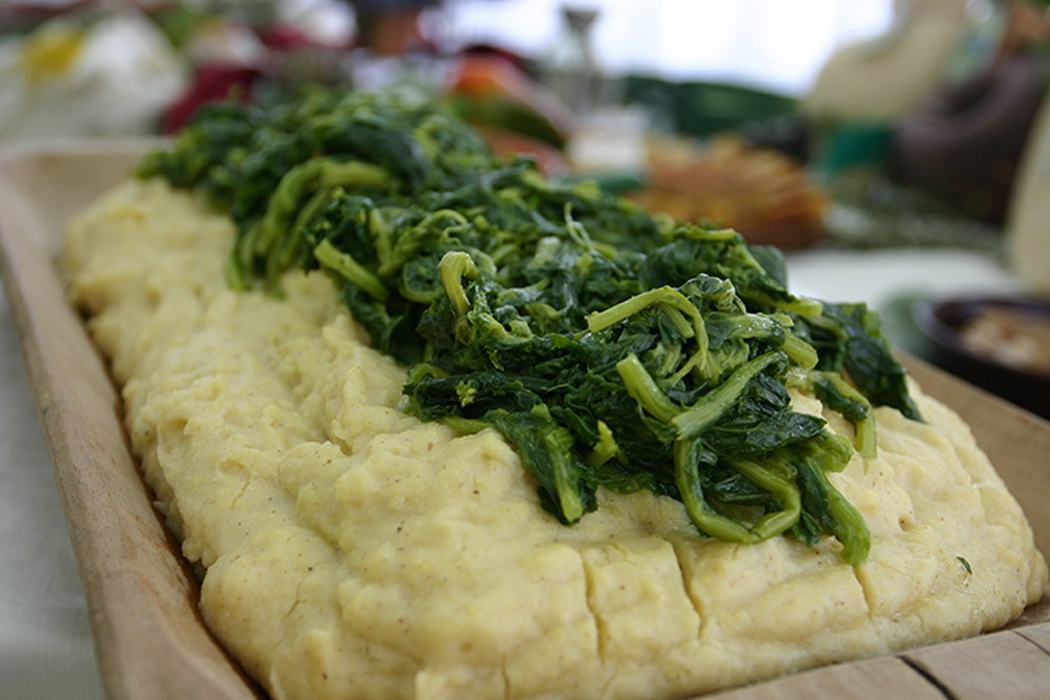
Polenta with Tanni is a typical dish of Torre Cajetani, a nice town on Ernici Mountains.

Tanni are a particular type of rapeseed broccoli. The raw vegetables are cooked in a pan with plenty of oil, garlic, salt and very little water. Tradition also calls for a bit of chili.

Polenta is made with maize flour, preferably large grain.

When it is cooked it is then poured into the traditional wooden "scife" (plates). The cooked Tanni is spread over the polenta.
 

powered by social2s
Gnocchi di ortica e asparagi by Tonino Bernardelli

Gnocchi with nettle and asparagus are a typical dish of Settefrati made by collecting wild herbs from the meadows of the Val di Comino.

Local flavors for one of the traditional Ciociara dishes where the famous potato gnocchi are seasoned with a sauce made with nettles and wild asparagus.

powered by social2s
Pan a moll
Pan a moll

Pan a moll is one of the traditional dishes of Settefrati in Val Comino in which the leftover bread from previous days was recovered.

It was a way not to waste the bread that was baked once a week in public ovens.

Stale homemade bread was cooked with the addition of vegetables, legumes and pork rinds. A typical dish of the peasant tradition.

powered by social2s
Gnocchi al Sugo di pecora

Gnocchi with sheep sauce are one of the typical dishes of the Ciociara tradition and of the charming village of Vico in Lazio.

In a land where many men traditionally devoted themselves to sheep farming and traversing the trails of seasonal flock movement, they could not miss traditional sheep-eating dishes.

Two festivals are dedicated to gnocchi with sheep sauce in Vico nel Lazio: in May with the Madonna del Campo Festival and in August during the Festival of the Return.

Gnocchi, made from local potatoes and shaped by hand. They are seasoned with macerated and cooked sheep meat with garlic, onion, laurel, juniper, oil, parsley and tomato.

Gnocchi are then sprinkled with seasoned sheep cheese or Parmesan cheese.
 

powered by social2s
Vico nel Lazio- Cicoria

Chicory is the best side dishes of Vico nel Lazio and Ciociaria region and it is cooked in several different ways.

It is a spontaneous growth plant known since the ancient Egyptians who used it widely and it is quoted in the Ebers Papyrus of 1550 BC.

Its name could have Greek or Arab derivation and already Greek physician Galen quoted it as useful to cure liver disease.

In addition to the plant, in war time the root of the chicory was used to prepare a coffee. The 'cicoriario' is name of the worker who picked the chicory in the fields and sold it in the markets.

In the Roman and Ciociara tradition, chicory is preferably cooked in a pan, with oil, garlic and chili pepper, accompanied by home-made bread.

powered by social2s

Subscribe to Newsletter

Discover a territory through the emotions of the people that have lived it.