Hazel Romana DOP of Tuscia (the area of Viterbo north of Rome) is very famous for the production of hazels that have been chosen by very famous chocolate cream makers.

The "Nocchie", hazelnuts, are part of the Mediterranean diet and are the basis of many desserts such as "tozzetti”, the “ossetti da morto”, the “brutti ma buoni”, the “mostaccioli” in donuts and meringues, but also for meat dishes such as rabbit stew.

Their consumption dates back to pre-Roman times and is mentioned in several documents. We know they were especially welcomed by Pope Leo X by the "History of the Roman Carnival".

In the twentieth century the reputation of Hazel Romana, Tonda Gentile Romana and Nocchione, has grown and the "National Prize of the Dolce with Tonda Gentile Romana DOP" has been created with the participation of chefs and pastry chefs.

powered by social2s

The DOP 'Tuscia' Olive Oil is produced from olives of the Frantoio, Leccino and Canino varieties. Tuscia is the magnificent region north of Rome surrounding the city of Viterbo.

Tuscia Oil has an emerald green color with golden highlights and a fruity smell reminiscent of healthy, fresh fruit, harvested at optimum ripeness.

Its flavour is medium fruity with balanced bitter and spicy aftertaste.

powered by social2s

The cultivation of grapes in Tuscia began with the Etruscans long before the birth of Rome.

Colli Etruschi Viterbesi Wine is produced from grapes grown in the municipalities Acquapendente, Arlena di Castro, Bagnoregio, Barbarano Romano, Bassano in Teverina, Blera, Bolsena, Bomarzo, Canino, Capodimonte, Castiglione in Teverina, Celleno, Cellere, Civitella d'Agliano, Farnese, Gradoli, Graffignano, Grotte di Castro, Ischia di Castro, Latera, Lubriano, Marta, Montefiascone, Monte Romano, Onano, Oriolo Romano, Orte, Piansano, Proceno, San Lorenzo Nuovo, Tessennano, Tuscania, Valentano, Vejano, Vetralla, Villa San Giovanni in Tuscia, Viterbo and Vitorchiano.

The production area is located around Lake Bolsena and is protected by the Cimini Mountains and the Sabatini Mountains.

Excellent red wines are produced from Multipulciano and Sangiovese grapes and white wines from Trebbiano Toscano grapes, locally called Procanico, and Tuscan or Lazio Malvasia.

The DOC (Protected Designation of Origin) designation was recognized in 1996.

powered by social2s

The town of Blera is part of the Tarquinia DOC Wine Area.

You can taste Tarquinia DOC wine in the red version made with Montepulciano, Sangiovese and Cesanese grapes. White version is made with Trebbiano Toscano (locally called Procanico), trebbiano Giallo, Malvasia di Candia and Malvasia del Lazio.

Tarquinia was one of the most important Etruscan Cities and its Necropoli is within the UNESCO Wold Heritage List.

The cultivation of grapes in northern Lazio began with the Etruscans and was first documented in a fourth-century BC tomb in the necropolis of Molesino. You see a Faliscan 'stamnos' with black and red figures representing Dionysus and Oinopion, i.e. a rounded vase with two handles, with which the wine was brought to the table to serve with a long bronze ladle.

Some writings of Pliny describe in more detail the grape growing and wine production that the Romans stimulated and developed.

In Statonia (in the territory of Vulci) in 540-530 BC wine production was more than sufficient for local production and was sent to Gravisca (ancient port of Tarquinia) and was sold overseas as evidenced by the discovery of the wreck of a sixth Etruscan ship century BC discovered in the sea in front of Marseille.

The Roman writer Martial describes the Cerveteri wine, 'Caeretanus' as of good quality and with a flavour that resembled old Setino. Columella instead celebrates the ancient Cere for its exquisite wine.

After the Middle Ages, before the abbeys and then the Papal States production and promotion of wine resumed.

The Statutes of the city of Civitavecchia in 1451 contained 20 chapters that regulated the production and trade of wine. They described the harvest period, the penalties for people who damaged vineyards and the measures that tavern owners had to use for sale.

In 1761, the Marquis Frangiapani in the book 'Story of the ancient city of Civitavecchia' describes some local vineyards.

powered by social2s

Croutons with Anchovies fished in Azio is perhaps one of the cheapest but most loved dishes of the tradition of this coast city sea cuisine.

Take slices of bread and toast them before putting the sauce on. Traditionally, bread was transformed into croutons by coating with oil or butter.

The sauce comprises anchovies cooked with oil, garlic, onion, tomato and salt.

As soon as the sauce is concentrated, it is poured on the toast and served hot. Flavour with a sprinkling of pepper and a leaf of basil.

powered by social2s

Anzio's portodanzese style fish soup is one of the typical dishes of this city made particularly tasty by the choice of fish directly from the boxes of fishermen at the port.

The key elements of the soup are the polyps, cuttlefish, scorpion fish, weever fish, piper, the dogfish, gurnard and sea bream. To these are added seafood such as anchovies, mussels and clams.

The soup begins by cutting the polyps and cuttlefish into small pieces and cooking them on a high flame with oil, garlic and chilli, to which a little white wine is added. Once the wine has evaporated, add a salted anchovy and peeled tomatoes.

After about 30 minutes add the cleaned fish and then the seafood.

To serve the dishes, place croutons of bread (bruschette bread with oil) in the bowl on which the fish soup is poured and finally parsley is sprinkled, and this is `alla portodanzese`.

powered by social2s

The fried fish is a fry of small fish and the particularity of that of Anzio is the freshness of the fish just arrived in port on the fleet of fishing boats.

The fish are rolled in flour and fried in plenty of olive oil.

They are then dried on paper and served with slices of lemon that each person can squeeze at will.

It takes its name from the 'paranza', a type of boat used for trawling.

powered by social2s
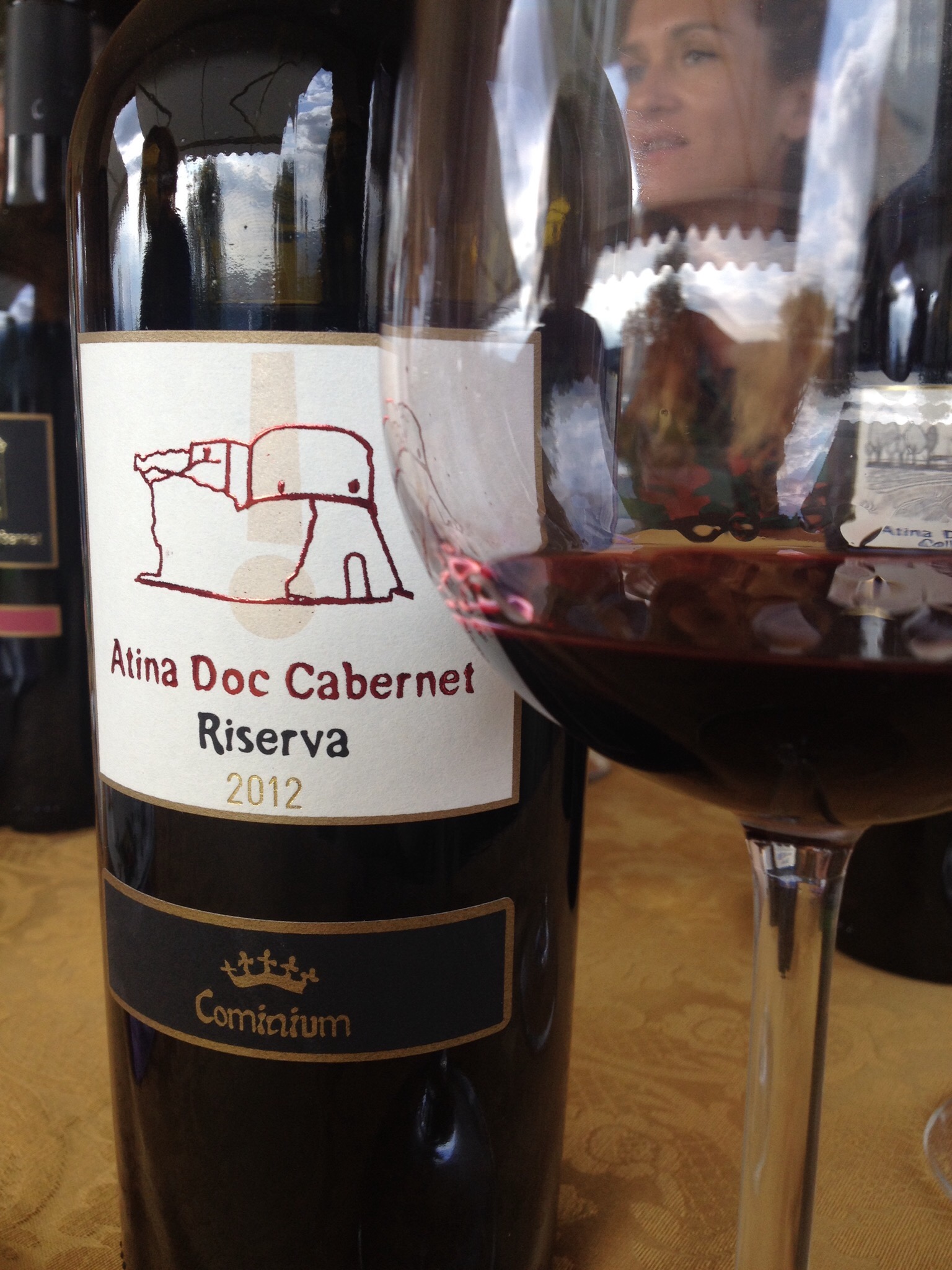
Vino Atina DOC Cabernet

The cultivation of grapes in Val Comino, the enchanting valley between Rome and Naples, started in the nineteenth century in Atina with select cabernet grapes for the production of Atina DOC wine.

It all began with the famous agronomist Pasquale Visocchi who was also mayor of Atina. Pasquale Visocchi often went to France and he imported both red grapes (cabernet franc, cabernet sauvignon, merlot) and white grapes (pinot, semillon, russane) and he successfully planted them in Val di Comino.

The ancient sedimentary soils with prevalence of limestone rocks of the Apennine range proved to be perfect for the Cabernet and other French vines.

The Cabernet is a vine native to the Medoc and the Bordeaux area and has good adaptability to different climatic conditions. The wine has an intense colour and is rich in aromatic substances that make it improve with aging, especially if in oak barrels.

Today two DOC wines are produced: Atina Rosso DOC and Cabernet di Atina DOC. Also on sale are Atina Rosso Riserva, Cabernet Riserva and Semillon. In Cabernet Atina DOC wine must be present at least 85% of Cabernet Sauvignon and Cabernet Franc grapes while the other 15% may be of black grapes grown in Lazio. Atina Doc wine must contain at least 50% Cabernet Sauvignon grapes and the rest of Merlot, Syrah and Cabernet Franc and up to 20% of other black grapes grown in Lazio.

The vines are cultivated in the towns of Atina, Gallinaro, Belmonte Castello, Picinisco, Sant’Elia Fiume Rapido, Alvito, Villa Latina, San Donato Val di Comino, Vicalvi, Casalattico, Casalvieri and Settefrati.

powered by social2s

Subscribe to Newsletter

Discover a territory through the emotions of the people that have lived it.