The good life around the Lake of Nemi and its pleasures

Spend a different kind of Sunday in Nemi and its fascinating lake hidden inside the Castelli Romani Park, a small oasis of peace so close to the capital.

This enchanted village is one of those places where the hands of time seem to have stopped. Above the clear waters of the lake of Nemi surrounded by the nature of the sacred wood of the goddess Diana, the village emerges on a spur at a height of a bit over 300 meters above sea level.

The lake of Nemi and its forests have always inspired man to respect nature and its link with it. But the beauty and sacred nature of the place are not the only elements that characterize its fame.

Good food and the genuineness of local products have their social relevance and, to frame this pleasant scenario with local pleasures, check out a good glass of the renowned Fragolino wine, accompanied by a cup of strawberries with cream, from the local crops. In this way life around the lake of Nemi can take on a truly invaluable value.

Living in Nemi becomes a 'choice', as well as an excellent investment to rediscover the well-being and a more human dimension, alone, with friends or with the whole family.

In particular, the microclimate should be noticed, which with its moderate temperatures has always favoured cultivation in the area. The pleasant climate encourages local agriculture and, not least, the presence of some sources of drinking water, which make Nemi a coveted place to live and visit.

Over time, the constancy of the locals has certainly been essential for the growth of this small town. For centuries, in fact, the local populations have collected the seedlings of the strawberries in the undergrowth and have transplanted them in the terraced farms of the slopes of the lake, thus allowing a lush cultivation of the fruit, and the development of this activity. (This is the reason why the wild strawberry is the typical product of excellence in Nemi).

Nemi has been chosen since ancient times by the major Roman families as a summer residence, so it has become the hub of good life, good food and contact with nature. Today, it is still chosen for the same reasons.

Lovers of the 'green lifestyle' can choose to take a trip out of town or have a short escape from the chaos of the city metropolis or even just to go in a desperate search for a breath of magic in timeless Nemi

Her beauties, therefore, continue to enchant and fascinate young and old, with its aroma of lavender that emanates through the streets of the village.

Nemi still allows us to dream compared to those who, too often, have forgotten the formula for doing so.

powered by social2s
Discovering Torre Baccelli on the Farfa river at Fara in Sabina

In Sabina to discover the Farfa river, an interesting and very famous river whose course offers continuous surprises including the Baccelli Tower in the municipality of Fara in Sabina.

In summer, when it's hot, you can go up the Farfa starting from the picturesque lake that forms at Granica in Montopoli di Sabina. You can walk with rock shoes in the very clean and cold water, thanks to the pebble-covered ground and the torrential regime in the wet season: it's a pleasure with the summer heat. Along the way, delightful bathing holes can be found all the time.

Always in summer you can go (maybe with your mountain bike arriving by train at Poggio Mirteto station) inside the Reserve of Tiber-Farfa, and swim in a loop that is formed between the rapids under the high and impressive viaduct of the "slow" Rome-Orte railway.

Or you can walk beside the Farfa along lonely country roads, or go on mountain bike.

Or again, and this is the top selection, you can get off from Castelnuovo di Farfa, or from Mompeo, inside its famous and sparkling gorges.

We used to talk about the location of the Granica lake, where the presence of a large beach with beautiful polished pebbles and the effervescent water of the river attract many bathers during the summer, which picnic and swim. The rapid flow of the river makes it white from the foam that produce the clear waters.

From this beach, however, very few venture along the river bed. And none of them look for the Baccelli Tower nearby.

But let's go step by step. We are close to the famous Abbey of Farfa, whose abbots became very powerful during the Middle Ages and possessed hundreds of churches, monastic communities, castles and then cities, ports, fortresses, mines and mills.

The abbey was protected by various security systems, such as the network of fortifications along the Treja river with at least 10 castles in line (of which the three most secret are Castello d'Ischia, Pizzo Jella and Filissano), and was also protected by a tower called Baccelli.

At that time the waters of the Farfa were not yet captured by aqueducts to bring water to Rome and the level of the river was higher. For this it was navigable and the abbots used the boat to get to Rome. Perhaps it was because of its navigability that the Saracens in the ninth century easily penetrated into Sabina and even destroyed the abbey of Farfa.

Baccelli Tower now dominates the small and enchanting artificial lake of Baccelli, built in the '30s and which collects the waters of the Farfa for the production of energy. Unfortunately, the tower can no longer be visited since ENEL has closed access to the site with a gate.

In any case, even before this gate, it was not easy to arrive at the tower because of the steep hidden path and the vertiginous cavities that suddenly open in the ground, to show the underground parts of the settlement.

Caves appear all around Baccelli Tower and the imposing ruins and the impressive view of the underground from above lets you imagine the importance of this fortified place.

The view of the lake below offers further suggestions and inspiration for those who want to immerse themselves in the surprising interweaving of the mysterious history and the luxuriant nature.

 
For more information, we suggest you visit the author's website www.luigiplos.it

powered by social2s
Along the Cremera and the Torraccia gorge in Formello

We are in the Park of Vejo along the course of the Cremera river, the magical tributary of the Tiber that we will travel from its sources and then go up a side branch to the discover the mysterious Falls of Hell (Cascate dell’Inferno).

Then we will descend its course to enter the intimate Franca Caves and finally we will go with the river towards the Tiber to reach Ponte Sodo.

The extraordinary feature of Vejo Park is the incredible mix of "wildness" (the so-called Wilderness) and the work of man. The landscape to the west and north of Rome despite having an orography and a complex morphology, and therefore being uncomfortable, has been frequented for millennia by man. And the countless remains, in particular Falisci, Etruscan and medieval, testify.

The source of the Cremera is considered the rock wall from which descends the waterfall that collects the rivulets of the upper flow, located in the valley between Campagnano, Formello and Sacrofano. You arrive passing through a fantastic gallery of plants that has formed naturally at a certain point of the ravine, in an extremely appealing environment.

From the start, with the view from below of the sanctuary of the Madonna del Sorbo high on the cliff overlooking the river, it is an ever deeper immersion in nature. There are no paths and you have to go up the river to find the view, continually wading where the walls of the gorge force you to pass from one to the other bank.

Then there is the splendid landscape at the confluence with the gully that comes from the Cascata dell'Inferno (Waterfall of Hell): with cascades everywhere. This secret place just a couple of steps from Rome, takes its name from the fact that the cows that were watering at the gorge fell from the waterfall and died.

But the "source" of the Cremera changes its position according to the rains and the season. During the dry season it starts with a set of drops falling from the walls while in the rainy season it is possible to recognize the rivulets (or torrents) that feed the river and also the fountain of Sacrofano, at the crossroads between Formello, Campagnano, and Sacrofano.

Following one of these torrents that feed the river you have a real surprise and you meet the gully of Torraccia, just below the village of Formello, going down a steep mule track, in the woods to the Valle del Sorbo.

If you stay on the path that passes over the stream, the landscape is usually very beautiful, as always happens when you walk in these areas. But if you try to get down on the banks of the gully, everything changes: you dive into an enchanted environment, made of large fallen rocks needing regular jumping, in rapid running water, until you get to the point where the Torraccia gully meets the Cremera river.

And here the landscape becomes alienating, with the smooth slab on which lie the waters of the Cremera, that go to meet those of the Torraccia in a whirlwind of waterfalls.

And it's not over. The Torraccia gully reserves in its side valley its most hidden secret: a medieval fountain and the overlying Etruscan tunnel/ aqueduct both still active! The tunnel still today drains the water towards the fountain!

Let's go back to the Cremera and to its passage in the valley, between one gorge and another, we arrive at the impressive ruins of the unfortunately crumbling medieval mill next to the equally appealing Cascata della Mola. Just from this Mill Waterfall, the river, after a couple of miles in the open field, falls pouring into the gorge.

And almost no one continues to walk along the banks of the Cremera, beyond the waterfall, up to the grotto known locally as Grotta Franca and to the rocky promontory on the summit, just below the last houses of Formello.

The problem is in fact that crossing of the river. on the way out and back, is quite difficult as the water is always quite high (except August and September).

But if you decide to get wet, unless you wear the uncomfortable galoshes of a fisherman, you will go into a part of the river that has a wild look, like that at the Waterfall of Hell, with even traces of the trail!

Returning to the Cremera and its wonders you end up with the Ponte Sodo, the tunnel excavated by the Etruscans to let the water of the Cremera escape during the floods, so that it does not go back to flood the Vejo esplanade. The place, about 1.5 km as the crow flies from the archaeological area, is absolutely magical.

powered by social2s
The wondrous red sulphur lake of Pomezia

Who knows the red lake inside the Sulphur lands of Pomezia? Very few, probably.

Well, there is a partially reddened lake because of particular bacteria that is found in part of the bottom of a gigantic quarry, inside the locality called 'solforata of Pomezia' and located at the extreme south of the park of Decima Malafede.

And this is where we come to.

We cross narrow strips of land in the marshes, we jump onto the rocks made yellow by the sulphur and climb up the highest hill, where suddenly the view of the lake, partially reddened, opens to us.

This vision is exciting, especially with the sun high in the sky.

In recent years, due to unknown causes, the phenomenon of redness has been somewhat attenuated.

"Ahi!" You will say. "We arrived too late? Can we no longer see the red lake? "(If the phenomenon is not present during your excursion).

This I do not know.

But if you descend from the hill and you go around the shores of another lake with a small and interesting cliff in the centre and in the water the looming yellow sulphur walls of the stack cliffs are reflected, and then you venture into the caldera passing streams of cerulean water and skirt around another lake which seems to be frozen, (but instead it is a conglomeration of small sulphurous fumaroles with banks that seem to be whitened by a snowfall), you will reach the opposite end of the caldera.

Here you will find yourself at the foot of a small canyon, at the base of which a stream of singular green shades appears.

You then ascend the steep walls of this gorge and you will have the vision of a further lake with a uniform vermilion color, whose sight will console you properly, if you had not found the big red lake.

But the problem is not so much the loss of the fantastic scarlet red colour of the big lake, as the drought of 2017 that is reducing the caldera lakes to pools, and that threatens to annihilate this and many other beautiful sulphurous places near Rome.

After completing this tour in a fantasy setting, we will be able to, still looking at the ‘alien’ views of the Sulphur lands, return to via Pontina, and reach the Circeo.

powered by social2s
The small tunnels, the aqueducts and the Etruscan Tunnels of Formello

The underground tunnels, aqueducts and large Etruscan tunnels are among the secret places to be discovered within walking distance of Rome.

The Etruscans were worthy plumbers and we begin to discover them in a tunnel in a side valley of the Torraccia stream, a tributary of the river Cremera, which is a steep and deep gully dug out near the mill of Formello.

In any case, where there is now an accumulation of small impassable gorges, once there was a mule track, which connected Cesano to the mill of Formello, you get to a fountain. This was totally surrounded by nature, far from any path and away from the most famous areas of the Vejo park, located along this ancient path.
 
The fountain is made of large blocks of gray tuff, about a dozen meters long and about one wide, and is located at the base of a wall above which opens the feeding tunnel, whose entrance, due to landslides, now has the appearance of a cave.

It is possible to enter the cave area, even if it is difficult to get to the bottom due to the amount of water and mud and the need for a helmet and powerful flashlights. However, even the few meters that you can get inside are exciting.

Seeing in fact that the aqueduct is still active, with the path as it is from the stream that feeds, after all these centuries, the fountain below.

But the most famous gallery is perhaps the one excavated by the Etruscans to let the water of the Cremera flow during the floods, so that it did not back up and flood the Vejo flats.

Like all the Etruscan galleries, even this is not reachable by paths, and the visit is advisable only in summer and at shallow water. The place is absolutely magical immersed in the gorge of the Cremera from the luxuriant nature, the reflections of the water at the edges of the gallery (provided there is sun), the walking a little scared - with galoshes - into the gallery.

Continuing to move away from Rome in the direction of Formello we arrive at the aqueduct of the Fosso degli Olmetti which was part of a hydraulic system to reclaim the area of ​​Vejo and which has been in operation for over 2500 years.

The system consisted of a series of 'free flowing almost touching' channels that had been dug into the tufa rock. From time to time these channels flowed into a 'settling basin' that rebalanced the different pressures and levels and it seems that this basin was built by the Etruscans with an ancient artificial dam.

Let's go back to the gallery of the Fosso degli Olmetti: my desire is to invite you to experience the thrill of entering the first few meters (using a service gallery) that are of a unique splendour.

The looming walls, the flowing water running under our feet, the fear of slipping, getting soaked and spraining an ankle, the roar of the last waterfall: everything gives unique and arcane sensations, and a certain fear.

With helmets and torches a visit can be extended for a few hundred metres, increasing the charm of this excursion.

Near Fosso degli Olmetti there are three tunnels dug to control the waters of the area, similar to construction techniques at Ponte Sodo, and equally astonishing, isolated from the rest of the world as if they were tropical ruins.

The third gallery, with an internal waterfall, is incidentally usable if you have at least a ladder for speleological use.

These are distant and mysterious places. A unique blend of nature and traces of human work in a wild and alienating environment just a few kilometers from the GRA.

Entering these ducts with your feet in water and mud, seeing the play of light, particularly that coming from above the service wells that open up like skylights, is total immersion, physical and mental, in a mysterious world.

One of these galleries, when I entered the first time, reminded me so much of the magical lava caves of Etna.

We continue the exploration that brings us closer and closer to Formello, precisely into the Selviata area. Good. The tunnels in this area are even more extraordinary.

In one of these, after having passed a pond with the help of a ladder, you can even reach a spectacular point of intersection with more tunnels, which probably had the task of draining the waters of the overlying plains.

Another gallery then, which surpasses if possible all others for grandeur, deserves a specific description. Here it is: after having steeply descended from the street level and having penetrated it, you come to a branch to the right, which after a few tens of meters widens, with the light penetrating it from above by a gigantic hole. This hole was probably a service well, widened with the collapse of the roof.

Then you fall into darkness. And at this point the artificial plumbing of the Etruscans becomes natural. A real cave, which must in fact be entered with speleological equipment.

As for the previous galleries, the work of erosion by water over these 2,500 years has been superimposed on the excavation of the Etruscans.

But in this gallery erosion has exaggerated the grandeur: by widening the old drainage tunnel and lowering its bottom, to form a real cave with a very high vault. This is all ‘spiced’ by the charm that regularly distinguishes Etruscan places.

To conclude, the Formello tunnels provide an exceptional mixture by man and nature, for their size and their diversity, there are not any others with the same charm, in my opinion, in the province of Rome.

powered by social2s
Pontinia 'Park of the Continents' reveals itself

"Ever since I was a child, I liked trees, plants, and especially flowers. It was my mother who started this passion in me. And I remember that as a child I carefully selected the violets from the field to be brought to the teacher. It was the first aesthetic selection of my career at a time when the most important women were Madonna, Mom and my School Teacher. It was my first tribute to beauty. Already within me I had a dream I was trying to accomplish."

ANTONIO'S DREAM EXPANDS

Saying this is Antonio Aumenta, owner of one of the largest nurseries in the province, who for years has cultivated the dream of building and opening to the public one of Europe's largest botanical parks.

"It will be called 'Park of the Continents' and I will open it in April 2018, because it has been in my head for decades and I've been working on it for years."

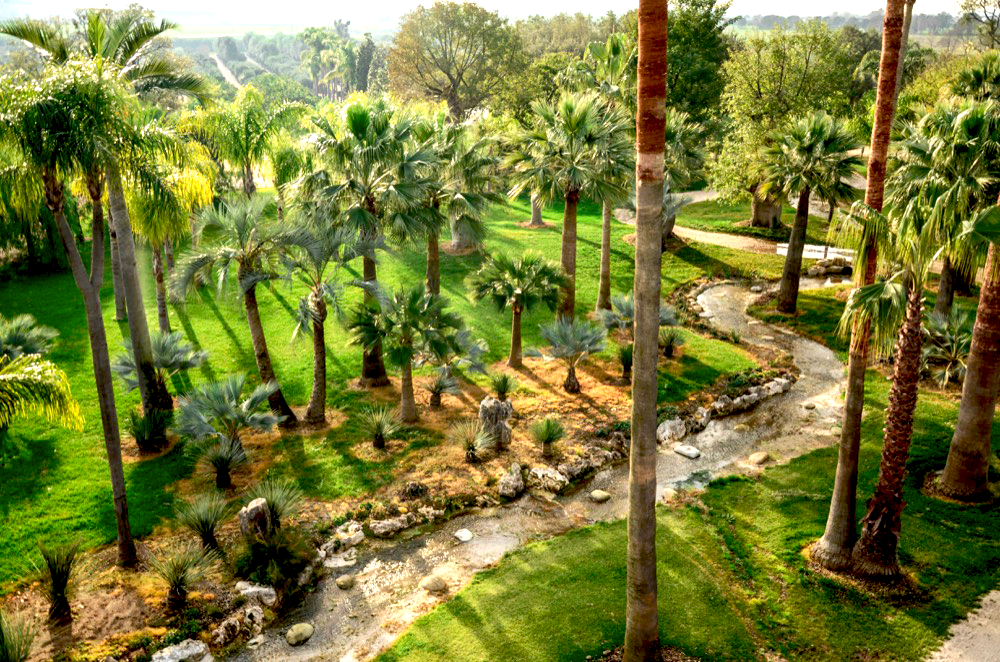
It is a great botanical park where you can admire the flora and landscapes of all the world. It is divided into territorial areas and not by climatic bands, as is often the case in similar parks.

"It was a bet with myself, as I always have done. My idea was to recreate a landscape and the vegetation of a distant country. To find the atmosphere of that place".

TREASURES FROM ALL THE WORLD

"I've gone round the world not only for plants but also for the habitat of the environment they come from. During this time I collected plants after plants for this park. Finally, in 2006, I found a place that seemed ideal to undertake this initiative: on the sole hilltop in the Municipality of Pontinia at the borders with Priverno, on Via Marittima Seconda in the locality of Procoio.

When it is complete, the park will be 16 acres area and there will be thousands and thousands of different plants".

Antonio Aumenta has some experience in landscapes, at least from what he tells us about his professional career. His parents were farmers and they sent him to study at the agrarian institute he got to like so much.

"OLD SCHOOL"

"In my time it was a different thing, you could really do the job and I was able to work for years with Pietro Porcinai, the best and greatest landscape architect ever in our country.

Then I worked as a gardener of Ninfa from '77 to '84. I learned a lot, I met Princess Diana and Prince Charles when they visited the garden, I had a lot from that experience, in short, but I also gave much".

The family business created by this gentleman by very simple ways is really immense and rich in material. But when we ask Mr. Antonio Aumenta what he has spent on his incredible collection of plants from around the world he shrugs and smiles:

"You see, I've always been one that if I have to buy a car I would look at every penny. But if I like a plant and I'm convinced it's unique I do not care how much it costs. In this park, however, we do not just want to display the plants but we want to carry people physically to the places they come from".

THE SAND OF THE MEXICAN DESERT IN PONTINIA

"Let me give you some examples. We also imported boulders from the Mexican desert, sand and soil from Australia, we brought millennial plants, more unique than rare, and we have depicted rainy and desert landscapes. We brought the plant that fed dinosaurs, the Dicksonia Antarctica which is a true fossil still living among us.

There are millennial plants, there are some very rare that have developed toxic defense mechanisms against other plants. Others that are capable of living for millennia. All in fascinating landscapes that only nature and a bit of ingenuity can create.

And so, in the area dedicated to Europe, we paid homage to the olive tree, a fundamental plant of our history, creating a colossal and very impressive amphitheatre with stones and olive trees.

But it's only by seeing all of this that you can appreciate it. Words and photos will not suffice to describe this dream when it is done but it is indicative to think that the park is so well done that it has already been chosen for photographic and cinematic sets in the recent past".

OPENING APRIL 2018

The time has come: "Opening must occur in 2018, I think in April. I will call it ‘The Park of the Continents’ and I hope to help all those who are passionate about seeing things they have not seen in their lives as well as those who are less sensitive to nature for them to understand how delicate and extraordinary our planet is.

It's the dream of a lifetime, I have worked hard to try and realize it, and I hope I can see it soon. "

This is a challenge not so small for this entrepreneur who is likely to become one of the world's largest collectors of plants. And you can just about believe it when you visit the park under construction in Pontinia in the province of Latina.

It seems like walking through an imaginary path of a deserted desert or diving into the air filled with perfumes of an ancient Japanese garden. There is all the wisdom of experience and a dose of girlhood folly. The same thing that pushed this once-child entrepreneur to look for the finest violets in the field to give to the teacher on the first day of school.

And Antonio Aumenta, in his several decade long work in search of the rarest and most exotic flowers and plants to for his botanical park of dreams, never ceases to look at every single flower as if it were the most beautiful in the world.
 
Published in the weekly newspaper  "Il Caffè di Latina"

powered by social2s
bdr
The Velletri Pilgrims’ Garden: Via Francigena with medicinal herbs

The Middle Ages can be seen in so many ways, and in Velletri the history of Via Francigena is seen from a truly unusual angle: that of medicinal herbs used by pilgrims.

A group of women has recreated in the heart of the historic centre of Velletri a vegetable garden that helps to retrace the history of European pilgrimage that, from 500 AD with Benedetto da Norcia, intersects that of the monasteries.

It is a journey of art, history, botanism and spirituality to the discovery of Via Francigena but also of one of the first mass phenomenon that united European peoples to the emblem of the path and to exploration of the territory.

In the historic centre of Velletri, in the shadow of the Torre del Trivio, the Vicolo del Pero brings the Pilgrim to a small inner courtyard overlooking an old doorway.

The stone staircase step by step climbs between tiles, roofs and terraces before arriving at the garden where the traveler can find remedies and medications to use on the way.

Chiara, one of the founders of the initiative, tells us:

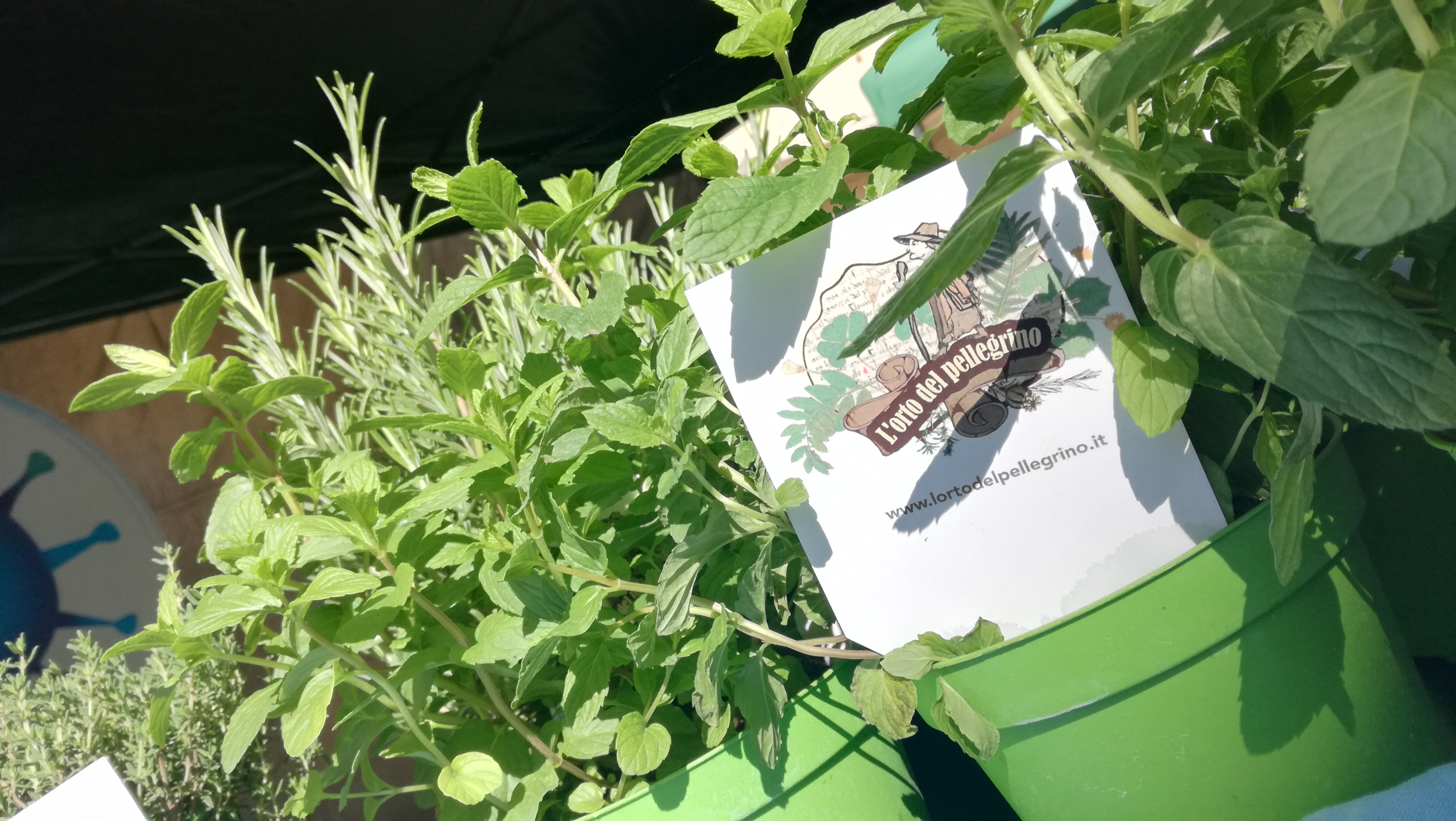
"We have recuperated an old abandoned garden in the historic centre of Velletri (Rome) by planting the main medicinal herbs that pilgrims traveling along Via Francigena (which officially passes by Velletri) would use most frequently during the travel to solve the most common problems of hygiene and health ".

Thus, the Pilgrims’ Garden has arisen from the recovery of a small garden abandoned among the roofs of Velletri, among the Roman Castles. The all-female group who managed to give life to this forgotten urban space decided to plant in the Garden the main medicinal herbs which the pilgrims used - a sort of ready-made portable intervention could be on hand in order to prepare ad hoc medications.

The Pellegrino Garden keeps medicinal plants in small flowerbeds, maintaining water in its heart as the central element. Hundred year old vines and white camellias shade the sloping paths that accompany the visitors to discover the Via Francigena.

It is a real experiment of urban regeneration because they did not want to create new scenery or hide the realities of daily life of houses that overlook this space suspended between the past and the present, between symbolic suggestion and reality.

The Pilgrim's Garden during the week hosts animated guided tours and educational workshops, offering children and teenagers the chance to learn about herbs and their use for the preparation of the most common remedies.

During weekends you can take part in events such as the Butterfly Garden, the "Animal Pharmacy" or you can book a half-day tour that, in addition to the guided tour of the herb garden, includes a visit to the Diocesan Museum at the nearby Cathedral of San Clemente.

There, among the various works, there is a Madonna with Child (1426-27) by Gentile da Fabriano and the famous Velletri (Veliterna) Stauroteca Cross (because it is said to contain a piece of the Cross of Christ). The visit then concludes with the entry to the Crypt of the Cathedral that is opened only on these occasions.

For more information visit www.lortodelpellegrino.it

powered by social2s
La Selva, a park born from the dream of a prince

La Selva is a forested bird park in Paliano, about 30 kilometers south of Rome, that has an amazing story which suddenly came back alive a few days ago during the opening of a 'holy door' in nature.

The opportunity to celebrate a Holy Year in a green environment had attracted a lot of public and civic institutions and more than 4,000 people had gathered to hear a Mass celebrated by the bishop in a clearing in the trees. I found many friends but my attention was drawn to an elegant gentleman dressed in white staring at the stage with trepidation.

It was Mr. Manfred Massimi Berucci, the best friend of Prince Ruffo with whom for many years he had shared the dream to develop the agricultural area in a park intended for tourist and business accommodation. For some years I had shared this dream with them and gave me great pleasure to go and pay homage to Mr. Berucci.

As I approached, however, I felt a particular tension and after welcoming me with a traditional Italian kiss, he excused himself, saying "I have to go and say something, I cannot miss this moment, I have to be focused." And he returned to stare at the stage and the movements of many priests intent on the celebration.

After the Mass, the bishop gave the floor to the mayor and the regional councilors for their greetings. A priest was putting the microphone back when Mr. Berucci elegantly but determinedly moved onto the stage and took the microphone for his greeting. All remained a little puzzled, but understanding that the intent was not violent, he was given time to say something.

He could have said many things, tell millions of anecdotes but his choice was to bring the greetings of the aged prince, who no longer lives in Paliano, and remember with misty eyes, rosemary seedlings, lavender and mimosa planted by citizens of Paliano following the landscape architectural lines desired by the prince. Million seedlings that are now part of the landscape but which then were only small twigs on a lawn with no particular natural order were planted by citizens involved in the dream.

I could not say goodbye to Mr Berucci to thank him for his words. He dissolved into the crowd after performing his duty to bear witness to passing the baton from the Prince to the new owners, from his generation to the current young people who sought to open this season in the park with an important moment.

This moment of poetry brought to mind my years of relationship with La Selva which has never been forgotten. From the windows of my house I have the view of the park every day, and every day I feel new emotions and I always had the hope to see it reborn.

It was about thirty years ago when I had just graduated and I had left my mother's house 'abruptly' and a gentleman of noble bearing, with a look that passed quickly from the slightly crazy to rational, offered me a job and a house in the park. He was Prince Antonello Ruffo di Calabria and I had no idea how he would change my life.

The job was to support his family in an urban transformation plan, working between designers and local administration, and to support an Israeli company that was working on the marketing plan and the development plan of the district.

But how was the park La Selva born?

I had not assisted in the formation of ponds that Prince had made many years before damning a tributary of the river Sacco, and I had not taken part in the arrival of the birds that were the result of an agreement with Fidel Castro. I had not taken part in the involvement of artists to create original structures where the birds could find food or shelter. I had not taken part in the planting of the vineyard or mimosas.

But some days I could see Don Antonello in an open jeep that went around the estate following a tractor that was to move a hill or create a scene from some new perspective. I have assisted the shifting of many small oaks to be able to enlarge a wood on one side and create a space for play activities on the other side. I saw planting kilometers of bamboo to follow the paths that the prince had marked with chalk on the countryside. I had tickets to the park when the exit of Colleferro was the most clogged in Italy on Easter Monday and May Day.

Creating La Selva was not a cost effective operation for the prince. And whenever he found himself close to solving his economic problems he escaped from the solution for fear of losing his 'toy', or that someone could ruin him. His was not an easy life with this dream that hung in front of his face like a carrot in a race of rabbits that can never catch up.

He was afraid all his life that speculation prevailed over beauty. Art and Nature were combined in his head and he never bowed to the lure of money, even demanding sacrifices from his family.

The words of Manfred Berucci Massimi have had a profound significance for me. A blessing on what you are doing and a wish for continuing on the path of La Selva begun with the love of a visionary prince.

powered by social2s

Subscribe to Newsletter

Discover a territory through the emotions of the people that have lived it.