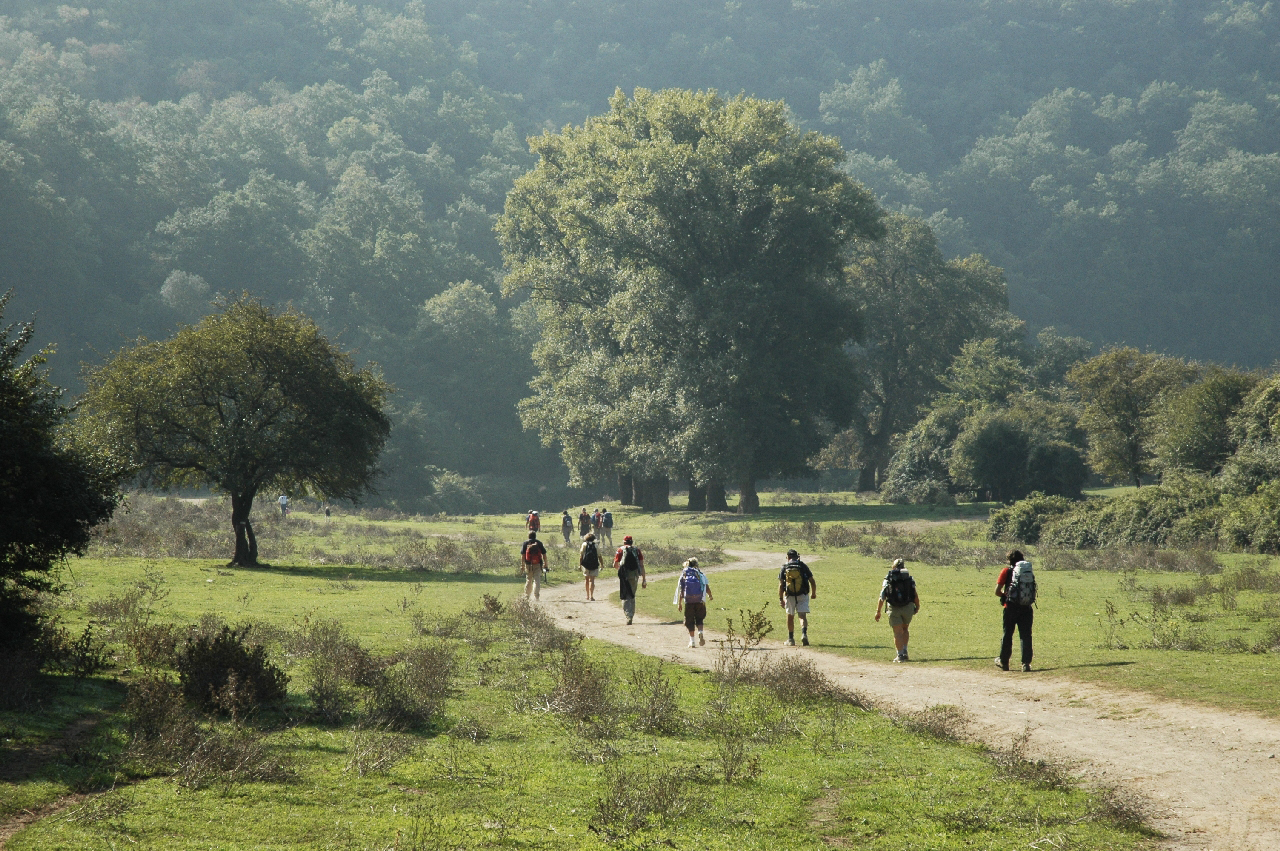
In Barbarano Romano, San Giuliano necropolis is named after the saint venerated in a modest little church.

This is located on the plateau and corresponds to the area of ​​the ancient Etruscan settlement of Marturanum.

The town dates back to the Villanovan period, X sec. BC, while it has had a period of prosperity between the seventh and third centuries BC.

The cemeteries that surround it show the different burial techniques that were used over the years.

From large mounds built into blocks or made in tuff, to the chamber tombs with portico, with the cultural influence of Ceri, to the cube tombs.

Then there are scattered graves, niches and burial recesses.

The most important tombs are in the necropolis of Poggio Castle, Greppo Cenale, Caiolo, Poggio San Simon, Ara Treasury, Chiusa Cima and Chiuse Vallerani.
powered by social2s
Sperlonga. Roman Villa of Tiberius

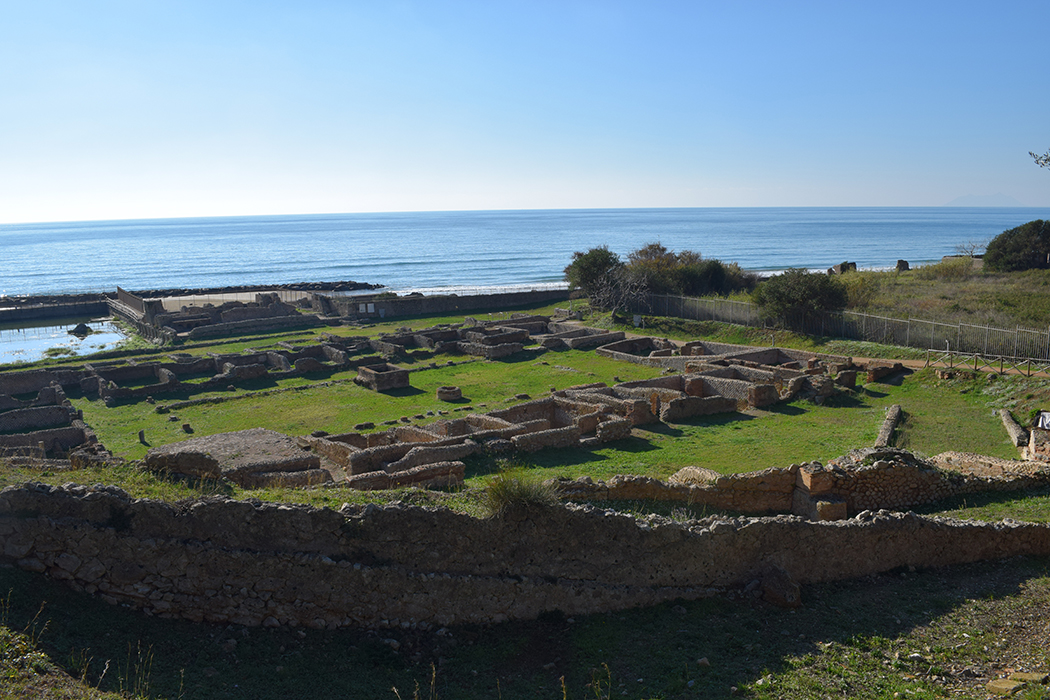
This magnificent Roman villa on the coast of Sperlonga already existed in the late Republican age, and was enlarged and decorated by the Emperor Tiberius to be used as an imperial residence.

The remains clearly visible from the sea extend along the eastern beach.

The main feature of this villa is a natural cave richly decorated with marble and mosaics and furnished with sculptural groups inspired by the exploits of Ulysses.

Among these sculptures it is worth mentioning the group of Polyphemus preserved in the archaeological museum of Sperlonga.


powered by social2s

The remains of Archaeological Site of the ancient roman city of Aquinum are located in the municipalities of Aquino and Castrocielo.

In the archaeological area are the ruins of the Capitol, a huge building, perhaps for the worship of the Ceres Elvina cult, a military post called Quadrata (Square) Tower, an amphitheater that has suffered irreparable damage from the construction of the motorway in the 1960s, the so-called Apsidal Building and remains of the walls of the Roman colony.

It has also a well-preserved gateway, Porta Capuana, some sections of the Via Latina and the Arch of Mark Antony.

Aquinum is spoken of by the Latin satirical poet Juvenal, who liked to retreat into the cool of the colony of the Roman countryside to escape the summer heat.

Livio also mentions Aquino when he tells of the passage of Hannibal for the Via Latina in 211 BC. Horace referred to an industry of natural dyes with particularly purple at Aquinum. Finally Strabo, the Greek geographer who described the area around Rome, tells of Aquinum, as a city divided in two by the Via Latina and wet from the icy waters of the Melfa River.

According to the testimony of Tacitus, political opponents were confined in Aquino, as happened to Dolabella.

powered by social2s
Sutri. City park of the Ancient City of Sutri

This urban park, one of the smallest of the Lazio, extends above the ancient city of Sutri in an area of ​​7 hectares and is designed to enhance the archeological findings, landscape and nature of that time.

The park includes a large 'tuff island' on top of which there is Villa Savorelli.

At the lower part, near the city centre, is one of the most important archaeological sites of Tuscia with the amphitheatre, Necropolis and several churches.

The Church of the Madonna del Parto is completely dug out of tufa on an area reserved for the worship of the god Mithras of the first century that still has a baptismal area. The Mithreum was transformed into a church in the fourth century.

The church has three naves, a barrel-vaulted ceiling and an apse and is mostly covered by frescoes.

The Santa Fortunata Church was built around 1000 AD near a ‘miraculous’ spring. Women who give birth had made pilgrimages to drink the water that was believed favoured breastfeeding.

The park headquarters is located in the small church of San Giovanni of the fifteenth century that inside has frescoes from different eras.

powered by social2s
Sutri. Roman Amphitheater

The Roman amphitheatre of Sutri was completely dug into tufa rock between the second and first century BC.

It was forgotten and covered with soil for many centuries, until 1935 when the local population brought it to light.

It has an elliptical shape with three rows of bleachers and could accommodate over 9000 people.

As with the Flavian Amphitheatre in Rome, it had a final crowning with niches and statues that have been partially preserved.
 

powered by social2s
Priverno. Archaeological Site 'Ancient Privernum'

The Archaeological site 'Ancient Privernum' is located in the plain of Mezzagosto and corresponds to a part of the ancient roman city of Privernum (today Priverno) in a plan in the Amaseno Valley non far from the coast.

You can admire a stretch of the city walls from the Roman period, three patrician houses of the Republican era, a large spa building and the remains of the Capitolium temple. Some buildings had elegant floors with exquisite Hellenistic mosaics.

During the excavation of the eighteenth century there were found colossal statues of the emperors Tiberius and Claudius and the general Germanicus that are now on display at the Vatican Museum.
 

powered by social2s
Ruins of Valvisciolo Abbey

Valvisciolo Abbey was built in Carpineto Romano by three lay founders, it was inhabited for a short time by the Cistercian fathers.

According to tradition, the Cistercians abandoned the monastery in the early fourteenth century, to join the confreres of Sermoneta.

The Valvisciolo abbey area became the cause of conflict between the secular community.

Today, of the Valvisciolo Abbey only the ruins of a church tower remian, part of the abbey walls and the church in honour of St. Stephen Martyr.

Near the abbey one of the fishermen's pools has been reactivated, in which the brothers, who could not feed on meat, bred fish.

Lower down there are traces of the conduit of water of the Fota, from Roman times.

powered by social2s

Subscribe to Newsletter

Discover a territory through the emotions of the people that have lived it.