Fontechiari. Chickpea and Cicoria Soup

The Chickpea and Chicory Soup (zuppa di ceci e cicoria) is a poor dish typical of the rural world of Fontechiari and Val di Comino.

It is prepared with chickpeas grown in the fields and chicory collected in the meadows and is a dish rich in nutrients.

The soup was also a way of reusing leftover stale bread during the week.

In fact, the bread was baked only once a week in the common oven and had to be eaten both fresh and dry.

powered by social2s
Fontechiari. The Sprout of Sora

This sprout of Sora is a winter green with a purple colour and does not need greenhouses or pesticides for growth.

It has a high content of anthocyanins, an anticancer substance, and is a strong antioxidant.

It is one of the few vegetables that colon sufferers can eat.

powered by social2s
Fontechiari. Stracciatella of Gobbi (thistles) and Fried Gobbi

Gobbi (hunchback) is the name with which the thistles are called in Val Comino, winter plants related to the artichoke that have great nutritional properties.

They are plants that grow cultivated or spontaneous in cold periods and therefore are at the base of many local recipes. Their bitter taste has given rise to dishes that are very recognizable for their taste.

The name 'hunchback' derives from a cultivation method in which the plant was partially buried and the part that came out did not have the strength to remain straight and leaned on one side.

Stracciatella of Gobbi (thistles) and Fried Gobbi are two Christmas dishes based on thistle typical of Fontechiari.

Stracciatella is a recipe made with thistle cut into cubes and cooked with egg in chicken broth, better than capon.

In the second recipe, the thistles are cut into strips which are then browned with egg and breadcrumbs. These strips are then fried in olive oil and enjoyed hot.

powered by social2s
Fontechiari. The Abbuots

Abbuot are one of the typical dishes of Ciociaria and can be found in many countries with different names.

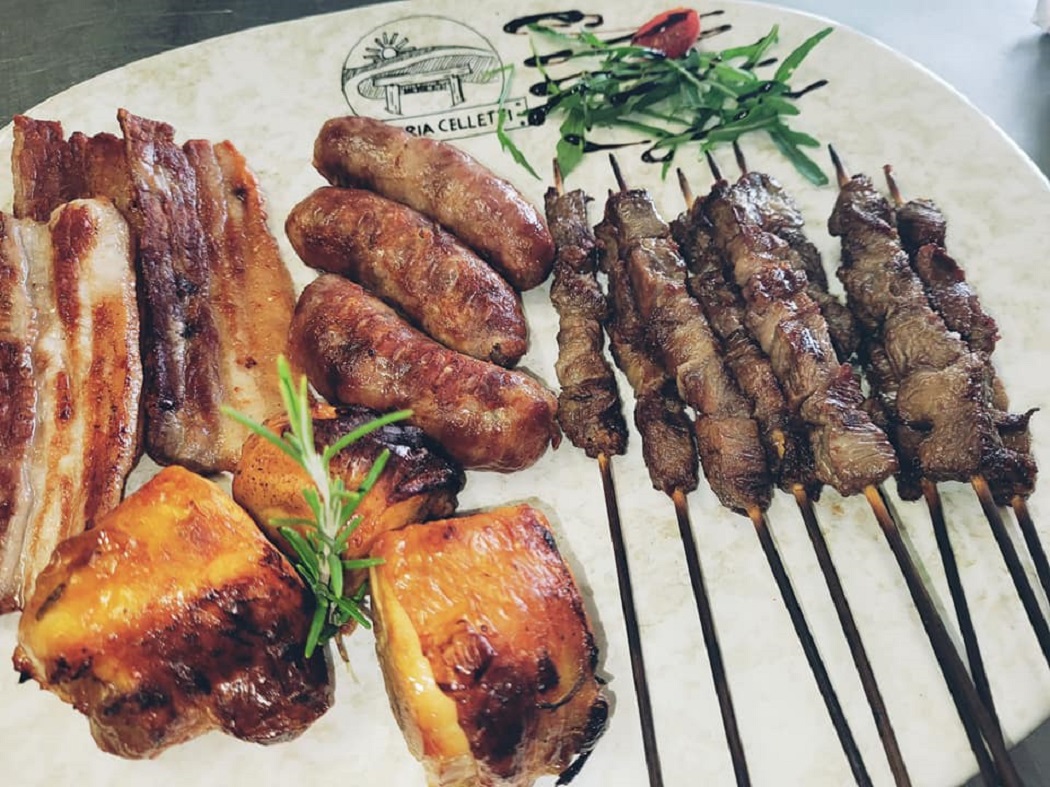
Abbuot are rolls of lamb entrails (hence the word abbuot which means wrapped) and was a way to use all the parts of the animal.

These are seasoned with many spices such as garlic, pepper, chilli and parsley, and placed inside the lamb's casing which is used to contain the dough.

It is cooked slowly in a pan with a sauté or roasted on the grill and, once cold, it is cut into slices.

powered by social2s
Fontechiari. The Crespella of Ciociaria

The Crespella of Ciociaria is one of the typical sweets of the Val di Comino and lower Lazio that are offered during the Christmas holidays.

It is made with local wheat flour which is left to rise and then fried with olive oil.

It can be served in the simple version or with raisins or other flavors.

powered by social2s
Fontechiari. The Way of Olive Oil

The Cisterna district of Fontechiari, with a breathtaking panorama that spans most of the province, has a particular microclimate and is exposed to the winds of the sea.

This allows growth, even at some distance from the sea of fl orid Mediterranean scrub and especially of olive groves.

There are two ancient mills in the district and you can buy one of the best oils in the area.

powered by social2s
Polenta di Sgurgola
Polenta di Sgurgola

Polenta is the other typical dish of Ciociaria thanks to which the population was fed during the winter.

Today here in Sgurgola it is still one of the most popular dishes and is eaten seasoned with a sauce based on pork ribs and sausages and with the addition of grated cheese (parmesan or pecorino).

A mushroom-based or vegetable-based sauce sautéed in a pan with garlic, oil and chilli is highly sought after.

In the Ciociara tradition, polenta is eaten on 'scife', traditional wooden plates.

powered by social2s
Gavignano. Gabinia Meo Water

The Gabinia Meo Water is bottled directly from the source located in the municipality of Gavignano.

In 1893, near the ruins of the Villa of the Consul Aulus Gabinius (63 B.C.), were found the traces of an ancient Roman aqueduct that carried water to the villa.

In those years the first water analysis was made and it was recognized as pure with the therapeutic qualities of water being one of the best in the region.

The source was named Gabinia, the ancient name of the town of Gavignano, and is located in area of Meo.

The water flows from volcanic rocks, probably the result of eruptions of a group of volcanoes in the Ernici.

powered by social2s

Subscribe to Newsletter

Discover a territory through the emotions of the people that have lived it.