Greeks Bearing Gifts -  Revival of the Parthenon

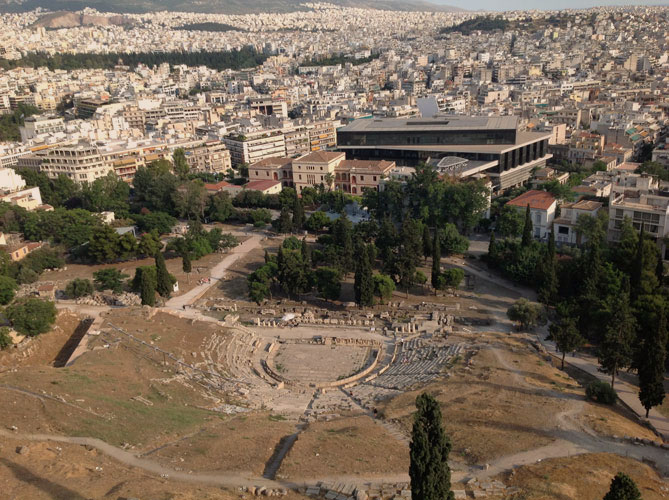
There is no doubt as you travel throughout the Mediterranean and the Levant of the great treasures that the classical Greeks created. From the Parthenon atop Acropolis to the Greek theatre in Siracusa.

Whether reviled for their cunning in the Trojan War or admired for the creation of democracy, Greece dramatically fashioned the ancient world.

Wherever they settled, whether by invitation or will, Greeks were bearing gifts of civilization, democracy, art, architecture, engineering, science, sculpture, theatre and games. Their memorial rests in the great structures and sculptures in their cities built in many countries over the many hundreds of years.

At home, stands the remnant of their greatest structure, the Parthenon on the Acropolis. It still stands despite war, fire, being blown up, raped and pillaged by races from afar. Pillagers who cared nought for the magnificence of the perfection of the structure in its design, engineering and sculpture.

The justification for accidentally blowing up the Parthenon seems today to be more valid than the apparent greed that led to the 'theft' of the frieze. The subsequent glorification by the great British establishment of the monument robber, as Elgin should rightly be remembered, highlights the lackofrespect by the powerful for culture.

Even today those marbles lie sadly alone in England, bereft of their rightful place in Athens. The British tourists suffer little or no embarrassment in their justifications as they tramp around the shell of the Parthenon and sip beer on a hot summer’s day at the base of the mount.

Yet the Greeks are bringing this gift to the world, the world’s most famous and valuable monument, is coming back to life. Stone by stone, block by block the Parthenon is being reborn. Its renaissance is palpable to a visitor who only occasionally climbs up the Acropolis to stand near what must have been the source for Palladio’s architecture, so similar was his engineering.

For this great building one could well justify the spending of the over €100M of bribes given by the German contractors for the Greek Navy submarine project. Yet possibly the amount to be spent till the draft completion date in 2020 is somewhat less. One but wonders where is the understanding of the value of Common Goods, the culture of each country.


The second great modern gift is the Acropolis Museum, which is proof, without any doubt, that Greece has a safe place to display the marble sculptures stolen from the Parthenon. This grand glass and stone structure houses in its top level a reconstitution of the Parthenon frieze.

One looks down through the glass floor to the levels below, down four levels to the basement where the 1000 BC historical town resides. Whether your interests in ancient architecture and sculpture is academic or casual, this museum is the pride of Athens and a joy to behold, inside and out.


Its ‘father’ is Dimitrios Pandermalis, a classical archaeologist who presided over the building’s construction and is now curator of the museum. In him and the team, which envisioned and created this magnificent structure, memorial and seat of learning, Greece has its Human Treasures.

Thank them for their gift and help them to succeed.

powered by social2s
Painting and baking in the sun - decorators of ceramics

The second weekend in March, late winter on two balmy global warming days, saw the Italian Cross Country Championships in the centre of decorators of ceramics, Nove, in north east Italy near Marostica and Bassano del Grappa.

Thousands of runners of most ages, blisters, sprains, free fruit, blood donations and a smattering of the art of Nove, hand painted ceramics, in the gazebos on the bridge over the Brenta, the original pre-historic source of the clays of the Nove area.

For the statistically bent observer, our friends at Veneto Marketing informed us that the runners would cover 9 million metres of grass, making one feel a little sorry for the blades underfoot. Somewhere over 13km of plastic tape was unrolled and spread around the tracks to separate the lanes and about 500 road maintenance style metal separators barred the spectators from key running lanes.

Energitismo was there as one of the sponsors supported by our major partner, D’Orica, producers of Living Jewellery, led by Gianpietro Zonta, with elegant sustainable lunches by Daniela, his wife.

Beside us at the back of his gazebo sat a gentleman at a painting bench, wisely, as I later learned to my chagrin, wearing a deerstalker hat. A large plate sat on a section the bench, held there by the rim so that he could put it at an angle to paint. Generously proportioned and dressed, to my view, as a country squire might when just past his most elegant days, he lightly caressed the plate with a fine brush dipped in his blue raw glaze, creating the petal of a flower.

All weekend he painted, not being diverted by colleagues from the gazebos further onto the bridge over the Brenta leading to Rosà. Occasionally, a potential client would engage him in discussion concerning one or more of the jars, bowls, vases, large plates or table ware, mostly colour blends between yellow and blue, but then those passionate about cross-country running are not a perfect match for those who collect fine painted ceramic ware, and I was left a little sadder each time a customer came and passed by, and a little redder in the face from the unforeseen strength of the northern Italian UV spectrum.

Like most of his compatriots he had a generous streak, sharing the local white wine and, at the end of the events, it was soothing for the soul to see six of these painters sitting at a quickly set up dining table sharing a late lunch of home-made gems with a few sips of wine, as their works slowly ’baked’ in the sun. A weekend of camaraderie, but virtually bereft of financial reward must epitomize the lives of these traditionalists who protect the old ceramic arts that made Nove famous worldwide.

I look forward to mid September in Nove, when the annual ceramic fair is held and the clientele will hopefully really appreciate the efforts of these humble men and women who for fifty years or more have sat at their benches and created their coloured designs with passion, infinite care, precision and perseverance.

powered by social2s
Limericks, playing with words

What is a limerick, is it a chinese pronunciation of a fruit dip?
A marvelous verse is a limerick
It uses fine words with fine rhythmic
Syllables in rhyme
Like hymn and like lime
Makes a laugh with a lick and a trick
Traditionally the limerick has been defined in verse and deals with subjects quite bawdy such as this famous summary:
The limerick packs laughs anatomical
Into space that is quite economical.
But the good ones I've seen
So seldom are clean

And the clean ones so seldom are comical.

But the major reason for writing a limerick is self-aggrandisement among similarly quick witted accomplices, errant children and editors.
There was an anonymous bore
Who sat on his arse just to roar
What a wonderful verse
All the others are worse,
Give10 out of 10 for the score
It is a wonderful form for presenting subjects that may appear risqué but are good for sustainable laughter from the “eleganza”. Two of the best are:
There was a young man from Belgrave
Who kept a dead whore in a cave
He said I admit
I’m a bit of a shit
But think of the money I save

And:

There was a young man from Kent
Whose tool was horribly bent
To save himself trouble
He put it in double
And instead of coming he went
Plus, for the neologist:
The new cinematic emporium
Is not just a super sensorium
But a highly effectual
Heterosexual
Mutual masturbatorium

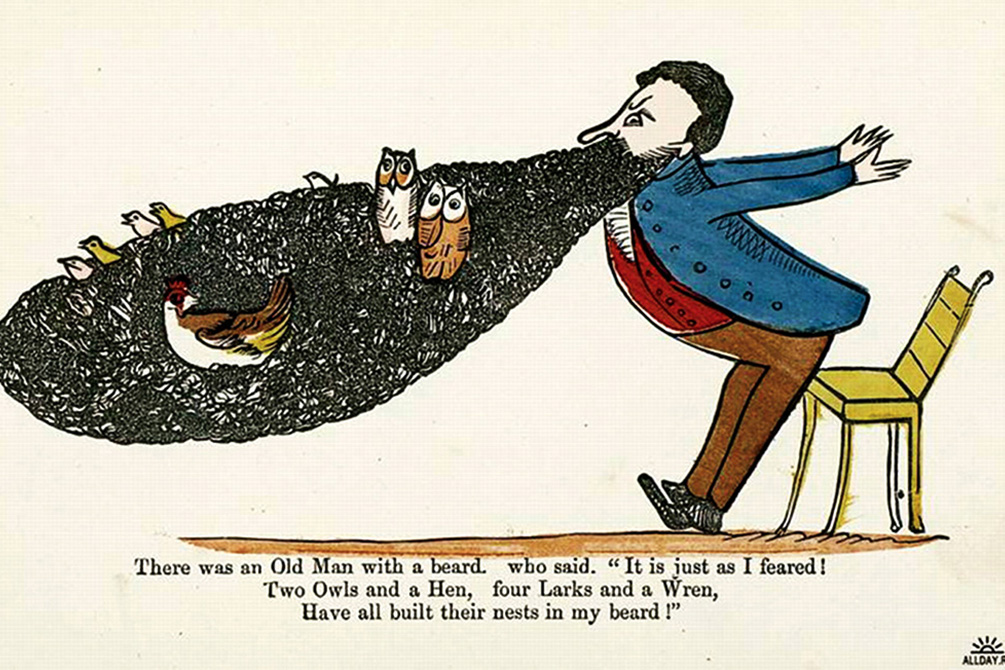
And just to round it off, the limerick (and the word) were not invented by Edward Lear, but he did compose more good ones than anyone else. More later.

powered by social2s
But or Butt?

Never start a sentence with ‘but’, and do not ever start a sentence with ’never’- many a man has realised this too late. Am I right or do I write incorrectly? What is sustainability in our language, so that meaning is not lost and an elegant sentence remains?
Fifty years ago I was educated in English by a Welshman named, Rhys Jones, who occasionally entertained us with readings of the most horrible best ‘yarns’ of Somerset Maugham. The remainder of the time he drilled us with either English grammar or literature. Not only did we learn correct sentence structure, but also we studied the magnificence of the language. We learned that ‘equal’ cannot be followed by ‘as’ and that ‘sophisticated’ is not what it seems to be, though times do change.
This strict structure of a sentence has declined as media language has taken charge, and with this change has come confusion of meaning, sometimes adventitious and, at other times, disadvantageous. Is accidental interpretation the role of language or just of lawyers and politicians creating linguistic interpretation? Not withstanding this paradox, you must not start a sentence with but, unless of course it has been created due to a real butt.
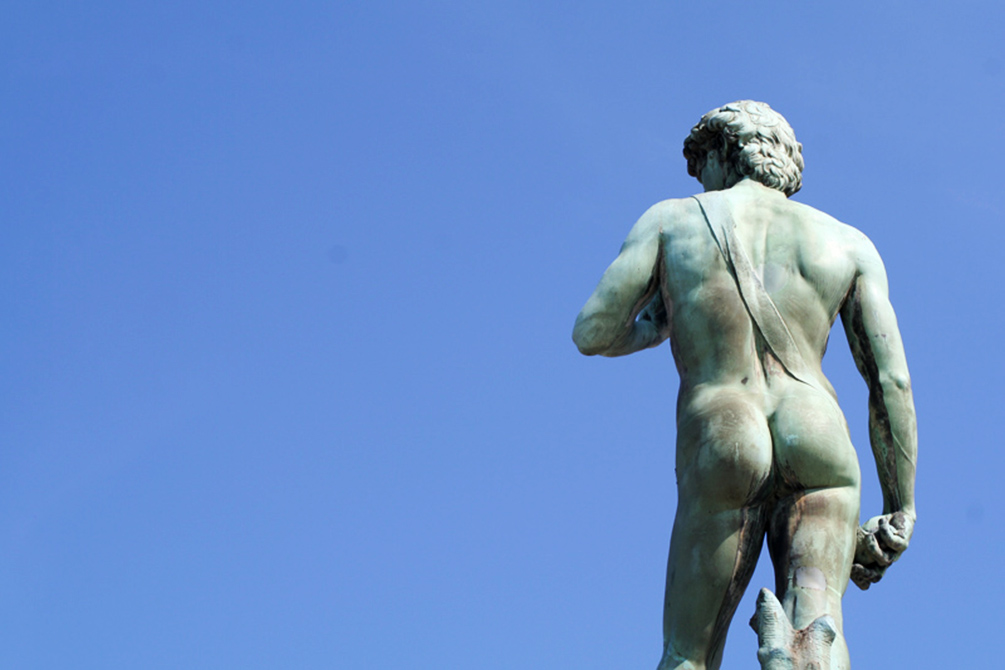
Butt is the end of a rifle that you pull into your shoulder, but a cigarette butt is flicked away from your shoulder to start a fire from a smoulder. Butt, nevertheless, is also the word for describing the more pleasant round rearwards facing cheeks of a lady whom one desires, as in ’gorgeous butt’. One can also consider that when one is a butt of a joke, the term ‘gorgeous’ may not apply; so, butting her butt with a head or with a horn, is likely to be considered a one-way pleasure that will be rewarded with more than scorn, unless the sentence is well constructed.
However, if the sound of ‘but’ is not polite wherever it is placed, which some ladies will attest, to start a sentence from the heart, we must place ‘but’ inoffensively, while letting ‘however’ get going with a start. Nevertheless, not too soon should ‘but’ be demoted from its role at the start, for without a ‘but’ to admire as a key male desire, one that can give a kick start, there may be no reason in any judgmental sentence of any conjunction of the heart. So let us try to sate all tastes and place ‘but’ where it is best viewed and where it rolls off the tongue.
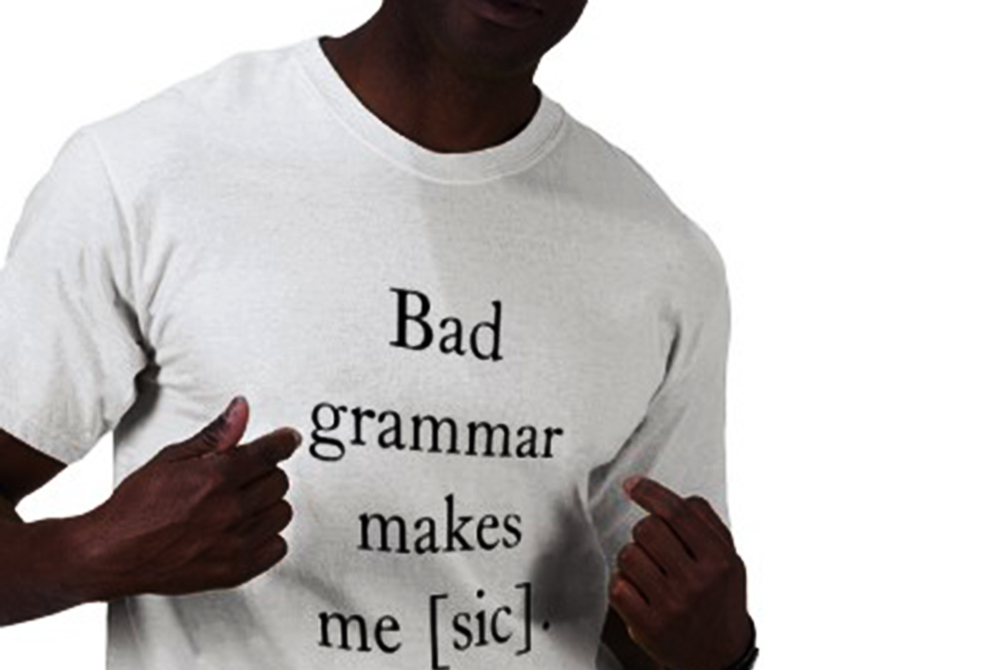
Consequentially, when in doubt, the conjunction is useful between the key elements of the sentence. So beyond wedlock but before death we now find the fine ‘but’ in the middle; and if you smile and handle it just right (sic correctly), your sentence may be a conjunction of soft exclamations of an open mouth.
But, this depends on sensitivity or is that sensation?
(This article has been reproduced under licence from Energitismo Limited)
powered by social2s
The Fourth Way - Gurdjieff in Practice

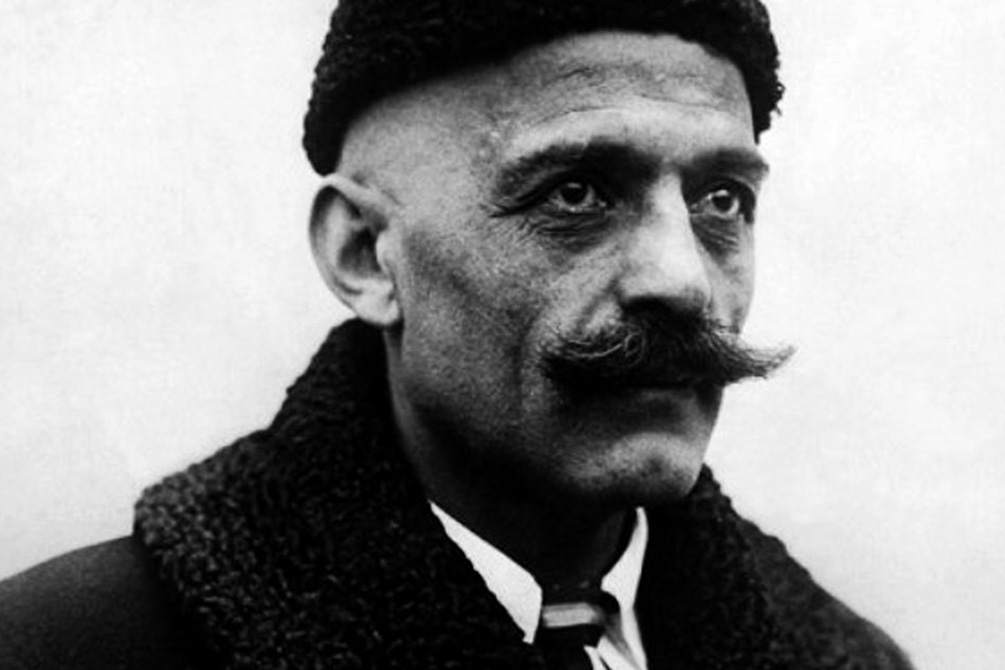
About 100 years ago Pietr Ouspensky, a Russian mathematician and philosophy student of Gurdjieff, commenced writing his understanding of the practical philosophies of Gurdjieff. 

While many would struggle with Beelzebub’s Tales to His Grandson, most found the practical and intellectual approach of Ouspensky at least understandable. But even then, without practice to test the ‘teaching’ what use are words?

Gurdjieff did not teach a new philosophy, his way of teaching was different, through work and dance, dining and readings. To help explain the approach of Gurdjieff and the books of Ouspensky, I am reminded of just three rules on the road to wishing to be.

These are:

Avoid negative emotions

Anger, hate, envy, self-pity are at one end of the bundle of sticks of life while, for example, happiness and compassion are at the other. Creativity is not possible for those trapped in a negative emotion. Senses are impaired, facial muscles tighten and enemies abound. Negativity blames, while one key element of life is to accept personal responsibility. The ability to change is instant, it is a matter of a decision to take the other end of the stick – to stop frowning and to smile.

Stop inner considering

Inner considering is, in effect, worrying what other people think of us says Gurdjieff. Often it is delusory. Always, considering drains energy. In every case, the ‘soul’ influence we can have, is on who we are and what we do for ourselves. If your job is to be a bell ringer to wake the town at dawn, many will curse you – it is your choice whether this destroys you or not.

Stop being identified

Who are you? Are you trapped in a personality that causes pain or tribulation? Are you proud because of your title or because of the quality of your work? To the extent that reality is conquered by dreams of who we are not but wish to be, Gurdjieff admonishes, you cannot ‘become’. When we are identified, we are living in a shoebox with a label on the outside, but we can’t read it. We need to take the risk and lift the lid on who we are.

This is the work of life that Gurdjieff espoused, so simple but so difficult for me to remember myself. Nevertheless, ‘I wish to be free’ can be the desire of every human, free in body and in being.

(This article is reproduced under licence from Energitismo Limited)
powered by social2s
Gaggle - Nonsense or Not?

At Energitismo we recognise the importance of recognition, particularly by the enigmatic Gaggle Cockroach, that has become the accepted judge of excellence in publications on the world wide web, which is in itself a key and necessary feature of information transfer in this age of electronic information where not only words but also, and more importantly, images, maps, sketches, diagrams, letters, concepts, non-concepts, opinions, interpretations, formulae, and many other forms of information are shared and not shared among all the many types of creatures, both human and nonhuman who need to know what every other creature is doing, and hence in this wonderful world wide web even though we may not be, at the time of writing an expose, able to even spell a word or put two, three, four, five, six, seven, eight, nine, ten or even more or less words together in a coherent or non-coherent manner to bless the world wide web with our version of personal perfection; but you may wonder where we are going and what the purpose of this exercise in creative wonder is, so I need to explain the value of words as so far we have deposited on the parchment over 185 words which is about 46.25% of a 400 word article, hence let me continue to reach our goal by further explaining in the finest Oxford English how the use of very long words and difficult words such as euthanasia, serendipity, mordacity, gaggle, contradistinction but not contradiction, argumentability, auspiciously, box, antidisestablishmentarianism, and names such as chalmondeley and beauchamp can add immensely to the value of an article such as this ponderous treatise in miniature on gaggle by dealing with these important subjects in crisp, clean, synchronous, non-cacophonic, and crystal clear words, phrases, clauses, sentences, and paragraphs, pointedly and punctiliously, without any doubt in any mind or mindless array of thoughts of any gendered or non-engendered, endangered or non-endangered, dangerous or even totally benign condensation thereof on land, in the air, on or below the aquatic surface or in any mix of those divinely splendid habitats for living and not so living creatures of the planet in which Gaggle has chosen to dominate our information exchange mechanisms for the benefit of digital creative distributed scan rate observers of the beauty of the cockroach, until having subsumed their erstwhile ego desires, do now but worship the utter survivability of the great thermonuclear resistant body, until reaching over 400 words (incomplete sentence)……………gaggle.

 
powered by social2s
An Article

Factum est. An is an article as is the and a. Each defines a specific article that is impossible to define without its use. It is not credible to consider defining the term article without the use of an article. So we must accept this as a paradox or is the term An Article an infinite do-loop? 

In English, the article, whether a definite or indefinite article is used less often than in some other languages such as Italian where, for no apparent reason to the native English speaker, the article is used in front of personal pronouns such as my – il mio articolo o I miei articoli.

For an Englishman, my article is quite sufficient and is all that is necessary to denote perfectly elegantly the definition of the article (and without an article in sight).

But an article can also be an article of clothing or even a sustainable article. And on the subject of sustainability, the article is probably the most sustainable word in language, used more regularly than any other common words, and this is the case whether one is articulate or inarticulate. The article also may be indefinite to the extent of not being part of the firmament such as a definite article of truth rather than an indefinite (or undefined) article of clothing – is it a shoe, the shoe or a hat.

And this brings us to the conundrum of the use of an. An as an indefinite article is definitely used whenever a definitely does not belong. But many who train in English, both native and as a second language, do not recognize naturally when to use an.

An is obvious before a vowel, but what about before a soft aitch such as an hoar frost or is it a hoar frost? An insoluble conundrum dependent on the linguistic coach and your home town.

So to round off or possible square up the discussion on articles, we need to prepare an article such as this article on a subject that has less articles and more definitive words.

Ah, parole, parole, parole – but what if the parole is an? No true Italian composer or librettist would deign to waste a high C on a simple article, except possibly Leoncavallo who came very close in the English translation of the prologue to I Pagliacci. So let us to poetry drift and find some lines that avoid and deny the article.

powered by social2s
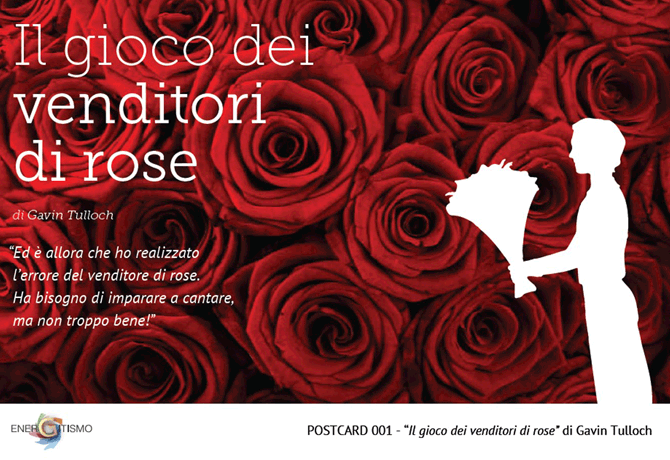
A Rose Buy Any Other Game - the Rose Seller

In Frascati, just like other market towns, there is a plethora of fresh food outlets such as butchers, mozzarella producers, patisseries, ‘enoteche’ (wine shops) serving local wines and more than one rose seller. 

Alongside these are the service shops, the hairdressers, chocolatiers, tobacconists, and bars. Even at nearly nine on a winter’s night, the local fashion stores, bookshops and jewellers are open and the populace comes in wave after wave seeking presents or just being Italian, wandering from shop to shop to meet their friends and be seen.

Within half an hour the restaurants have filled and the night hawkers appear, seemingly from nowhere or from cracks in the wall. When the Carabinieri and Local Police are elsewhere, the blankets of the Senegalese and Nigerian bag sellers fill the walkways near the Cathedral Square. Flower and novel toy sellers roam the streets looking for bars and restaurants where they may be allowed to peddle their wares.

We follow the habit and wander the streets, now covered for Christmas with throw-away red carpet that hides not well enough the rough cobblestones and half steps designed to trip the unwary or any seventeen year young beauty in Neapolitan heels. We tour until we find ourselves back in the street of restaurants overlooking Rome and decide to check Zarazà first.

It is surprisingly not yet full, so we have our choice of tables, all placed just encroaching on the private space of the next table – a great way to meet your neighbour, if her husband is not the jealous type. After a difficult selection process interpreting the sources and taste types, we select a regional red, matched by water, and settle into a quiet evening, awaiting polenta and soup, as lamb head was no longer on the menu (maybe why there were tables vacant).

Behind me as I am facing away from the door, I sensed the presence of someone and looked around slightly to espy three red roses being waved in my face by a gentleman of southern Asian appearance, the rose-seller. I felt like a woman who is rubbed against when she is not seeking companionship.

The roses are beautiful, the seller attentive, yet my wife is perpetually neutral in these situations. All of this happens in a few seconds, and my rebuttal of the seller is a bit aggressive, particularly when he dawdles around our table trying to make me suffer a guilt trip and reverse my decision. This is a poor marketing ploy as he reinforces my rejection, and I feel a slight dislike for this man, doing his job, trying to make a buck, the rose-seller, selling beautiful flowers to make people happy.

As we dine, we hear music of a violin, played also by a southern Asian, quite near, just a few metres away. I do not turn around to watch, but listen with some embarrassment to a musician who obviously needs to earn money for more lessons.

He comes near the table and I pull out a couple of coins and put them in his decrepit paper cup, not as a reward for enjoyment, as I had not enjoyed the recital at all, but simply as an encouragement to move on.

It was then that I realized the mistake of the rose seller. He needs to learn to sing, but not too well!

powered by social2s

Subscribe to Newsletter

Discover a territory through the emotions of the people that have lived it.