A ‘True Blue’ Ballad of Australia

In every culture, poetry, rhymes and songs tell the story of the country, of the region, of the people. Yet except for the English bards and a very few from other cultures, French, Italian, German, not much transfers from one language, from one culture, to another. Shakespeare and Lord Byron are exceptions, where rhymes and stanzas have become known in other cultures. And now for a ballad of Australia.

Australian culture is surprising and unknown to many. The world sees Australians as sun, surf and sin loving young men and women. But what is the record of Australian culture?

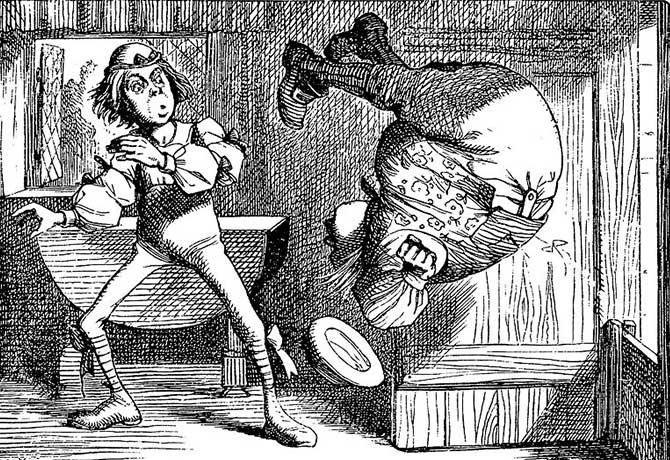
Australia’s greatest poet was Banjo Patterson from about 125 years ago. His poems sit in Australian history. The ballad of Australia below is recorded in microprint on the $10 note behind his portrait, characteristically with a hat, and an image of a drover mounted on his horse with a stockwhip ‘singing’. So what is this subject of Australian lore – not just folklore? It is of a man and his horse, of great horses, of proud horses, of the drover and his horse (and sometimes his dog). These and the drought form the basis of many a ballad of Australia.

This ballad of Australia, this poem is The Man from Snowy River. Its territory is the highlands of Australia around the border between Victoria and New South Wales; country that is similar to the Italian Pre-Alps above Bassano del Grappa, just wilder and less easily crossed. Read this poem and learn Australian lore and language. Contact us and we will translate words and terms that seem intractable. Mostly, feel the pride of men who were the heritage of Australia – men who lived with their horses, who became one with them, and together they just ‘did’.

There was movement at the station, for the word had passed around
That the colt from old Regret had got away,
And had joined the wild bush horses—he was worth a thousand pound,
So all the cracks had gathered to the fray.
All the tried and noted riders from the stations near and far
Had mustered at the homestead overnight,
For the bushmen love hard riding where the wild bush horses are,
And the stockhorse snuffs the battle with delight.
There was Harrison, who made his pile when Pardon won the cup,
The old man with his hair as white as snow
But few could ride beside him when his blood was fairly up—
He would go wherever horse and man could go.
And Clancy of the Overflow came down to lend a hand,
No better horseman ever held the reins;
For never horse could throw him while the saddle girths would stand,
He learnt to ride while droving on the plains.
And one was there, a stripling on a small and weedy beast,
He was something like a racehorse undersized,
With a touch of Timor pony—three parts thoroughbred at least—
And such as are by mountain horsemen prized.
He was hard and tough and wiry—just the sort that won't say die—
There was courage in his quick impatient tread;
And he bore the badge of gameness in his bright and fiery eye,
And the proud and lofty carriage of his head.
But still so slight and weedy, one would doubt his power to stay,
And the old man said, "That horse will never do
For a long and tiring gallop—lad, you'd better stop away,
Those hills are far too rough for such as you."
So he waited sad and wistful—only Clancy stood his friend—
"I think we ought to let him come," he said;
"I warrant he'll be with us when he's wanted at the end,
For both his horse and he are mountain bred.
"He hails from Snowy River, up by Kosciusko's side,
Where the hills are twice as steep and twice as rough,
Where a horse's hoofs strike firelight from the flint stones every stride,
The man that holds his own is good enough.
And the Snowy River riders on the mountains make their home,
Where the river runs those giant hills between;
I have seen full many horsemen since I first commenced to roam,
But nowhere yet such horsemen have I seen."
So he went—they found the horses by the big mimosa clump—
They raced away towards the mountain's brow,
And the old man gave his orders, "Boys, go at them from the jump,
No use to try for fancy riding now.
And, Clancy, you must wheel them, try and wheel them to the right.
Ride boldly, lad, and never fear the spills,
For never yet was rider that could keep the mob in sight,
If once they gain the shelter of those hills."
So Clancy rode to wheel them—he was racing on the wing
Where the best and boldest riders take their place,
And he raced his stockhorse past them, and he made the ranges ring
With the stockwhip, as he met them face to face.
Then they halted for a moment, while he swung the dreaded lash,
But they saw their well-loved mountain full in view,
And they charged beneath the stockwhip with a sharp and sudden dash,
And off into the mountain scrub they flew.
Then fast the horsemen followed, where the gorges deep and black
Resounded to the thunder of their tread,
And the stockwhips woke the echoes, and they fiercely answered back
From cliffs and crags that beetled overhead.
And upward, ever upward, the wild horses held their way,
Where mountain ash and kurrajong grew wide;
And the old man muttered fiercely, "We may bid the mob good day,
No man can hold them down the other side."
When they reached the mountain's summit, even Clancy took a pull,
It well might make the boldest hold their breath,
The wild hop scrub grew thickly, and the hidden ground was full
Of wombat holes, and any slip was death.
But the man from Snowy River let the pony have his head,
And he swung his stockwhip round and gave a cheer,
And he raced him down the mountain like a torrent down its bed,
While the others stood and watched in very fear.
He sent the flint stones flying, but the pony kept his feet,
He cleared the fallen timber in his stride,
And the man from Snowy River never shifted in his seat—
It was grand to see that mountain horseman ride.
Through the stringybarks and saplings, on the rough and broken ground,
Down the hillside at a racing pace he went;
And he never drew the bridle till he landed safe and sound,
At the bottom of that terrible descent.
He was right among the horses as they climbed the further hill,
And the watchers on the mountain standing mute,
Saw him ply the stockwhip fiercely, he was right among them still,
As he raced across the clearing in pursuit.
Then they lost him for a moment, where two mountain gullies met
In the ranges, but a final glimpse reveals
On a dim and distant hillside the wild horses racing yet,
With the man from Snowy River at their heels.
And he ran them single-handed till their sides were white with foam.
He followed like a bloodhound on their track,
Till they halted cowed and beaten, then he turned their heads for home,
And alone and unassisted brought them back.
But his hardy mountain pony he could scarcely raise a trot,
He was blood from hip to shoulder from the spur;
But his pluck was still undaunted, and his courage fiery hot,
For never yet was mountain horse a cur.
And down by Kosciusko, where the pine-clad ridges raise
Their torn and rugged battlements on high,
Where the air is clear as crystal, and the white stars fairly blaze
At midnight in the cold and frosty sky,
And where around The Overflow the reed beds sweep and sway
To the breezes, and the rolling plains are wide,
The man from Snowy River is a household word today,
And the stockmen tell the story of his ride.

A few translations into English:

Stanza 1
Station - Large outback farm
Crack – Great horse rider
Fray – Battle
Colt – Young stallion
Mustered – gathered and camped
Snuffs – smells the air
Stanza 2
Pile – large amount of money
The Cup – The Melbourne Cup (horse race)
Blood was fairly up – excited
Droving – Herding and pushing cattle long distances
Stanza 3
Stripling – thin young man or youth
Weedy Beast – underdeveloped horse
Thoroughbred – breed of horse for racing
Wiry – lean and sinewy
Stanza 4
Lad – teenage boy
Stood – supported
Mountain bred – born in the mountain country
Stanza 5
Kosciusko – Australia’s tallest mountain above the Snowy River
Firelight – sparks
Flint Stone – very hard sharp rocks
Holds his own – doesn’t lose touch
Stanza 6 ………
And now over to you – good luck – and enjoy the story
(This article is published under licence from Energitismo Limited and forms part of the Australian Blog)
powered by social2s
Herman Branover and LMMHD

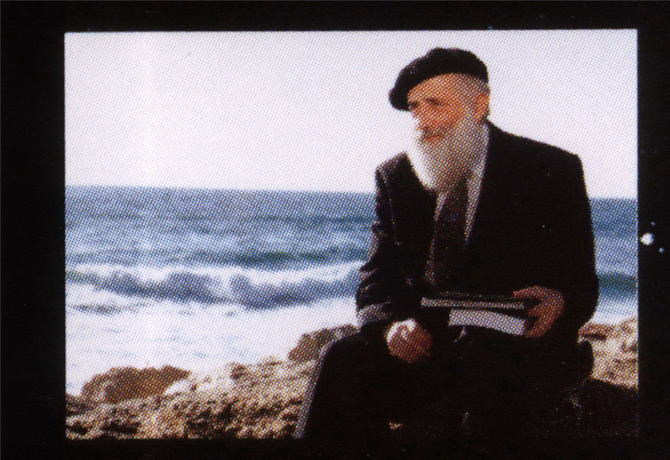
It was in Australia, some time in 1987, during the period that I was providing technical consultancy in the energy field to the business interests of Joseph Gutnick, that I met Peter Kalms and was introduced through him to Professor Herman Branover.

For those who follow the Chabad Hasidic movement, the name Branover immediately brings feelings of great respect, maybe nearly to the same level as the Rebbe of that period, sitting in New York. I recall that Peter Kalms related to me the background of Herman Branover originally from Riga, Latvia. Peter told me that his business in the UK had been responsible for some support funding of Branover’s research work in Israel for several years and that the Rebbe had selected Joseph Gutnick to take over that responsibility. Many who dealt with ‘Diamond Joe’ Gutnick in business or invested in his stocks on the ASX did not know the depth of his orthodoxy and philanthropic support for Israel.

My first responsibility was to be the link with the scientific, defence and political communities during a forthcoming visit to Australia by Herman Branover to meet the Gutnick team and to present his LMMHD technology to Australian organisations. When Herman Branover arrived in Sydney I was introduced to a charming man in his mid-fifties with natural bearing and elegance, carrying a full beard traditional of orthodoxy. He was also greeted at the airport by a throng of young orthodox Jews, all apparent by their dress and hairstyles.

I was educated rapidly that this man was more than a Latvian scientist who had been a refusenik and then eventually been allowed with the payment of a ‘ransom’ to aliyah to Israel. He was held in awe by all. Wherever we went in Australia the throngs followed, keen to absorb whatever message Herman Branover might give. For me there were some other interesting elements, one of which was that his food had to be prepared according to orthodox kosher rules. When he flew out to Tokyo following the visit, his food for the travel was prepared under the supervision of the chief rabbi from the St Kilda synagogue, as Qantas was unable to guarantee observance of the orthodoxy in food preparation and transport.

My next involvement with Professor Branover was to visit his laboratories and LMMHD pilot plant at Ben Gurion University, Beersheva. This was not my first visit to Israel, but it was definitely a stand-out. I remember driving from Tel Aviv into the ‘desert’ towards Beersheva, a town with particular poignancy for Australians from the world war periods. Along the sides of the road were orange orchards rich with fruit, and at one point a sign recording the words of a famous English traveller – ‘5,000 years a desert this has been and 5,000 years a desert it will remain’.

LMMHD is the acronym for Liquid Metal Magneto Hydro Dynamics. At university in the late 60’s we had studied MHD and the search for refractory ceramics to house the reactors, so the practical issues of a conductive fluid flowing through a magnetic field to produce an electric field were known to me. LMMHD solved the problem of high temperature as the molten metal, in this case lead, was at less than 400 degrees. Some of the requirements of LMMHD, such as the use of superconducting niobium alloy magnets, were of particular interest as, during that period, ‘warm’ superconductors were discovered.

However, for LMMHD, as for all renewable energy technologies, energy balance is a challenge, how to get more energy out than you have to put in. In the case of LMMHD, there were several chemical engineering technical challenges such as friction, barrier layers, and thermal insulation. The unique feature of the technology and pilot plant created by Professor Branover’s team was the use of compressed dry nitrogen gas to pump the molten lead to the top of the system where the gas escaped for recycling and ‘old man’ gravity could take over as the lead fell through the magnetic field.

The challenge that seemed to be a blocking function to scale up was that each increase in diameter of the pipes resulted in an increase of losses, as the gas bubbles would tend to coalesce and slip past the lead rather than ‘lifting’ it. Of course there were other issues. Whereas lithium and sodium/potassium ‘alloys’ would reduce the density differential, the disadvantages of higher cost and corrosion/explosion risk weighed against such systems except in space.

I am not sure whether the LMMHD technical scale-up issues for terrestrial applications have been solved, and even so how commerciality of the system could be achieved. Yet none of these issues reduces the joy of the creation and the wit in some of the engineering solutions. Looking back now, nearly thirty years on, I can see remarkable similarities in the practical challenges facing bringing of LMMHD and DSC (Dye Solar Cells) to market. I wonder today whether Herman Branover and Michael Graetzel, two of the great scientific entrepreneurs of our time, have ever met.

The visit to Beersheva included a wonderful middle-eastern feast in a Turkish restaurant where about fifteen scientists from Ben Gurion University consumed significant quantities of Russian vodka, local mezzes and meats. As we enjoyed sipping the vodka, I sat next to Herman Branover chatting and I watched this man, a blend of Torah and science, and he smiled - at home in ‘his Israel’.

Herman Branover is a very special person. I remember him with joy and respect. He is still, and may he be for many more years, a man of science and God and a wonderful Jewish gentleman.

powered by social2s
Baron Hutchinson, Truly British to the Core

Jeremy Nicolas Hutchinson, Baron Hutchinson of Lullington, will celebrate completion of 102 years on this planet in about 10 days, God willing. Given his life and causes followed, probably God won’t interfere.

In any case, if the life of Jeremy Hutchinson were to be celebrated in his seat of life peerage, it would be quite an inadequate affair as, apart from its Baron, the other claim to fame of Lullington is having arguably the smallest church in England - more a ‘churchlet’ that can seat just 20 persons, not even enough for a rugby team with reserves. Yet it is not recorded whether rugby is among the great loves of the long life of Jeremy Hutchinson though sailing is. Several other features of his bloodline and activities are of sufficient interest to post a few snippets.

He is descended from one of the 59 good souls who signed the death warrant for King Charles 1, a certain Colonel Hutchinson. But this member of the family tree seems to have taken a less strident view of sin. Up to Oxford, philosophy and politics to be certain, called to the bar of course. His memorable cases for the salacious at heart included being part of the successful defence in 1960 of Lady Chatterley.

In the history of mankind, changes of morality may never have been so rapid as in the last century with massive swings from libertarian to prudishness. Jeremy Hutchinson, with a quick mind and tongue, also led the defence of director Michael Bogdanov just over 20 years after Lady Chatterley, defending against a charge of indecency in the play ‘The Romans in Britain’. The case was brought by Christian morality campaigner Mary Whitehouse, bless her soul. Curiously the chief witness against Bogdanov, was Whitehouse's solicitor who revealed under cross-examination that he had been sitting at the back of the theatre when he saw what was claimed to be a penis.

The prosecution withdrew after Hutchinson demonstrated that what could have been witnessed was the actor's thumb protruding from his fist - the case was abandoned (extract from Wikipedia). It would have been a fun evening at the bar afterwards as fisted men of silk stood for a beer. Jeremy Hutchinson entertained the bar with several more cases of equal interest to the excitement starved judges and juries.

Why are we talking about Baron Hutchinson today? Well, he has just been anointed as joint winner of Oldie of the Year by the British magazine The Oldie. His ‘partner’ in the crime of growing old gracefully is Olivia De Havilland, the oldest living actor (actress) with an Oscar, who followed Peggy Ashcroft in film versions of plays. The curious connection to this pairing is that the first wife of Jeremy Hutchinson was (Dame) Peggy Ashcoft whose first husband (2 before Jeremy) claimed her to be the world’s best living actress (possibly he had an admiration for those already deceased).

For the war time researcher, note that Jeremy was on board HMS Kelly off Crete when it was sunk by German bombers in 1941. He survived clinging to wreckage in the sea alongside Lord Mountbatten. Always keeping good company.

After the war, seeking a stint in politics, Jeremy Hutchinson entertained the journals in 1945 by challenging Churchill in the seat of Westminster Abbey. When attempting to canvas for votes, he found that the resident, Sir Winston, was away, so he entertained the staff with his political persuasion. Later, as a life peer, Baron Hutchinson sat in Lords, but took an extended vacation before retiring gracefully.

I do hope that he has a quiet chuckle to himself, remembering all his triumphs and joys and recalling being on the stage for over a century of a truly British life.

powered by social2s
Tango is beauty

Do you know what is frightening to people more than anything? Death, illness or old age? No! just beauty!

Have you ever seen people in a museum? They usually look at the detail or at the frames but few look at the paintings and works of art, just abandoning themselves to the enjoyment of the moment. To cope with the concept and actuality of beauty takes courage. And how many of us know how to cope with beauty of the body in the people we meet? We are suffering from a disease that I have called "fear of contact" .

When someone exceeds that limit of our virtual being (the ‘comfort zone’ as some call it) we feel uncomfortable, or even feel a sense of revulsion against physical contact (whether it occurs or not). This phobia is given by hypersensitivity to physical contact, feeling it as an invasion of our own or other people's intimate area.

As children we approached and touched other people without inhibitions. We were driven by a pure spirit of discovery of such a beautiful world. Touching the hair of others, we feel the hands of grandparents and so on. And then? And then our parents, society, civilization gradually have "taught" us that there were the limits to be kept with others, what and where to touch.

So one day we found ourselves having to keep larger distances. If a stranger approached less than half a meter and touch our arm it started to annoy us. Obviously the limits and distances vary from person to person, from place to place and from culture to culture. Taking a great approximation, generally the people of the south world know how to be "closer" more than people of the north.

Thank God that there's tango

I have no evidence, but I'm sure God can dance the tango. Tango is one of the best tricks that human beings have ever invented to overcome the taboo of touching a stranger. In tango not only do we touch strangers but we hug them, and very often the embrace is deep without shame and fear. "In the tango one closes his eyes in a blind embrace of trust." The tango overcomes social limitations. In reality, tango is close to placidly accepted adultery. It breaks all the rules of propriety in a ‘sentimental’ relationship.

Couples in life ‘break up’ in tango to dance with other people, then return to sit next to each other happily. Tango subverts all the canons of good education, dictating new concepts. The simplest discovery I made dancing is to understand how tango affects me through the other person. I discover my beauty through the beauty of the other. Tango makes you realize how to be more than what you know you are. When it happens, the tango dance becomes an existential prayer.

The tango is a medicine

When we touch - or are touched - our body begins to secrete oxytocin, which improves our immune system. Tango - as love - gives us strength and increases self-esteem of those who practice it.

Tango has done so well in recent years it has become a real cure: the Tango Therapy. As Dr. Monica Barassi explains: "Thanks to the precision with which the roles in tango are established, participants in groups of Tango Therapy experience different parts of themselves, especially the active part of the male, determined, outgoing, masculine and for the woman the receptive , ‘lunar’, sensitive, feminine.

The tango is the setting for all of this, with the music, the meeting of the couple, and the contact, both within yourself and among the people dancing. Why practice Tango Therapy? Because it improves self-knowledge through experiential work on the masculine and feminine sides. In addition, through the couple working together, it helps understanding by contact, how to relate better with others. "

Tango for her

In tango, a woman explores her sensuality and femininity, too often previously lost or damaged. Tango helps her to feel and understand what happens when her body comes into contact with another.

Tango for him

In tango man enhances his self-esteem, especially in men who are struggling to manage well the commitments, relationships, everyday life; having to lead the dance, lead his partner, reproduce the anxious tension of performing, the burden of responsibility that he feels in those situations, but also helps to manage the relationship with greater security.

In short, tango, is a metaphor for life. Because exchange occurs, both for men and for women, there must be an embrace. Contact.

"And you realize how easy it is to live fully if your body marries your soul and if, even for a few minutes, this new alliance joins with another body and another soul."

 
powered by social2s
In Memory of Alice at 150 - Thanks to Lewis Carroll

Thanks due to Lewis Carroll -
for his great rhyming truth
that described me to a ‘T’.
Yet without his then namesake,
a Charles Lutwidge Dodgson,
many would not share such glee
 
Tis the voice of my son George with poetic licence:
"You are old, Father Gavin," your sole son said,
"And your hair has become very white;
And yet you succour whisky into your head;
At your age should you get so tight?"
"In my youth," Father Gavin replied to his son,
"I feared it might injure the brain;
But now that I'm perfectly sure I have none,
Why, I do it again and again."
"You are old," said his son, "As I mentioned before,
And have grown most uncommonly fat;
Yet you drank 12 year whisky balanced in the door—
Pray, what is the reason of that?"
"In my youth," said the sage, as he shook his grey locks,
"I kept my organs very supple
By the use of this liquor—twelve dollars a box,
Allow me to sell you a couple?"
"You are old," said his son, "And your jaws are too weak
For anything tougher than suet;
Yet you finished the goose, with the bones and the beak—
Pray, how did you manage to do it?"
"In my youth," said his father, "I took to the law,
And argued my case with each wife;
And the muscular strength which it gave to my jaw,
Has lasted the rest of my life."
"You are old," said the youth, "one would hardly suppose
That your eye was as steady as ever;
Yet you balanced a beer on the end of your nose
What made you so awfully clever?"
"I have answered three questions, and that is enough,"
Said his father; "don't give yourself airs!
Do you think I can listen all day to such stuff?
Go find me a new bottle downstairs!"

(This parody article by Gavin Tulloch is reproduced under licence from Energitismo Limited)
powered by social2s
The Fox and the Old Fool (or the vixen and the victim)

Not so long ago there was a lonely old man, not from these parts, somewhat bent over from back injuries and rotund from a predilection to beer, who got lost in the fields near the forest.

He lay down in the grass near an oak tree, dreaming of making love to beautiful women and seeing their images in soft clouds in the blue sky.

Nearby a fox was searching for a new home and she trod softly through the long grass in case a hunter were about. True, she was both the hunter and the hunted, seeking to find dens where she might sleep and rabbits and chickens that she could devour, while avoiding being captured and put in a cage.

The breeze blew softly through the grass and the fox caught a scent that was new – maybe man – but different. Soon she came across the old man, supine in the grass lost in his dreams and she ventured a little closer. He awoke and reached out ever so slowly. She sniffed the tips of his fingers and came closer. He felt her soft fur and admired her shiny coat and athletic figure, and saw in her face a subtle but wicked smile.

He sat up and she stiffened in fear, knowing that she should run, that all men were hunters and none could be trusted. But he just put his hand out on the grass and so she sat next to him and began to relax. The old man dipped his other hand in his bag and brought out a chicken sandwich – broke it in half and handed one half to the fox.

She was not too hungry but was always interested in the pleasure of eating. So they sat there, the old man and the lady fox eating a chicken sandwich in the dappled light each lost in dreams, maybe even of being together.

And that is where the story really starts ………..

 
powered by social2s
It Ain’t Necessarily So

George Gershwin was born on 26 September 1898 in New York. An inspirational natural musician who departed too soon in July 1937.

Possibly but not necessarily, Jacob Gershwine, as was his given name, was not as well known by his first famous song as was its celebrated singer, Al Jolson, and the song that he heard George sing at a social - ‘Swanee’.

For most of us the introduction to George Gershwin as he was then called, was Rhapsody in Blue, a composition that attracts the more mature post adolescent ear, excited by jazz blended with a great tune.

In Paddington, Sydney in the 70’s, the terraces were in full swing of renovation and the maybe 20 old pubs were revitalised by jazz, mainly New Orleans. Yet Gershwin was a sought after pleasure over a beer or 3 any evening or weekend afternoon.

We befriended an old couple (70 or more in the shade), Marie (who played the piano) and Banjo George who had emigrated from the jazz pubs of London and each Tuesday played at one of our ‘locals’. For both Idelies and myself, the great reward was to hear a rendition by George of Rhapsody in Blue on the Banjo. Words cannot do the performance justice. I trust that he is still strumming it somewhere in heaven.

Possibly Gershwin was not aware of the magic of his music as he sought teachers for many years. Maybe the rejection by Ravel – ‘Why be a second rate Ravel when you are already a first rate Gershwin?’- gave him belief in his own art.

Porgy and Bess has become a permanent member of the repertoire of many opera companies and I recall it capturing my esteem, despite my predilection for Italian opera, when the Australian Opera introduced it to us. Separately, during my earlier period of failing to become a saxophonist, I had the experience of struggling with the rhythm of ‘Summertime’ to the despair of our jazz teacher.

The Porgy and Bess song ‘I Got Plenty o' Nuttin' definitely marked my skill. So I now settle to enjoyment of George Gershwin as an accompaniment to our search for artists and artisans who may, like Gershwin, bring something extraordinary to inspire their chosen artistic discipline.

powered by social2s
‘And God Created Woman’ & Brigitte Bardot

As I turned from childhood into teenage prepubescence, my mind got way ahead of my body, and I dreamed longingly of voluptuous women.

And who came into my life?

Through a recently acquired art book near nude photos of the greatest sex-siren of the 20th century, Brigitte Bardot. Yes, subsequently I have fallen head over heals for other beautiful ladies, but the period of pubescence is a very special time for a young man, when all things are driven by testosterone and the consequential search for naked women, so the first heroine has a special place.

I suffered no jealousy until I became a devotee of BB. But forever more I suffered terribly from jealousy of Roger Vadim. Roger was the first husband of Brigitte, ‘stealing’ her from her parents in her teenage years. He was also the writer and director of the movie from which some of the stills that thrilled me arose. That movie – ‘And God Created Woman’.

Tales have it that his leading lady may have taken her role quite seriously as a sex siren in the arms of other men. Wikipedia reports in its summary of the movie, that Bosley Crowther, the film critic for The New York Times, found Brigitte Bardot attractive. He wrote, "Bardot moves herself in a fashion that fully accentuates her charms. She is undeniably a creation of superlative craftsmanship.” A delicate way of describing her natural charms.

There is one particular image from ‘And God Created Woman’ that remained with me through the past more than 50 years. It is of BB laying on her back across the mattress on an iron bedstead with her lover across her breasts and the sheet delicately dabbed atop her mons Venus. In my approaching dotage I now find this scene quite artistic.

Well, why this reminiscence? September 28, is the birthday of Brigitte Anne-Marie Bardot. She knows not how much pleasure she unleashed on me and countless other men those many years ago, but we remember, so, thanks for the memories.

powered by social2s

Subscribe to Newsletter

Discover a territory through the emotions of the people that have lived it.