Aquaduct Anio Novus
 Aquaduct Anio Novus

The aqueduct Anio Novus dating back to 38 B.C..

It was built by Caligula along the Via Empolitana, running from Tivoli, it passes through Castel Madama and arrives in Ciciliano.

The greatest amount of remains are found in Tivoli, specifically in the area of the Arch Bridge, where a bridge crossed the Aqua Marcia and where the aqueduct crossed the river Aniene.

powered by social2s
Catillo Nature Reserve

The Catillo Reserve in Tivoli is a place where two different ecosystems overlap and it has a great and valuable floral diversity.

The variety of plant species makes the reserve a place much loved by botanists and all lovers of experiences of nature.

powered by social2s
Cathedral of San Lorenzo

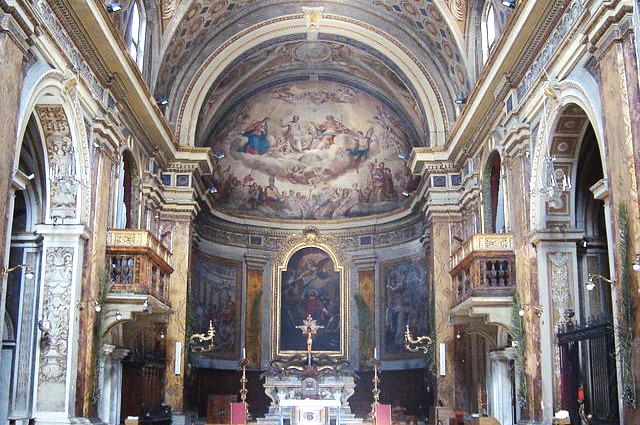
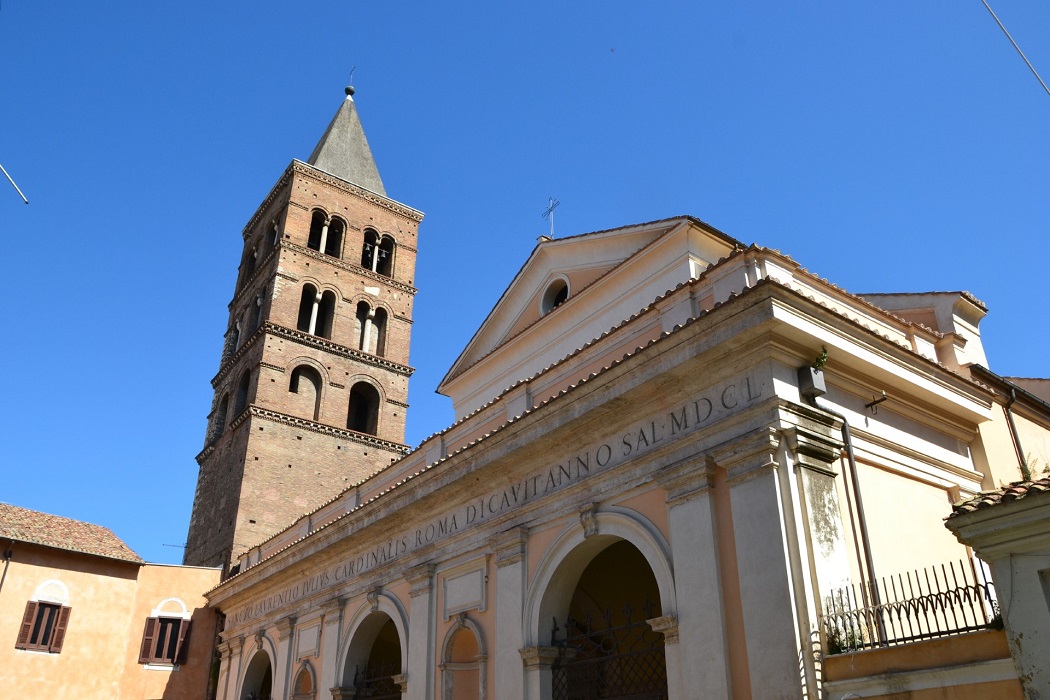
The cathedral of San Lorenzo or the cathedral of Tivoli was built in medieval times and is famous for its beautiful Romanesque bell tower 45 meters high.

An ancient legend associates the construction of the cathedral to the Emperor Constantine, who reputedly built it over the ruins of the ancient Forum Tiburtino.

The original apse is still visible on the outside of the religious building.

Inside the building there are three masterpieces.

The first is the Gruppo Ligneo della Deposizione, a masterpiece of Romanesque art dating from the thirteenth century,.

The secondo is a silver case - embossed from the fifteenth century, and then the Triptych of the Saviour from the XII century.

powered by social2s

Its history of the temple of the cough of Tivoli is not known precisely.

From a tombstone it seems that the building dates back to the time of Constantine I, the mid-fourth century, and it is built on the ruins of a Roman villa of the first century B.C., to commemorate the work performed on the Via Tiburtina.

There is no foundation to the medieval hypothesis that it was a temple dedicated to the personification of cough, to ward off the disease from the Tiburtina population.

The building became a church dedicated to the Virgin Mary in the tenth century using material from the nearby sanctuary of Hercules. Inside it has a few late medieval frescoes.

It was abandoned between the XVII and XVIII centuries and is privately owned.

powered by social2s

The church of Gonfalone ("Chiesa del Gonfalone") is located in the town square and is one of the most interesting churches in Campagnano di Roma with an unusual style for a religious structure.

The current building was initially built around the 16th century and renovated in the 19th century.

The nineteenth-century style is found in a very geometric rectangular façade.

It is characterized by a play between the white color of the plaster and the dark gray of the string courses and the cornices in peperino.

The central part of the building is characterized by a door, a window and ends with a tower with a clock entirely in dark peperino.

The construction of the tower dates back to 1864.

powered by social2s

The area of ​​Albano Laziale was known for the villas of Roman patricians who sought shelter from the summer heat of Rome and wanted their residence dedicated to the Otium.

In the locality of Cavallacci there are the remains of a roman villa that dates back to the end of the Republican age.

The villa then had its heyday in the imperial age and was inhabited until the 5th century AD, when Rome fell under the barbarian invasions.

The villa had a series of terraces and also served as a centre for agricultural production, so that workers' homes were located inside it.

Some remains of masonry and floors of patrician rooms, of the cistern, of the rustic area are still visible.

The finds, rediscovered during the excavations, including terracotta objects and the marble head of Tiberio Gemello, can be seen in the Museo Civico di Albano which looks after the excavations.

powered by social2s

In the Selvotta area of Albano Laziale, on the border with Ariccia, there is one of the most important burial sites of the Second Partic Legion.

This is the Legion that Emperor Septimius Severus wanted to allocate near Rome for his personal protection and is the only example of the Roman Legion with encampment in Italy as the legions normally were on the borders of the Empire's borders.

The tombs were discovered starting from 1866 and today about fifty have been found, all with the same characteristics.

The tombs are dug out of peperino stone and are covered by a roof-shaped peperino slab.

Many of them have an epigraph and often wife and children were buried next to the legionary.

powered by social2s

Recommended

Subscribe to Newsletter

Discover a territory through the emotions of the people that have lived it.