Trevignano Romano. Civic Museum

In the territory of Trevignano Romano was the ancient Etruscan town of Sabate, of which was found an extensive necropolis of the VII-VI centuries BC.

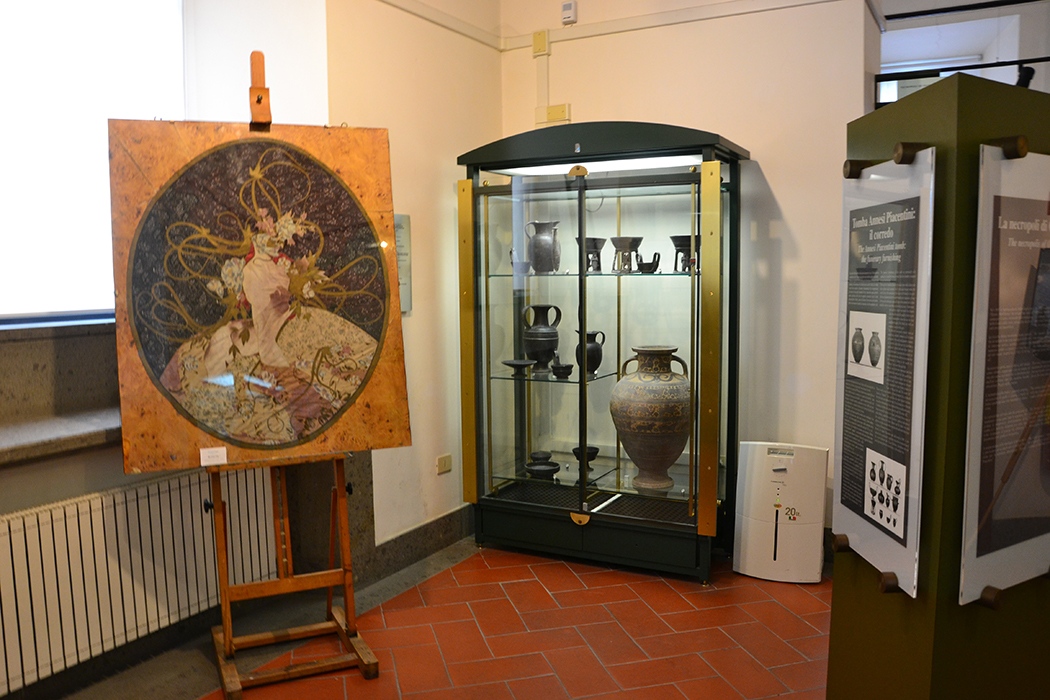
Some of the tombs are on display in the Civic Museum located in the City Hall of Trevignano Romano.

Besides the many bronze artifacts and elegantly painted vases, belonging to the Orientalizing tradition.

The museum houses an intact burial of an eighth century BC warrior, who still has his array of weapons, and the remains of two chariots.

powered by social2s

The Tolfa Civic Museum and the city library are located in the convent of the Augustinian fathers near the church of Our Lady of Sughera.

The church was built around a cork tree (sughero) where two hunters found the image of Madonna and baby Jesus.

powered by social2s
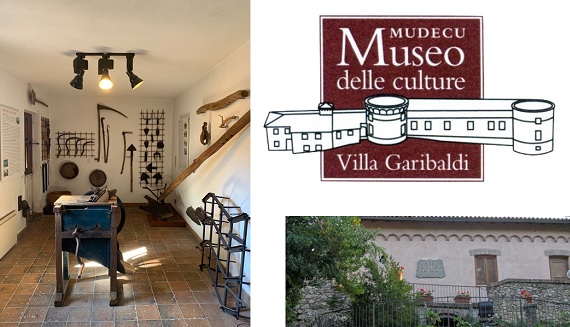
Museum of Culture Villa Garibaldi

This villa in Riofreddo, seat of the Museum of Culture Villa Garibaldi, was built in 1800 by Ricciotti Garibaldi, son of General Giuseppe Garibaldi and Anita Ribeiro da Silva.

The museum collects artifacts and evidence of the long history of Riofreddo that, due to it being located along the Via Valeria and crossroads of pastoral paths, has seen the passing of many different cultures.

Here is the dagger of Equi warrior found in the Casal Rotondo Necropolis and dating from around 1000 BC.

powered by social2s

Along the ancient Via Flaminia is the Casale di Malborghetto which incorporates a four-sided arch of the fourth century AD, positioned to mark the junction between the Via Flaminia and a side street.

The arch is rectangular, has four brick pillars, and was crowned with an attic flat roof.

Perhaps the arch has a relationship with the descent from the north of the troops of Constantine along this road to oppose the emperor Maxentius.

The Christian tradition has it that Constantine, camped in this place, has seen at sunset in the sky the sign of the cross and that "during sleep he dreamed to mark the shields with the celestial sign of God and to do battle."

The next day, on October 28, 312, Constantine vanquished the army of Maxentius at Saxa Rubra.

Following this victory, in 315, the Roman Senate erected in the City the two-faced arch near the Colosseum and perhaps here that of Malborghetto.
Over time the arch has undergone several transformations.

In the eleventh century, it became a fortified church dedicated to the Virgin and in the thirteenth became part of the walls of a castrum in a small village.

It became part of the Papal States defenses until the fifteenth century and was destroyed during the battles between the feudal lords. Transformed into a farmhouse surrounded with the ruins of the village, it took the name of Malborghetto.

In 1567 the building was restored and operated as a post station until the eighteenth century when Pius VI abolished the postal service.

It now houses an Antiquarium filled with the finds from along the Via Flaminia.
 

powered by social2s

Lavinium Archeological Museum is an innovative new museum located at Pratica di Mare in Pomezia.

The medieval village of Pratica di Mare was built supposedly on the ancient Acropolis of Lavinium.

The traditional museum is integrated with 3D characters that illustrate the history and events.

In the traditional part are shown finds from the tenth century BC and from the Roman period, such as the statue of Minerva and the great votive terracotta statues, mainly female, coming from the sanctuary of the goddess.

Note also the traditional Greek ritual vases with black figures like the cup of Castor of the sixth century BC.

Other areas are dedicated to the 'world of women' with jewellery and daily work tools found in the proto-historic necropolis and a room dedicated to Aeneas, the Trojan hero famous founder of Lavinium.

Many of the grave goods shown were found in the tomb in which it was thought he was buried, like the sword, the spear and the sacrificial knife, decorated vases and other items.

In the picturesque Blue Room, a video reconstructs the 3D journey of a ship of the Bronze Age, the era of Enea.

powered by social2s
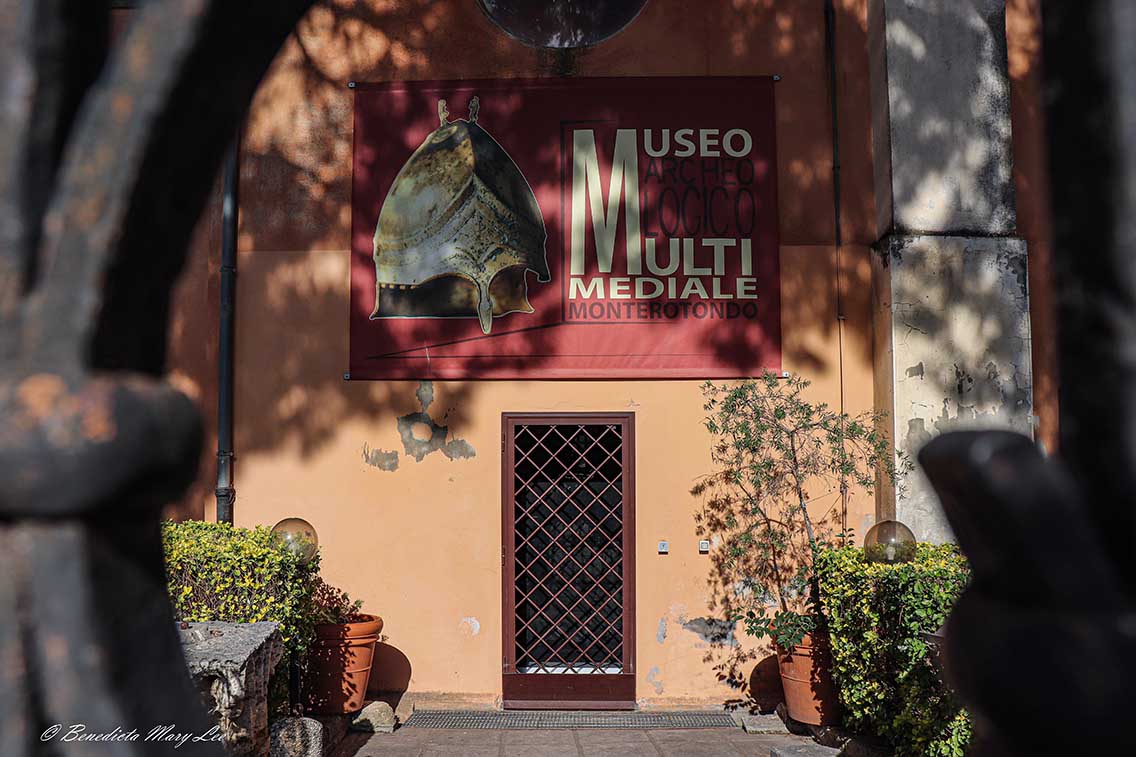
Monterotondo. Archaeological Museum

Inside Palazzo Orsini in Monterotondo the archaeological museum was set up along a route of 11 rooms with a bookshop.

It is a selection of some of the 3,000 archaeological findings of the city of Monterotondo collection.

powered by social2s

The Etruscan site of Narce of Mazzano Romano was very well known and its necropolis were among the first Etruscan site excavated. Therefore, today their remains are found in all the most important museums in the world.

Hence the idea to inaugurate in 2013 a very original virtual museum which shows the riches of the area.

The first exhibition, "The Narce princesses in the world: Faliscan Girls, Brides and Mothers between VIII if the seventh century BC" showed findings from the Danish National Museum in Copenhagen, the Musée du Louvre, the British Museum, the Pennsylvania Museum of Archaeology and Anthropology in Philadelphia, the Chicago Field Museum, the Smithsonian National Museum in Washington, and in Italy, the National Etruscan Museum of Villa Giulia, the National Museum of Prehistory and Ethnography L. Pigorini in Rome, the Archaeological Museum of Agro Falisco in Civita Castellana and Central National Etruscan Museum in Florence.

This is a different way of showing outfits and life in the ancient city through reconstructions and 3D reality. The museum has received the American Institute of Archaeology Award (2014-2016).
 

powered by social2s

A first Antiquarium of the city of Marino (in the Roman Castles area) was set up in 1904 after the discovery of many archaeological finds in the nineteenth century. It sa was destroyed by the Anglo-American air raid in 1944 and the Antiquarium was then replaced by the City Museum "Umberto Mastroianni" of Marino.

The finds and others were then collected in a new museum located in the former deconsecrated Gothic church of Saint Lucia of which the fresco of a saint remains visible.

Among the most notable works, a marble relief with Medusa's face that became the symbol of the museum.
 

powered by social2s

Subscribe to Newsletter

Discover a territory through the emotions of the people that have lived it.