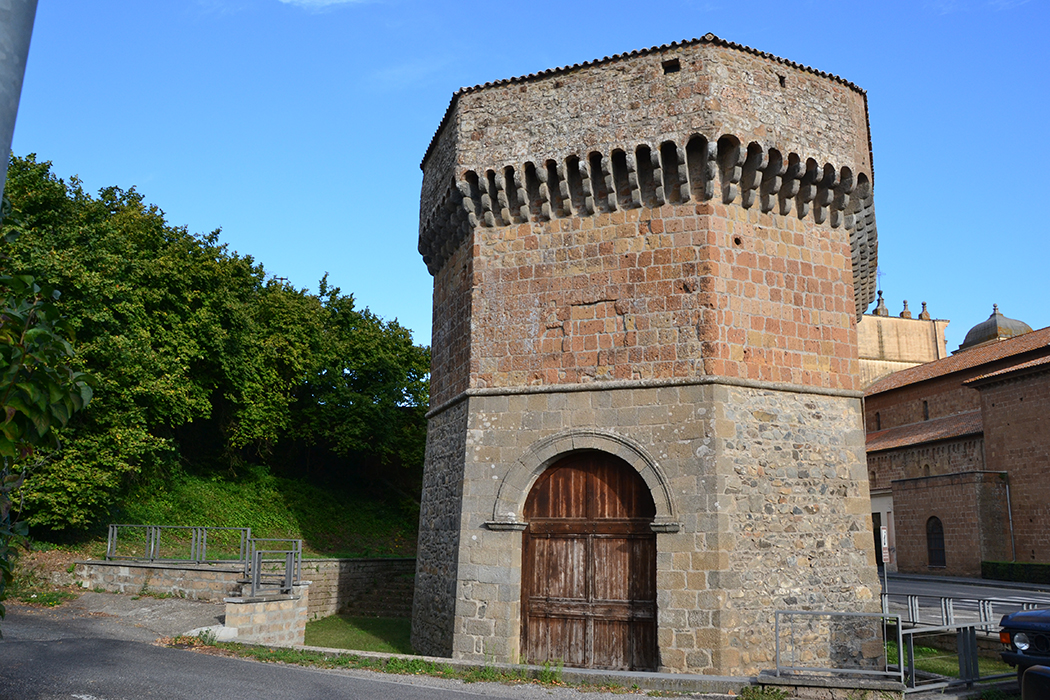
The Rittatore von Willer Archaeological Museum of Farnese collects artifacts of the habitation of Sources of the Nova, one of the oldest settlements in southern Etruria.

In one section there is an exhibition of medieval and Renaissance artefacts found in some "garbage" of the historic center.

The museum was named after the archaeologist Ferrante Rittatore Von Willer (1919-1976) very active in Maremma and in particular in the Fiora River Valley.

powered by social2s
Civita Castellana. Archaeological Museum of Agro Falisco

The Archaeological Museum of Agro Falisco of Civita Castellana collects artefact from ancient time and shows the history of the are during the time of Falisci's and the Etruscan civilisation. It shows a large collection of important production ceramics, from the oldest kneaded clay with scratched decorations and plastic clay to those of the fourth and third centuries BC.

The Falisci were an ancient pre-Roman population for whom the main centre was Falerii Veteres, today's Civita Castellana. The museum is located in the magnificent Fort Borgiano built by Pope Alexander IV Borgia.

Among the curiosities, it has a skull with ancient dental prosthesis in gold from a tomb excavated in the late 1800’s.

powered by social2s

The National Archaeological Museum of Vulci is located in the Castle of the Abbadia of Vulci, in the municipality of Canino.

The property was a former abbey dedicated to St. Mamiliano that was destroyed by the Saracens, and then rebuilt by the Cistercians in the thirteenth century and subsequently transformed and expanded in later periods when it became a fort, almost rectangular with four circular towers at the sides.

In the museum are kept finds from excavations starting from the tenth century BC, the proto-aged, and up to the Roman era.

The collection ranges from funerary urns, vases and collections from magnificent Etruscan tombs and arriving to the Roman, with anatomical ‘ex voto’, from the late republican and imperial periods.

powered by social2s

Subscribe to Newsletter

Discover a territory through the emotions of the people that have lived it.