Antiquarium
Antiquarium

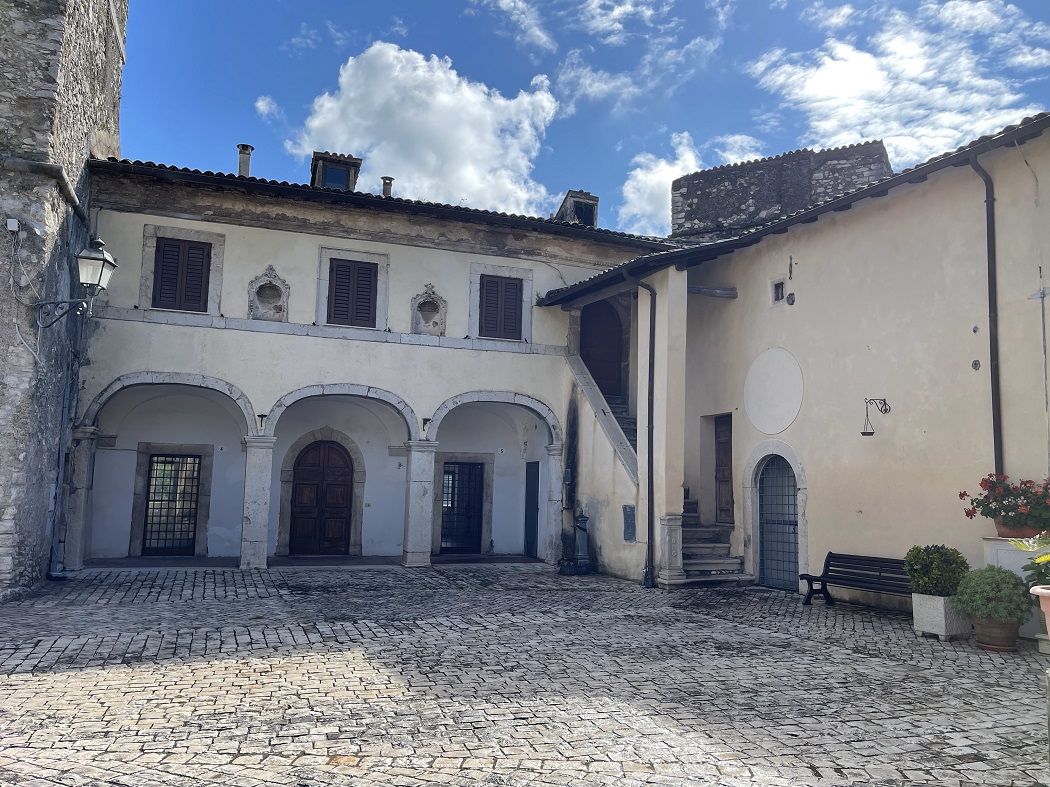
Palazzo Orsini is also the seat of the Antiquarium of Licenza, which mainly collects material from excavations in the Villa of Horace.

The museum displays pieces of frescoes, small animal sculptures, mosaics, vases, small terracotta objects, lamps, keys, surgical instruments, bricks with trademarks, large tiles, architectural and sculptural fragments.

powered by social2s
Guidonia Montecelio. Archaeological Museum Rodolfo Lanciani

The Archaeological Museum Rodolfo Lanciani in Guidonia Montecelio is located in the former Convent of San Michele.

It focuses on the 'Roman Villa', typical of the area, in its rustic and rustic-residential aspects. The Roman Villa was a small agricultural center with the main residence of a roman 'patrizio' (noble) and the barn and the warehouse and the agricultural transformation buildings. Many Italian towns are born from the ruin of ancient roman villas.

Here you will find the "Capitoline Triad" found in the Inviolata Park, representing Jupiter, Juno and Minerva.
 

powered by social2s

The Civic Museum of Formello is located in Palazzo Chigi, and collects its materials from the territory of the municipality in a period from the ninth century BC to the fifteenth century AD.

Among the materials exhibited is a bronze basin of the late seventh century BC and two statues in white marble, without heads, depicting a male figure with the drapery around the hips (the emperor) and a Priapus (fertility god) in women's clothes (the Maripara).

These sculptures were on display at the entrance to the fortified village.

powered by social2s

The Museum of Ships of Fiumicino gathers an important collection of Roman imperial age vessels that were found in the flooded area at the Port of Claudius during the construction of the International Airport Leonardo da Vinci of Rome.

It is a historical and educational museum which illustrate the construction techniques, the trade routes, life on board.

powered by social2s
Civic museum Lily Ross Taylor

The civic museum of Ciciliano collects many of the finds that were found in the ancient Roman settlement of Trebula Suffenas.

Among these, the large 45 m2 mosaic with black and white tiles found in the city that represents Helle and Frisso is being restored, the two brothers were fleeing from their stepmother. His sister Helle fell into the sea (from which the name Hellespont derives from the current Strait of the Dardanelles which separates Greece from Turkey, and therefore Europe from Asia).

Other mosaics of the city of Trebula Suffenas were moved to enrich Villa d'Este in Tivoli.

The museum is dedicated to the American archaeologist Lily Ross Taylor, born in Alabama but a scholar of late Roman Republican history.

powered by social2s
Capena. Museum of the Clock Tower

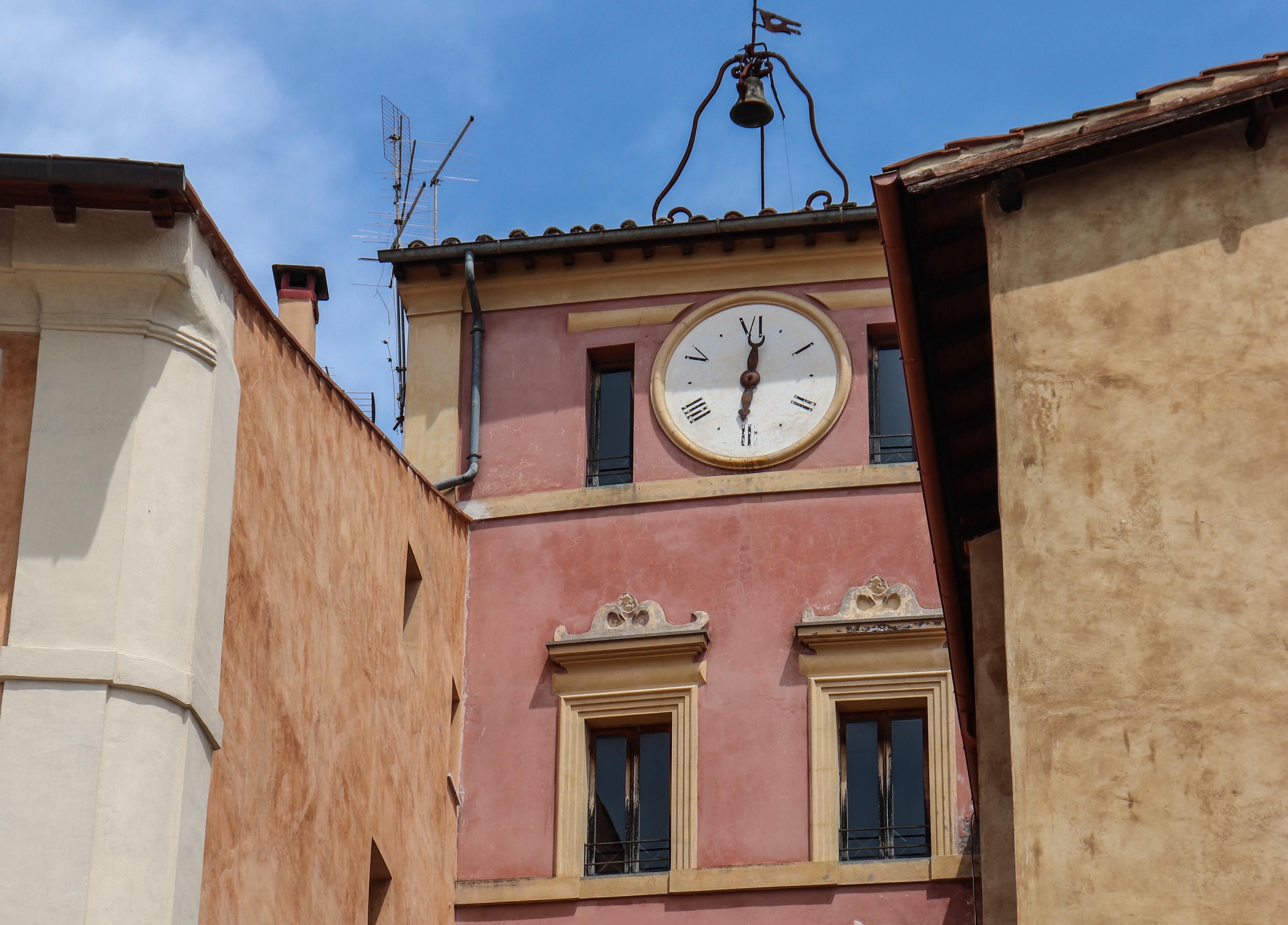
The Clock Tower Museum of Capena (Museo della Torre dell'Orologio), is dedicated to medieval archeology.

It is located in a seventeenth-century building on four levels: the first level is a water tank which, through a seventeenth pipeline, even feeds a public fountain.

The second floor houses the clock mechanism and that is weights still in operation. The third and fourth levels are home to the Museum. The building's function has always been public and, probably, was the seat of the Chancellery and citizen Archives.

Many of the museum exhibits come from a site in the fortress used as a "dump" (garbage dump), others from the community and the Monks. Most of the material is then made up into by table and kitchen pottery and can be dated between the late Middle Ages and the Renaissance.

The coat of arms of the monks is shown as a forearm with the hand gripping an upright sword. Other common objects include knives, forks, buckles, horse shoes, spurs and various vintage coins in different metals.

Unique pieces are a ceramic monstrance from the Baroque period and an unusual press for preparing the Hosts for Mass.

powered by social2s

The Civic Museum of Albano Laziale is located in the neoclassical Villa Ferrajoli which is surrounded by a splendid park and located along the Via Appia.

The villa was restored in the nineteenth century by the Marquis Ferrajoli who oversaw its neoclassical transformation. The facade recalls a classic temple and presents a large pediment with a representation of the myth of Ceres who teaches agriculture in Trittolemo.

In 1948 the villa was purchased by the Municipality of Albano and today houses a museum, in some interior rooms you can see the original frescoes painted by Giovan Battista Caretti.

The path of the museum winds along 4 sections that start from prehistory and reach the Middle Ages. It then begins with finds from the Village of the Millstones on piles of Lake Albano and goes through the Iron Age of Albalonga to then arrive at finds of the first villas of the Republican era in Rome.

The last rooms are dedicated to the finds in the catacombs of San Senatore.

powered by social2s

The Museum of "Santa Filippa Mareri" in Petrella Salto shows part of the exhibits, documents and records of the ancient Monastery of San Pietro de Molito.

The monastery was founded by the Baroness Saint in 1228 and abandoned in 1940 because it was submerged with the village St. Peter, by the artificial Salto Lake.

The ancient monastery lives again through its decorative fragments (capitals, panels, frames, badges, masks, bells of XII-XVIII centuries) and the imposing wooden door panels from 1511.

In a section about the lives of the Poor Clares, with trunks containing their ‘dowry’, and the tools of their home life and work, such as the pharmacy tools and tools for spinning and weaving. Ancient texts and important twelfth-century parchments (papal bulls, deeds, manuscripts, illuminated manuscripts) can be seen in the monastic library,

powered by social2s

Subscribe to Newsletter

Discover a territory through the emotions of the people that have lived it.