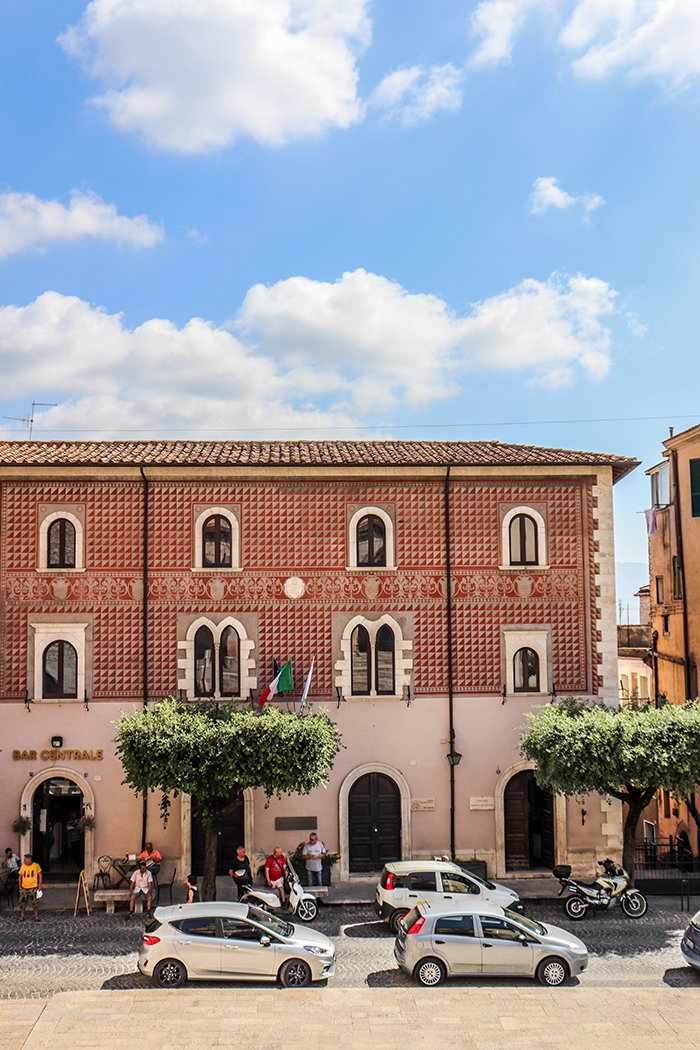
Sutri. Museum of Patrimonium

The Museum of Patrimonium of Sutri is located in a fifteenth century building that previously had been the headquarters of the Community of Sutri and the Civic Hospital.

The museum collects works that represent the history of the city including the beautiful paintings from the church of San Francesco, the medieval frescoes in the church of Santa Fortunata, dating back to medieval times and stone artifacts, including the famous tombstone of "Colony of Sutri”.

powered by social2s
Priverno. Medieval Museum

The Medieval Museum of Priverno is located in the ancient Cistercian guesthouse of Fossanova and offers scenes of medieval life in a setting of great beauty. The museum displays the early life of ancient Privernum in the plains and then when it reached its 'new foundation' in the hills during the twelfth century.
In the museum are artifacts, sculptures and paintings that belonged to the medieval cathedral of the ancient towns of the plain. Part of the museum is dedicated to Fossanova, and to the daily life of the Cistercian monks.

powered by social2s
Priverno. Archaeological Museum

The Archaeological Museum of Priverno is located in the main square in the Palazzo Valeriani Guarini in medieval layout and decorated in Art Nouveau style.
The museum is dedicated to the ancient Privernum, and consists of 12 rooms in which it traces the history from the Volscian Camilla Queen and of which you can admire the remains found in the archaeological area.

One room is dedicated to the beautiful statues that adorned the theatre and one to the status of women in the Roman period.
In the central hall is displayed a mosaic floor called ‘Domus della Soglia Nilotica’, which shows a landscape on the Nile.

powered by social2s
Artena. Archaeological Museum Roger Lambrechts

The archaeological museum dedicated to Roger Lambrechts is located in the ex Granaio Borghese ("former Bourgeois Barn") in Artena.

The building is on the main road and was built by the Borghese family in the eighteenth century as a barn and had retained its original function until the 1950s. It is owned by the City of Artena and is also home to the city council and hosts special cultural events.

The museum explains the different forms of settlement that have occurred in the area in ancient times. Among the many findings stand out the rare Neolithic lava stone axe and a beautiful bronze fibula of the Archaic period. Many middle-Republican phase findings include: beautiful pottery, clay supports, frame of clay weights, tools, weapons and much pottery, among which stand out the beautiful plates with decoration in red figures, more commonly known as "Genucilia dishes".

Curiously, on one of the weights was found an inscription with the name "Gaia". It is an important testimony of this community, which in the middle-Republican era was using an alphabet and a Latin language. Among the finds dating back to the sixth century AD, stands a fragment of an African ceramic bowl with seal, that was imported from Tunisia, and which depicts one of the twelve labors of Hercules.

powered by social2s
Alatri. Civic Museum Palazzo Gottifredo

The Civic Museum Palazzo Gottifredo is located in a palace built in the thirteenth century by Cardinal Gottifredo Raynaldo who was then the 'governatore' of Alatri and was also a politically very active in mediating between the Pope and the Empire.

The palace and the history of the cardinal are also narrated by the traveller Gregorovius who wrote that the building appeared to be achieved by connecting two medieval towers and appeared more like a edifice to defend than a palace. The cardinal reached the ripe old age of ninety and died during the plague in 1287.

The palace, however, was damaged by the earthquake of 1349 the structure with pointed arches of the roof were lost.

The building has undergone changes, and then from 1932 has become the Civic Museum Palazzo Gottifredo which collects many Roman remains, a section relating to the early history and a anthropological demonstration section where tools and artifacts of the peasant and artisan tradition of the Lazio region are exposed.
 

powered by social2s
Carpineto Romano. The Museum of the Volsci Royal Palace

The civic museum of Carpineto Romano is located inside the Aldobrandini palace, called also Volsci Palace from the name of an ancient population of the area. It houses a museum articulated in nine thematic areas.

There are sections dedicated to traditional farming objects, costumes of the Palio della Carriera, the oldest bell of Lazio (from the abbey Valvisciolo), and the history of Carpineto Romano. Palio della Carriera is one of the oldest traditional horses competition in Lazio Region and it takes place every year in august. 

powered by social2s
Frosinone. Archaeological Museum

The Archaeological Museum of the city of Frosinone is located in the historic area and embraces the numerous artifacts found in the Frosinone area.

It is divided into three sections dedicated to prehistory, the pre-Roman history of the Volsci, Ernici and Etruscans and the Roman period.

Many artifacts come from the Roman amphitheatre or were found along the Cosa river banks.

The museum also includes some classrooms and a space for temporary exhibitions.

powered by social2s

Subscribe to Newsletter

Discover a territory through the emotions of the people that have lived it.