Viterbo is located in the central part of the Tuscia that was inhabited by the Etruscan, a pre-roman civilisation which has left some great masterpiece listed in the UNESCO World Heritage. in the area surrounding Viterbo many artifacts have been found.

The National Etruscan Museum is located in the monumental fortress Rocca Albornoz at the centre of Viterbo built in 1354 by the Cardinal Albornoz. The Cardinal was the head of the Papal Army and had to reconquer cities after the papal parenthesis in Avignon - France.

It houses a rich collection and a representation of the daily life of the Etruscans and includes the reconstruction of life-sized buildings. 

On the top floor are the grave goods and the fascinating tomb of the Etruscan chariot found in Ischia di Castro.
 

powered by social2s
Valentano. Museum of the Prehistory of Tuscia and of the Rocca Farnese

The Museum of the Prehistory of Tuscia and of the Rocca Farnese in Valentano is located in the Rocca Farnese and is divided into two parts: one dedicated to prehistory and the other to the castle. In the first section there are many relics from the villages submerged in the Lake Mezzano and dated between 2400 and 1100 BC.

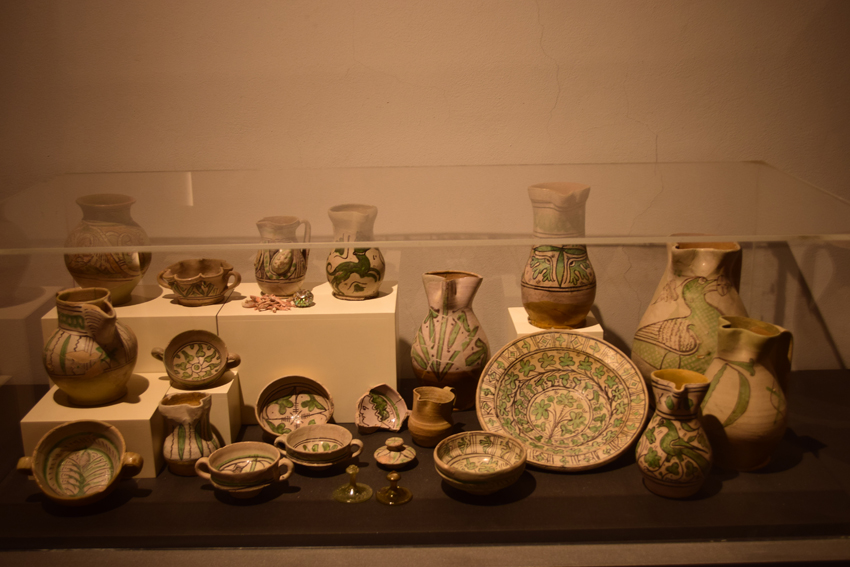
The second section begins with the period of the Lombard domination and comes from the eighteenth century. Note the rich collection of ‘thrown away’ ceramics , the pieces of ceramic thrown out by the castle, among which is the matrimonial plate of Pier Luigi Farnese and Gerolama Orsini 1519.

The visit to the Rocca Farnese of Valentano, which was inhabited by the family from the middle of 1400s until the destruction of Castro, includes an interesting architectural and artistic itinerary in which you visit the so-called "Court of Love", the well of Sangallo, the Paul III lodge and the "Scala Santa".

From the top of the great octagonal tower you can enjoy an incredible view of the entire valley.
 

powered by social2s
Tuscania. National Etruscan Museum

The National Etruscan Museum of Tuscania is located in the former Franciscan convent near the church of Santa Maria del Riposo, rebuilt according to a Renaissance style in the late fifteenth century. The convent was built in the sixteenth century and the frescoes of the cloister that illustrate the deeds and miracles of St. Francis of Assisi were made in the seventeenth century.

In the museum there are tombs that show the ways of life, customs and wealth of some of the Etruscan families in the fourth and third centuries BC, coming from the necropolis of Tuscania.

Particular attention is given to the sculptures of Vulci school who raised the sculptural art to a very high level. 

One other feature is the installation of the Vipinana grave where the sarcophagi and the furnishings were positioned exactly as they were discovered by Vincenzo Campanari, Tuscania archaeologist of the mid-nineteenth century.

powered by social2s
Tarquinia. National Archaeological Museum Tarquiniense

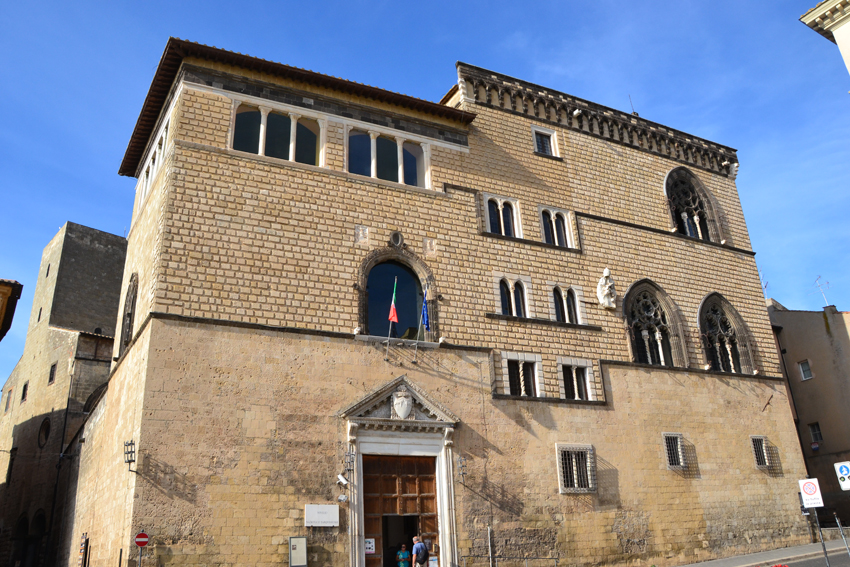
The National Archaeological Museum Tarquiniense is located in the three floors of the Palazzo Vitelleschi in the main road of the city of Tarquinia.

It is one of the most important museums in Italy dedicated to the ancient Etruscan civilisation as Tarquinia was one the 12 important Etruscan cities. The museum was opened in 1924.

It houses many of the Etruscan artifacts found in the Necropolis of Tarquinia which is included in the UNESCO World Heritage List and it gives a clear view of the daily life of the mysterious Etruscan people
 

powered by social2s
Nepi. Civic Museum

The Civic Museum of Nepi is located in the Town Hall which, like the Duomo, is built on the site of a large temple which probably belongs to the Etruscan age.

Inside the museum many archaeological finds, inscriptions, statues mostly from the Roman period are displayed. 
 

powered by social2s

The Antiquarium of Monte Romano is located within the old prisons used during the eighteenth century. It displays a wide collection of Etruscan and Roman remains.

The Etruscans objects come from a rich necropolis used between the seventh and sixth centuries BC. Beautiful terracotta sarcophagi and rich grave goods come from an important Etruscan tomb chamber of the early first century BC.

Etruscan was an ancient and mysterious civilisation which lived in the center of Italy well before the rise of Rome. Some of the first kings of Rome were Etruscan.
 

powered by social2s

The National Etruscan Museum of Vulci in Montalto di Castro is one of the most inspiring museum in Italy dedicated to the ancient Etruscan people. It is located within the archaeological park and shows interesting finds from the ancient city and the surrounding areas.

The museum is in a majestic medieval castle dating from the XI century and is located on the left bank of the river Fiora. You enter the museum after passing an imposing Etruscan built bridge, called “dell'Arcobaleno " (Rainbow).

powered by social2s

Subscribe to Newsletter

Discover a territory through the emotions of the people that have lived it.