Bassiano. Museum of the Scriptures

'[metaslider id="108097"]'
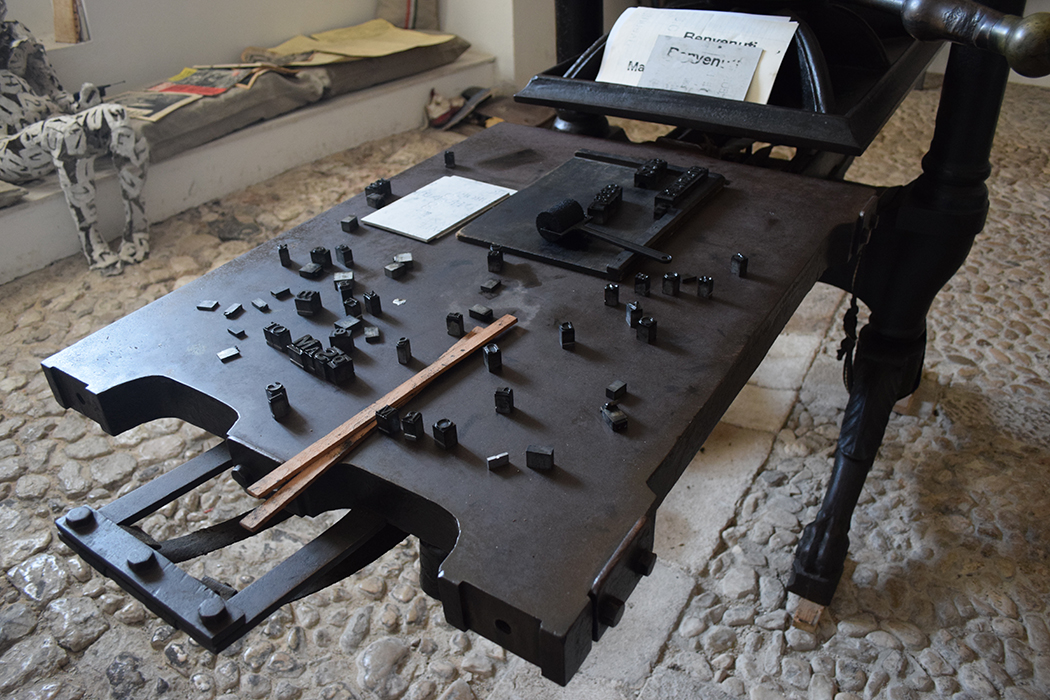
The Museum of the Scriptures of Bassiano is located inside Palazzo Cajetani and tells of the different forms of written communication from many countries and that often appear cryptic to people. Cajetani was one of the most important family of the middle age and Pope Bonifacio VIII (the Pope of the Spal of Anagni) was a Cajetani.

The museum emphasizes technological revolutions in the forms of communication and the evolution of the relationship between written and oral communication. A section is dedicated to the marginal local writings of shepherds and to the graffiti that becomes art.

The museum is dedicated to the famous publisher and printer Aldo Manuzio, born in Bassiano in 1449 and who died in Venice in 1515, inventor of the 'aldini' print characters that are on display.

A part of the museum is dedicated to a significant amount of charcoal drawings made in the eighteenth century by the detainees locked up in the building.

 

powered by social2s
Museum of Old Ironworks

The Museum of Old Ironworks (Museo della Vecchia Ferriera) is located in the oldest ironworks in the area and tells the industrial, economic and social history of the city.

Ronciglione was known as one of the most active centres of the papal steel activities since the early fifteenth century. In Ronciglione 15 ironworks operated along the Rio Vicano.

The construction of the Rio Vicano ironworks led to an economic and urban revolution, for example with the construction of new neighborhoods with wide and free flowing streets.

The oldest ironworks was closed in 1922.
 

powered by social2s
Orte. Museum of the Riunite Brotherhoods

The Museum of the Riunite Brotherhoods (Museo delle Confraternite Riunite) in Orte is located inside the great sacristy of Santa Croce church that was originally the hospital.

The most beautiful ornaments of the local fraternities are shown that are still used on Good Friday for the Procession of the Dead Christ.

Among the masterpieces of religious art, to appreciate the beauty view the "coffin of 1626", an authentic and unique Baroque crafts exemplary. The coffin is placed on the base of the Addolorata, built in about 1616. In addition to many valuable arts and crafts, there are two large lamps of the Brotherhood of the SS. Trinity and the cross of the compagnia della Misericordia, both eighteenth century.

The museum shows a sixteenth-century table of Sant'Egidio and a beautiful wooden crucifix of the fifteenth.

powered by social2s

The Museum of Costume Farnesano is located inside the Palazzo Farnese in Gradoli and presents a collection of clothes and accessories that illustrates the history of fashion in Tuscia between the fifteenth and seventeenth centuries.

The costumes were created inspired by the paintings of the sixteenth-century frescoes of the Palazzo Farnese in Caprarola and accessories such as linens, jewelry, gloves, and fans are also exhibited. In a small room you will find the necessary tools to process hemp and wool: the frame, the spindles, the bobbins, scissors.

The collection also includes a items of arms and armour.
 

powered by social2s
Civita Castellana. Ceramics Museum C. Marcantoni

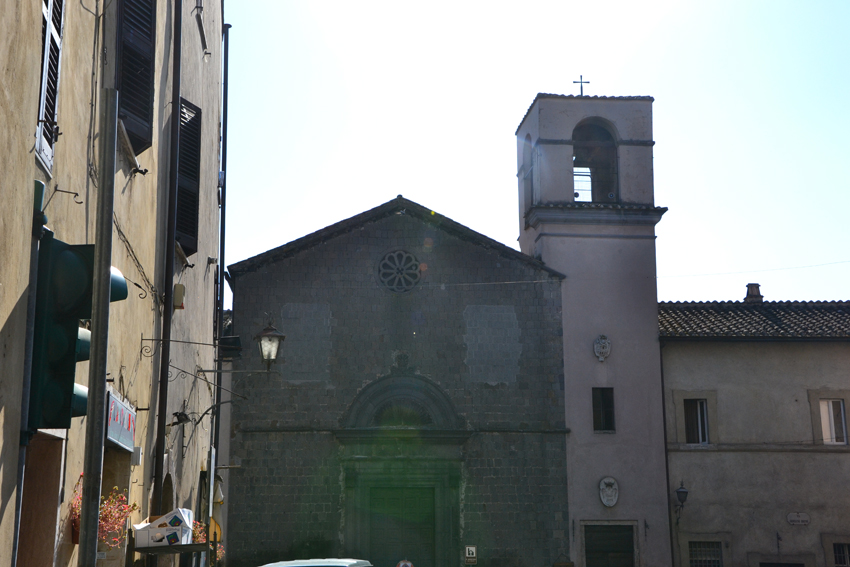
The Ceramics Museum C. Marcantoni is located inside the Church of San Giorgio, in the city centre, and documents the activities of Civita Castellana ceramics of the last two centuries: from the craft during the nineteenth century until the industrial production in the sixties-seventies of the twentieth century.

Exhibits include ceramics, a wide collection of objects and tools, including a beautiful original lathe, and vintage photos taken inside the factories.

Thanks to private donations, a section has been set up on the activities of individual ceramic factories that have played an important role (Sbordoni, Percossi, Vasey, Marcantoni, Coramusi, F.a.c.i., M.a.i.s.c).

The museum holds educational activities and workshops as well as cultural activities.
 

powered by social2s

The Museum of Banditry (Museo del Brigantaggio) in Cellere tells the history of banditry in Maremma, the area between Lazio and Tuscany regions. The museum started after the unification of Italy presenting some historical truths. A particular attention is given to the robber Tiburzi, who was called the "King of Lamone", in reference to the forest on the border with Tuscany where he was hiding.

The famous Domenico Tiburzi was born in Cellere in 1836 and administered justice according to the ‘Robin Hood’ principle of "stealing from the rich and giving to the poor."

The first victim of the robber was a country guard of the Marquis Torlonia, who was killed in 1867. His adventurous life ended in 1896 when he was captured by the police in a house near Capalbio.
 

powered by social2s
Castiglione in Teverina. MUVIS, Wine and Agro Science Museum

The MUVIS, Wine and Agricultural Science Museum (Museo del vino e delle scienze Agroalimentari), is located in a vineyard along the Strada del Vino della Teverina in Castiglione in Teverina, north of Rome along the Tiber River.

Here, in 1942, Count Romolo Vaselli started wine production, which continued until 1994 and he produced one of the most famous wine and vermouth. Since then, viticulture has developed leading to the opening of other wineries and progressively improving the quality levels of the wine.

Today the winery has been transformed into a museum that collects testimonies and finds of old farming culture as well as internationally promoting Tiber Valley Wine. MUVIS is internationally reknown and host an Hotellerie and Sommelier School with branches in other countries.

powered by social2s

The museum of horse is dedicated to King Gustav VI Adolfo of Sweden, who participated in the archaeological excavations of Blera.

It describes the history of the horse and the relationship between man and horse starting from prehistoric times.

The museum is divided into two sections: the evolution of the animal starting from its ancestors and life in the Maremma with the famous cowboys.

Horses have been an integral part of the life of the people of this area of Italy and the destiny of men has often been found intertwined with that of animals.

An external space of the museum houses the faithful reconstruction of work environments such as: the stable, the drinking trough, the farrier's shop, the taming rod, the Maremma hut.
 

powered by social2s

Subscribe to Newsletter

Discover a territory through the emotions of the people that have lived it.