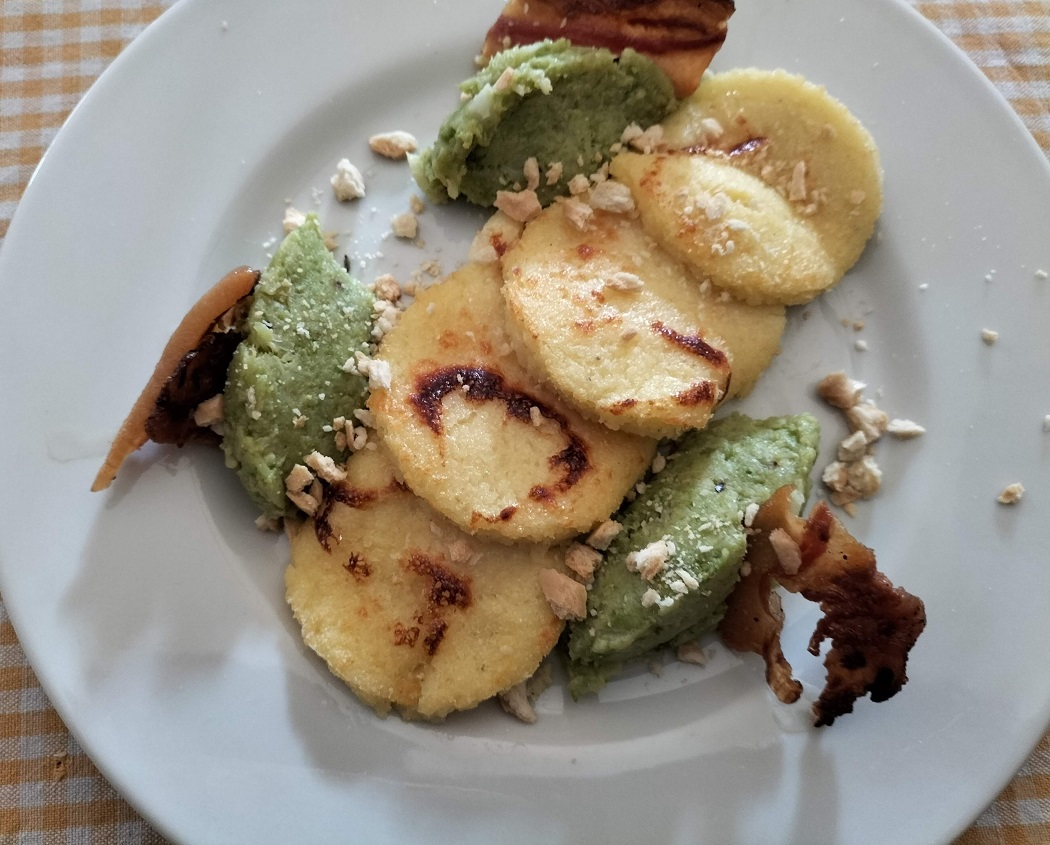
Thursday gnocchi (dumplings), Friday fish, Saturday tripe: this has been a mantra of Roman cuisine for centuries and is still respected in some trattorias.


Thursday gnocchi (dumplings), Friday fish, Saturday tripe: this has been a mantra of Roman cuisine for centuries and is still respected in some trattorias.

Puglia, a land of treasures that hides as many ancient recipes in its ancient history. Like that of Cegliesi Biscuits, a typical dessert from the village of Ceglie Messapica in the province of Brindisi, which today is making the rounds of Italy and the world.

Few refined palates knew Controne before Slow Food talked about its tasty bean. We are talking about a small Campania village with just under 800 inhabitants in the province of Salerno, inserted in the splendid setting of the Cilento and Vallo di Diano National Park.
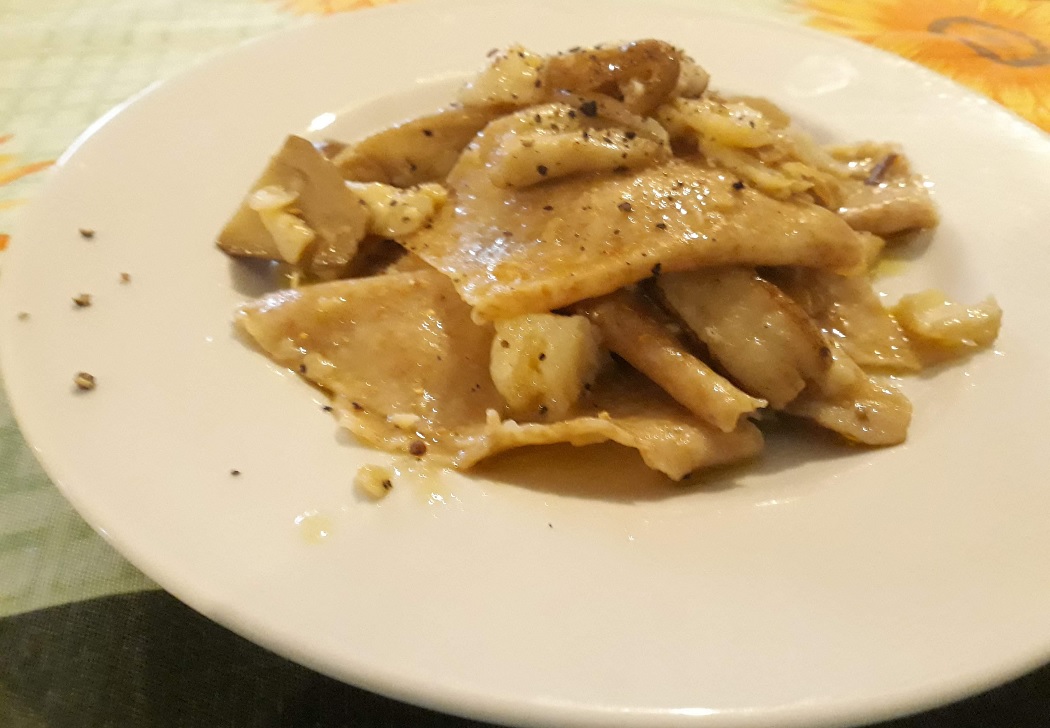
Autumn is mushroom season and its king is the porcino. There are many recipes with porcini mushrooms but that of Capranica Prenestina is truly unique. This mushroom is the main feature of a recipe with cod.

A torrid day in a Sicilian summer, or rather Catanese, where you cannot miss a dessert that today I want to tell you with a very special family recipe.
The catanese brioche with "tuppo", is known all over the world and its name derives from the traditional low chignon of women, in the Catania dialect it is called "tuppu", which they wore long ago and that still some wonderful woman of "other generation ”carries with pride. Its history of ancient origins, and its unforgettable taste make this dessert a must of Catanese pastry.
Just last year, during the pandemic, when everything seemed surreal and forced us to cuddle at home, I went back to leaf through the family recipe book to make the legendary croissants.
Here is our recipe!
Ingredients:

Deflate the dough by working it with your hands (it will be slightly sticky) and form, on a lightly floured surface, 80g balls each and smaller 15g balls.
Arrange the larger balls on a baking sheet lined with parchment paper, make a bowl on each, brush it with beaten egg with a little milk and place the smaller balls on top.
Brush the "tuppo" again and let it rise for another 2 hours, in the oven off with the light on.
Brush again with egg and milk and bake in a static oven preheated to 180 ° for 20 min. about
For the almond granita, the most classic from Catania, I usually buy the almond block, there are many artisan producers in Sicily who keep the flavors as genuine as they used to be ...
250 g of almond paste, 500 ml of water and a pinch of salt.

Add the water and a pinch of salt to the dough that you have made into small pieces and in a container dissolve the dough until the mixture is homogeneous. Pass the mixture through a colander to have a creamier granita. Put the container in the freezer for about 1 hour, breaking the ice crystals every time they form, up to about 4 hours, when you get a creamy consistency, taking care with the tines of the fork to "scrape" the granita to give it back its consistency desired.
Of course I invite you to try the artisanal ones in the Catania area that will amaze you with their goodness and the difference in tastes to choose from, all to be tasted, such as: figs and mulberries, my favorites, but also toasted almonds, lemon, strawberry, peach … Depending on the seasons, because the km0 and following the season for a correct eco-sustainability makes this product the winning key!
I have always been passionate about the cuisine and recipes of the tradition of Catenanuova, my town. In the family we jealously guard an notebook where many recipes are written down handed down to us by our grandparents. It is nice to reread them, pass them on and make them again together with my children.
They are often written with misspellings and misspelled words, but for this reason we love them even more, because they are authentic and pass on to us the love for food of a purely peasant culture which, despite all the difficulties, did not give up on holiday sweets such as the "Ciciulia" at Easter and the "Cucciddati" at Christmas.

Or not being able to buy fish because they did not have the economic possibilities (or perhaps because they were far from the sea), they invented "pisci chiani" (flat or shallow fish) made with wild thistles, flour and egg batter and with addition of salted anchovies that could be kept at home and used as needed.Flour was a lifeline in the post-war period and wheat crops grew greatly in our territories, from there many both sweet and savoury preparations were made with this versatile ingredient.
I still remember that as a child I watched my mother and my grandmothers knead the homemade pasta and then roll out the "Fogghia" as the thin sheet used to make tagliatelle and lasagna is called in our town.
One day I told them I wanted to do it myself and I started repeating their gestures. Suddenly my mother disappeared and I saw her come back with the neighbours she had called to show them how I rolled out the dough. This memory remains indelible in my mind, I must have been a little over 10 years old but it seems vivid to me as if it had happened just a few minutes ago.
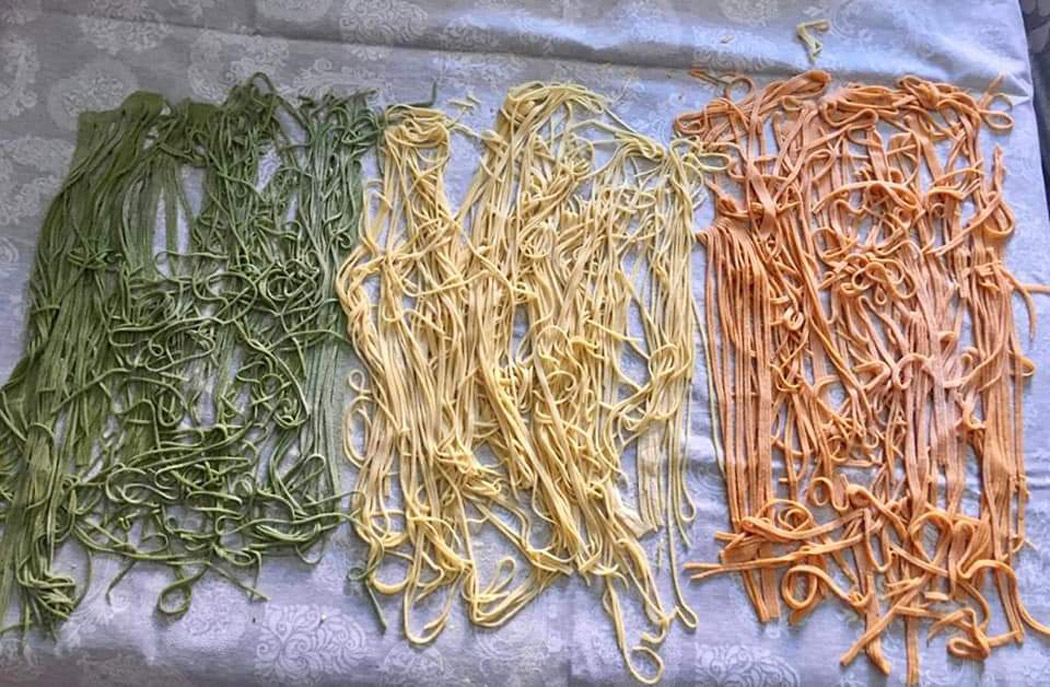
I am also handing down this love to my children who, despite being three boys, know how to cook, make bread in the stone oven as it used to be and above all they know how to roll out pasta with a rolling pin as my mother taught me.
You can see all the photos and videos of traditional recipes that I have made.
Caponatìna is a typically summer dish made above all with aubergines, peppers, celery, onion and which was cooked early in the morning due to the strong heat that characterizes our town. And for this reason it was called capomatìna and hence the name caponatìna.

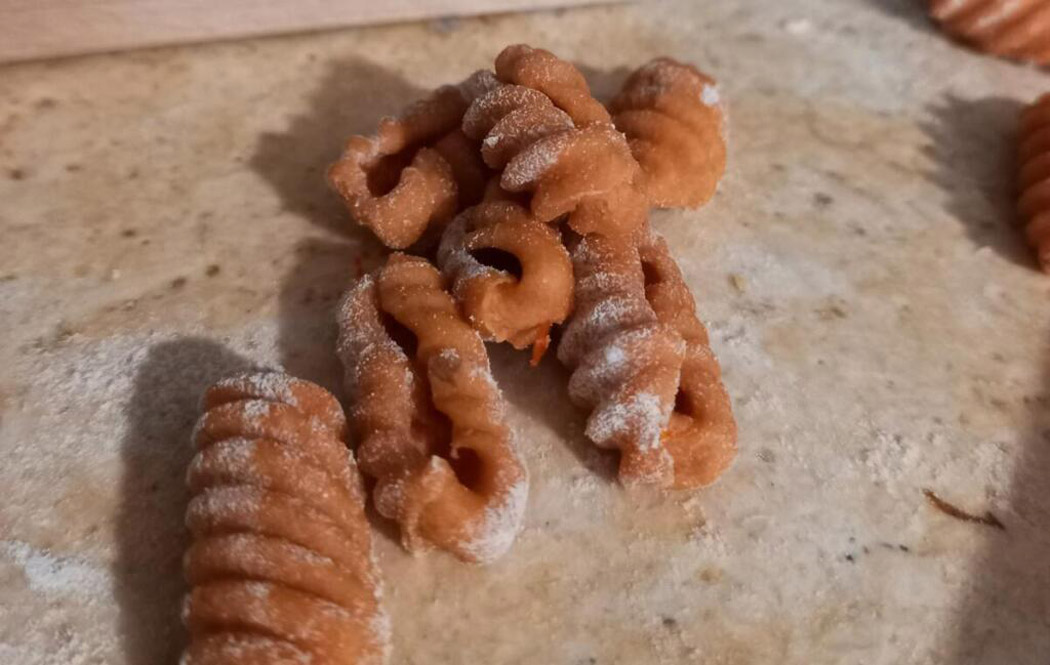
The Cavatelli gathered us around the table to prepare them all together, it was enough to knead the dough and make rolls which were then cut into small cylinders which were given the shape taken out with the help of a fork or grater.
Wild fennel, asparagus, cardoons (artichoke thistles) are only a part of the products that the earth offers us spontaneously and that allow us to make our local recipes such as "pasta a milanisa" with fennel and toasted breadcrumbs. It is not known why it is called ‘Milanisa’, certainly in Milan they do not have fennel and the only ones who know how to cook it are the immigrants who have them sent to their relatives.
Pasta with fennel can be found in many places in our Sicily and is cooked more or less in the same way with small variations.
Even a rainy and cold day, considered bad for obvious reasons, can give us beautiful childhood memories in our family of origin. When it rains in winter and there is bad weather, the breakfast of when I was little comes to mind.
In those gloomy days my mother made "Frascatuli" with "frittuli" and seasonal vegetables. It is a polenta made with chickpea flour, broccoli and pork (frittuli). And with the light on, because it was pitch dark, they all gathered us at the table. It was a way to warm up in a not so distant time, when we didn't have heating in all the rooms. A legacy of our grandparents who went to the fields in all weather conditions and needed the energy to do their hard work.Do you know which are the edible flowers par excellence? The flowers of the thistle, which we know as "cacuoccili" artichokes. Excellent and versatile, they can be cooked in many ways, but the recipe that I love most and that reminds me of my childhood is "Stuffed artichokes" with breadcrumbs. Each town has a different way of dressing chopped bread. I put pecorino cheese, mint, garlic or onion, stale bread, salt and pepper, mince everything and fill the artichokes. You can also add sausage or bacon and cook over low heat in a pot, with a little water or roasted in the embers. On Easter Monday the feast cannot be concluded if there are no roasted artichokes.
Here is the tradition of the holidays that returns to remind us of our origins.
The Ciciulia are not very sweet sweets, pardon the pun, which have their origin in a historical period of our peasant culture, when everyone raised hens and these, especially in the Easter period, tripled the production of eggs. Today we made the dough very similar to that of biscuits, but before, sweetened bread dough was used and the children could not wait to receive them as an Easter gift. I always use my grandmother's recipe where semolina flour is mixed with 00 flour and then sugar, lard, eggs and milk are added.

At Christmas you can't miss the Buccellati "Cucciddati" with figs and honey.
I remember when as a child I looked at my mother and my grandmother who with their skilled hands prepared the ingredients and baked these traditional sweets. I also tried to make them and was proud of my first shapes, even if they were a little gouged. Today as then, every year I make my cucciddati.
The shapes are not of haute patisserie, but I like to make them very simple and homemade, soaked in granulated sugar before baking them. In any case, whatever shape or decoration we choose to use, we renew every year a tradition that has been handed down for generations.
My mother, my grandmother, my great-grandmother and those who before them took the products of the earth such as flour, almonds, figs, and then lard, honey and worked them with love and dedication, remaining faithful to an ancient recipe, they handed down a memory that takes us back beyond time and space and makes us relive the emotions of childhood, when the fire of the stone oven warmed us, while we worked and made our delicious recipes of the gastronomic history of Catania.

Pasta alla Norma is one of the symbols of our Sicilian cuisine and its history seems to be linked to a tribute to Vincenzo Bellini, a well-known composer from Catania. Others, on the other hand, attribute it to the humour of the writer Nino Martoglio.
It was December 26, 1831 when Vincenzo Bellini's opera Norma premiered for the first time at the Teatro alla Scala in Milan, becoming the most famous of his ten works and immediately enjoying great success.
It is said that a Sicilian chef created a dish for the occasion, Pasta alla Norma, that was served on the evening of the premier of Bellini's opera,. A first course was also dedicated to the name of Norma's first interpreter, the soprano Giuditta Pasta.
Bellini brought his work to the stage of the Scala in Milan, which was later made immortal by the interpretations of Maria Callas, Montserrat Caballè, Joan Sutherland and Cecilia Bartoli.

The other version of the origins of the Catania dish tells that in 1920 a lunch was held at the Musco-Pandolfini house, in via Etnea in Catania (the main street of Catania).
Around the same table were found Angelo Musco, his sister Anna and her husband Giuseppe Pandolfini (the hosts), the nephews Turi and Janu, Janu with his wife Saridda D'Urso, and Nino Martoglio, who with the well-known actor had undertaken an artistic bond for some time.
When the dish was brought to the diners, Martoglio was struck by the scent and quality of the Sicilian dish and turning to the cook he exclaimed: Signora Saridda, this is a true Norma.
A joke that gave its name to Catania's “Pasta diva”.
A state of excellence that was in fact renamed "made to the standard" or "made to perfection!"Pasta alla Norma are Mediterranean aromas combined in a single dish! A vegetarian dish that is the gustatory pillar of the Catania summers, a riot of flavours.
Our family recipe brings the Italian colours and the spirit of Catania: a simple dish that at the same time has an effect for our senses: colour, aroma and flavour.

Wash, dry and cut the fresh copper tomatoes, or Piccadilly tomatoess, to make a tomato sauce. Put some Sicilian EVO oil on a pan and add 1 clove of clean whole garlic, to be removed shortly after.
Then add the tomatoes and cook for about 30 minutes with some fresh basil leaves. After this, blend everything in a mixer or pass through a vegetable mill.
Cut the aubergine partly into thin slices and partly into cubes, purge them with salt and rinse them under running water, then dry them with absorbent paper. Fry the aubergines in plenty of extra virgin olive oil heated to a temperature of 170 ° and place them on absorbent paper for fried foods (straw paper) to dry the excess oil.
Cook the pasta, preferably spaghetti or even Sicilian casarecce or sedanini rigati, in salted water and drain it al dente.
Meanwhile, add some fresh basil leaves to the fresh tomato sauce and dip the pasta into it. Add the pieces of fried aubergine and leave whole slices to serve on the dinner plate together with a generous sprinkling of grated salted ricotta!
A masterpiece of Catania and Mediterranean cuisine!

My memories are made of images and flavors, which always bring me back to those of a child and to Zafferana Etnea.
Called the "Pearl of Etna", due to its beauty and position at the foot of the volcano, it is a town with an ancient name and Arab origins, which in fact recalls the colorful pistil of Saffron, which blooms in the fertile volcanic soil in autumn. with impetus, like small sprays of lava.
Saffron is also a fundamental ingredient in Sicilian cuisine!
And every time I went up to Zafferana with my family, it meant that a Sicilian pizza was guaranteed! As were the walks to the belvedere, while the music of some concerts brightened the evening.
Zafferana Etnea is also known for many other typical products. Its honey, the tea leaves, the exquisite soft “skier's” biscuits covered in chocolate, so called because it was the favorite dessert of the Alpine Club skiers and of course the famous Sicilian pizza!
Sicilian pizza spectacle for sight and palate is a ritual that is consumed all year round, and is a "must-have" for lovers of fried food and typical local flavors.
The most sought after recipe is the secret one of a particular bar called Donna Peppina. Many have tried to imitate it and of course I too have been making my family version for years!
When the warm season begins, until early autumn, and vacationers and tourists go up to Zafferana to get away from the heat of the city, a dinner with the "Siciliana" becomes inevitable, where the locals compete for reservations and the result of this frenzy it is similar to a square in celebration!
Today I want to tell you the recipe of my "Siciliana"!
For the dough:
For the stuffing:
Preparation:
 My Sicilian is made with 0 flour and re-milled semolina flour, milk and water, a piece of lard, sugar and brewer's yeast, for the filling we need Sicilian anchovies in oil, a little fresh onion or spring onion, Sicilian black olives, black pepper and typical Sicilian cheese, “Tuma”, a fresh unseasoned cheese made from sheep's milk, which gives the pizza a creamy heart.
The dough is worked like that for classic pizza, letting it rise until doubled, after you get balls to rise for another 15 minutes, then roll out the balls about 1/2 cm and stuffed with ingredients
Sicilian and close the circles of the dough in a crescent, trying to seal the edges well to prevent the dough from leaking out during cooking.
 After waiting another 15 minutes, the time for making the pizzas, he plunges them into the lard ... and that's where the wonderful transformation into a golden pizza takes place, crumbly outside and with a soft and tasty heart inside. Alternatively, you can fry the sunflower oil, but I assure you that the difference is considerable! A delight!
Honestly, the original Sicilian ones are preferable to home-made ones, but not only for their goodness, what makes a favorite and good food, in my humble opinion, is also given by many other aspects related to the territory, its people, memories that make it unique!
My memories are always those of a child with the family: that every time she went up to Zafferana, it meant that a Sicilian pizza was guaranteed, as were the walks to the belvedere, while the music of some concerts cheered up the evening.
The last memory before leaving was the smell of orange blossom and the wet earth of the freshly watered flower beds, summer was upon us.
Page 9 of 23



Follow us