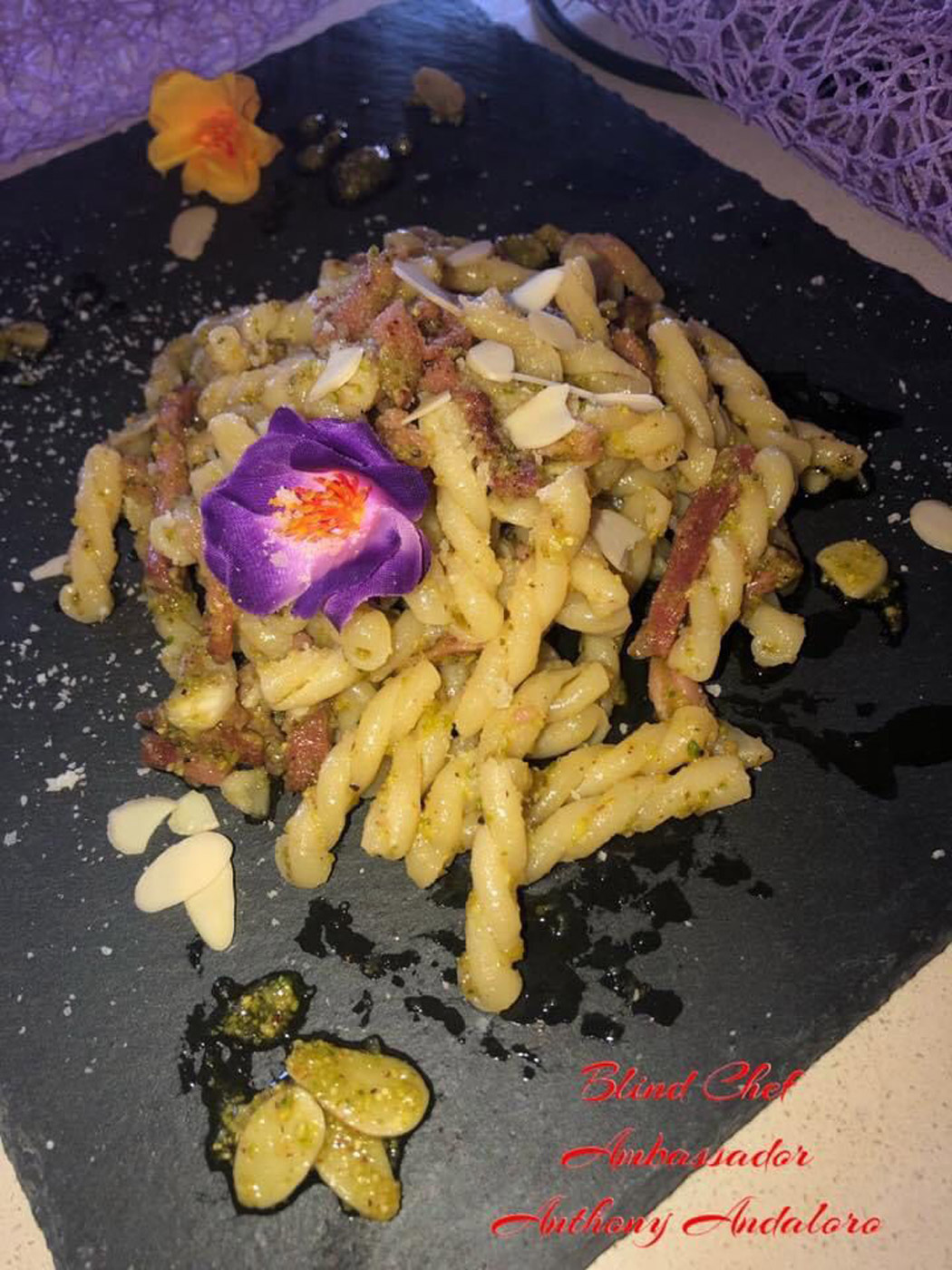
A recipe by Blind Chef Ambassador Anthony Andaloro, the chef without sight

If you look for the name of the Sicilian Blind Chef Anthony Andaloro on the web you will discover that until a few years ago it did not exist. Anthony was in fact born in 2013 when Antonio Andaloro had lost his sight and, after a period of depression, a new season of life began.

It is a different and in some ways exciting season. Not better or worse, but a totally new phase of savouring life and relationships with others. And if you meet him face to face you will always find him smiling!

But let's start from the beginning in order to better tell the birth of Anthony and his incredible adventure of being one of the few blind chefs in the world.

Antonio's problems with eyes already had come when he was a child and he was just 6 years old. He was practically visually impaired for most of his life and had hoped in vain for technology and surgery.

Anthony is the rebirth but also his new challenge to help all people who have physical problems and who come to the edge of depression.

It's not losing sight that creates the real problems. In fact my life has been reborn and I am an example of how nothing is lost and now I have a 2 and a half year old son and a job that takes me all over the world.

The real problem is feeling alone and not having the strength to face the change."

Antonio's earlier life had also been driven by the desire to challenge conventions and, as a visually impaired, he had chosen to become a master decorator. A profession that he practiced until the total worsening of the disease.

Then with blindness came depression.

"Then for 7 years I studied to become a 'fusion / innovation / sensorial' chef. And it could not be otherwise because the senses are the ones that guide me in the preparation of dishes and in the choice of pairings. "

Today there are 4 blind chefs in the world: 2 in Italy (Anthony and Antonio Ciotola from Ancona) and 2 in Chicago (Laura Martinez and Christine Ha, a Vietnamese winner of the American edition of Masterchef in 2012).

But let's go back to Anthony, his kitchen and the events he organizes: the sensory dinners. For those who have already had experience of 'dinners in the dark' (often organized by many organizations of blinds to make people with normal sight understand their situation), Anthony's are different. The light is very dim but not absent, you dine by candlelight and blindfolded but if you have panic attacks or discomfort you can take off the blindfold.

Before COVID he had organized 142 sensory events around the world, most notably in Cappadocia in Turkey.

It should be emphasized that all these events serve to finance philanthropic associations that deal not only with blinds but with those with disabilities in general. In fact, this is Anthony's true strength, that of having become an example of strength, a true 'warrior' who can help others with his positivity.

Today Anthony Andaloro is Blind Chef Ambassador, famous all over the world and an example for those like him. He was awarded by UNESCO in 2017 with the Quality Food award and appointed Chef Ambassador of Solidarity in 2019. He is trustee of the disability sector of the Sicily region of the Disciples D 'Auguste Escoffier.

Disability then became a strength that gave him unimaginable peace and energy when he was still uncertain of his condition. Today he has remarried and has a two and a half year old son that he simply sees with different eyes.

He created the television format "I don't see us from hunger but I see with my senses" produced by Me.Pa. Production, which is shot for web TV in particular in Sicily where he was born. He comes from the province of Messina and from there he is broadcasting on EventiMessinaweb TV channel yuotube e page FB to reach his audience in Italy and around the world. An audience that awaits him and follows him with passion.

However, his passion is fusion cuisine where the Mediterranean brings together East and West. And as an example of this continuous search for new dimensions and gastronomic experiences, plunging into a journey beyond the dark with his taste buds, he presents us with a very simple but very tasteful recipe.

Recipe of Braids with Pistachio Pesto, Almond Flakes and Speck

Ingredients for 4 people:

  • Fresh Pasta (Braided format or to your liking) 320 gr
  • Speck Alto Adige PGI 200 gr
  • Bronte DOP Pistachio Flour 100 gr
  • Toritto Almond Slices 50 gr
  • Pecorino Romano DOP 50 gr
  • A knob of Butter
  • Extra virgin olive oil to taste
  • Salt and Pepper to Taste.


Bring the water for the pasta to the boil in a saucepan and add salt and in the meantime prepare the pesto. Put the pistachio flour and pecorino Romano in a bowl, pour a little extra virgin olive oil and mix until a homogeneous mixture is obtained.

While you wait for the water to boil for cooking the pasta, brown the speck with a knob of butter in a pan.

Drain the pasta and combine everything in a Wok adding the almond slices. Sauté for a few minutes and serve by sprinkling a handful of pecorino on top.

Wine? I would combine pistachio pesto with a white wine "Grillo" from a native Sicilian vine.


powered by social2s
The Sicilian Cannolo: a very sweet story to savour

When our teacher entered the class and asked us which dish, in our opinion, could best tell the story of our town, in chorus we answered “cannoli”.

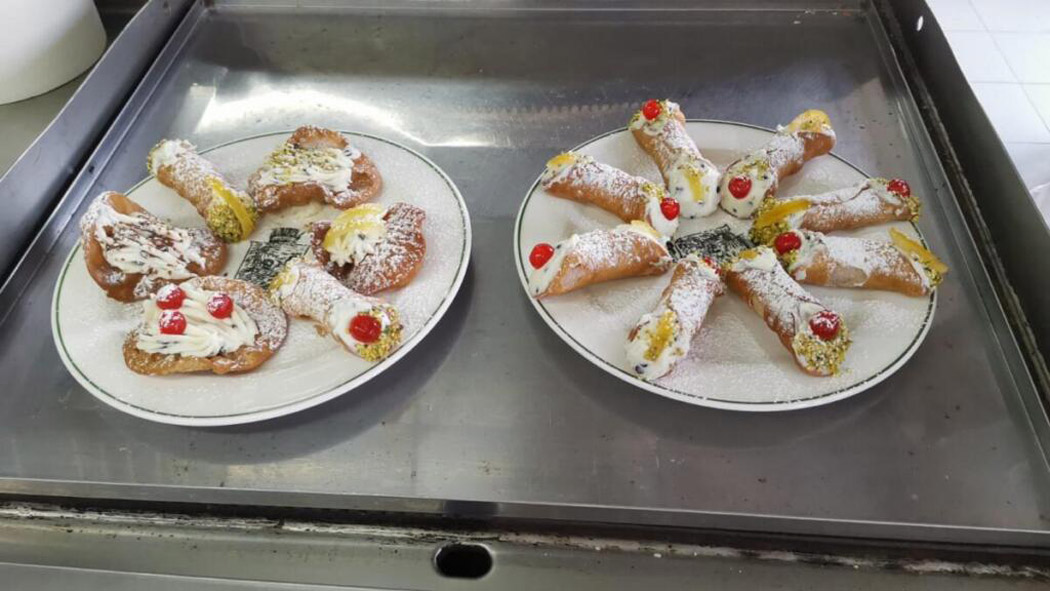
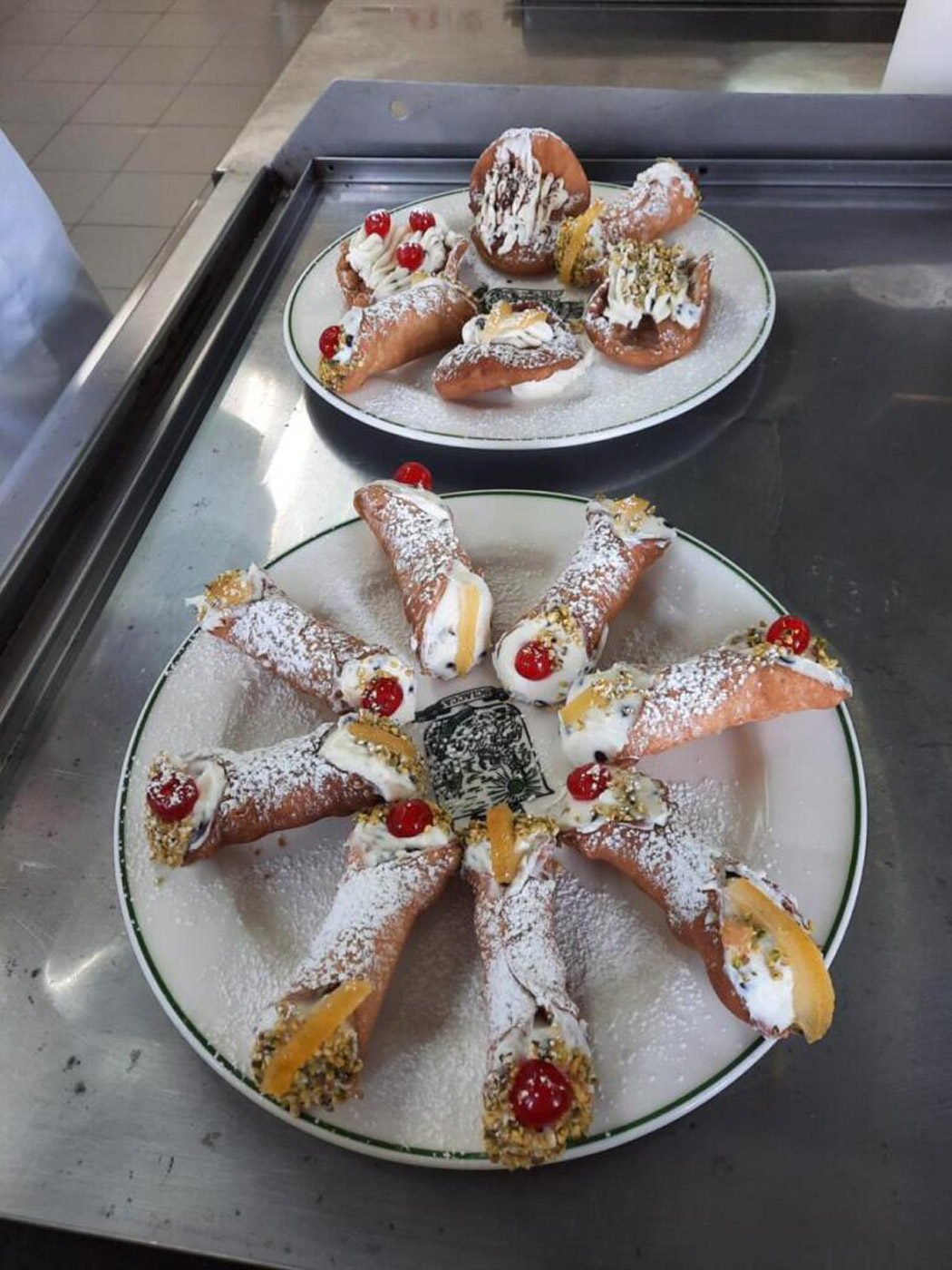
A delicious and truly unique dessert in shape and taste and, certainly, one of the most popular Sicilian pastry specialties throughout Italy.

With the skilled guidance of our kind teacher of literature, we researched the history of this delicious pastry product. Imagine our surprise when we learned that its name is linked to the river reeds on which, until a few decades ago, the wafer was rolled during its preparation.

It is a dessert rich in history and already Marco Tullio Cicerone, in 70 BC. during one of his trips to Sicily, he was so enchanted that he defined it: “tube of flour filled with soft milk cream”. A cylinder made with flour, with a very sweet filling based on soft ricotta cream.

Over the centuries there have been many variations of recipes and there is still discussion about the true origin of cannoli as we know it today. In fact, there are several versions suspended between history and legend.

We certainly know that the Arabs were the first to sweeten ricotta to form an exquisite cream, the basis of Sicilian pastry, which the women of the Caltanissetta harem, the Arab Kalt el Nissa (castle of women), used in their cannoli. in the phallic form, as a "sweet" homage to their emir.

Some historians, on the other hand, argue that the cloistered nuns of the Convent of Santa Maria di Monte Oliveto in Palermo invented the cannolo, when at carnival, as a joke, they would fill a tub with ricotta cream and would replace the classic taps with cannoli. In fact, in Sicilian the word cannolo just means tap!

This dessert accompanied everyone's childhood as a conclusion to our Sunday lunches but it is also and above all the symbol of our Sicily. A land enriched by many ethnic, cultural and gastronomic mixtures linked to the various dominations that have influenced its treasures and flavours.

After having rediscovered its history, with our talented cooking teacher we tried our hand at its preparation.

Sicilian Cannoli Recipe

Ingredients for about 16 pieces

For the cannoli rind:

  • 00 flour + a little for sprinkling 250 gr
  • 1 level teaspoon of unsweetened cocoa powder
  • granulated sugar 50 gr
  • lard (alternatively soft butter) 30 gr
  • 1 beaten egg (to use 1/2 for the dough and 1/2 for the cannoli closure)
  • 1 glass of Marsala, about 60 gr
  • A tablespoon of white wine vinegar
  • Cinnamon powder
  • A pinch of vanilla essence
  • salt 3 gr
  • Frying oil

For the cannoli filling:

  • perfectly drained sheep ricotta 800 gr
  • granulated sugar 300 gr
  • dark chocolate chips 120 gr

To decorate:

  • Powdered sugar
  • Chopped pistachios
  • Candied orange
  • Chocolate chips
  • Candied cherries
  • We started with the preparation of the cream. After having perfectly drained the fresh sheep ricotta, we transferred it to a container and mixed it with the granulated sugar. We then added dark chocolate flakes to the ricotta and left it to stand in the fridge for several hours.

    Then we dedicated ourselves to the zest and to make it "as God commands", we made a dough based on flour, lard, sugar, wine vinegar, marsala, an egg and a small percentage of cocoa powder.

    After letting it also stand in the fridge, we rolled out the dough to form a very thin sheet, cut it into squares which, when rolled up in aluminium cylinders, were fried.

    Only when the waffles have cooled completely did we fill them with the classic ricotta cream.

    The secret to enjoying a perfect Sicilian cannoli is to add ricotta when serving it to ensure that the wafer always remains crunchy and creates a pleasant contrast with the enveloping creaminess of the ricotta.

    The last stage of preparation is the garnish which represents the most creative stage. In fact, you can choose between different variants: candied orange and / or candied cherry, or chopped pistachios. Finally, sprinkle the wafer with the icing sugar.

    Eating a cannoli is truly magic!


powered by social2s
Pasta alla Puttanesca and Pasta alla Buttanesca Siciliana

Pasta alla puttanesca is one of the many dishes of the Italian gastronomic culture that does not have a precise and codified recipe.

It does not even have a "scientifically" proven geographical connotation such as to be claimed as exclusive from one territory over another.

However, we can say that it is a recycled dish, or rather, an easy to assemble pasta with canned products available in all kitchens and, above all, its preparation ranges across  all families and restauranteurs from north to south of the boot.

But this does not mean that it lacks its own taste identity!

But why and from what does puttanesca pasta come from? With this term, certainly not sober, which suggests the oldest profession in the world or those brothels so widespread in Italian society prior to the Merlin Law?
Many more or less well-founded or imaginative stories are told about the origin of pasta alla puttanesca. Among these, one concerns the habit of eating pasta fast, during meal breaks in brothels. But I like to think that it all started with the bizarre exclamation of an innkeeper: "Puttana Eva" (a very common expression in Italy and often used as an interlayer during moments of anger).

The innkeeper cook would exclaim this at the entrance of yet another diner, but with the kitchen already closed and all the dishes washed and finished.

"What am I going to cook for him now?" he asked himself, just not to let it escape!

It certainly did not lack imagination and creativity. Then, he took a little of all the canned products: salted anchovies, capers, dried tomatoes and canned tuna, black and white olives. Garlic, as well as chilli, pepper and oil are never lacking in the kitchen.

He added a sprig of parsley and oregano, a touch of grated old cheese and invented the "Pasta alla puttanesca", one of the most popular pastas for tourists visiting Italy.

Yes, of the different schools of thought, this is one of the most credible hypotheses. But being, I repeat, one of the many famous Italian pastas not codified, Cucinare per Passione evolves into "Sicilian Buttanesca", because here in Sicily, the host would have exclaimed: "buttana ra miseria".

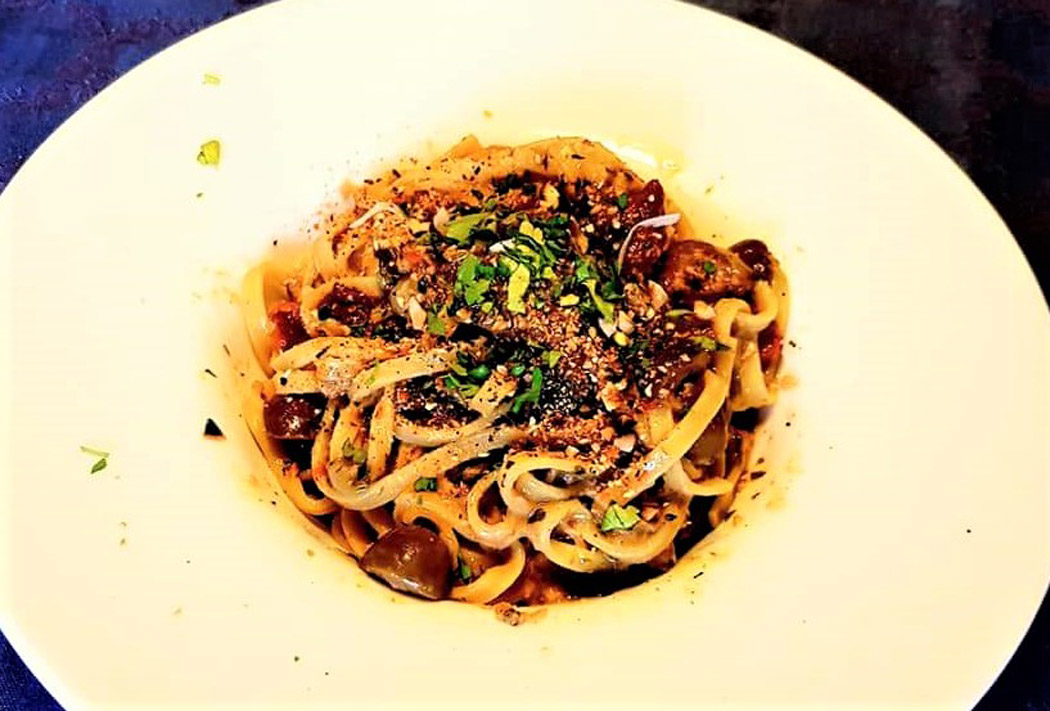
Then we add zest, lemon juice, magic tuna bottarga powders and toasted and spiced breadcrumbs and crunchy toasted almond grains. And here the uncoded Italian puttanesca becomes "Tagliolini alla Buttanesca Siciliana in the fashion of Cooking for Passion." Because of all the ingredients necessary for the preparation, Sicily is the undisputed protagonist, with its historical and popular products.

Sicilian ingredients. Anchovy from Sciacca, Favignana tuna and bottarga, Nubia garlic, Siccagno dried tomatoes, “e ciuruse” olives in brine, Pantelleria capers, "Val di Mazara" EVO oil, fresh and dry red chilli, almonds from the Sicani mountains, Sicilian bread, fresh and aged cheeses from the Ragusa highlands or the Sicane and Madonite hills, citrus fruits from the Conca d'Oro and Piana di Catania.

You are spoiled for choice. But there is no embarrassment to use all or only a part of them.

Recipe for Sicilian Buttanesca Pasta

The complete recipe and the dish in the tasting version and in the "belly" version 1.

Ingredients for two servings:

  • 200 gr of pasta of your choice (short or long). I used semi-fresh tagliolini
  • garlic
  • fresh red pepper
  • anchovy fillets
  • salted capers
  • dried tomato
  • black and white olives without pits (please, not the horrendous supermarket pitted olives that taste like soda)
  • parsley
  • extra virgin olive oil
  • Origan
  • canned tuna
  • freshly ground black pepper
  • freshly grated caciocavallo and pecorino cheese
  • juice and zest of 1 lemon (I used a lumia)
  • flavoured breadcrumbs
  • chopped toasted hazelnuts.
  • white wine to blend to taste.

No added salt: there is already enough in the ingredients.

To start, prepare a coarse mixture of capers, anchovies, chilli, garlic, olives and dried tomatoes and put it in a pan with 3 tablespoons of extra virgin olive oil. Leave to fry for a couple of minutes over high heat.

Deglaze with half a glass of white wine to taste (I didn't use it). Then soften the sauce that tends to dry with a ladle of pasta cooking water and add the canned tuna, a pinch of dried oregano, a sprig of chopped parsley, a sprinkling of freshly ground black pepper. Let it cook until it has absorbed the ladle of water.

With the heat off, scrape the zest of a lemon and the juice of half a lemon and add it to the sauce to give a touch of freshness to the mixture that tends to excessively flavour.

Drop the pasta in with plenty of freshly salted water. I used the tagliolini, but any shape of long or short pasta, fresh or dry, is fine. The pasta for the Puttanesca is not coded with the pasta very al dente, rekindle the fire on the pan and add the pasta together with a couple of ladles of cooking water.

Allow part of the water to be absorbed to 're-cook' the pasta during cooking, handling it with a fork. Stir in the joyful Sicilian concoction and the pasta over high heat by adding another drizzle of extra virgin olive oil, the mix of grated caciocavallo and pecorino cheeses, and sauté vigorously.

Et voilà, here we are ready to exclaim: "Sicilian Buttanesca!" and to serve on plates to taste.

Complete the dish with a small piece of fresh parsley, a drizzle of raw extra virgin olive oil, the bottarga and toasted breadcrumbs and chopped toasted almonds.

Bon appetit from Fabrizio Ricotta

powered by social2s
Tuscan Liver Pan in the Artusi 374 version

I learned how to cook this dish about ten years ago from a lady of about 75, a strong woman of few words but with a very tender heart.

I met Rita as soon as I arrived in Italy from Spain and, eager to learn about Tuscan cuisine, I began to volunteer at the small club in my town of Cavriglia, near Arezzo. At that time we all volunteered to support the town's soccer team.

One evening Rita told me:

- I see you are very determined to learn and I will teach you everything. You must listen to me and do "papal papal" as I tell you. I'll give you something tomorrow.

I didn't sleep that night. The great responsibility and honour of being Rita's ward crushed me. She then said she had something very important to give me.

The next day she arrived at the club with a small package covered with a tissue printed with yellow nasturtium flowers ... I love nasturtium!

Almost like in a ritual she gave me the package and told me: "I learned a lot from the 'chef with a moustache', now it's your turn".

I couldn't wait to finish the service to meet 'the chef with a moustache'. She was right, it was a moment of revelation for me. She made me forget the modern cuisine with which I had come a little way in Spain. I stripped myself of frills and set off on this journey of discovery of Tuscan cuisine.
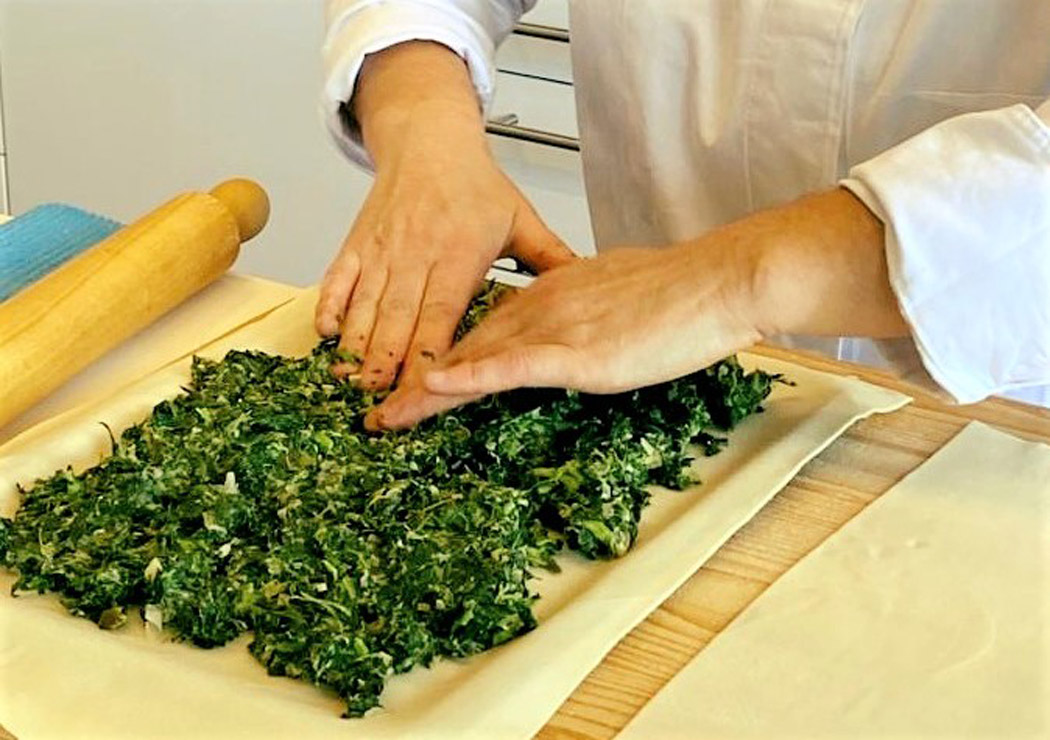
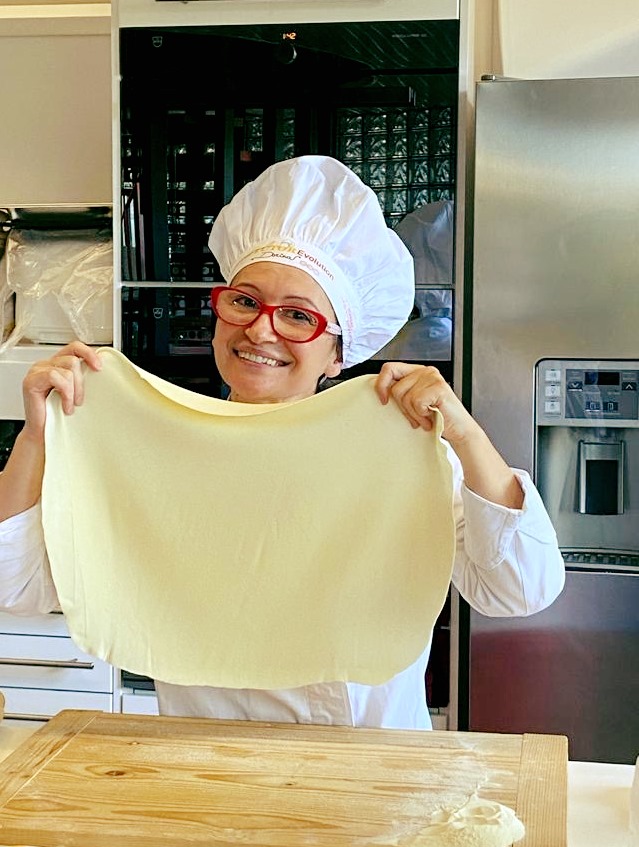

Why did I choose this recipe?

It wasn't an easy choice. My passion is making pasta, a passion that I was lucky enough to transform into my work. But equally I like to highlight peasant ingredients and give them new life. I strongly believe that simple things are tied stronger to the heart. In all aspects of life. Thanks Artusi!

The recipe I have reported is exactly the one from the Artusi cookbook, recipe number 374.

powered by social2s
Erbazzone di Reggio Emilia between tradition and innovation

In the nearly thirty years I spent in Reggio Emilia, I have learned to appreciate the culinary tradition of this city and I was pleasantly surprised by how the love for a simple 'savoury pie' could involve so many people.

Every Reggiano is immediately recognizable through a slice of Erbazzone that can be enjoyed at any time of the day: from children at recreation to the elderly at the bar, from breakfast to late aperitifs. In a festive banquet of a wedding, a graduation party or a birthday, it is demanded in equal measure to the much more famous pizza.

Erbazzone is a typical pastry of the Reggio Emilia province with an ancient flavour of simple ingredients. It is so connected to the everyday life of the city that it is considered part of the Italian gastronomic culture.

This dish was born near the Emilian Apennines from the processing of wild herbs and local products such as Parmigiano Reggiano and lard.

The classic version of the recipe provides a filling based on spinach or chard and spring onions, while the pastry completely wraps the filling and is then covered with bacon pieces, which slowly melt in the oven giving the Erbazzone its typical flavour.


ngredients of the traditional Erbazzone recipe

Stuffing:

  • chard 500 gr
  • spinach 500 gr
  • Parmesan cheese 120 gr
  • lard pesto 150 gr
  • EVO oil 50 gr
  • onion 150 gr
  • 1 clove of garlic
  • parsley 20 gr
  • grated bread 50 gr
  • salt 10 gr

Pastry:

  • flour type 00 300 gr
  • lard 50 gr
  • salt 10 gr
  • water about 100 ml

The prepared pastry must be homogeneous and must be left to rest so that the liquids hydrate the starches and develop the gluten making it elastic.

It must be rolled out with a rolling pin making a first thin layer for the base.

The filling (or pesto) is prepared with a sautéed base to which the herbs previously boiled, well squeezed and coarsely chopped are added. Once cooled, the other ingredients are added and blended well together. The filling must be an intense green colour, quite dry, grainy but compact.

The pesto rests on the base of the Erbazzone. Another thin sheet of pasta must then be placed on top of the pesto, wrapped in a rolling pin and slightly wrinkled with the fingers to create the typical folds of the real Erbazzone.

At this point the covering paste is pierced with a fork and the Erbazzone is baked at a temperature of 200 degrees for about 45 minutes. As soon as it is taken out of the oven, the pastry must be crunchy and recall an intense flavour of lard.

This is the tradition, but on the Erbazzone I presented a master's thesis at the Culinary Nutrition Academy and I created a more balanced version suitable for all people and with studied nutritional values. I have cooked gluten-free, vegan, vegetarian, lactose-free, traditional, nutritional, plain or coloured pasta.

I studied and cooked them all, perhaps I am the only cook of foreign origins who has ever studied a recipe of Italian gastronomy so much.

A traditional slice of Erbazzone is about 80 grams which corresponds to 200 kcal, while in my recipe there are only 84 kcal.

In fact, an excessive amount of saturated fat and a high salt content could cause health problems. Eating well is synonymous with physical and psychological balance, you feel lighter, feel better, perform more and keep your weight and health balanced.

I kept all the ingredients required by the traditional recipe and after six months I found the right balance by decreasing fat and salt, introducing a lot of fibre, creating that triangle of nutritional balance between proteins, carbohydrates and lipids to be able to eat even two portions without any sense of guilt.

Cooking is an art, art is loving, loving is helping others ...


powered by social2s
How to introduce children to vegetables and Eggplant Parmigiana of Agrigento

Can a vegetable become an object of desire?

Yes, because aubergine and I established an idyllic relationship that began in the period of my childhood and has not yet ended.

From the first moment it was a succulent and experiential discovery that I wanted to continually renew the increase of taste in its gastronomic variety.

The play of colour

When I was little, like all children, I didn't like vegetables: they made me smell and I complained every time some dish contained some vegetables.

Then, one day, my maternal grandmother proposed me a colourful game. Like all children I was attracted by the novelty of the game and above all to get my hands on things that usually I could not touch such as food, pots and pans.

So, happy and excited, I put on my grandmother's mega apron and got on the stool to get to work.

She placed a large bowl full of very red tomatoes in front of me and she told me to dry them well because they had taken a bath. If they stayed wet they got cold and got sick.

Then appealing to the Red Cross nurse inside me, I began to carefully dry a small wet tomato. Meanwhile, she peeled, sliced ​​and fried the aubergines, but I was too busy with my task to notice that.

As soon as I finished, my grandmother told me that the tomato I had now dried I had to mash.

How to crush ??? But everything will get dirty, you washed it and I just dried it! "

I protested, and my grandmother then explained to me that the tomatoes had bellies full of "ariddri" (seeds) and they would get sick if we didn't let them out.

Besides, I didn't have to tell anyone, because it was such a funny thing that my aunts would have been jealous that I had taken their place in this very delicate operation.

I nodded looking over my shoulder for my aunts, who loved me so much but had kept this job here for them.

In short, I enjoyed myself like few other times in my life.

I soiled not only my apron but also my hair, face and shoes.

"What would my mom have said ????"

So I learned how to make tomato sauce and since I had to check once if it was the right amount of salt, and if it was cooked, I discovered that the tomato sauce with fresh basil, the one just picked from the plant, I really liked.

It was sweet and harmonious on the palate, and at the same time delicate. I wanted to know everything, that is, how I could eat it as well as a sauce for spaghetti.

My grandmother made a gesture that is untranslatable, but which basically means "unnegghè" that is everywhere and with everything.

She placed in front of me a plate of a dish that seemed to me to be pasta, but she took some with a fork and said to me: "Close your eyes and taste well, let's see if you discover the mysterious ingredient!"

And it was love at first taste.

You will never thank the Arabs enough when I happen to see them, it is thanks to them that in the distant 15th century they brought eggplants from India to Europe.

That bite that my grandmother made me taste as part of the game and the surprise, I liked it so much that it became my favourite dish.

That sweet taste of fresh sauce, combined with the strong and bitter taste of fried aubergines, interspersed with a generous sprinkling of Parmesan, and the heady scent of freshly picked basil, conquered me forever.

Eggplant of parmigiana, rather than eggplant parmigiana

Parmigiana does not come, as it would seem from Parma and Parmesan, but from the Sicilian word "palmigiana" that is Persian, for the window so to speak. Those wooden shutters made of many strips that overlap and that look like many slices of eggplant one on top of the other.

There are several versions, but I prefer it to simply cooked, that is, assembled the fried aubergines as soon as ready and "accutturato" (ristretto) less sauce. You can bake it with mozzarella, ham, egg, mushrooms ... and so on and so forth.

Everyone can unleash their own culinary fantasy and be inspired by his creativity! But first taste it as I fell in love with it, in its sublime simplicity and with the love that my grandmother gave me.

powered by social2s
Cassoeula, the queen of traditional Milanese cuisine

When I moved to Milan, one of the things that really impressed me is that here, unlike Palermo, you can eat anything.

In the sense that there are people from all over the world, and places where you can taste the dishes of all Italian cities and all countries of the world.

Wandering around the city it was even easier to find a good sandwich with spleen, or an excellent fried pizza, rather than a good cutlet or, an unpronounceable name for me, the cassoeula.

Perhaps because, as some jokingly say: "the Milanese do not exist, they are an invention of the southerners to try to keep the people of the province away".

So, at least for the first few months, I had no traditional Milanese cuisine until we met her, Ilaria.

Ilaria is our age and apparently she is the same as all young women in their thirties, but she hides a secret. Ilaria has been Milanese for generations and besides she has dispelled the above myth, she has grandmother Elvira who cooks strictly Milanese, and she cooks it very well.

So one Sunday when I was on duty, I received a call from his wife announcing:

- Tonight cassoeula!

- But what is 'casso' called? We don't know how to do it, and then I know that it must be made the day before!

- No, trust me, cassoeula tonight!

I went home intrigued and intimidated, and actually found the much-dreamed delicacy in a lunch box complete with yellow polenta to accompany it.

-You know Ilaria called me and told me that her grandmother had prepared the cassoeula and that if I wanted to taste it I could go and get it. And they made me this schiscetta (the mess tin, but that's another story!) For you too.

What to say? An unforgettable experience!

Certainly because it is a good dish, indeed very good, but above all because it was full of the condiment of the welcome that is so good for a couple of naïve newly arrived people.

Needless to say, after some time I too tried to prepare my version of the cassoeula, certainly with much poorer results than my grandmother, Elvira, but quite acceptable.

Especially because every time I prepare it I think of Ilaria who calls us to let us taste her grandmother's cassoeula, and a feeling of gratitude rises and I remember that proverb that says "Milan col coeur in man", yes, absolutely true!

Recipe of Milanese cassoeula

Ingredients:

  • Various cuts of pork (ribs, rind, feet, snout)
  • Verzellini (typical Milanese pork sausages)
  • Chopped carrot, celery and onion
  • Laurel
  • Extra virgin olive oil
  • Cabbage
  • Vegetable broth
  • Salt and pepper
  • Red Wine (Barbera or Bonarda possibly).

You start with cleaning the cabbage thoroughly and tearing the leaves into pieces, cleaning the rinds and the pig's foot thoroughly, scraping and burning any bristles present.

Then in a large pot, boil the pork for a few minutes to slightly degrease it.

At this point you need a very large casserole, where in you put plenty of extra virgin olive oil, brown the chopped carrot, celery and onion. Then add all the previously drained meat, the herbs and some bay leaves, brown the meat and then deglaze with plenty of red wine.

When the wine has evaporated, add the cabbage, mix everything, cover with the vegetable broth and let it go over a low heat until the broth has gone.

Remember that the cassoeula must be thick and not broth.

When it is ready, let it rest in a cool and dry place until the next day. Then heat and serve accompanied with yellow polenta.

Enjoy your meal and, if you come to Milan, taste the cassoeula which is hot and tasty like the heart of the Milanese.

To be served with an Oltrepo 'Pavese: Barbera or Bonarda. Or Buttafuoco.

powered by social2s
Vastedda cheese and vegetables from the Magaggiaro wood

I was born in a town by the sea, water and sun are my vital elements and yet I love mountains and woods very much.

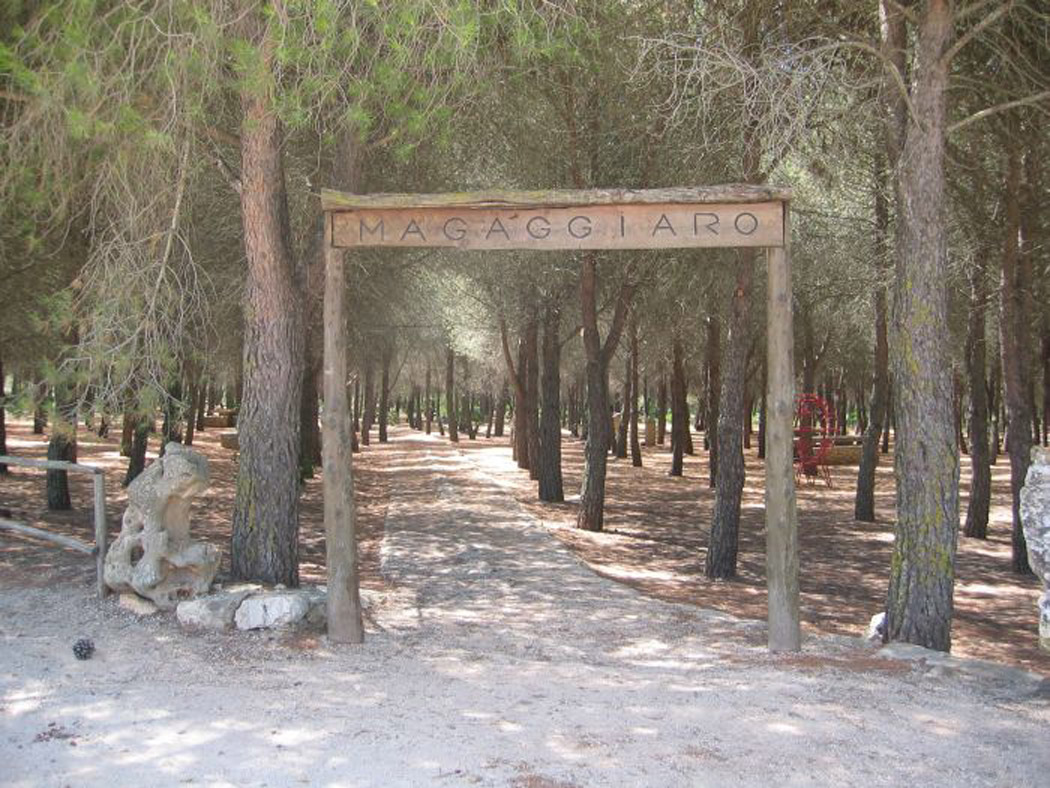
In the 1970s, in the Magaggiaro locality, a few kilometres from Montevago, on a large expanse of uncultivated land, the forestry company began planting pines, eucalyptus and cypresses to create a forest. To these joined spontaneously holm oaks and ogliastri.

The young undergrowth, day after day, was populated by dwarf palms with fan leaves, fennel fennel (a plant linked to Greek mythology) and various bushes.

In the years to come I have seen all those plants transformed into majestic giant trees with their arms outstretched to the sky and wild hares and rabbits and thrushes, buzzards, woodcocks and larks populate the forest. I also met some red foxes and, only once, a wild boar with two cubs.

The Magaggiaro wood is a place very dear to me, where I go to seek serenity and my walks as well as being relaxing are always fruitful.

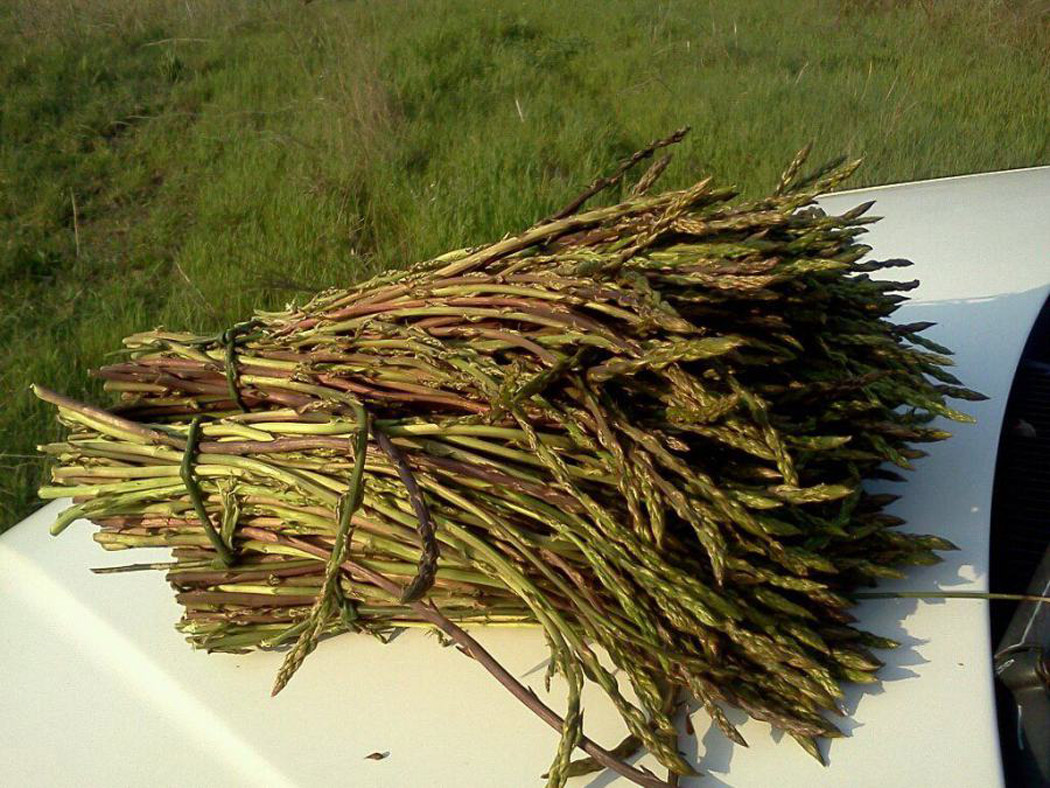
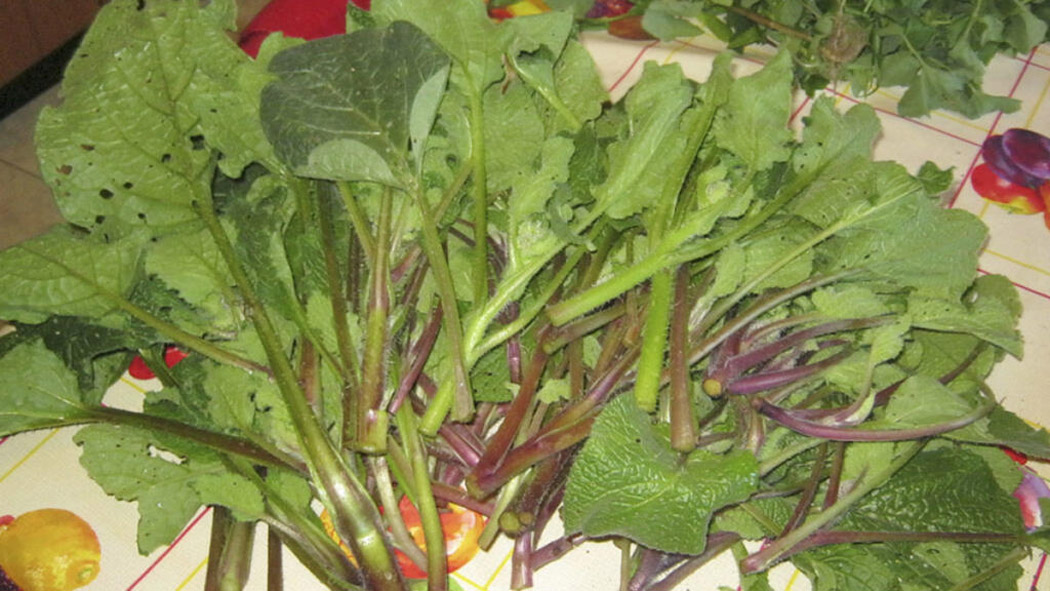
One of my passions is to collect wild herbs. Capers, fennel, asparagus, chicory, giritelli and borage are seasonally the harvest of a patient search in the woods.


On a warm morning in late December, during my last walk, I had collected a good quantity of asparagus and other wild vegetables and was returning when I found myself next to a large plateau covered with thousands of colourful flowers.


The tinkling of some cowbells caught my attention and I saw a flock of sheep and goats grazing a few metres from me. A little poetically I thought of a beautiful vessel of warm ricotta and a fantastic piece of Vastedda, the only Italian ‘stretched’ curd sheep's milk cheese full with raw sheep's milk.

I reluctantly left that place with its perfect rural idyll and headed to one of the dairies in the area where I bought ricotta and Vastedda to go with lunch of asparagus, but nothing came to mind.

After a while I thought of my friend the cook Francesco, he surely would have been able to cook something with Vastedda and vegetables. I joined him in his restaurant:

- ‘Francesco I collected asparagus and other vegetables and I wanted to prepare a dish by adding the Vastedda, but nothing came to mind. Can you try it?’

- ‘Sure. I'll do something.’

We immediately got to work. My job was to peel and clean the vegetables. I followed with my eyes the skilled hands of Francesco who worked quickly, the smart man knew what to do, and I watched in silence.

First rule: when a cook creates, the others watch and are silent. My friend was starting the dish and I widened my eyes: the vegetables I had collected in the woods and the Vastedda del Belice had been transformed into such an inviting dish that I couldn't wait to eat.

- ‘Thanks chef Mauceri. It's beautiful!’

- ‘Let's eat it now, so we can judge.’

- ‘Francesco, what will you call this dish?’

- ‘Belice in the Heart.’

Recipe

  • Vastedda DOP cheese from Belice
  • 2 eggs
  • Breadcrumbs
  • Seasonal vegetables
  • extra virgin olive oil
  • a clove of garlic
  • chili pepper
  • salt
  • pepper ‘spikes’
  • Nocellara olive powder


In a saucepan in a bain marie, melt the small pieces of Vastedda D.O.P. Del Belice at a temperature of 60 °. Then transfer the cheese into a concave container and make a hole in the centre, where an egg yolk will be gently placed.

At this point, close the flaps and form a sphere and place it in the fridge at a temperature of 4° for no less than 2 hours. After, bread the sphere is with beaten egg and breadcrumbs.

Peel and clean the seasonal vegetables and blanch them for a few minutes in lightly salted water, then transfer them to ice water for quick cooling. This process is used to maintain a bright green colour.

Once the vegetables have been drained well, sauté them with a drizzle of extra virgin olive oil, a clove of garlic, some chilli and a pinch of salt. Start composing the dish with a ring of vegetables in the centre.

In the meantime, fry the ball of cheese at 175° for no more than a minute and after having dried it well, place it on the vegetable ring.

Complete the dish with a Vastedda cheese mousse, pepper spikes and baked nocellara olive powder.

If desired, edible flowers can be added.


powered by social2s

Subscribe to Newsletter

Discover a territory through the emotions of the people that have lived it.