The sailors of Sciacca and the Quattara cocktail

We are in Sciacca, a beautiful seaside town in the southwestern part of Sicily where the port has been a portrait of economic and social life for many centuries. Many years ago, around 1900, before the existence of the plastic bottle, sailors used the "Quattara" to bring food on board.

The quattara was a terracotta pot with a pointed base in which the water, which is of fundamental importance in the sea, and various spirits were placed.

One of these spirits was "Sea foam" made with mandarin liqueur, orange juice, gin macerated with wheat, almond syrup and finally a ‘velvet’ coat made with a particular sugar (Sucerester).

The orange juice and the mandarin liqueur represented the coral of Sciacca, meanwhile the velvet that was in the upper part of the cocktail, represented the foam of the sea.

On board the fishing boats, during the weekend, when we were all together to fix the net, we drank this cocktail.

About Quattara, an insult has arisen around the Quartararo family: those who bear this surname are abbreviated with the name of "Quattara".

Finally, linked to the Quattara there is a marine proverb: ‘la Quattara chi va a l’acqua o si rumpi o si ciacca’ means that 'if someone insists on something with determination, sooner or later something bad happens'.


The ancient cocktail has been modernized and improved.

powered by social2s
Sweet Easter Lamb: a very sweet Sicilian tradition

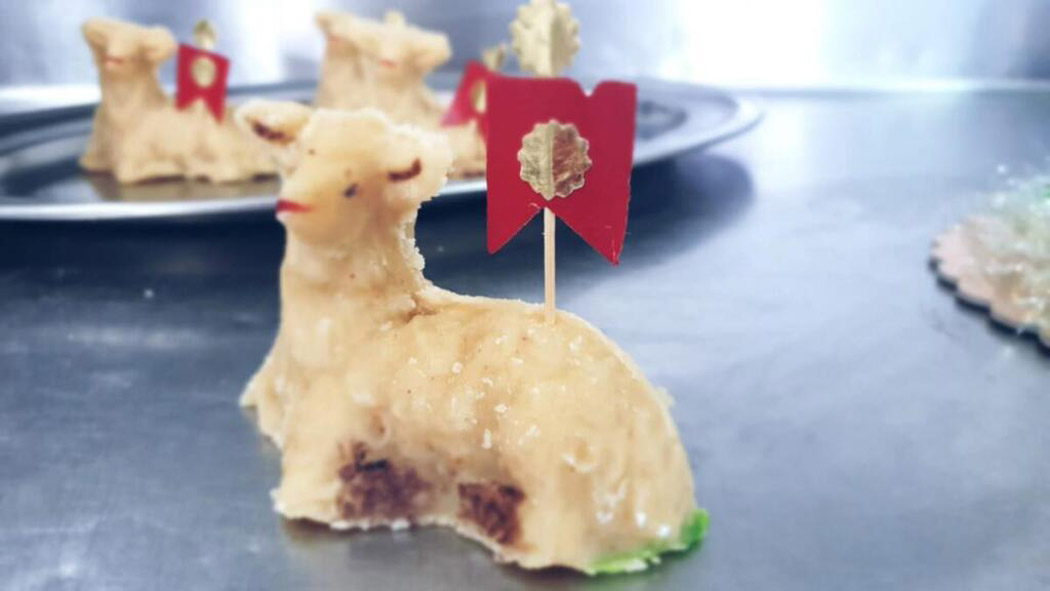
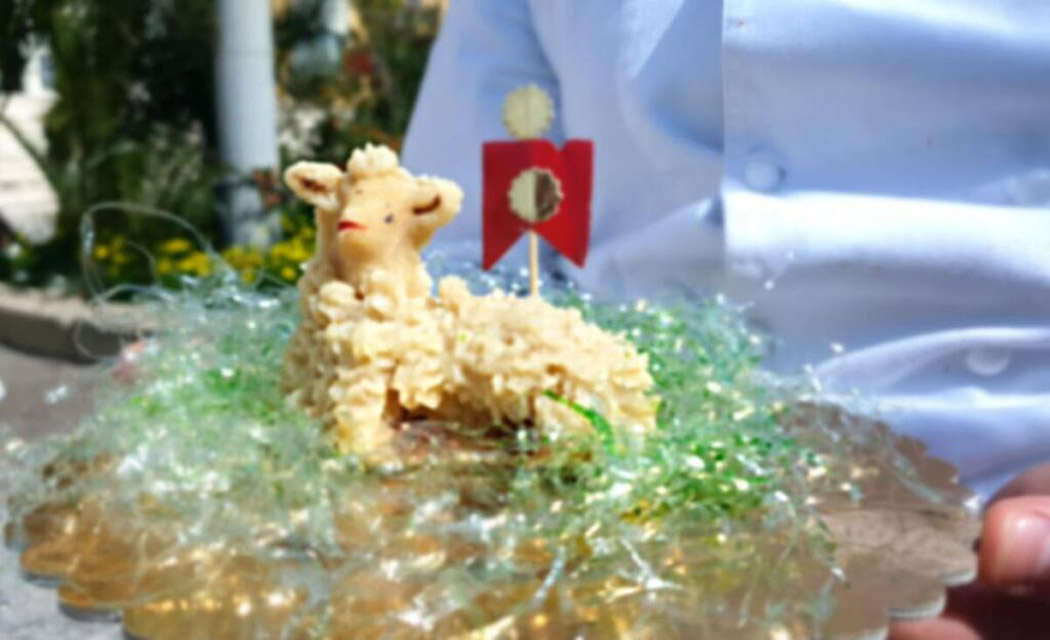
We want to present you one of the most typical sweets of our Sicilian tradition: Sweet Easter Lamb.

Until now we had appreciated it only for its goodness and its beauty, but thanks to the school we have discovered its interesting history and the link with the Easter feast.

According to some sources, the origins of the Easter Lamb date back to the late nineteenth century when a rich family from Favara, of the agrarian and sulphur mining bourgeoisie, commissioned its preparation for the first time.

According to other testimonies, however, the first to prepare it were the nuns of the Collegio di Maria in the “Batia” district of Favara. Initially the recipe was handed down orally from the older nuns to the younger ones and its production had an essentially artisanal and family character.

Of course, Sweet Easter Lamb could not compete with the most popular sweets, which were the classic "Sicilian Cannoli, and only in the second half of the 1900s did it begin its production on a more industrial level. This favoured its spread not only in Italy, but also abroad.
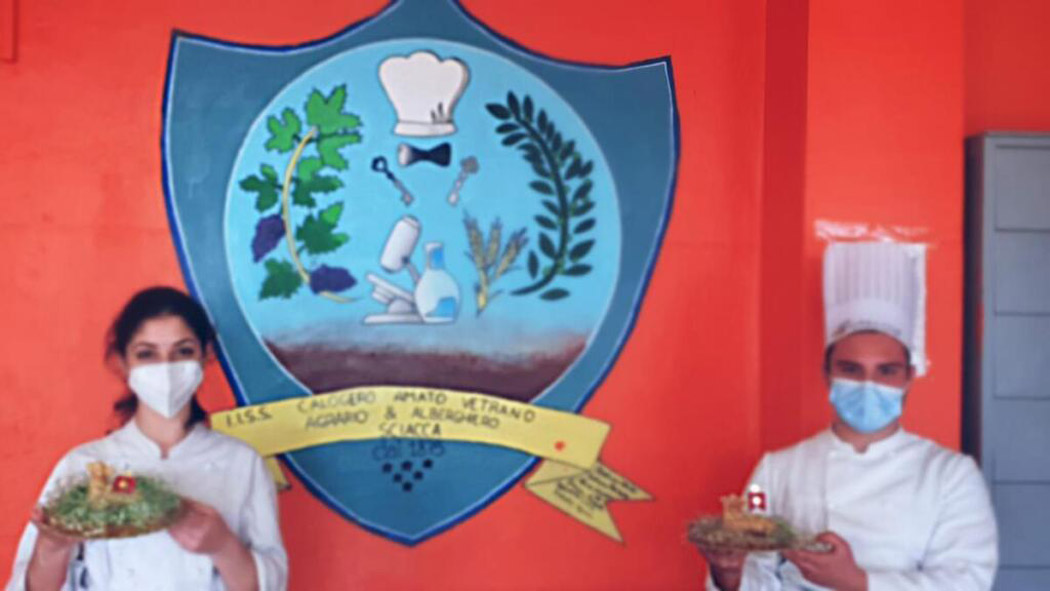
It is said that on May 12, 1923, the dessert was tasted by Monsignor Roncalli (not yet Pope) when he was visiting Agrigento and stopped in Favara before returning to Rome.

The Pope was so strongly impressed by the taste of the royal paste combined with the fragrance of the almonds that, after his election as Pope, every year for Easter the diocese of Agrigento honoured him with this delicious dessert.

But why is the Lamb one of the most classical symbols of Easter?

Our research has led us to discover that the symbolism of the lamb draws its origins from the Jewish tradition and that it only subsequently arrived in the Christian tradition. The lamb symbolizes mildness and meekness even in the face of death, attitudes that characterized Jesus during the crucifixion.

Innocence and lack of guilt are the basis of the symbolism of the lamb in the Christian religion, and in medieval iconography the triumphal lamb is represented with the head turned back and the right hoof placed on the emblem of the cross. For Christians this became the symbol of the Resurrection, that is, of the defeat of death.

Throughout Sicily, it is customary to prepare the Easter Lamb, but Favara holds the record in the production of Lamb, so much so that it deserves the nickname "City of the Easter Lamb".

The Favarese Easter Lamb stands out from all the others for the soft heart of pistachio paste that it hides inside. Every year, Favara dedicates a festival to it during which tourists, driven by the curiosity to know the dessert, can watch the preparation of the famous Easter Lamb.
Sweet Easter Lamb Recipe

Ingredients for the preparation:

  • icing sugar 1.4 kg
  • almonds 1 kg
  • Pistachios 1 kg
  • Water 500 ml

Its preparation is quite long and laborious, but extremely fascinating.

First of all, it is necessary to blanch and peel the almonds and pistachios. When both ingredients have cooled, grind them separately until you get fine flours.

Then boil 700 g of icing sugar and 250 ml of water in a saucepan, then, after removing the syrup from the flame, add the ground almonds and knead everything until you get a smooth and homogeneous paste.

The same procedure must be followed for pistachios.

Once the almond paste has cooled, insert a part of it into the mould of the Easter Lamb and press it along all the walls of the mould to a thickness of about 1 cm, so as to form what will be the part of the Lamb visible to the eye.

After that, the remaining cavity of the mould is filled with all the almond paste remaining and the cake is left to harden inside the mould before removing it carefully.

Favara's Easter Lamb can be served as it is (perhaps decorating it with a bow or bell around the neck and a banner planted on the back), or it can be decorated with dyes and chocolates.

To create the lamb's wool coat, you can use the same food colours that are used to paint the Martorana fruit. Or with sugar fondant and a few silver beads to sprinkle here and there on the mantle. Or, again, it can be created in an even more elegant way by modelling it with a pastry bag containing a little almond paste softened with water.

What a satisfaction!!!! It is a true masterpiece!


powered by social2s
Boiled Beef Salad: Fresh, light and easy to prepare

Boiled beef is mostly a winter dish with which to enjoy both broth and meat.

But boiled beef can be an excellent idea even in summer, just let it cool, cut it into small pieces and season it. Using olive oil, vinegar, fresh vegetables and black olives, you will have prepared an excellent boiled beef salad!

Of course, given the tight times that each of us has during the day, we can think of preparing boiled beef in abundance and eating it in the evening as boiled meat and broth and the next day as a salad.

It is obvious that the better the quality of the meat, the higher the quality of your salad. Of course, I recommend our Monti Sicani Real Grass Fed meat but, if you don't have it, another Grass Fed meat from well-known producers is fine too.

Boiled Beef Salad Recipe

Ingredients for 4 people

  • boiled meat 500 gr.
  • 6 tomatoes
  • 2 sticks of celery
  • 2 carrots
  • black olives
  • salt and pepper
  • olive oil
  • White wine vinegar
  • basil

The main ingredient for the boiled beef salad is boiled meat so, first of all, take a large pot and add 3 litres of water for each kg. of meat.

Add 1-2 stalks of celery, 2 carrots, 1 onion to which you have skewered 2-3 cloves, and a bay leaf.

Bring the water to the boil and only then add the pieces of meat. Add salt and cook over low heat for at least 2 hours.

When your boiled beef is ready, let it cool, then clean the boiled meat by removing the bone and fatty parts, and cut it into small pieces.

Put the boiled meat that has been cut into small pieces in a bowl and add the chopped tomatoes, celery stalks and thinly sliced ​​carrots.

Add the black olives and season with olive oil, white wine vinegar and fresh basil leaves and other products according to your tastes and your imagination.

powered by social2s
From Sciacca the recipe of Macaroni with Pumpkin, Pink Shrimp, Artichokes and Almonds

Sicily is my land but I think I'm right if I say it has the best cuisine in the world.

The recipe for Macaroni with Pumpkin, Pink Shrimp pesto, Artichokes and Almonds is inspired by the products of Sciacca, the splendid Sicilian city on the southwest coast of the island.

But all the ingredients come from this part of Sicily. In fact, the pink shrimp Sapore di Sciacca meets the spiny artichoke from nearby Menfi ( for an all winter dish.

The Menfi artichoke, which is part of the Slow Food Presidium, is a vegetable originally from Sicily that the Arabs called "al-kharshuf" and in the city of Menfi it is grown in one of its oldest sources. For this reason it has been protected and enhanced by Slow Food and the PAT - Traditional Italian Agri-food Products - for its characteristics.

The pink shrimp of Sciacca, the second most important fishing port in Sicily, is a crustacean that is found in the seabed around the Graham bank.

This backdrop is famous for the events of the early nineteenth century concerning the Ferdinandea Island.

In this dish they are brought together in their 'raw' forms and  seasoned with Nocellara del Belice oil and lemon juice.

Macaroni recipe with pumpkin, pink shrimp pesto, artichokes and almonds

Ingredients:

Maccheroncini 100 gr

Pumpkin 200 gr

Artichokes 2

Clove of garlic

Pink Shrimp Flavour of Sciacca 50 gr

Almonds 20 gr

Mint 5 leaves

Extra virgin olive oil Lemon 1

Butter 10 gr

Sicilian Pecorino 10 gr

To make the pumpkin cream, take a piece of pumpkin with the peel and wrap it in foil together with a clove of garlic. Then we bake at 160 degrees for 1 hour or until well cooked. At this point, remove the peel and the garlic and blend the pulp by adding a pinch of salt.

To make the pesto we shell the shrimps and peel the artichokes completely leaving only the heart and removing the beard. Then we cut them in half lengthwise and slice them thinly dipping them immediately in a basin with oil and lemon. We mix and finish seasoning them by adding salt and pepper. At this point we add the shrimp and marinate for 15 minutes.

Separately, lightly toast the almonds, cut them into thick slices and set them aside.

At the same time, bring a pot of water with salt to the boil to cook the pasta. Once it is al dente, drain the pasta and put it in the pan, retaining part of the cooking water for any dilutions. Add a spoonful of pumpkin cream and cook until everything is blended. At this stage we add some cooking water if necessary. Once the heat is off, add a knob of butter, the pecorino cheese and stir in EVO oil, turning the dough to create a creamy emulsion. Taste with salt and adjust if necessary.

To serve, put the pasta on a flat plate with the help of a pasta bowl and put the pesto, slightly drained, on top of the pasta. We sprinkle with almonds.

powered by social2s
Panareddi of pani cu l'ova, from Sicily the bread for Easter

Easter is one of the most heartfelt and celebrated holidays in Cattolica Eraclea, perhaps due to the message of resurrection and rebirth that it has always transmitted.

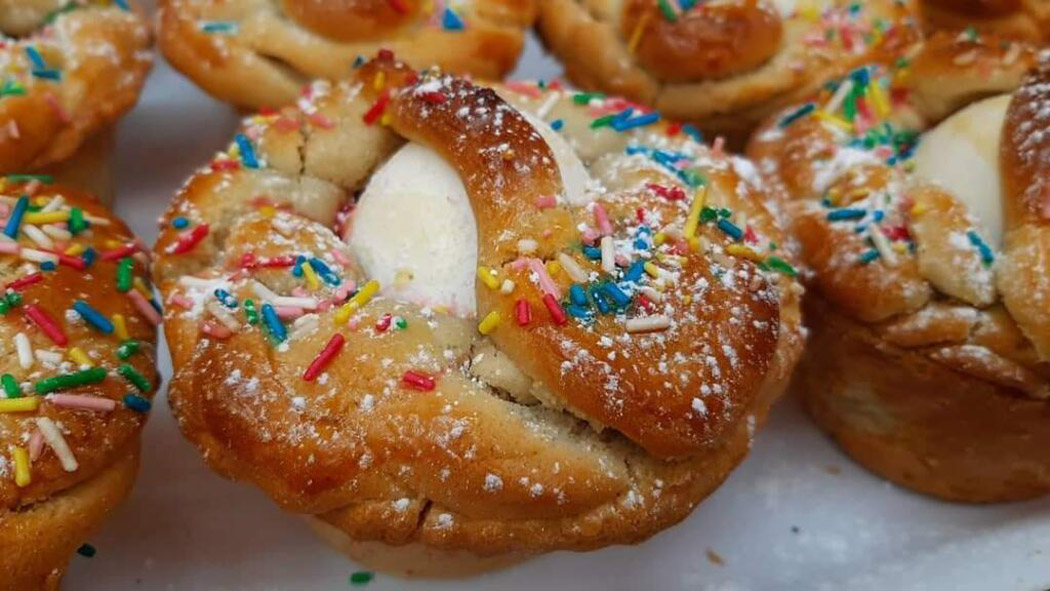
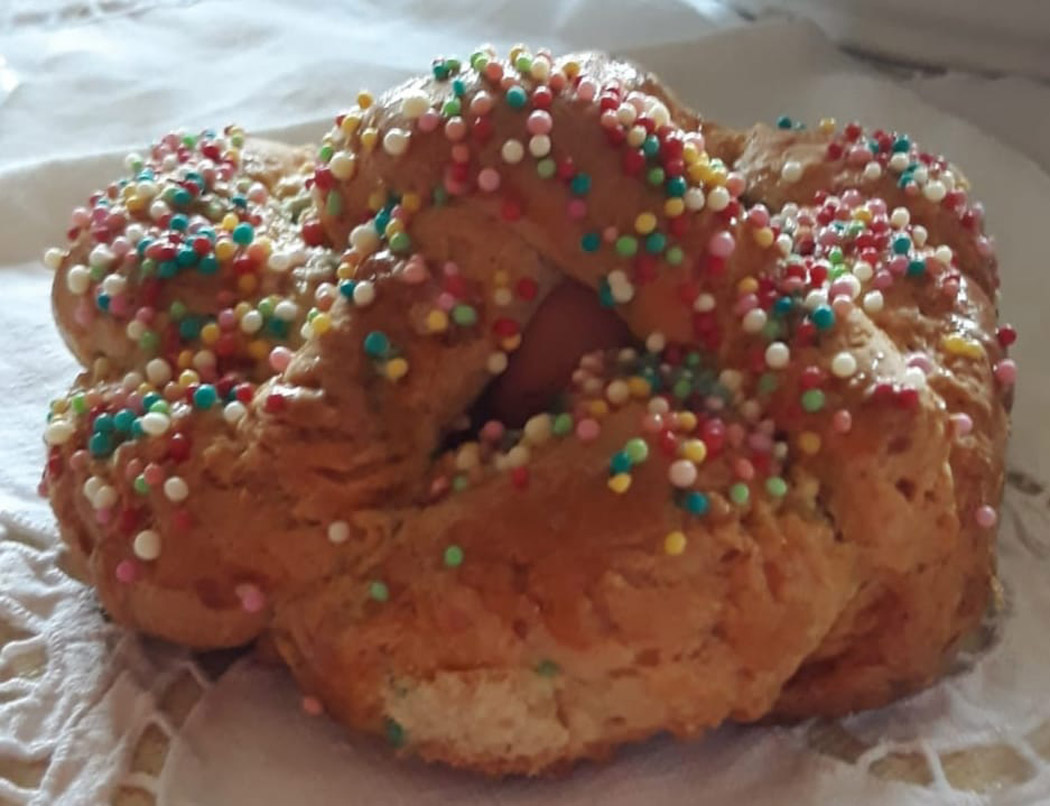
As per tradition, foods linked to the occasion and rooted in the regional culture are brought to the table, one of these being the Panareddi di pani cu l'ova, a kind of very kneaded bread combined with coloured eggs.

In fact, once upon a time only wealthy families could afford the luxury of tasting particularly expensive and beautiful sweets, while less fortunate children asked their mothers "cosi duci" (duke’s things) to eat for Easter.

These mothers, in order to make their children happy, invented stories and even sweets that were simple but beautiful to look at.

Thus, one of these mothers went to work and kneaded flour with eggs, sugar, salt and water. She puzzled to give that dough a nice shape and decorate it and just in this way, from her skilled hands, a "panareddu" was created.

But she had to add a pop of colour to the cake, so she boiled an egg hard and magically coloured the shell with a piece of coloured tissue paper.

She placed the coloured egg in the basket, covering it with thin strips of dough and put it in the oven. She created a one-of-a-kind dessert, appreciated by young and old alike. This panareddu bread with its intertwined shape and small relief designs, skilfully raised with a small knife, has become one of the most important traditions of Sicily.

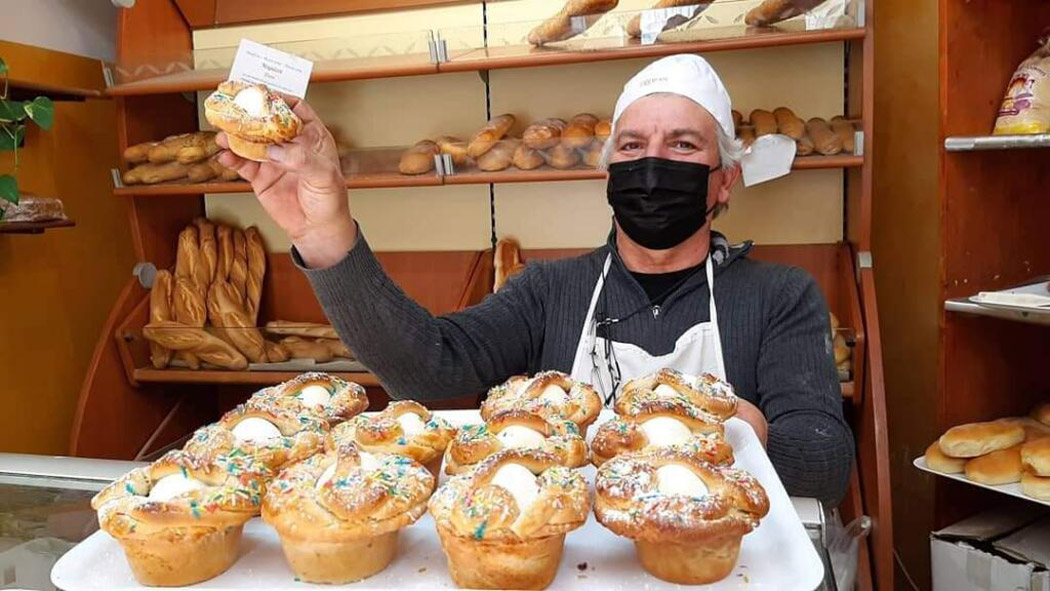
In all the families of Cattolica Eraclea it was customary to prepare strictly home-made "panareddi cu l'ova". Today they are bought in bakeries and pastry shops but are always very popular, especially by the older people who go back in time and relive the distant memories of their childhood.


Recipe for Panareddi made with breads with eggs

  • Flour
  • Salt
  • Sugar
  • Oil
  • Milk
  • Yeast
  • Warm water
  • Eggs


The first thing to do is to wash the egg shells well and dry them. In fact, they can be put in panareddi as they are, or coloured with food dyes.

In this case, put the eggs to boil in a saucepan where some dye was first added or, as I did, moisten some powdered dye with water and then colour the shells with the help of a paper towel.

Put the flour, salt, sugar, oil, milk and yeast in the mixer and start kneading, adding the lukewarm water a little at a time.

Remove the dough and put it to rise in a bowl covered with cling film, until it has doubled in volume.

Eggs, if cold-coloured, can be put in panareddi even when raw, otherwise they must be hard-boiled.

Take some pieces of leavened dough and give the shape you want, placing an egg trapped with pieces of dough in the centre. Just before baking, brush the bread with beaten egg.

Bake at about 200 ° for 20-30 minutes, always checking, because the temperatures of the ovens vary.

The Panareddi di pani cu l'ova are ready and you can give them as a gift, create an Easter centrepiece or use them as a placeholder.

Happy Easter.


powered by social2s
The history and the true recipe of the Sfincia di San Giuseppe

At our tables in Sicily on March 19  you cannot miss the Sfince di San Giuseppe, one of the most classic recipes of Sicilian pastry and typical dessert of Father's Day.

The name sfincia derives from the Latin spongia, sponge, the term originates from the particular shape of this cake which looks like a soft and irregularly shaped pancake, just like a real sponge.

The origin of this dessert is very ancient, so much so that it appears, albeit with different names, in the Bible and the Koran. It seems to be the evolution of Arab or Persian breads or sweets fried in oil.

An old tradition tells that in the past, the sfincia was prepared by the mother-in-law for the daughter-in-law to try to "soften" the relationship between the two. Traditionally difficult relationships due to the jealousy of the two women towards their son and husband respectively.

There is another tradition that seems to date back to the Roman era. It is said that St. Joseph, who fled to Egypt with Mary and Jesus, to keep the "sacred" family in a foreign land had become a seller of pancakes.

This simple pancake has been transformed into a delicious dessert by the skill of the nuns of the monastery of the Stigmata in Palermo. They are the ones who have handed it down to Palermo pastry chefs and who have dedicated it to the "Saint of the Humble", as the ingredients used for their preparation are classically ‘humble’.

Originally the recipe was quite simple but the Palermo pastry chefs made this dessert even tastier by enriching it with some local products: ricotta, chopped pistachios, candied orange peel, cinnamon powder.

Sfincia di San Giuseppe is a Traditional Agri-food Product (PAT) recognized by the Ministry of Agriculture.

Recipe for Sfincia di San Giuseppe

Ingredients for the dough

  • Water 500 ml
  • Flour type OO 400 gr
  • Butter or Lard 130 gr
  • Salt 7 gr
  • 10 medium eggs

Ingredients for the dough

  • Sheep ricotta 600 - 700 gr
  • Powdered sugar 100 gr
  • Dark chocolate drops 100 gr

Ingredients for decorating and frying

  • Seed oil 2 lt
  • Chopped pistachios 50 gr
  • 10-15 Candied cherries
  • Candied orange 50 gr

In a saucepan, put the water, lard / butter and salt, and heat. Once it boils, add the flour all at once and mix the ingredients on heat for at least 2-3 minutes until the mixture comes can be separated from the pan.

Allow the dough to cool and either put it in a planetary mixer with a leaf hook or work by hand with a wooden ladle.

Turn the dough for 1 minute, then add the eggs one at a time. Be careful not to add the next egg if the previous one has not been completely absorbed first. You will get a smooth, creamy and thick batter.

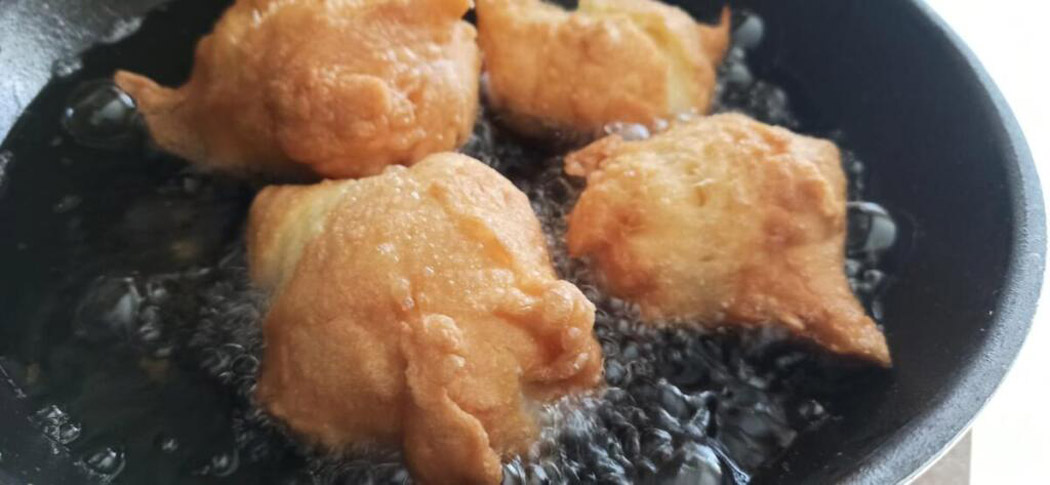
Bring the oil to 160-165° for frying and pour the mixture into the saucepan by spoonfuls. Be careful not to fry more than 3-4 sfincie at a time so as not to lower the oil temperature too much.

With this temperature, the sfincie will have to fry for at least 8 - 10 minutes. When they are golden brown, drain them well with a slotted spoon and place them on a tray with absorbent kitchen paper. Let the ‘sfincie’ cool down.

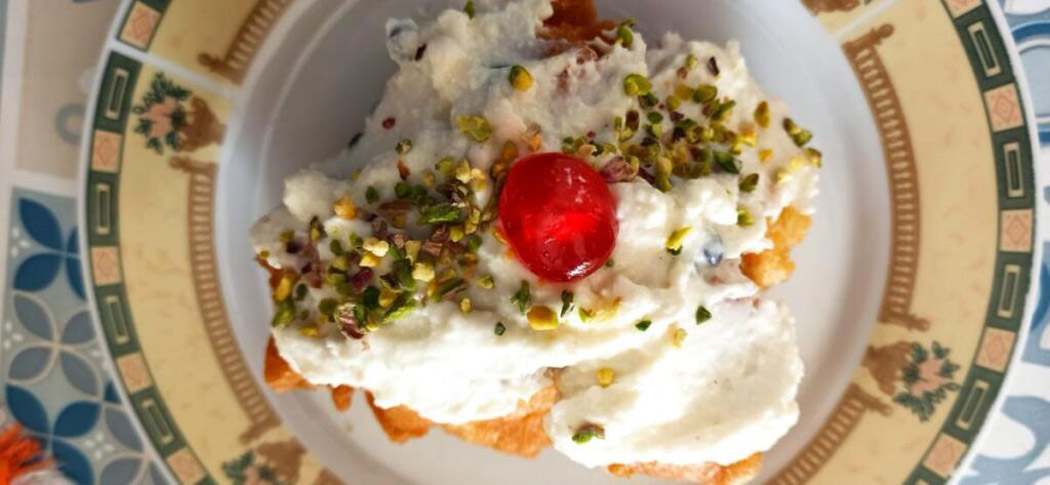
Then take the ricotta cream and the chocolate chips, stir for a few moments with a ladle and then cover the surface of the sfincie with a spoon full of the mix. Garnish each sfincia with chopped pistachios, a candied cherry and a candied orange peel.


powered by social2s
The exquisite Mallone Irpino of Turnips and Potatoes, aka Leaves and Patane

Mallone Irpino is an ancient dish made with turnips and potatoes, and accompanied by a special local pizza made with corn.

Mallone is an integral part of the tradition of Avellino, the city I love and live in, and owes its name to its shape similar to that of the walnut 'husk' while Irpino indicates the area where it was consumed.

Irpinia is perhaps still famous for the terrible earthquake of 1980 but today it has been rebuilt in all its beauty and is one of the most enchanting areas in Italy.

Avellino is its natural centre, located in a large basin, the medieval city and the nineteenth century are real jewels. While the soil of volcanic origin gives some of the best wines in Italy such as Fiano di Avellino, Greco di Tufo and Taurasi.

Mallone Irpino was a typical dish of the autumn and winter season and, despite being composed of vegetables, in Avellino the dish is consumed as a first course and is a fairly elaborate recipe in its realization.

The Mallone Irpino, however, is different and less complicated than the Mallone Sciatizzo, made with wild vegetables. Sciatica in our dialect are the seasonal herbs that grow spontaneously in the fields or in the vineyards and which, by tradition, are harvested mainly in the area around Solofrano, the town known for its leather processing, and in Montoro.

Turnips and Potatoes is a typical peasant dish handed down to us by the peasant culture based on the principle of 'nothing is thrown away'.

In fact, the farmers, when they cleaned the broccoli, did not throw away the leaves but used them precisely for the preparation of Turnips and Potatoes, which they divinely accompanied with a fried "Pitta" pizza prepared with corn flour (or granone) and called "pizza king graurignolo" .

Recipe of Mallone Irpino, Turnips and Potatoes

Ingredients for 4 people:

  • turnip leaves 1 Kg
  • potatoes 500 gr
  • 1 pickled papaccella "pepaina"
  • garlic to your taste
  • enough oil and salt.

Ingredients for corn or Pitta pizza:

  • corn flour 200 gr
  • vegetable broth or alternatively boiling salted water 1 lt

The preparation begins by boiling the potatoes, which are then peeled and coarsely mashed, mixing them in.

Meanwhile, rinse the turnip leaves and heat them. Once cooked, the turnips must be cooled, squeezed and shredded.

Take a large pickled ‘papaccella’, a particular type of sweet-tasting pepper, remove the seeds and excess vinegar and cut into strips. Fry the papaccella in boiling oil that you will have flavoured with garlic, to your taste.

At this point, add the turnip leaves cut into small pieces, frying everything together with salt.

Add the mashed potatoes into the pot with the vegetables previously fried with the papaccella, season with salt and oil to taste.

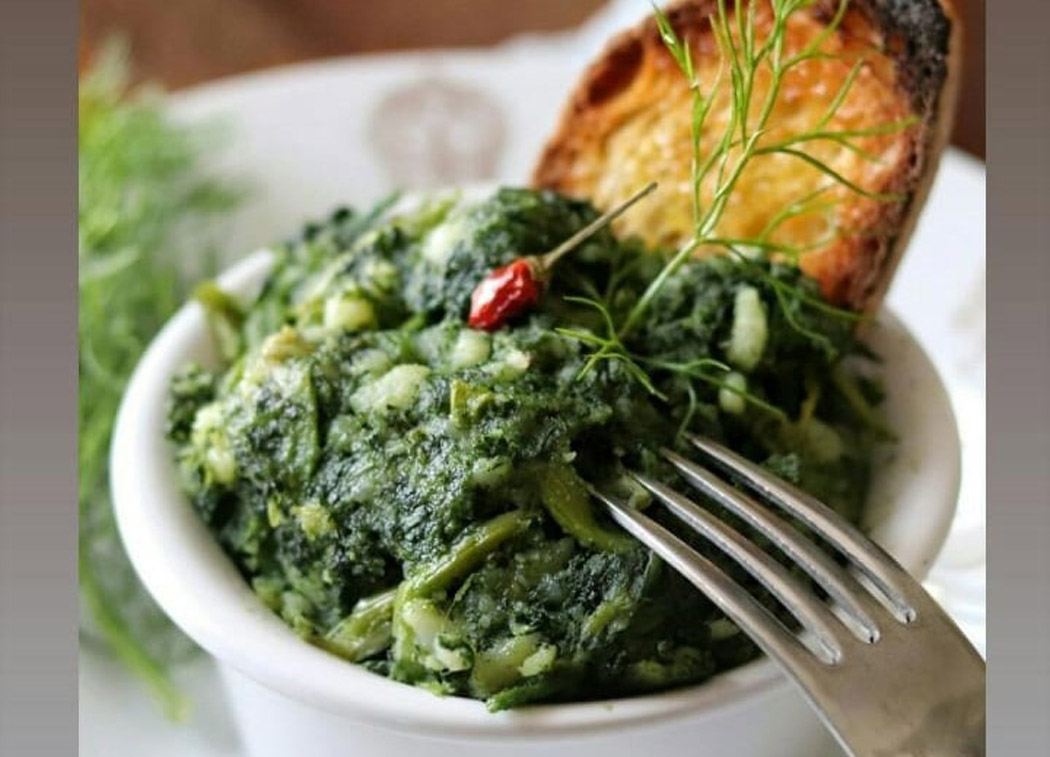
Over low heat, stir with a wooden spoon for about ten minutes, adding, if necessary, a little of the cooking water from the potatoes (the mixture must be thick and homogeneous but not excessively dry) and the mallone will be nice and ready. You can add some hot pepper if you prefer.

Prepare the pizza with the 200 gr. of flour to be mixed with about a litre of boiling vegetable broth (as if preparing a very thick polenta). This dough will then be fried by rolling it out and crushing it with your hands in a pan, cooking it on both sides.

In ancient times, the peasants cooked the pizza at the base of the fireplace near the embers in a clay container, and it was called "pizza 'ndo chinco".

In Irpinia, a land rich in food and wine culture among other things, prestigious wines known throughout the world are produced, including Aglianico and Taurasi that enhance and increase the taste of the dish.

powered by social2s
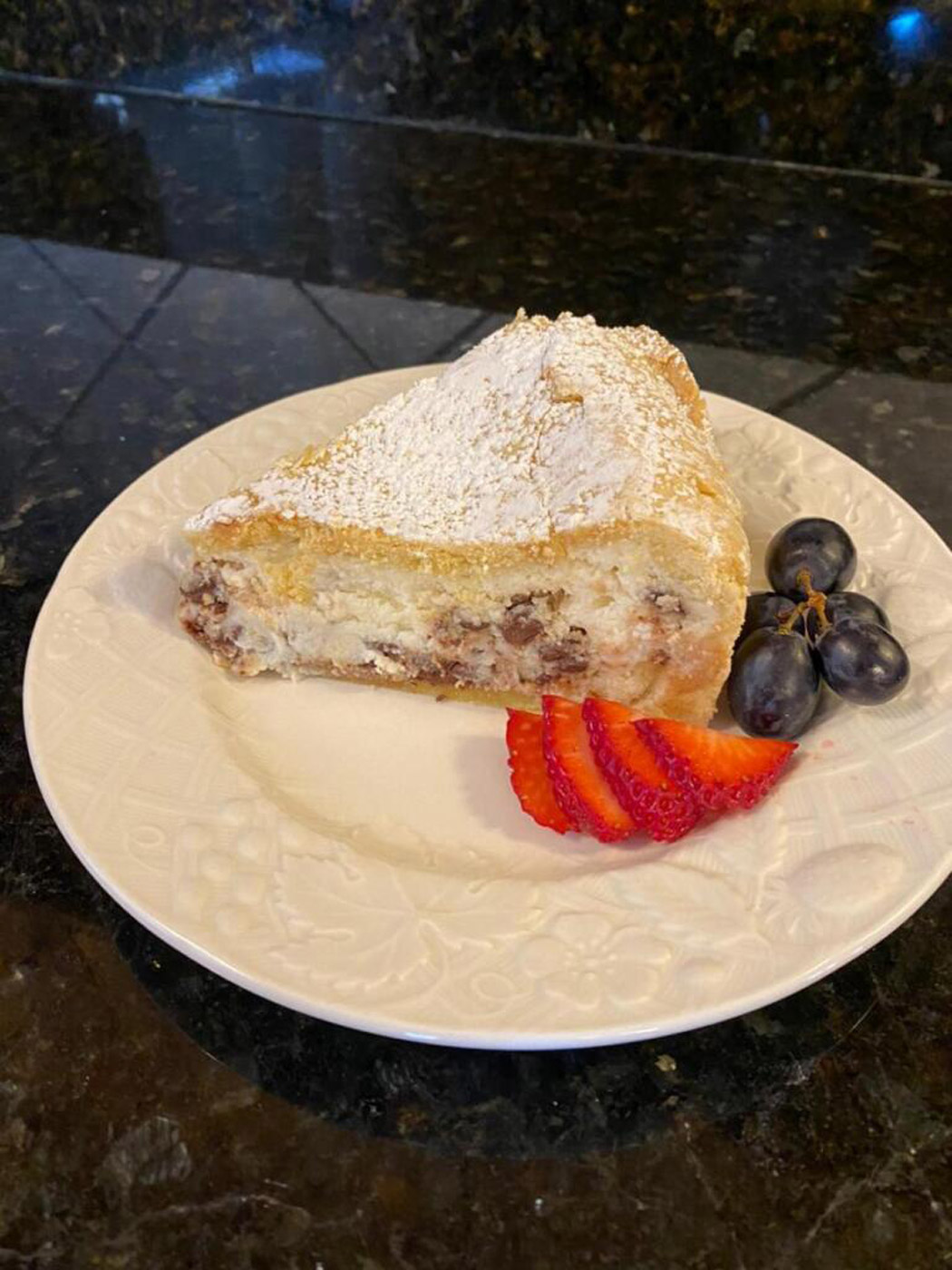
Pizza Dolce di Pasqua (Easter) from Sicily to Boston, USA

Here is a recipe that has been pasted down for 5 generations...this is my family Pizza Dolce recipe. My family came from Sciacca and Palermo in Sicily many generations ago, and it carried some secret recipes and some traditions.

Often traditional feasts are linked to special dishes and Easter is particularly rich of flavour and perfumes. In Sciacca the Holy Feast is very important and it is celebrated with joy and family lunches.

At Easter we also pray to the Madonna Del Soccorso of Sciacca for the sacrifice her Son made for all of us, to die on the cross got the forgiveness of sins for all. It is so important to remember the true meaning of the Lenten season and the celebration of Easter miracle.

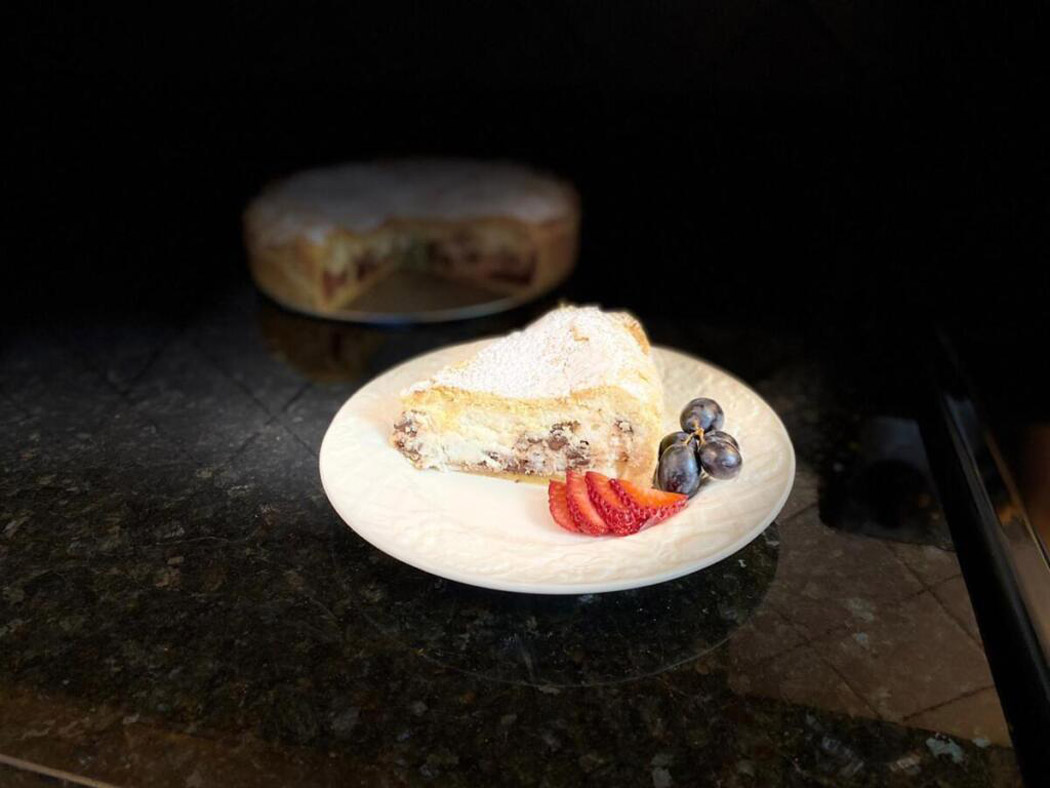
Pizza dolce is a classics Easter dessert. For me there is nothing better than cutting into that sweet ricotta and chocolate chips after Easter Sunday brunch. Sicilian Ricotta is made with ship milk and springtime is the best moment of the year for its taste.

So, if you love Cannoli Siciliani too, this is the right moment to taste them.

But Easter is Pizza Dolce and I am so happy that I show all my secrets in Live, Laugh and Cook Italian on YouTube.

Recipe of Pizza Dolce

Ingredients for Crust (top and bottom) 

  • flour 2 and half cups
  • sugar 1/2 cup
  • butter 12 tbsp
  • baking powder 1/2 tsp
  • vanilla extract 1/2 tsp
  • 6 egg yolks

Mix all ingredients with a pastry blender, then by hand until firm. When it is done, refrigerate for 1 hour.

Roll out in wax paper and plenty of flour to proper size for bottom and top crust. Line bottom of ungraded 9 inch round pan with lower dough and form sides up the pan

Ingredients for Filling 

  • ricotta drained 2 lbs
  • sugar 2 cups
  • 6 egg whites
  • Flour 1 tbsp
  • almond extract 1 tsp
  • vanilla extract 1 tsp
  • mini chocolate chips 2 cups

Incorporate all ingredients until well blended, fill pan with filling and leave space for expansion. Apply top crust and form edges, cut slits on top for expansion

Bake 350 degrees for 40 to 45 minutes, until you have a clean cake tester (or a toothpick) from the center.

Let cool on counter then refrigerate until ready to serve.

I hope you enjoy this Classic Easter dessert as much as my family does.

Buona Pasqua a tutti


powered by social2s

Subscribe to Newsletter

Discover a territory through the emotions of the people that have lived it.