Sicilian recipe of Rinaloru auruduci with Amarola or sweet and sour Gattuccio with Amarola

Sicilian cuisine is rich in sweet and sour cooking thanks to the influence of the Arabs who introduced sugar in the 900s. You can find a variety of dishes seasoned with vinegar and sugar that make the experience of our kitchen unique.

A dogfish is a poor fish that lends itself well to sweet and sour preparation, called by the Sicilians 'Rinarolu', which is fished along the Sicilian coasts. In this preparation it is peeled and fried in olive oil and then seasoned with olives, capers in a sweet and sour sauce.

This recipe represents a true triumph of Sicilian flavours that are accentuated by a locally produced amaro called Amarola di Perollo and produced in Sciacca.

A liqueur with sweet / bitter notes and a slight hint of citrus that are given to it by an infusion of young Cerasuola olive leaves.

A bitterness comes from the ancient traditions of Sicilian liqueurs that our ancestors prepared for the winter. And the Cerasuola variety is the oldest and most widespread in Western Sicily, especially in the area between  Menfi and Sciacca where the agricultural landscape is characterized by expanses of vineyards and olive groves.


Sweet and sour Gattuccio recipe with Amarola

Ingredients:

  • Rinaloru (dog fish) 500 gr cut into slices
  • Liqueur Amarola di Perollo with olive leaves 30 ml
  • EVO Oil from Tenuta Gallinella Sciacca
  • White onion 200 gr
  • Red vinegar 50 ml or more depending on how sour it is
  • Orange honey 40 gr
  • Molino San Francesco semolina flour 100 gr
  • Salt of Trapani
  • Whole roasted "caliate" almonds 50 gr
  • Raisins soaked for 10 minutes 30 gr
  • Cumin powder “A sintimentu”… to taste
  • Tender celery leaves 10
  • Wild fennel 1 stalk


Flour the skinless fish steaks with the semolina and fry them in a pan with hot oil. Just browned and coloured on both sides, remove the slices from the pan.

In the same pan add the sliced ​​onion and brown for a few minutes. As soon as the onion begins to become transparent, we add the honey and let it melt well. Then add the vinegar and the acetic vinegar and mix for a few minutes.

At this point add the fish and a pinch of salt, mix and cover for a few minutes to cook the fish completely. Then remove the lid and let the sauce thicken.

For the presentation of the dish, add the almonds, raisins, chopped celery and fennel leaves.

powered by social2s
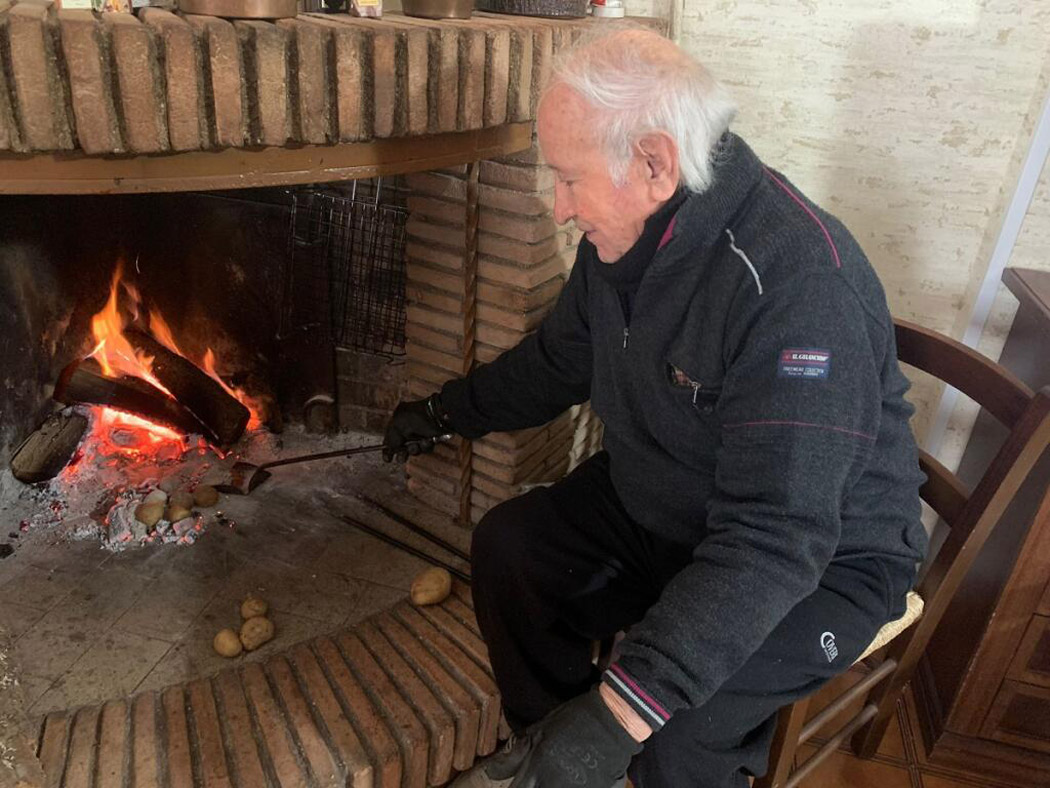
Nonno Lino the chef of the grilled “petate” of Rocca Priora: all the taste of simplicity

"Ninni zecca 'n top, so fattu le petate alla race, vettele a pijà". (Ninni come on now, I made the potatoes on the grill, come and get them)

This is my town’s food on the table, and it takes very little.

A burning fire, which in the homes of all of us inhabitants of Rocca Priora, never fails in a winter, perfect embers, small potatoes and that pinch of love that makes this dish unique.

Under a small mountain of ash the potatoes cook slowly, in the meantime grandfather warns all his grandchildren to come back in an hour.

He takes care of it, takes them off at the exact moment when the cooking is perfect, and for how many times I have tried to replicate the dish, I assure you that I have never succeeded.

While he does it he snorts and blows "peel !!" he punctually exclaims in his inevitable dialect.

To peel them, he wraps them in a sheet of newspaper, so he doesn't get burned, removes the skin with impressive speed, mashes the potatoes with a fork and seasons them with plenty of salt and olive oil.

The dish is ready we are at grandfather's house, the saucers for everyone are there in a row in his kitchen. It is difficult to resist without tasting and at this rate the potatoes on the table will not last to the evening.

There is nothing else to add, a simple recipe born from the tradition of Rocca Priora cuisine for the need to feed oneself in difficult times, to make it special a secret ingredient, the heart, that of a grumpy grandfather who managed to pass on this flavour already to his fourth generation.

Ingredients

  • potatoes
  • olive oil
  • fine salt

The most important choice is certainly in the choice of potatoes, small and of equal size, so as to ensure equal and uniform cooking.

We prepare the embers, place the potatoes on the top of the fireplace and cover them with hot ash.

There are no times to respect, the right ones are dictated by experience.

Once cooked, the potatoes are peeled and then mashed with a fork, seasoned with olive oil and a pinch of salt, they are ready to be tasted.


powered by social2s
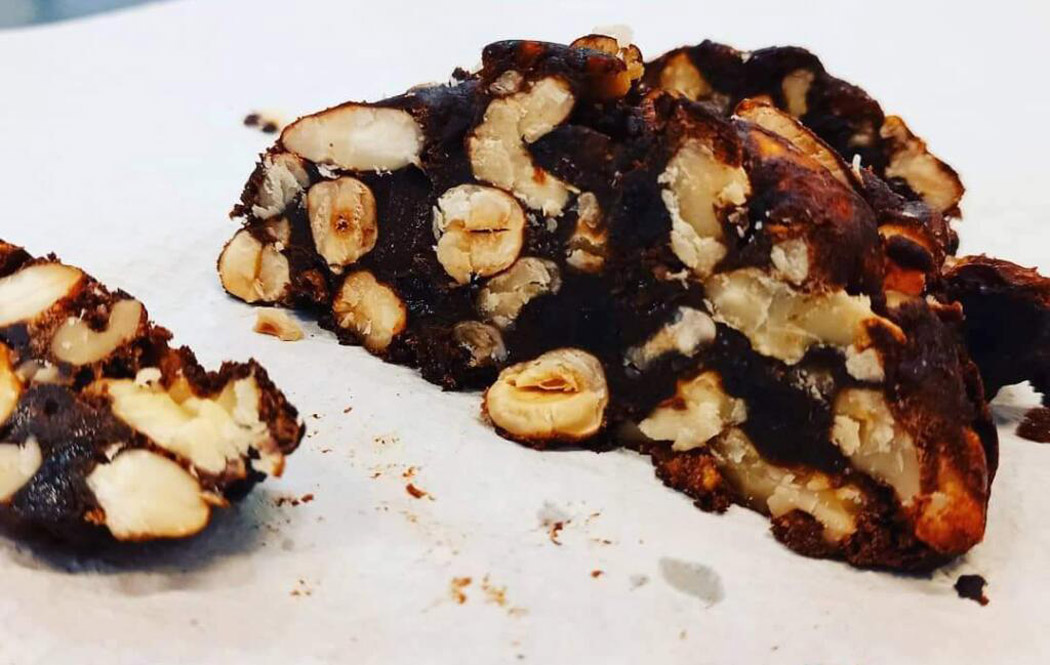
The pampepato comes only from Terni, and each of us has his own secret ingredient

"T" and "R" equals: All Rich.

This was the Terni of our grandparents, this was the dream of a better life that the neighbouring populations of rural origin cultivated, when they aspired to be the city of steel.

The Conca di Terni is among the richest in Italian history and nature surprises us. Terni means the city between two rivers and a road that links it directly to the Nera Valley and the Marmore Falls, the highest in our country.

Regarding the dispute over the name "pampepato" or "gingerbread", I think it can be said both ways. Just do not say that it is not Terni, in order not to incur possible reprisals of us colourful Terni.

However, I said that, to really talk about the origin of this dessert, you don't have to go back to 1600, and I strongly believe that since it is a rich recipe, it has caught on with the spread of well-being in the city. So from the second industrial revolution to the economic boom of the last century.

The history of the city of Terni is very long, in fact the Conca Ternana already at the end of the nineteenth century was a great centre from which Italian industrialization started. In 1875, the first arms factory was established there and a few years later the famous Steelworks.

For years Terni has been defined as the "Italian Manchester", with production related to steel but also to chemistry and energy, and we all enjoyed well-being.

Reading the ingredients that I will now list, you will better realize my reflection:

Ingredients of Pampepato di Terni

  • Dark chocolate (strictly avoid Perugina)
  • Bitter cocoa (always avoid the brand of enemy relations)
  • Honey
  • Nuts
  • Hazelnuts
  • Pine nuts
  • Almonds
  • Candied citron
  • Raisins
  • Cooked must
  • Flour
  • Cinnamon
  • Nutmeg
  • BLACK PEPPER!
  • Various liqueurs
  • Coffee

Then there are the secret ingredients that can range from bitter to Borghetti coffee to Plutonium. But no real Terni resident will tell you their mysterious ingredients.

I know that I have not entered the dosages, but it is better for you to make a friend from Terni than to try to do it yourself. Especially if you are Etruscan, our neighbours.

Terni are people of heart and, if you make them friends, they will give you Pampepato recipe at will. But don't try to sell them your imitations, which then risk the "pampepato" ... because for the citizens of the Conca it is not just a dessert!

powered by social2s
The 'Soup of the Fields from Granero', a dish from 1000 years ago

I live in a very small mountain village 1,200 m high in Val Germanasca, also called Valle Oscura because it is landlocked, and it is in the municipality of Perrero in the province of Turin. We are also across to the Val Chisone which leads to Sestriere, known by all. The village where I live is called Granero and is inhabited all year round by 6 people, 4 of whom are part of my family. It took me 3 years to choose a house and when I saw the 360 ​​degree panorama I had no doubt.

Ours is a special story because first we lived in Turin then, both my wife and I lost our jobs, so we moved to the mountains. A choice dictated more by the heart than by the rationality of the moment.

In this place we have begun to live immersed in nature and inebriated by these mountain areas with their fairytale landscapes. In a short time we created a food and wine cultural circle and a small farm, Azienda Agricola Borgata Granero , for the cultivation and harvesting of medicinal herbs and promoted the territory on Social Fb.  and Instagram .

My cuisine draws on raw materials and ingredients almost exclusively grown in these mountains. We make dishes with unexpected combinations and flavours that blend together in a single gustatory emotion. What helped me a lot is that I am a curious person, who documents himself on the history of the place where he lives and on the culture. I discovered that about 400 meters from the house are the ruins of a church built by the Benedictine monks, between 996 and 1046 AD.

And the path that passes near my house is called Cammino dei Monaci precisely because through this path they reached their small monastery. At this point I absolutely had to know more.

And after some time I managed to find a couple of manuscripts where there were written some recipes prepared by the monks. Dishes with simple but particular ingredients such as the 1,000 year old Prato soup. A soup prepared with 9 different wild herbs, chestnuts, porcini mushrooms and ancient wheat.
A dish that takes you by the hand and accompanies you through the meadows ready to be cut into hay, where you can smell the scents of hay, and then along the path until you enter the woods where the mushrooms and chestnuts make you feel their aromas unmistakable. A dish perhaps not traditional because it has been forgotten over time. But a dish that despite everything brings you to the reality of how incredible the combination of ingredients defined as poor but immediately rich in flavour and history is.

Ingredients for the Granero Soup of the Fields

These are the ingredients that are collected in the meadows between mid-May and late June and which make this dish a seasonal soup.

  • Primrose
  • Blackberry sprouts (green ones taken from brambles)
  • Nettles
  • Dandelion
  • Yarrow
  • Borage leaves
  • Watercress, which grows near the springs
  • Marjoram
  • Thyme Serpillo
  • 1 glass of previously cooked wheat
  • Crumbled chestnuts
  • Porcini mushrooms
  • Cream that comes from the Bergeria

First, a vegetable broth is prepared with wild carrots, spring onion and wild celery. The herbs are then added according to their cooking time so as not to disperse their flavour. Then the chestnuts are added(a little crumbled and a little whole so as not to lose consistency), the porcini mushrooms and the cooked wheat (or 5 cereals). Finally, the fresh cream from the Bergeria is added.

And for the garnish, chopped hazelnuts and wildflowers are added such as the ‘Pope's medals’, pansies, dandelions and clover flowers. A dish that is beautiful to see and taste.

Especially in front of the panorama of the Val Germanasca. You are all invited to experience this emotion. I get excited every day.

powered by social2s
Raw pink shrimp with frozen Riberella salad

This dish is linked to two Sicilian cities on the Mediterranean coast, each of great historical importance, Sciacca and Ribera, hence the name of the dish.

Sciacca is the second most important fishing port in Sicily, and it is here that the famous pink shrimp is caught. It is a crustacean that is found in the depths around the Graham bank, famous for the events of the early nineteenth century concerning the Ferdinandea island, the island that appeared a couple of times and then returned to sink into the sea.

Ferdinandea Island is still disputed by several European countris although it does not exist today and owes its name to the ruler Barbone who planted a flag of the Kingdom of the Two Sicilies there.

The other Sicilian city is Ribera where there is a millenial tradition of oranges, the Riberelle, which had been brought by the Arabs and grown in the Verdura Valley.

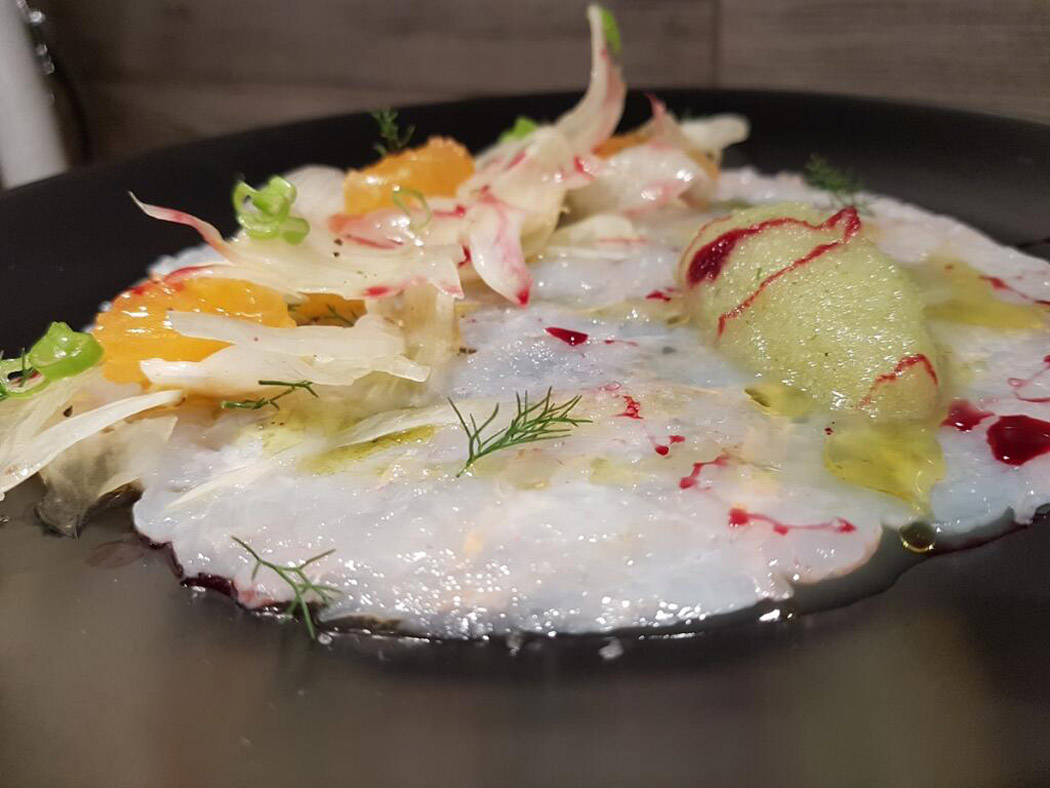
This dish takes these two gastronomic products from these two cities and blends them in a marriage of flavours: a peasant winter salad made of oranges and fennel placed on a pink shrimp base.


Pink shrimp raw recipe with frozen Riberella salad:

Ingredients:

  • Pink shrimp flavour of Sciacca 60 gr
  • Fennel 30 gr
  • PDO Ribera Oranges 30 gr
  • Spring onion 10 gr
  • Wild fennel 1 stalk
  • Pomegranate juice 100 ml
  • Seeds of pomegranate
  • Sugar 30 gr

Ingredients for the fennel sorbet:

  • Fennel 600 gr
  • Sugar 140 gr
  • Lemon 1\2
  • Pinch salt
  • Tufts of fennel

To prepare the base, the pink shrimp disc with the flavour of Sciacca, take the pink shrimps and peel them, taking care to remove the intestines from the larger shrimps. Then spread the shrimp on a layer of foodwrap and cover with another layer and beat with a meat mallet to form a flat disc.

At this point freeze the film with the beaten shrimp.

To transform pomegranate juice into pomegranate syrup, put the juice with 30 grams of sugar in a saucepan and reduce by a third until you obtain the consistency of a syrup.

To prepare the fennel sorbet we must cut the fennel into squares, mix it with all the other ingredients and put everything under vacuum to macerate for 3 hours.

After 3 hours, whisk everything and put it in the freezer. Then you need to repeat the operation: get it out of the freezer, blend and refreeze so that the mixture remains grainy.

And now let's move on to a not secondary aspect to make all diners happy : the presentation of the dish.

Take the disc of shrimp from the freezer and remove one side of the foodwrap, place that unwrapped side on the platter and remove the opposite foodwrap layer.

Cut the fennel very thin with a kitchen mandolin and soak them in cold water for a few minutes. Drain the fennel and season with the finely chopped onion, oranges, extra virgin olive oil, salt and pepper.

Then cut the oranges 'vivo', that is, removing the peel and then removing the segments of the oranges themselves from the fibrous part that surrounds them.

Place this salad on the pink shrimp and garnish with wild fennel leaves.

Take the sorbet out of the freezer and, if too hard frozen, blend it and make a quenelle with a spoon by putting it on the opposite side of the salad.

Decorate the dish with the tip of a teaspoon of pomegranate syrup.

powered by social2s
Potato gnocchi alla Gricia and Pears al Cesanese

The history of the recipe for Potato Gnocchi alla Gricia and Pere al Cesanese coincides somewhat with mine and that of my brothers.

The vineyard, in the rolling hills of Olevano Romano, was given by our grandfather to our father, who built the cottage and carried on the passion for the cultivation of Cesanese.

As adults we decide to continue their passion and open the Le Cerquette farmhouse restaurant.

We transform the cottage with a style between the traditional and the modern, giving space to large windows for a mix between inside and outside and giving the image of eating among the vineyards. Then each of us followed his inclination and mine is the kitchen.

I feel at ease in the kitchen and unleash all my creativity every season following the aromas and flavours of the products of the garden, the countryside or the territory.

Olevano Romano is the land of wine and the prince of our lands is the Cesanese DOC wine.

For this reason, dishes based on wine or flavoured with its aromas could not be missed and in the autumn I present this recipe for potato gnocchi, a must in the Roman countryside, seasoned with a 'correct Gricia' with additions of pears flavoured with Cesanese wine.

Recipe of Potato Gnocchi alla Gricia and Pere al Cesanese

Ingredients for the gnocchi for 6 people:

  • 500 gr boiled potatoes
  • 200 gr re-milled durum wheat semolina with 1 egg
  • 100 gr Parmesan
  • Nutmeg
  • Salt and pepper.

Ingredients for the dressing:

  • 150 gr of Abate pears
  • 200 ml of Cesanese
  • 200 gr of Pecorino Romano
  • 200 gr of Bacon with Pepper

The preparation of the gnocchi begins by heating the potatoes in boiling water. Once cooked, pass them through a sieve while still hot and make a dough by adding the egg, Parmesan, salt, spices and flour a little at a time.

Once at the right consistency, cut the gnocchi not too large to be well flavoured with the sauce.

In the meantime, cut the pear into cubes which are blanched in a hot pan with olive oil, blending them with the red wine. Lower the heat and wait until the wine aroma recedes.

While you cook the gnocchi in abundant salted water, brown the cut bacon in a pan over low heat. Then remove the browned bacon from the pan and place it on a paper towel.

Drain the gnocchi and toss in the pan used to brown the bacon and sauté a couple of minutes over high heat.

Add the pears and stir with the pecorino far from the flame, if necessary add a ladle of hot unsalted water.

Serve and finish with the crispy bacon, grated pecorino, some ground black pepper and serve hot.

powered by social2s
Baccalà Ghiotto, a cod tradition of Sicily

Today baccalà, better known in English as cod, is part of the culinary traditions of every Italian region, yet this particular fish from the northern seas arrived in Italy following unusual routes.

Perhaps many know the story of the Venetian merchant who was shipwrecked in 1432 in the Lafoten Islands and who after his rescue began the stockfish trade in Venice and therefore in every part of the areas where the commerce of the Serenissima arrived.

In reality, the Normans, who came from the far north, brought with them some of their food traditions such as that of dried cod, thanks to the northern winds, stockfish or 'fish fingers'. It could have been easily transported either way but it's not baccalà.

The baccalà is always a cod but its conservation method changes and salt is used instead of the drying wind. The first to use this method seem to have been the Basques, the warrior people between Spain and France.

Despite the Normans, therefore, also in Sicily stockfish and cod arrived due to the trade with Venice and other countries. When they arrived on the island they were called "piscistoccu and baccalaru" and gave rise to many traditional dishes.

Today it is prepared any day of the year, but it was once eaten a lot on Fridays and during Lent. Not to mention some special days of the Christmas holidays and December 7 (eve of immaculate conception) and New Year's Eve.

Today I prepare what is the traditional dish of my family from Sciacca, a Baccalà Ghiotto (cod) that everyone was crazy about.

Ingredients and recipe for Baccalà Ghiotto:

  • cod
  • fresh spring onions
  • peeled tomatoes
  • pitted olives
  • potatoes
  • black pepper
  • coriander
  • raisins
  • Pine nuts
  • laurel
  • parsley

It all starts with desalting which is the longest phase without which we will not be able to eat cod. The cod is soaked the day before and the water is changed regularly to remove all the salt and to make the fish softer.

At this point the real recipe begins: fry the spring onions in olive oil. Once golden, add the peeled tomatoes and continue with a slow cooking. Then add the cod cut into large pieces.

When the cod is halfway cooked, add the potatoes cut into large pieces and the spices. Keep the flame low until cooking is complete.

Serve and sprinkle finely chopped fresh parsley.

powered by social2s
Articolo-Zucca-Vanni-Cicetti-1-1024x768.jpg

If we think of autumn, pumpkin is one of the products of the earth that comes to mind. Its orange colour recalls that of the leaves and its mere presence on the table creates an atmosphere even without cooking it.

If we give it to a child, think about dressing it up but, when brought to the kitchen, the pumpkin will immediately create excellent risotto or fantastic soups.

And this is true from the north to the south while there are areas like Mantua that have made it a symbol of their cuisine.

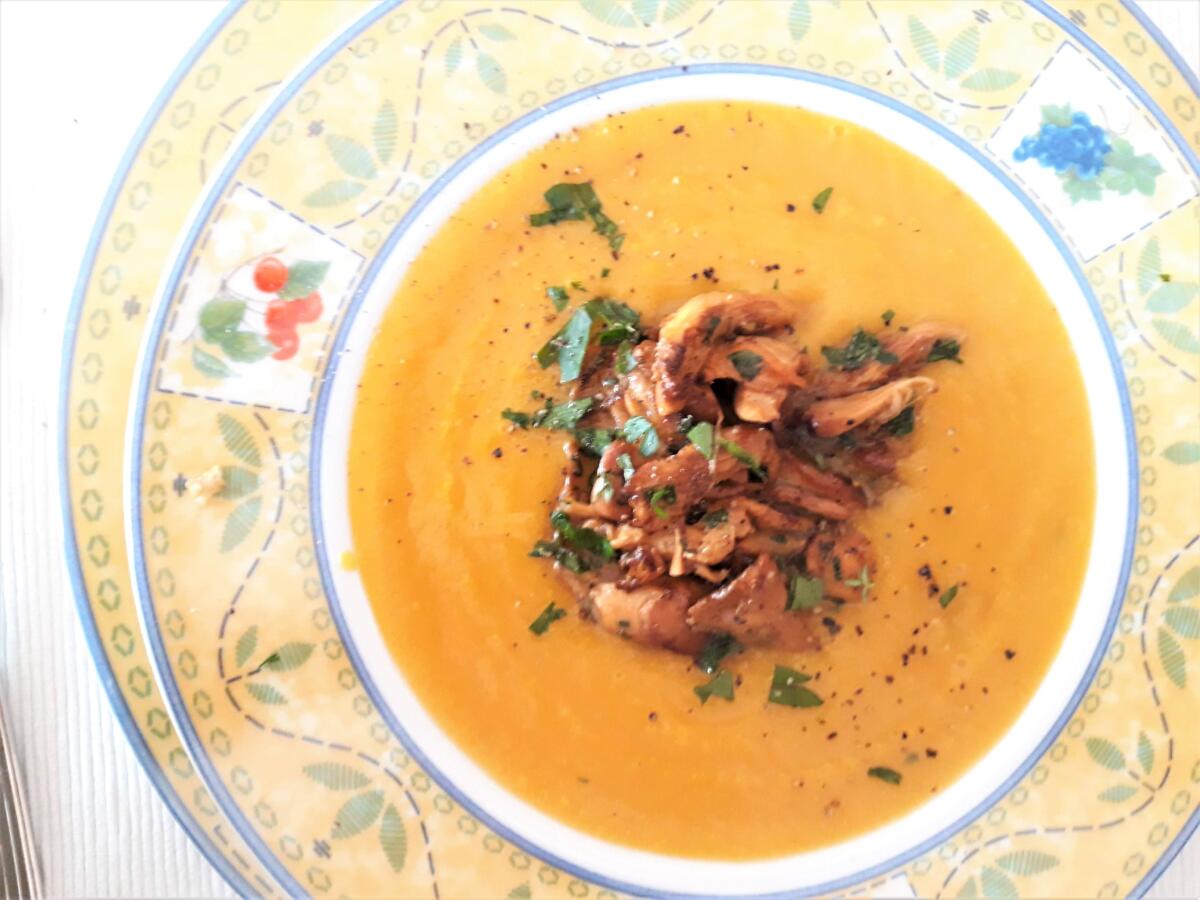
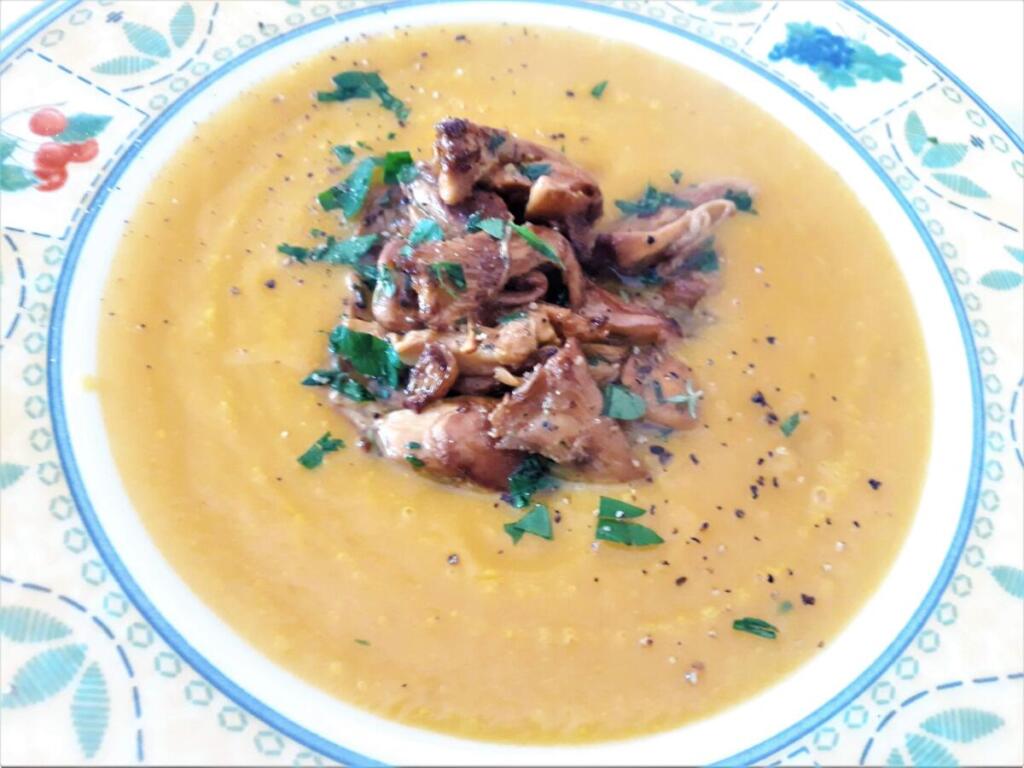
And the dish that I would like to prepare is really a soup or rather a cream soup because it is the one I am most fond of. The one that reminds me of my childhood: pumpkin cream soup with chanterelle mushrooms scented with aromatic herbs.

Strangely, there are 500 varieties of pumpkin but less than 10 are edible. And among these I chose the yellow one for our dish. At this time they can be seen in many fields in our area of ​​the upper Ciociaria.

Recipe for the Yellow pumpkin cream soup with herb flavoured chanterelle mushrooms

We take a piece of pumpkin we cut it into small cubes so it will cook faster.

Then we slice a quarter of a small onion and cut a piece of potato into cubes.

We take a pan, put some oil and let it heat then add the pumpkin, the potato and the onion. We brown everything and at a certain point add some broth or hot water and let it cook.

At the end of cooking we take an immersion blender and make the cream.

Separately, clean our mushrooms, cut them into julienne strips and toss them in a pan with hot oil for a few minutes. When cooked, add the aromatic herbs such as thyme, marjoram and parsley, well chopped.

Before serving, heat the pumpkin cream and add the mushrooms.

The dish will tend to be sweet but the salinity and minerality of the mushrooms will balance the dish.

The wine? A classic in the glass beside the pumpkin is the Bianco di Custoza. Not to get too far from Mantua.

powered by social2s

Subscribe to Newsletter

Discover a territory through the emotions of the people that have lived it.