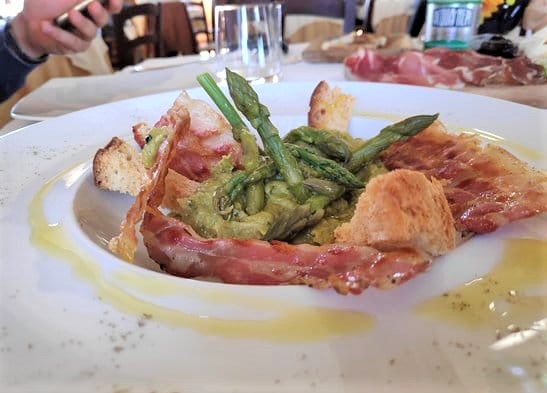
Asparagi-di-Canino.jpg

Today our journey takes us to Canino, in the heart of the Maremma country, a few kilometers from the sea between the beauties and wonders of the Etruscan cities.

Art, architecture, archeology, nature, but not only, ours will be a journey through the flavours of the earth, to experience the unique taste of Canino green Asparagus, in the province of Viterbo.


The agricultural production of asparagus in Canino began in the seventies and since then has represented the flagship of the agri-food production in this area. A specialty certainly favoured by its geographical position and by the presence of geothermal aquifers with thermal water at temperatures ranging from 35 ° to 40 °.

The water present in the subsoil is used to naturally heat the cultivation soil, thus anticipating the thermal conditions that only spring can bring when  there is an increase in weather temperatures.

The soil around the asparagus root is therefore warm and the plants begin their growth early. This is the secret that allows us to savour the taste of this precious product of the earth as early as January.

This "basal heating" technique gives the asparagus a bright green colour, with the top part standing and a soft stem that allows you to taste the asparagus in its entirety, unlike the asparagus from other crops.

The stem is so tender and tasty that in the local dialect they are called 'magnatutto' or 'mangiatutto'.

April is the month of the largest collection of this surprising product and we offer you a delicious recipe.

Recipe of the Asparagus Cream of Ivana Moscatelli of the restaurant "Da Isolina"


Ingredients:

Asparagus of Canino

Potatoes

Onion of Tropea

Garlic, Spicy pepper e Basil

Olive oil of Canino


To garnish:

Bacon (guanciale) slices

Toasted bread

In a pan, sprinkled with olive oil, we stew together diced asparagus and potatoes flavored with basil, Tropea onion and garlic. We add a pinch of chilli pepper, which is never missing in Mrs. Ivana's kitchen.

We put everything on the fire and let it cook for 15 minutes. In the meantime, we sear thin slices of bacon on the plate and toast some bread which will give the crispy note to our dish.

After the necessary cooking time, we blend our preparation, lay it on the bottom of the plate and serve it with bacon and bread. For the finish of the dish, then, we use some whole asparagus.

A simple and tasty recipe that brings with it the flavours of the land of Canino.

powered by social2s
tarassaco.jpg

If you are lucky enough to own a garden or to live near a lawn, have you noticed that, in a few days maybe after mowing, they have turned into a coat of bright yellow buttons?

These are very common flowers, which not everyone loves asthey are seen as weeds, especially in the home garden. They indicate the presence of the spontaneous herb from which they bud, a herb that is excellent in the kitchen, as well as in herbal medicine for therapeutic purposes.

I'm talking about the Dandelion, a small perennial herbaceous plant, widespread both in the plains and in the mountains, up to 2000 meters high.

In different areas of Italy it is called with various appellations, from "teeth of the lion" to "beard of the Lord" to "soffione", the latter for the characteristic impalpable tuft, which appears when the flower matures.

In Veneto this herb is called "pissacàn" for its diuretic properties, or even "radicio mato", as it is not a "real" but a wild radicchio.

In the past, pissacàn was a dish for the poor, cooked by peasant families who, not having many financial resources, lived with the products of the fields and vegetables.

Still today, however, it occupies an important place in the Venetian culinary tradition and we can use it to prepare salads, risotto, omelettes, soups, or simply boiled or "in tecia" (frypan).

And it is this last, very simple, recipe that I want to offer you, also because it is the most characteristic use of "pissacàn" in my region.

Recipe of the Pissacàn in tecia

Ingredients:
1 kilo of pissacàn,

100 grams of lard or fresh bacon,

3 cloves of garlic,

2 tablespoons of extra virgin olive oil,

salt or a vegetable stock cube and pepper

Clean the herbs, collected in the field or purchased from the greengrocer, scraping the earth from the roots and removing the toughest external leaves, as well as any flowers.

Boil them in salted water for about 15 minutes, drain and squeeze them well.

In a frypan, brown the oil with the cloves of garlic and the lard (or bacon) cut into cubes, then add the pissacàn and let them cook on low heat for at least half an hour. Season with salt and pepper and then bring to the table.

It goes well with boiled or roasted meat.

Other tips for feeling good with the dandelion

The pissacàn are also excellent simply boiled and seasoned in a salad, while the smaller and tender leaves can be chewed raw in a mixed salad, with tomato and carrots, which attenuate the bitter taste.

Finally, the flowers are well suited to frying in batter, just like pumpkin flowers, or in oil, or in the preparation of syrups, honey, jellies and preserves.

Thanks to its multiple properties, also contained in the roots, the dandelion, as well as in the kitchen, is used in herbal medicine, under the name of Taraxacum Officinale, ideal for preparing herbal teas.

It can act as a laxative, diuretic, anti-diabetic, to prevent stones and as a purifying and anti-inflammatory, especially for the liver.

Considering all the benefits that this herb, defined as poor, can bring to the body and palate, it takes on great value and certainly justifies the time and effort to collect it!

powered by social2s
Mazzarelle-3.jpg

Abruzzo is a land of shepherds and its territory is crossed by numerous sheep tracks, the paths along which seasonal migration passed and which today have been declared Intangible Heritage of Humanity by UNESCO.

The shepherds move their flock twice a year, in summer up to the fresh mountain pastures and in winter down to the less cold ones near the sea. For millennia they have followed the same paths that have been described in ancient texts. On their way, they participated in fairs and contributed to the local economy.

For this reason, Abruzzo cuisine has many dishes based on lamb and sheep. From the famous arrosticini that entered the Italian tradition around the world to particular dishes typical of specific areas.

Teramo was one of the last stages with its position between two rivers and a short distance from the Adriatic Sea, and has always been an independent and quite ‘belligerent’ place. Let's say that its history was characterized by having to contain the expansive aims of its neighbours and by having to reinvent itself after harsh natural disasters such as earthquakes.

In its kitchen "nothing is thrown away" and perhaps for this reason one of its traditional dishes are "mazzarelle", roulades of lamb's entrails wrapped in lettuce or endive leaves and tied with gut.

They were prepared especially at Easter, when the lamb is cooked, that symbol of Jesus left to die for our salvation. Some people ate the ‘noble’ part of the animal and some could only have what is called, in Rome, the fifth quarter.

According to the Teramana tradition, the mazzarelle were eaten in the morning with the Easter breakfast together with the blessed hard-boiled eggs and the Easter pizza. 

Today's recipe is presented by Daniele Zunica, the fourth generation of a family who have run a restaurant in Civitella del Tronto since 1880. Everything started from an inn for travellers and today it is one of the best places to find true Abruzzo cuisine, with dishes balancing tradition and innovation.

All the products they use come from the local territory, from producers selected for quality and attention to the environment. If you want to learn how to cook, Daniele and his staff also organize cooking courses where you can get to know about Abruzzo and its flavours.

Recipe of Mazzarelle Teramane

Ingredients:

Lamb coratella (heart, liver and lung)

Lamb entrails

Garlic and onion

Parsley, rosemary, marjoram, bay leaf, cloves, thyme, sage

Chilli pepper

Trebbiano d'Abruzzo

Extra virgin olive oil

Lettuce leaves or endive

Salt and pepper

Tomato sauce 

We start by cleaning the entrails: we then open the guts along their length, and wash them thoroughly by squeezing them several times. When they become light coloured and well cleaned, rinse with water and vinegar.

We cut the coratella into strips, wash and drain, after salting, together with the entrails.

At this point you can start making the dish by taking a lettuce / endive leaf and placing 3-4 strips of coratella on it. To these you add a little onion, parsley and garlic.

Then we roll up and tie with the guts, and as the rolls are prepared we put them back to drain. These are the 'mazzarelle'.

Then soften the mazzarelle in salted water with a bay leaf and cloves bringing to a boil and cook for about 2 hours on low heat.

For the final part, in a pan, put the herbs to fry, and add the mazzarelle and a few ladles of the cooking water. When they begin to fry (and the oil and water have been absorbed), add the Trebbiano d'Abruzzo wine and let it evaporate.
The mazzarelle can be eaten "white" or with the addition of tomato sauce.

powered by social2s
india-866692_1920-1024x660.jpg

For all of us life in quarantine seems impossible!

Everything has stopped, except the supermarkets, but apart from the sad reason for this quarantine, I would say that I am not feeling bad! I miss taking long walks,

I miss running against the wind, I miss having a coffee at the bar, I miss greeting the bartender, in short, I miss the same things that everyone is missing.

But I'm trying to consider this quarantine as a sort of "trip" and therefore I adapt to it. Even if we don't have the material possibility to travel, we remember that our mind is also programmed to travel with the imagination and not only ....

In this virtual journey of mine, I decided to take back my red suitcase and put all the documents I had from my research into it, these will be my mementos ...

First memento: India

This morning I woke up still with the emotion of the film I watched the night before and since it is a "Bollywood" film I decided to find out about India and their customs.

Did you know that ...?

Did you know that the guest in India is sacred? For Indians the guest is a God and as such should be served and revered.

Did you know that when food is offered to us, we have to refuse twice and then accept it? Also before sitting at the table, you have to wash your hands.

Do you think that in Indian restaurants there are special washbasins for the hands, divided from those of the bathroom, because as we all know, in India, especially in the southern part, it is customary to consume food with your hands, so before starting to eat it is good to wash your hands.

You have to wash your hands even between courses, because continuing with your dirty hand is not welcome. When you eat, you are very careful to only get your fingers dirty, because if your whole hand gets dirty, it means that you are rude and that we cannot eat together.

Furthermore, one must eat only and exclusively with the right hand, not with the left. In fact, the left hand is considered "dirty", as it is used for hygiene and therefore the food should not be touched with this hand nor can the dishes.

If a dish is touched with the left hand, the same food is considered "dirty", so if we were to meet an Indian person or if one day you decided to visit India, keep this in mind.

Furthermore, thanking is not well appreciated, because it is as if it were a payment, but the best way to make us understand that we liked the food is to eat everything, everything.

With this news, however, I became very hungry and above all had a desire to try to taste food with my hands.

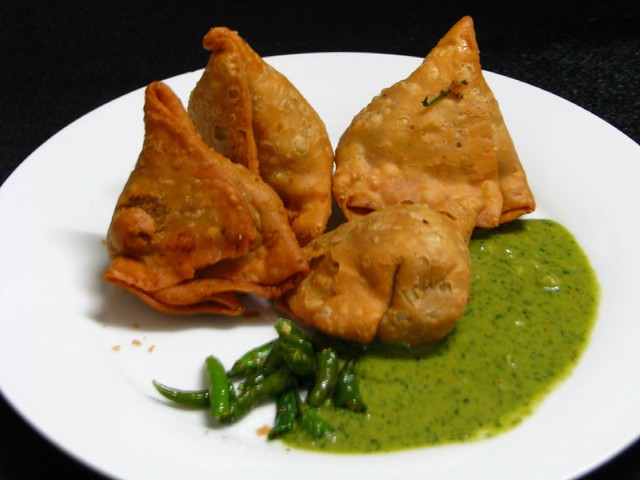
Do not disturb please! Tonight I travel and have dinner in front of the Taj Mahal with some Samosa.

Samosa recipe

Typical Indian appetizer and easy to cook. Ingredients:

250g of flour

100ml of water

Potatoes

Onion

Peas

Chilli pepper

50ml of olive oil

Salt (to taste)

Cumin

Preparation

We prepare the dough using the same technique that is used in every part of the world. Then, mix 250 g of flour with water and oil and salt in a bowl, work with your hands, until you obtain a consistency similar to that for pizza.

Then we prepare the filling: we boil the potatoes and then sauté them in a pan with oil, onion, peas, chilli and cumin.

Meanwhile, let the filling cool down, roll out the dough and create small round pizzas which we will then divide in two, we must make two half-moons that we have to fill and then close off giving the shape of a cone.

We can fry them or bake them in the oven at 200° for about 15 minutes.

Obviously the original recipe is different, this is a version more suitable for us and with ingredients that are easy to get at home.

powered by social2s
Vanni-Fettuccine-pesce-1024x768.jpg

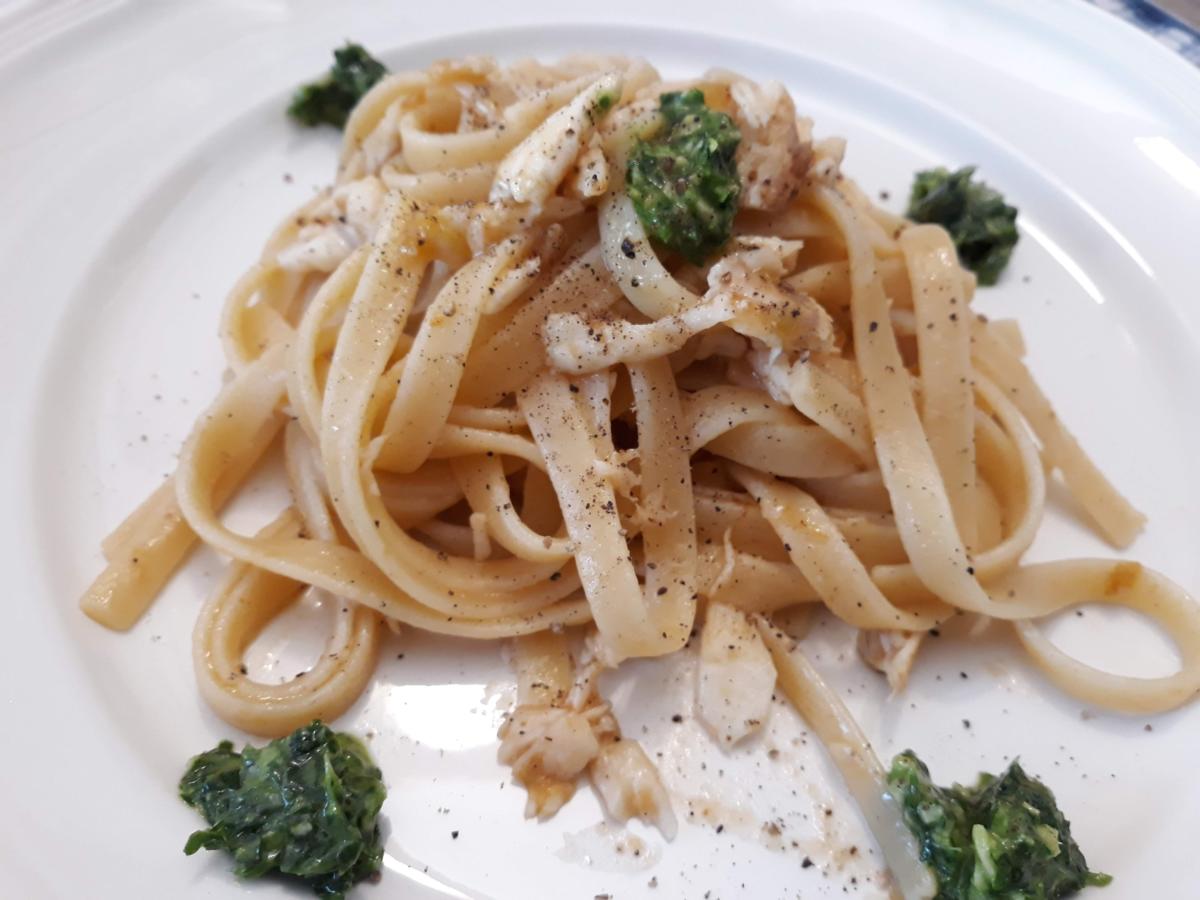
An original pesto to accompany a fish that has always been part of Mediterranean cuisine.

In fact, the sea bream is a fish that lives in the Mediterranean Sea, in particular along the coasts and in the lagoons not far from the mainland, and has practically entered the traditional cuisine of each town that overlooks this wonderful sea.

Only in winter, the sea bream moves into the open sea, forming more numerous schools to defend itself from the cold.

Its flesh is firm and tasty and has always been used in the kitchen. It was one of the favourite fish of the ancient Romans who cooked it on the grill and then covered it with sauces that today are not possible.

For example, do you know garum? A sauce made by fermenting the entrails of fish and salt that the Romans used to enhance the flavour of many dishes and to balance their diet rich in cereals. It intrigues me but I don't miss it.

In recent years, offshore farming has grown considerably in Italy, from sea bream with slightly fatter flesh.

Recipe of Fettucce with sea bream sauce

First we take the sea bream and fillet it. We will only use the flesh from which we have removed any bones.

Then we take a couple of cherry tomatoes, cut them in half and remove the watery inside. In the meantime, put the oil in a pan, a poached clove of garlic, some desalted capers (of the small ones called Tears of Venus) and the diced cherry tomatoes.

We heat and add the coarsely chopped sea bream flesh and cook for a few minutes.

Now let's prepare the parsley pesto: put the washed parsley in a glass for an immersion blender, only the leaves, some coarse salt and a little oil.

Blend for a few seconds and then add a little water, almonds and lemon juice. Then whisk again until you get a cream.

We boil the pasta, drain it al dente and finish cooking in the pan with the help of the water from the pasta. Serve, with the pesto on the side, a sprinkling of oil and some minced black pepper.

In the glass? A Laluci del Baglio del Cristo di Campobello, Sicilian white wine from Grillo grapes.

powered by social2s
virtu-teramane1-foto-moving-teramo.jpg

It is customary in Teramo that "Le Virtù" are served on the table almost May on the table.


[caption id="attachment_112539" align="center-block" width="559"] Picture by "Moving Teramo"[/caption]
This ancient dish of peasant origin and closely linked to the rhythms that nature imposed, is the sublimation of the "kitchen leftovers". In the days before May 1, the housewives cleaned their cupboards from the vegetables and legumes collected in the previous season because: nothing should be wasted.
To these vegetables herbs were then added, in a propitiatory manner, plus the first fruits of the fields and then the scraps of the pig: ears, feet, nose, bones.
Everything is cooked for  three days!
When I had the opportunity to eat them the first time, as a guest of a lady from Teramo, religiously linked to the peasant customs and traditions, I was told that in the past Le Virtù were produced by the entire community which then distributed them to the poor.


This custom had changed, with the socio-economic evolution, but the habit of cooking Le Virtù in great abundance and offering them in homage to neighbours, loved ones and even simple and occasional acquaintances, remained.

How to prepare Le Virtù?


Roughly, I go from memory as well as following the memories of the taste buds (I hope the Teramani will forgive me).
Each ingredient must be cooked individually: the dried legumes must be rehydrated (therefore at least 12 hours of soaking) and then boiled, flavouring the various cooking processes with sage, bay leaf, garlic.
To the beans must be added pork rinds, ears, feet, snout of the pig and other meat obtained from the pig itself.
Vegetables are prepared separately: onion, celery, carrots, scrippigni (thistle), borage, marjoram, dill, chard, pipirella (a sort of thyme), and fennel which are gradually added to the legumes.
Then, all the vegetables, all strictly from the field, are chopped, boiled and sautéed in a pan: chicory, chard, spinach, lettuce, wild herbs, asparagus, leek, celery, wild fennel, zucchini, carrots, potatoes.
Then the meat and bone sauce is prepared - the meat is lightly fried - as well as the small minced meat balls (pallottine). Peas and broad beans are cooked separately are also combined. There are more vegetables and legumes than meat.
Everything is gradually assembled in the large saucepan over a low heat.
Per ultimo si aggiunge la pasta, secca e fresca, con e senza uovo, tagliata in vario modo: tagliolini, rombi, quadrucci, maltagliati.
In abbinamento a questo piatto, decisamente laborioso anche per la digestione, è consigliabile un Cerasuolo d’Abruzzo (“cirasce” in Abruzzese)
Finally, the pasta is added, dry and fresh, with and without egg, cut in various ways: tagliolini, rhombuses, squares, maltagliati.
In combination with this dish, which is decidedly laborious also for digestion, we recommend a Cerasuolo d'Abruzzo ("cirasce" in Abruzzese means cherry), obtained from Montepulciano grapes vinified as white. A light, table wine, typical of Abruzzo farmers and ideal for freshening the mouth.
I conclude by offering a very warm greeting to Teramo, which for three years has been my "homeland" and in my heart it always is, with the hope that San Berardo will protect us in this circumstance too.

Cover Picture by "Tesori D'Abruzzo"
powered by social2s
Fettuccine-Clotilde-1024x683.jpeg

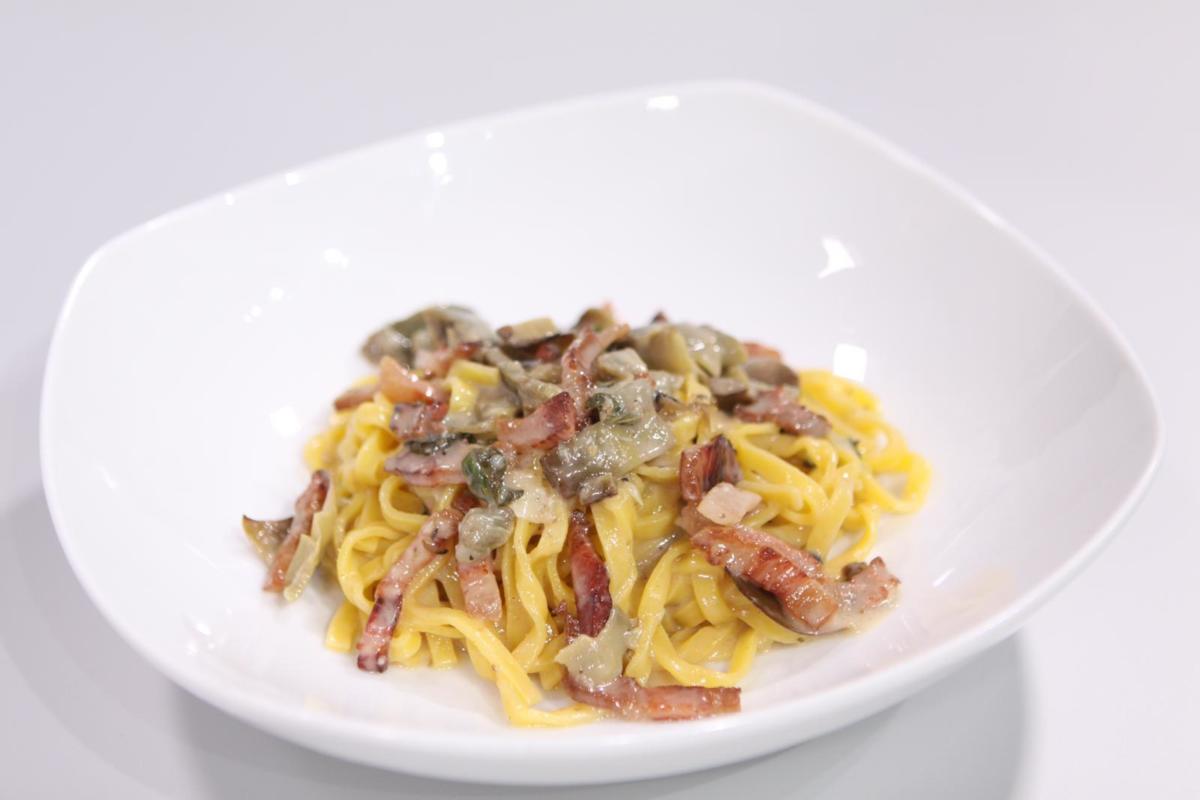
This recipe is inspired by 2 great traditional Roman dishes, GRICIA and VELLETRI's GRILLED ARTICHOKES, and binds them through the Italian pasta par excellence: egg fettuccine.

In addition, Clotilde has combined traditional tastes with innovative techniques for the creation of a dish that recollects the best of the products of the Roman and Ciociaria countryside.

But let's go step by step: if everyone should know what Gricia is, maybe not everyone knows Matticella, even if in Velletri there is even a festival dedicated to matticella artichokes.

The Velletri area is historically dedicated to the cultivation of grapes and the production of an excellent wine which has been appreciated since Roman times. Indeed, it is said that in 1222 Saint Francis passed through Velletri and performed the miracle of freeing the vineyards from worms, called Magnacozze, which were destroying the plants.

Those who cultivate vineyards know that the cinema must be pruned twice a year and each pruning involves the production of a large quantity of brushwood which in Velletri is allowed to dry for use in the kitchen. In fact, with the scraps from the pruning of the vineyards the bed of embers is prepared on which to cook the 'matticelle', or the cut vine branches.

In this way the aromas of the brushwood of the vineyards penetrate the artichoke and increase its perfume enriching it with a particular nuance. A tradition that is celebrated in Velletri every year.

For this dish we have chosen excellent products from the countryside south of Rome: the Sezze artichoke, a Romanesque artichoke which is a delicacy of the Lepini Mountains, and Veroli bacon.

Recipe of Fettuccine alla Matticella

400 gr egg fettuccine, 120 gr Pecorino Romano, 150 gr seasoned Veroli bacon, 2 Sezze artichokes, 50 ml of Velletri white wine, 3 gr of black pepper, salt.

Everything starts from the famous Sezze artichokes that we clean of the internal beard and we cover them with garlic, mint, parsley and bacon before cooking our artichoke.

As for the outer leaves of the artichoke, we only remove one row because they will be used to keep the inside soft once the artichoke is put on the embers.

When our embers are ready, we insert the artichoke from the bottom and cook it for about 15 minutes, but the time depends on the size of the artichoke.

Once cooked, we remove the external leaves and reheat the artichoke under vacuum at low temperature 93° for 1 hour, break it down and cut it into lozenges. In the meantime, we cut our bacon into 2 cm thick strips and put it in a pan to toast until golden brown.

We add a half glass of wine and add our cut artichokes.

Drain the fettuccine and let them flavour with the sauce by flooding it all with pecorino romano “coccia nera”. A nice amount of grated black pepper and call everyone to the table.

And if you want to taste it by those who are experts and can guide you in its discovery, you can start with Clotilde in Rome going to Piazza Cardarelli, right on the corner with Via della Scrofa, one of the most beautiful areas in Rome. So you can taste our dishes and take a walk in the heart of our beautiful city.

The artichoke is one of the most difficult foods to match with wine, we recommend a Cesanese del Piglio. We have chosen a Camere Pinte from the L’Avventura farm.

powered by social2s
Post-fb-del-17-03-PAPPA-CON-IL-POMODORO-1.png

The forced coronavirus lock-in leads me to reconsider the art of recycling, in the kitchen nothing is thrown away, in this peasant culture is a teacher.

And Tuscan cuisine is an art of the domestic economy.

In Florence, the cradle of Humanism and the Renaissance, there is a dish that in my opinion perfectly encompasses everything about Tuscany: that of being histrionic and arrogant but, at the same time, delicate as silk:

Bread and tomato soup!

A wise use of homemade leftovers has made it an inevitable delicacy in summer snacks.

Stale bread, preferably almost dry, vegetable broth, tomatoes: simple raw materials that are always present in every home. This composition does not admit haste, it is the dish for the next day.

Recipe for tomato soup

We cut the bread into cubes and mix it with cold vegetable broth. Don't you have the broth? And who doesn't have a carrot, an onion, a piece of celery in the fridge – now you have broth?

Please, we don't use ready-made powders, they stink! Let it rest for a couple of hours, so much for tomorrow.

In a saucepan, heat the oil with a few cloves of garlic. But they don't have to be fried and immediately turn off the gas and add the tomatoes. Those that are beautiful red, ripe, finely cut and peeled, and leave them alone the same time as the bread.

At this point, we squeeze the bread until all the broth is expelled, and with a fork, reduce it to a pulp. Once the garlic is removed, add the tomatoes and continue that fork job.

Adjust salt and serve it as it is or in the shapes you like best. It goes very well with various raw fish or meat.

I chose the raw salmon cut into light slices and some orange zest.

In the glass? A Felcebianco, a triple A from Ortonovo.

powered by social2s

Subscribe to Newsletter

Discover a territory through the emotions of the people that have lived it.