Melanzane-Chiara-1024x576.jpeg

This story starts with the meeting of my grandparents in what is my birthplace, Rocca Priora in Lazio.


Here the parents of my mother and father met, one coming from the north and the other from the south, thus linking my family, through an imaginary thread, to the stories and traditions of all of Italy.
Today we start from Calabria, which combines my life with that of a small medieval village in Locride, Grotteria, a village nestled on a hill overlooking the wonderful Ionian sea that breaks with its crystalline waters on its unique pebble beaches .
My connection with this land is strongly recalled by the sound of its unique and complicated dialect, which as a child I assimilated to a foreign language, and by the smells and flavours that I still have the opportunity to hear and savour.
The taste from the cooking hand of a Calabrian in the kitchen stands out in all the dishes she prepares: flavour, strong, decisive and spicy flavours are the perfect description of each dish prepared.


But I believe that the typical dishes of Calabria, even in their simplicity, seasoned with heart and passion are always transformed into a culinary masterpiece.
In my family and in the circle of our closest friends there is a recipe from my grandmother that  has become famous and, as much as we try to reproduce it following her advice, we remain of the opinion that, nobody prepares them like she prepares them!!

Calabrese stuffed aubergines, a recipe from the heart that talks about my story!


First we take the main protagonist of our recipe, the aubergines, cut them in half and boil them in water and salt.
While the pot is on the fire, in a bowl we put stale bread soaked in water, fresh basil cut with a knife, a generous handful of Parmesan and garlic cut into small pieces.
To our filling we must then add the eggs and continue to mix everything. At this point we take our shell of  peel from the aubergine and proceed with filling it.
Now we are ready to dip it in hot oil and fry our little masterpiece, which, once cooked, will be sprinkled with a veil of Parmesan and decorated with basil leaves ready to be tasted both hot and cold.

The variant of my Grandmother


The recipe can be modified as my grandmother does by adding minced meat to the filling ... and if we don't feel like frying we can bake our aubergines in the oven.
A dish to be tasted on any occasion that recalls the flavours of a magical land and makes us relive the memory of our origins!
See you next time we’ve cooked it!
powered by social2s
Minestra-Bazzoffia-Vanni-1024x710.jpg

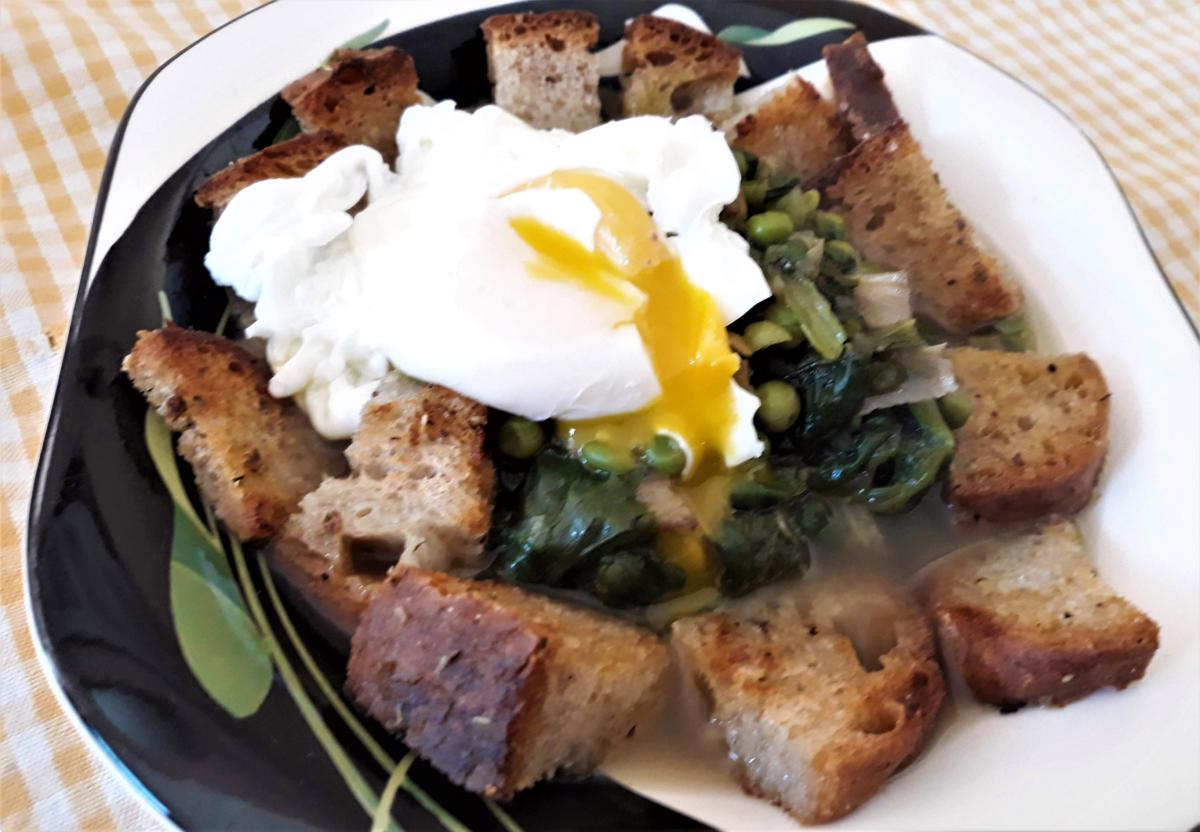
Bazzoffia soup or soup of love is a traditional dish of the area between Priverno and Sezze, in what was once the Historical Ciociaria and corresponded to the Provinces of Campagna and Marittima of the Papal States.

It was a dish for the very poor that combined the last vegetables of the winter with the first of the spring and was used to recycle the stale bread that remained hard and uneaten. Obviously, the artichokes of Sezze were inevitable and they are a true excellent vegetable of the area.

It was a dish that today we would call a "single course" where there was also included egg and pecorino cheese with milk from the sheep of the Lepini Mountains. Practically it gave a real hit of energy that could serve to awaken the bodies after the winter cold and prepare them for the labours of the work in the fields in spring. But not only that …

The women prepared the soup of love and offered it to men returning from the countryside, the completeness of the dish gave men the right boost and hence "love soup".

Today it is more difficult to find a man to return home after working the earth, or to find stale bread in the kitchen cupboard (the cabinet where the bread was kept), so I made a more contemporary version of it.

Recipe of Bazzoffia Soup

I start with the artichokes and I cut them fine. Then I slice ​​a spring onion and put it in a pan with extra virgin olive oil, a quick cook and immediately I add the cut artichokes to flavour everything together slightly. To this I then add chard, the one with small leaves, and some lettuce leaves and finally some peas and I leave everything to flavour together.

Then I add water to create the soup and partially cover the pan, leaving it to simmer for an hour.

In the meantime I prepared some croutons of bread, sautéing them in a pan with very little oil and flavour with oregano.

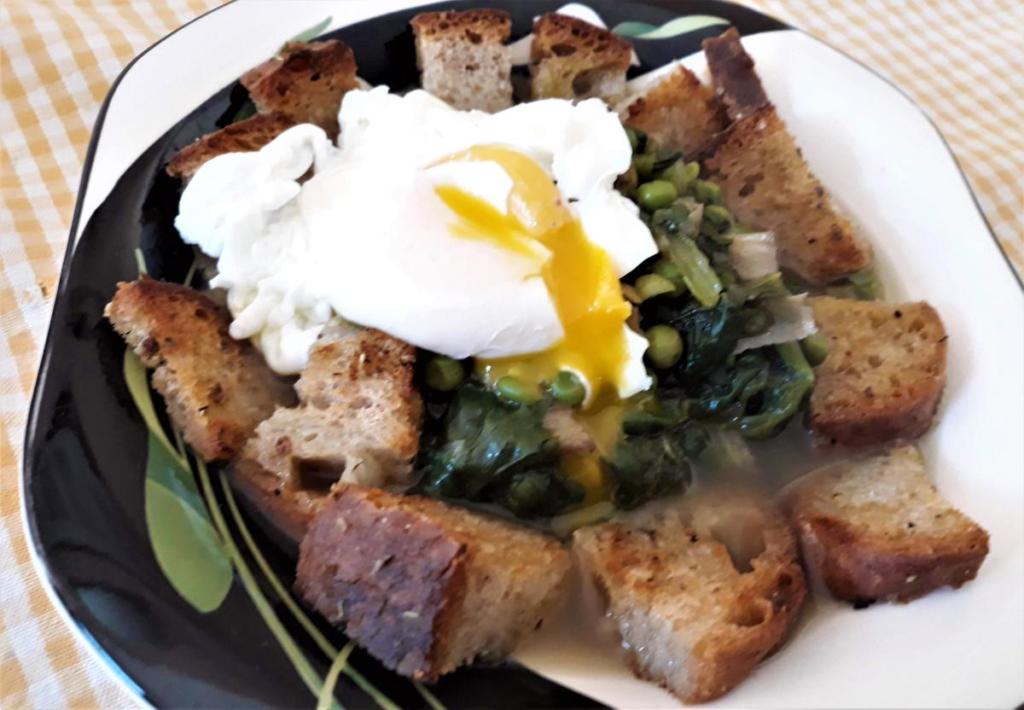
I also prepare a poached egg which we will lay on the soup. The preparation of the egg is always delicate: we take a saucepan with water and boil it slightly adding vinegar. With a spoon we create a whirlpool in the water and pour in  an egg which in a couple of minutes will create a white shirt around its yolk.

After the cooking time for the vegetables, pour the soup into a bowl, lay the egg on top, put the croutons and a pinch  of pepper and finally we serve our soup of love.

In the glass I pour a Pinot Grigio Friulano, perfect!

powered by social2s
pac3.jpg

"Mens sana in corpore sano" is a Latin saying that in this period is of a disarming relevance: the mind is healthy if the body is healthy.

The viral health hazard risks depressing us. I fight it with positivity and I want even more to cook something profoundly Italian. In the periods of heeling from viruses,, returning to our roots is reassuring, as Italians we have seen so many over the centuries that instead of each taking away from us, they have led us to be the most beautiful country in the world.

So, even in this time of crisis, I continue my life as usual and I dedicate myself to discovering seasonal flavours. The local Triofale market, where I always go, is swollen with delicious local products, I leave the supermarkets to the crazy people.

The vegetables are amazing, the first Roman artichokes are here from the fields near the sea between Maccacrese and Ladispoli are very fresh. The artichokes can be recognized by the leaves and the still white cut from the fields.

At the fish counter I see a nice roar of the Adriatic, the idea starts!

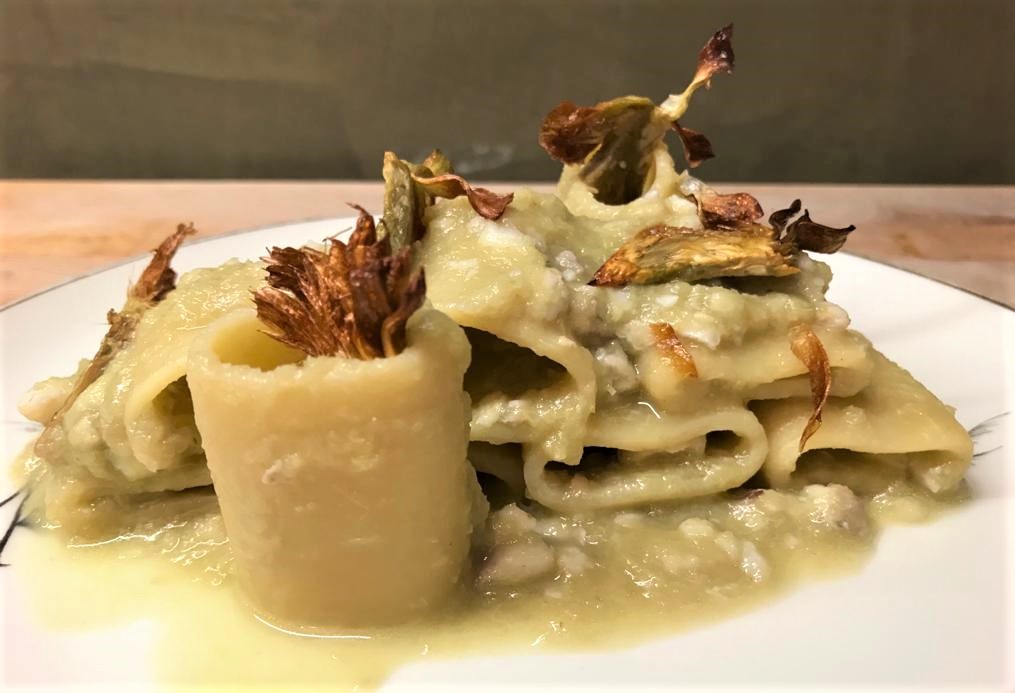
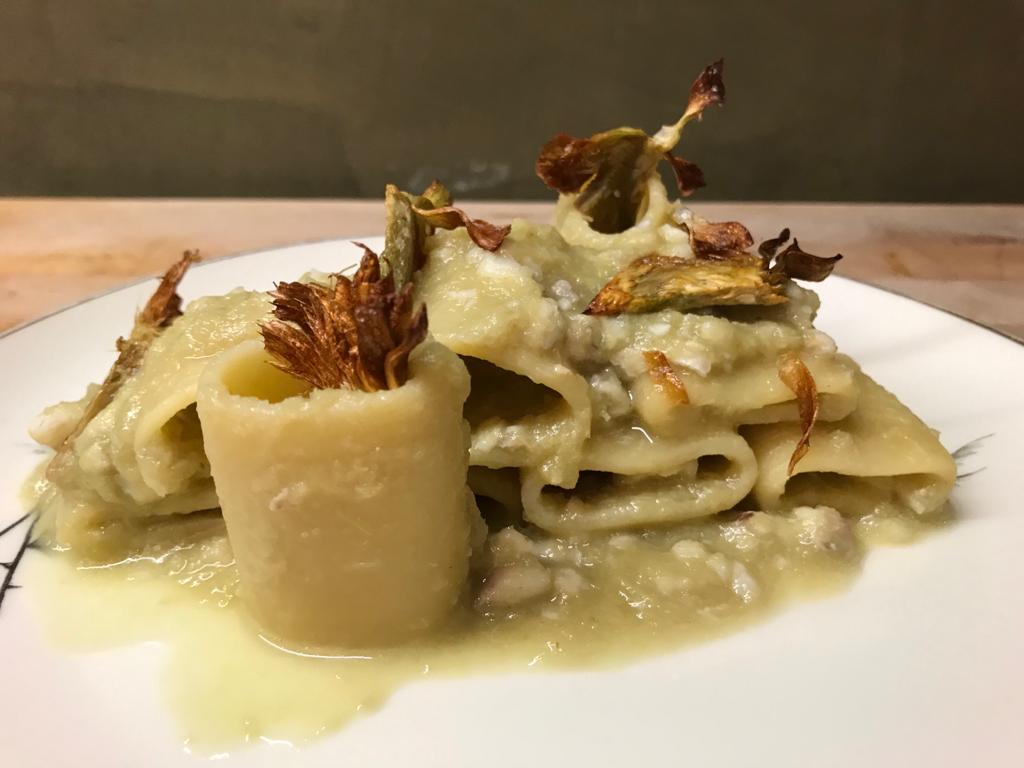
"Paccheri pasta with turbot and artichoke sauce a dish that embraces the two seas, a culinary Tyrrhenian-Adriatic".

Two coasts swollen with history: Ladispoli whose origins are Etruscan was like Anzio the tourist destination of ancient Rome. The black volcanic sand of its beaches and countryside is swollen with iron and favours the quality of the artichokes that have become DOP.

Pescara, which takes its name from the river whose sources are a natural oasis that is worth visiting, hardly needs any introduction. Its sea with the sandy bottom is generous and the turbot is one of the most valuable species.

Besides, sometimes I feel like the D’Annunzio of the kitchen.

Recipe of paccheri pasta with turbot and artichoke sauce

First fillet the fish making 4 fillets and remove the skin. I will use the larger two for a second dish in the oven, the smaller ones cut them into cubes and put everything else aside.

I clean the artichokes and prepare them by cutting the stems into slightly thick rings and the flowers in thin wedges.

Part of the segments I fry and I will use them for garnishing, the rest, blanch them in water with a few slices of lemon in order to prevent oxidation.
A few minutes of boiling, then I remove the lemons and blend the artichoke segments with the blender. Then I put everything in a pan with oil and garlic and cook over very low heat. Only at the end of cooking do I add the turbot cubes because it is a delicate fish and cooks in an instant.

I prepare the pot for the pasta and after cooking the paccheri ‘al dente’, I drain them, pour them into the pan and keep them.

For garnish, but also for crunchiness, on the plate I add the fried artichoke wedges.

A dish that embraces the two seas, a Tyrrhenian-Adriatic culinary dish without racing bicycles, a hymn to spring. And I accompany everything with a Chardonnay from Friuli, to continue the ideal embrace to Italy and because it is perfect with artichokes that are always difficult to combine.

powered by social2s
Laine-e-Ceci-Vanni-Cicetti-1024x768.jpg

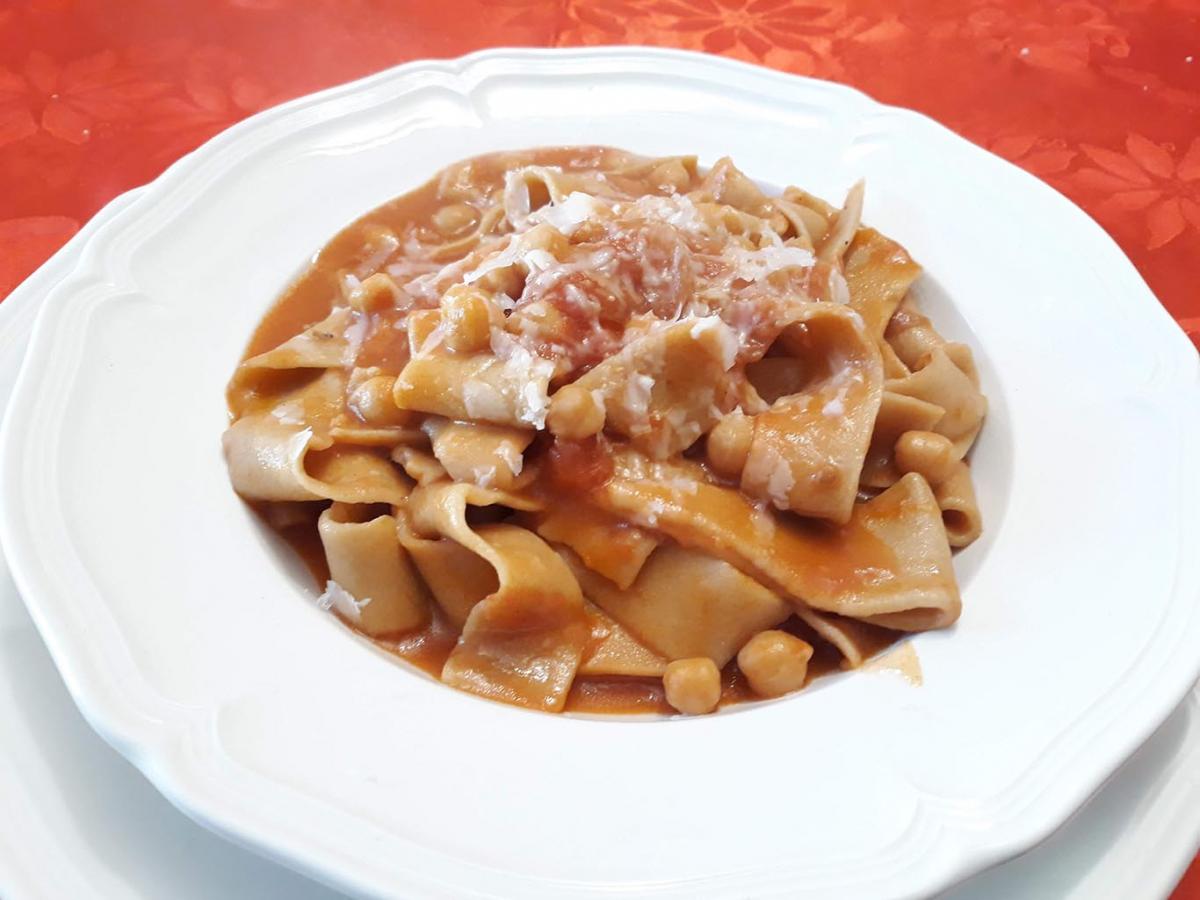
Laina e Ceci (Laina pasta and Chickpeas) is a traditional dish from south-western Lazio, that of the Ciociaria that looks towards the sea. Treaties could be written on the definition of the term Ciociaria and in any case each person in Southern Lazio has his own idea that differs from that of the others.

Remember that the current province of Frosinone  was born by taking part of the ancient province of Campagna and Marittima of the Papal States and that of the Terre di Lavoro of the Bourbon Kingdom.

The fact is that Latina did not yet exist as it was submerged by the waters of the Pontine marshes and that the province was called 'Campagna e Marittima' explains how a fairly homogeneous territory included the area of ​​the upper province of Frosinone down to the sea.

With these premises, I declare that Laina and Ceci is a characteristic dish of Ciociaria. And I don't listen to all the other ideas.
Laina is a type of long pasta, a kind of thicker and wider fettuccine, mixed only with durum wheat flour, water and a pinch of salt.

I make them by hand using the Maestà wheat semolina, a grain with excellent organoleptic qualities that was created to be planted in the centre-south. It is at the basis of the relaunch of the La Molisana pasta factory and represents the quality of its products.

The term laina deserves a separate story: we already find it in Marco Gavio Apicio's cookbook to indicate a generic mixture of water and flour pulled and cut into strips. At that time it was called the "laganum", a food for the poor. But laina could also derive from "lainaturo" that is the rolling pin.

By the way, for the uninitiated Marco Gavio Apicio was a Roman gastronome and cook and he also transcribed some of the recipes. He lived between the two centuries I B.C. and I AD he was a friend of the emperors of the time, especially Tiberius. His recipes were transcribed after his death, but they are still the first precious testimony of ancient Roman cuisine.

Since laina is a poor man’s pasta, it has always been seasoned with simple sauces. The most traditional one is with a chickpea sauce, in Selvacava di Ausonia in the province of Frosinone where for over twenty years the Laina and chickpea festival has been organized. But this is also one of the typical dishes of the nearby Castelnuovo Parano.

Recipe of Laina and Chickpeas

The preparation of the dish begins the night before by soaking the dried chickpeas in water.

We make the laina by putting the flour on a flat board and kneading it with water and a pinch of salt. We must work energetically to create a homogeneous mixture which must then be left to rest for about half an hour.

Then we spread the dough in a not too fine sheet, sprinkle it with flour and let it dry for 10 minutes. At this point, we will cut it like slightly irregular fettuccine.

In the meantime, boil the chickpeas in a saucepan and start preparing the sauce. For this we chop an onion and fry it in a pan with oil to which we will then add the peeled tomatoes and cook the sauce with a pinch of salt.

After boiling the chickpeas, we add them to the sauce and cook them for a few minutes.

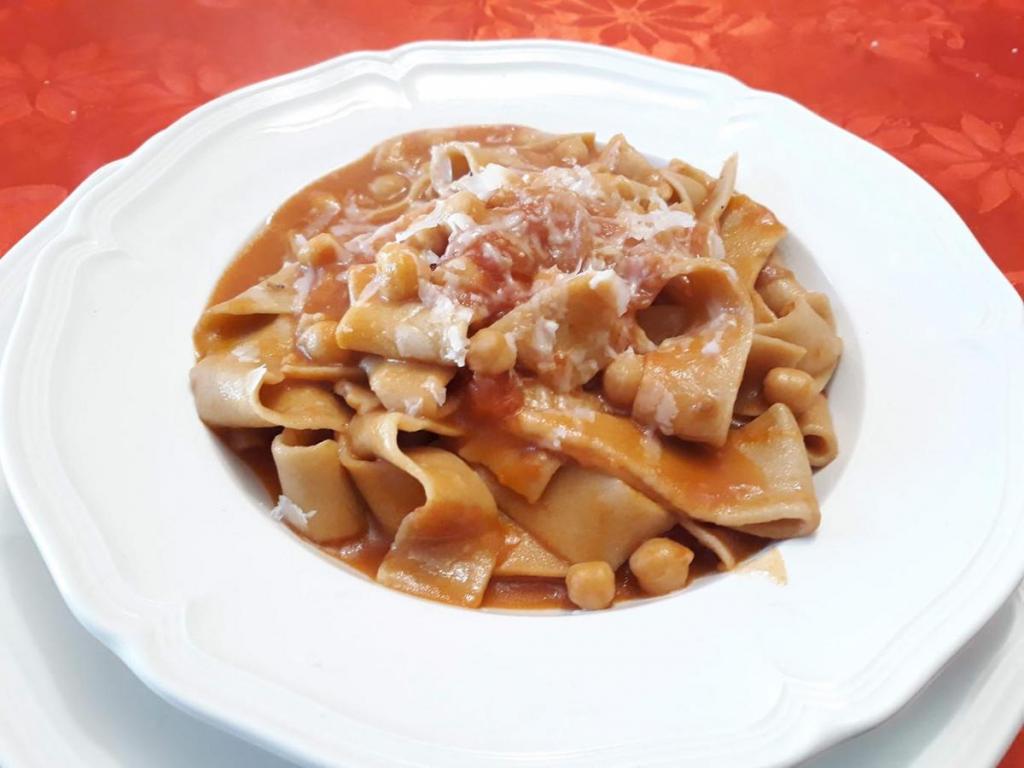
The peculiarity of this dish is to cook the pasta directly in the chickpea sauce, to which we will have added water. When the pasta is ready, after a few minutes, we serve everything adding semi-fresh pecorino flakes.

In the glass, to stay in the Ciociaria area but not near the sea (say in the ancient papal province of Campagna), I chose a good glass of red Cesanese del Piglio DOCG.

powered by social2s
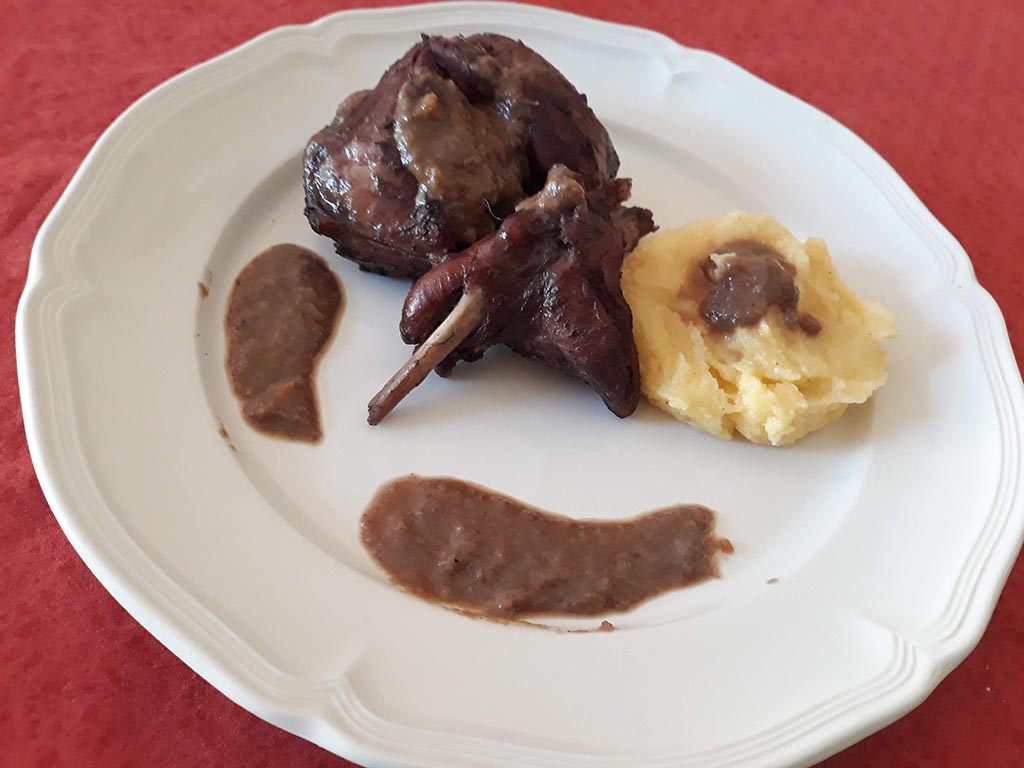
Carmagnola rabbit "al civet" with spices and polenta

It has a French name for what is a typical dish of Piedmontese cuisine, but it is a fact that they are neighbours who love and hate each other.

The recipe for the hare al Civet, which today has become rabbit al civet, has distant roots and was already enjoyed in the Middle Ages when it indicated a dish cooked with a lot of onion and breadcrumbs to which the animal's blood was then added. In fact, 'civet' comes from the French word 'cipolla', although today it is no longer used to the same extent that it once was.

In some areas this preparation is also called 'in salmì'. One thing is essential: it can be eaten accompanied by the same wine used in the marinade.

But let's get to the modern version with the grey rabbit from Carmagnola, the only Piedmontese native rabbit that was widespread until the 1950s. Then due to the difficulty in breeding this species that does not like to be kept in a cage, but wants to live on the ground (in practice he was a direct heir of the wild hare), it made sure that they gradually disappeared.

Recently, thanks to a genetic recovery from the University of Turin, grey rabbits have returned to the territory of Carmagnola and have also repopulated the countryside. They are medium-sized rabbits with a soft, grey coat with a lighter part in the ears, belly, legs and tail.

Fortunately, also with the help of Slow Food, which protected it, we have returned to breeding it. And the new farms respect the characteristics of these animals that love to feed on grass in open fields.

The Carmagnola grey has very tender and non-stringy meat and a muscle mass superior to the other breeds. Cooked with peppers it was a traditional Piedmontese dish that was found in all taverns while today we will give the recipe for "al civet".

Recipe for Rabbit of Carmagnola "al civet" with spices and polenta

We purchase the rabbit from a quality butcher, wash it and cut it into pieces. Then we put all the pieces in a container with carrots, onion and celery cut into large pieces. Be careful that to obtain a unique flavour, the onion must be stuck with cloves. A sprig of rosemary, sage leaves, bay leaf, cinnamon sticks, parsley leaves are also added.

Then we cover everything with an excellent red wine and leave it to marinate. I used a Barbera d'Asti, the same one I will drink when I eat. The container is closed with a transparent film and put in the fridge for 24 hours and note that after the first twelve hours the meat starts to turn.

After that period, take a pan and put in it some butter and oil and brown the meat. Before browning the meat we filter the marinade liquid, being careful to remove the aromatic herbs, cinnamon and cloves while leaving celery, carrots and onion (which we will add to the meat).

To flavour the rabbit we begin by soaking with the marinating wine before cooking over low heat for 1 hour and 30 minutes.

At the end of cooking, remove the rabbit from the pan and blend the vegetables with the cooking sauce, creating a sauce. We will use this sauce when we put it back in the pot with the rabbit for 5 minutes to  flavour it.

We then serve the rabbit with polenta, I used polenta integrale.

And the wine? Obviously in the glass we will drink the same wine with which we made the marinade.

powered by social2s
Ricetta Dario spaghetti broccoli e alici
Recipe for Spaghettoni with Roman broccoli and anchovy

Roman broccoli is not only beautiful but also good. With its fractal geometry, the Roman broccoli is an undisputed autumn lord. From the height to the first mists and the countrysides around Lake Bracciano are its best range.

Known since ancient times, broccoli, whose name derives from "brocco" or the sprout, is native to Asia Minor. This vegetable was considered sacred by the Greeks, the Romans used it to treat a wide variety of diseases and ate it raw before banquets to help the body absorb alcohol better, while crushing the leaves to treat ulcers and wounds. Today it is a natural anticancer and is rich in potassium and vitamin C.

Today the Roman Broccoli is included in the List of Italian Traditional Agri-food Products. This winter-growing plant has been a real source of nourishment over the centuries and the absolute protagonist of cooking treatises starting from the Roman ones of Pliny and Columella. For mathematical enthusiasts it represents the Fibonacci spiral in nature.

In 1834, broccoli became the topic of a sonnet by Giuseppe Giacchino Belli in which the  protagonist is Torzetto, or the broccoli farmer.

The testament of Pasqualino
“Torzetto l’ortolano a li Serpenti 
prometteva oggni sempre arzu’ curato
c’a la su’ morte j’averia lassato
cinquanta scudi e ccert’antri ingredienti.”
(Gioacchino Belli)

In the kitchen, broccoli is suitable for many recipes and is present in many dishes, from soups to pancakes. Everything is done a little, but broccoli soup is a must. A little different in form and substance, I prepared a quick and easy first course

Recipe of Spaghettoni with Roman broccoli with anchovy

First, get a fresh broccoli flower from Anguillara Sabazia that we will boil and drain without throwing away the water. In fact, in this water rich in vitamins and flavours, we will cook the pasta and we choose a square spaghettone.

Put the broccoli back in the pan with garlic, oil and a pinch of chilli, preferably fresh.

Then we put the still hot broccoli in the blender together with the Roman canestrato, a pecorino cheese that owes its name to the basket (basket) in which it is left to mature. It is a semi-hard pecorino cheese less incisive than the classic Roman one, the best one is that of the most northern dairies in Rome.

When the pasta is cooked and drained, put it in the pan for creaming together with the broccoli blended with cheese. It is served at the table with an anchovy over the pasta. Also the anchovy is a protagonist of the Roman and Latium cuisine, but I prefer those of Sciacca that are washed under a thread of running water.

Taste it with a good wine like a Bellone from the Agro Pontino.

powered by social2s
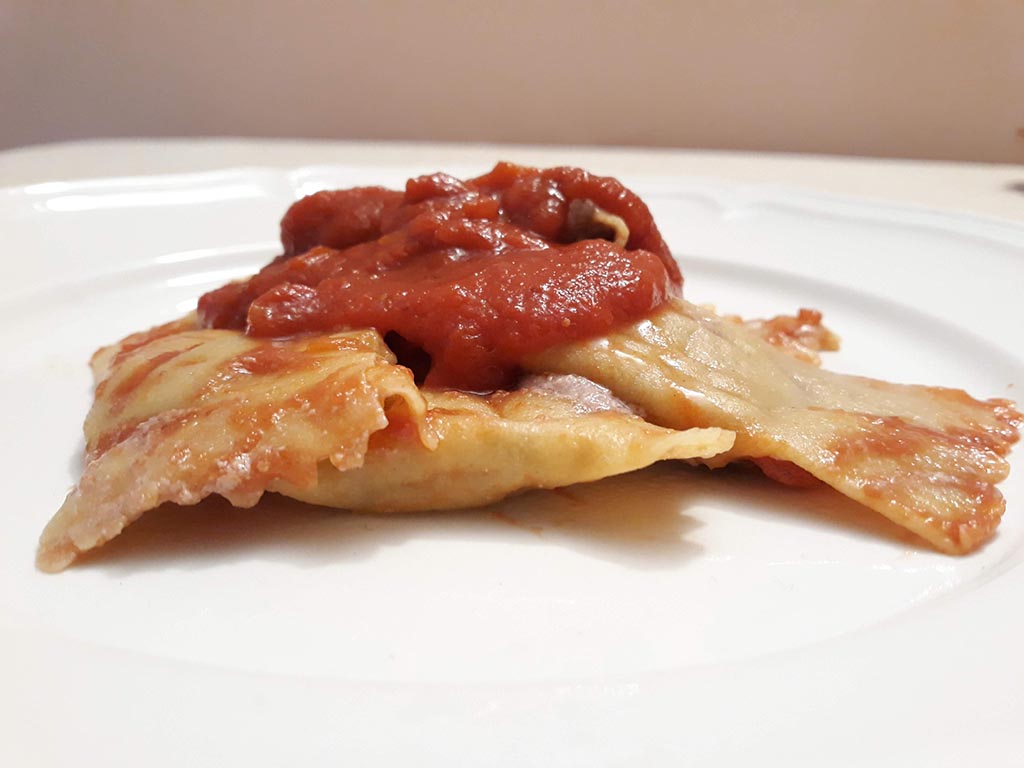
Ricotta and cocoa ravioli from tradition of Amatrice

Everyone knows Amatrice, a town renowned for one of the most famous pasta dishes as well as for a recent earthquake which, like that of 1639, has destroyed nearly the entire town.

Amatrice is located between the mountains and the highlands of the Apennines in the province of Rieti (since 1927) on the border with Abruzzo and Marche. Once it was part of the Kingdom of the Two Sicilies and even its culinary traditions are influenced by its history.

In fact this particular recipe was told to me by a person who lives in the Amatriciana basin, to be precise to Cornillo Nuovo, one of the 69 hamlets of Amatrice.

We are under the Monti della Laga with the highest peaks of the Central Apennines and near the Scandarello Lake, which are among the favourite destinations of lovers of trekking and mountain walks for the variety of the landscape and biodiversity. In winter also for some trails are dedicated to Nordic skiing.

But all this beauty has been outclassed in notoriety by a sauce to ‘dress’ pasta: the famous ‘Amatriciana’. Today, however, I am not going to tell you about the famous spaghetti all'amatriciana but an aromatic ravioli with a surprising taste. It is a particular ravioli that seem to come from a cookbook of a contemporary chef, one who loves to mix the classic kitchen with the modern one.

There are three secrets to this recipe: wheat flour, ricotta and cocoa.

For the ravioli pasta I used the flour os Grano Autonomia B, a soft wheat with a rich aroma and unmistakable taste. It was created in 1938 just to be cultivated in the lands of central Italy because it adapts to cold climates, like that of the highlands of Amatrice. It was made by the crossing of the Frassineto with the Mentana and in its name there is its history and that of the Italian autarchy of the Battaglia del Grano (Battle of the Wheat).

The ricotta is that from the sheep of the Amatrice highlands. There is nothing else to add because its flavour is universally known to those who love good food.

The third is cocoa, which is obviously not a local product. The use of cocoa for a savoury preparation is not the norm in the Lazio cuisine and appears towards the mid-18th century in the kitchens of the nobles.

It spread at the same time as wild boar and we can certainly say that this was a dish for the holidays. For all the others the poorest parts of the animal continued to exist, such as pajata (calf intestines and tripe.

Recipe of ricotta and cocoa ravioli with meat sauce

We prepare the dough of the ravioli pasta with flour and an egg and let it rest before rolling it out and cutting it.

We then proceed to prepare the sauce of seasoning the meat of the ravioli. Chop the carrot and onion and let them brown in a pan with oil. Then we add a whole piece of beef for gravy and we brown it before wetting it with white wine.

When it has evaporated, add peeled tomatoes and cook for a couple of hours over low heat. We will then eat meat as a second course by cutting it at the table in front of our friends.

Now we prepare the filling of the ravioli: take the sheep's milk ricotta and season it with cocoa and cinnamon and work the dough to make it soft and homogeneous.

We are ready for the ravioli and we spread the thin pasta, then we put the filling of ricotta and cocoa we prepare the ravioli. Boil the ravioli and season them with the meat sauce.

We serve at the table and offer grated pecorino cheese for those who love cheese.

Ricotta and cocoa ravioli is a simple but delicious dish and there is nothing adapted to your taste. It can be enjoyed with an excellent Pinot Nero from Trentino that will highlight its characteristics.

powered by social2s
A Chestnut Soup and "chickpeas sultan" for the arrival of autumn

"The bread tree", this is how the ancient Greeks called the chestnut tree because it fed in winter but that is not all. It is a plant that they began to use in its entirety: wood for buildings, flowers and bark in pharmacopoeia and fruits (nuts) as food.

In Italy the chestnut has always played a very important role, above all for the people that inhabited the entire Apennine arc where there are incredible chestnut woods.

At the beginning of the 20th century, 800 million kilos of chestnuts were produced which created a considerable turnover. Chestnut is used to make flour and other pastry products such as jams and glazed marrons. Not to mention the famous Mont Blanc cake, a true riot of flavours.

After the small glaciation in Europe in 1709, Rocca Priora decided to go back to planting trees in the mountains and for this reason the Castelli Romani are characterized by beautiful chestnut groves that in summer make the Castelli Romani Park a cool place to walk .

After the second world war there was the abandonment of the mountains and people went to look for a better life in the city and in the industrial zones, those of the so-called progress. The production of chestnuts and derivatives dropped dramatically and today we produce about 30 million pounds.

Chestnut is the classic fruit of autumn and I wanted to use it in a recipe together with another very ancient product, ceci (chickpea) that is a legume that together with chestnuts formed the food base for entire mountain populations.

For this dish we chose the "chickpea sultan", the smallest type that exists. The sultan chickpeas, as the name also reminds us, probably come from the East, Iran or Turkey, and the Egyptians used them to feed slaves.

We will make a soup with chestnuts in this specific case using the "marroni di Segni" (chestnuts from Segni), a beautiful town south of Rome, famous in the world for its cyclopic (polygonal) walls with the superb Porta Saracena.

Segni is absolutely one of the must visit towns in life.

Recipe of Chestnut Soup and Sultan Chickpeas

Everything has to start the night before the soup is cooked when we remember to soak the sultan chickpeas in cold water scented with sage leaves and a clove of garlic.

Take the chestnuts and boil them in water flavoured with fennel seeds and a bay leaf. In another pot, at the same time, we also boil the chickpeas. It is important not to salt during cooking but only at the end.

After boiling the chestnuts, peel them and chop them coarsely and put them to flavour in a pan where we will have already browned a clove of garlic with oil and chilli.

After a few minutes, when the chestnut has soaked up the flavour, we add the chickpeas with their cooking water. We wait for the soup to come to a boil and let it cook for 15/20 minutes, just long enough for the chestnuts to come apart and create a cream.

To enhance all the flavours, the soup should be served with a round of new oil (maybe just arrived from a mill that is still working in autumn) and sage leaves.

The dish tends to be sweet, excluding the spicy note of the chili pepper, and I drank a Trento classic method rosé. I could not wish for better!

powered by social2s

Subscribe to Newsletter

Discover a territory through the emotions of the people that have lived it.