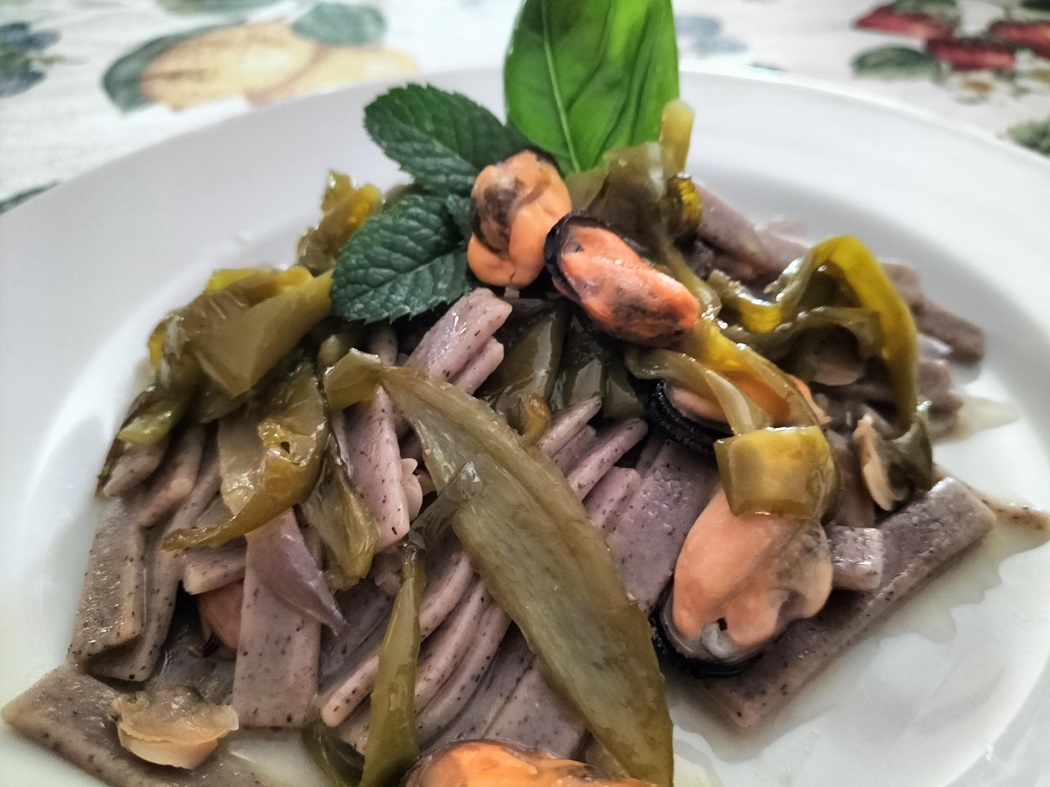
After the party ... spaghetti with broccoli and sausage

After the hangovers of tradition and Christmas holidays, I go back to cooking with what I find. Always remembering that it's cold outside and that I need to put something hot under my teeth.

The other night at the village was -3, wolf time, broccoli time! I wonder why I would eat the broccoli all year but with the cold I enjoy them great.

It is the cold that tempers them by giving them that bit of bitterness that distinguishes them. There are several species: in Rome they like a little more sweets, while going down to Naples you find them more bitter.

I choose those of Sezze that is the homeland of broccoli with the famous artichokes. Sezze is located on the side of the Lepini Mountains, along a road that from the Middle Ages was traveled by all those who went to Naples. They called it the Via Francigena del Sud and for centuries it took the place of the Appian Way that after the fall of the Roman empire had been covered by the marshes and was rather unhealthy.

The Sezze land is sunny and rich in iron and perfect for many crops. My classmates from the town of Sezze introduced me to the agricultural institute of borgo Piave. Memorable their sandwich with broccoli!

Recipe of spaghetti with broccoli and sausage

A simple and tasty first course that combines the soft taste of pasta, the decisive broccoli, the scent of the sausage woods and the taste of the canestrato meadows.
Meanwhile, I prepare a cream based on broccoli. As soon as they are boiled, cut them into small pieces and pass them to the blender with a piece of raw garlic to which I removed the soul.

Separately, cook the sausage, stir-fry garlic oil and chilli pepper. Also for the sausage I'm staying in the Lepini Mountains  and from my trusted butcher of the Via Trionfale Market I got a specialty. These are the famous sausages made with the black pig that lives in the semi-wild state right in the mountains between Sezze and Bassano Romano. Playing at home. My former classmates would be proud of it.

Let's remember to drain the pasta cooked al dente, so you can skip it in the pan with the cream of broccoli. Then add the sausage cut into thin slices, I know it is a scenographic habit but I like to put sausage in the mouth.

The preparation ends with a sprinkling of Roman canestrato cut into small flakes.

The canestrato is a cheese made with sheep's milk which takes its name from the basket of rushes in which it is prepared. For the occasion I found a tasty

Roman canestrato that drives me crazy with a lamb curd.

Now if you have a lit fireplace I recommend eating this pasta right next to the flame, otherwise you can warm up with a glass of Nero Buono Wine by Pietra Pinta di Cori.

Once again the protagonists are the Lepini Mountains also in the glass. This time I was inspired by the nostalgia of school.
powered by social2s
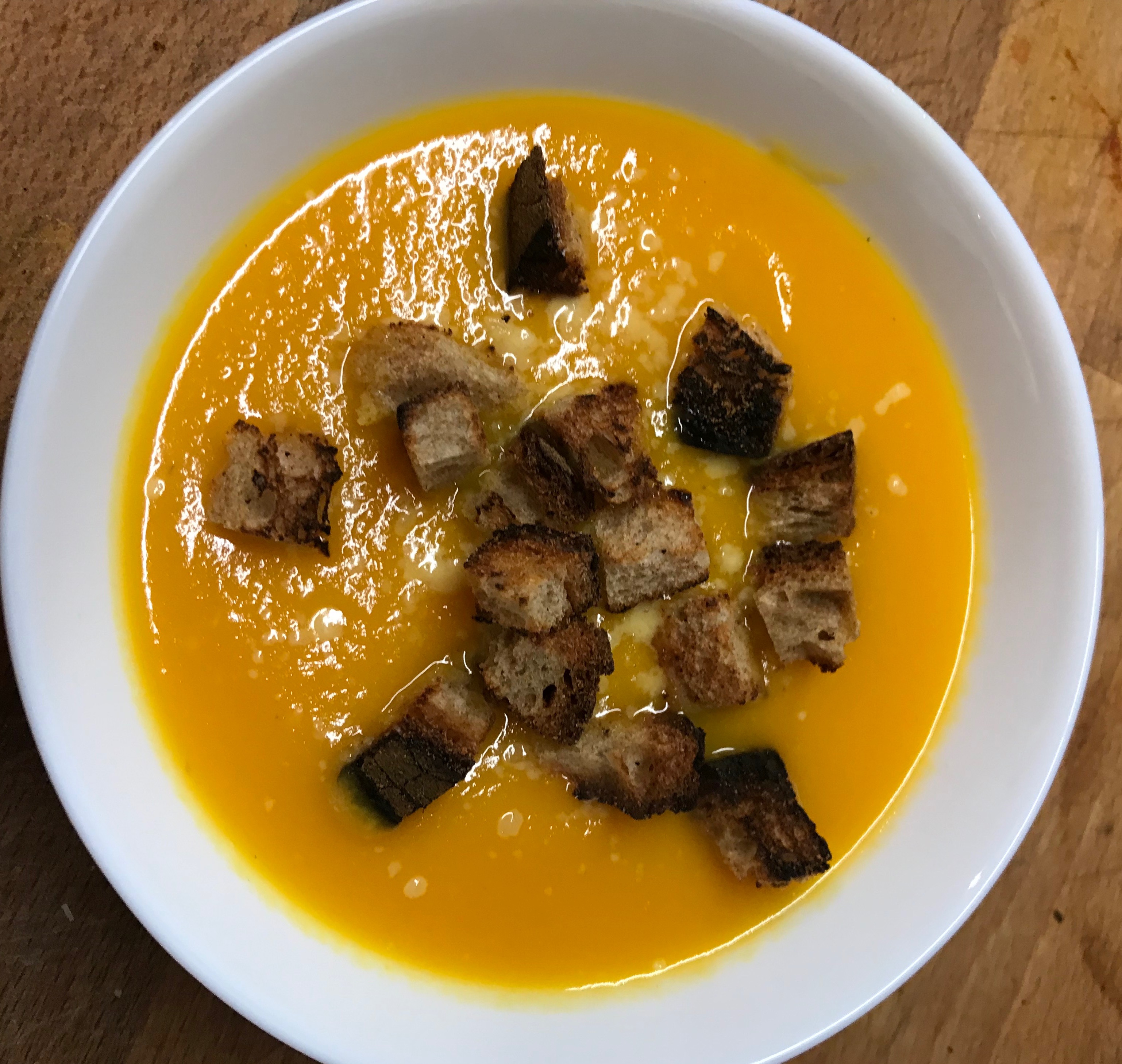
An orange cuisine is pumpkin and carrot soup

The cold and the tramontana (that cold north wind) make you want soup, it's time for pumpkins. After the halloween party there is something for all tastes: from mantovana to cappello del prete (literally the priest's hat). Each recipe has its pumpkin and each town has its own particularities.

Queen of the table in Emilia Romagna, the pumpkin tortelli from Ferrara are famous and appreciated all over the world.

Yet not very much found in the traditional Lazio cuisine, the pumpkin was once a second rate product often relegated to the feeding of the house animals. They were the last products of the zucchini plant that were used for seeds. Now it is cultivated in a decisive manner also in Lazio and now it is present on every market bench.

I'll make a cream soup with carrots. Orange for ever!

Today I feel decidedly orange, the colour that symbolizes inner harmony, artistic and sexual creativity. It makes optimists and fights depression. I think that after this soup I can emanate strength and wisdom!

Of course I will never be Dutch, who have the orange flag in honour of the Royal family of Orange, and I am not a Hindu. But it is interesting that in Christianity orange indicates ‘gluttony', and perhaps I am a little sinner in this sense.

Here is my recipe for pumpkin and carrot cream soup

It starts as always with a visit to the Via Trionfale Market where I go to choose the right pumpkin and fresh carrots, those that still have the tuft of grass and are not in a plastic bag.

When I arrive in the kitchen I take a soup pot and melt a knob of butter and brown a clove of garlic and a few grains of pepper. The pepper only serves to flavour with the scents of the East and I remove it soon after.

Add the pumpkin and the carrot cut into cubes and cook for about ten minutes, stirring occasionally. When the scent has reached the right point, I add some water almost to cover.

Let it cook on low heat until it becomes a cream with the help of a whisk. At this point I set the salt and with the electric mixer I give the last touch to the cream (or make it velvety for those who want to give themselves a character).

It's now time for some croutons: dice some old bread and toast it in the pan without anything. When ready, still hot, put the bread in a paper bag and add some freshly grated nutmeg. Then close and let cool.

A variation is the cinnamon for a touch of Christmas that for this period does not hurt.

The ideal wine? For me a Grechetto dei Colli Martani, a Traminer.

I drank a Barbarossa an old wine from Forlì, decidedly like the Colli Romagnoli, not apt to match the plate but I like it that way.

powered by social2s
When it rains outside: try black pork ribs with prunes

Finally, the first cold snap comes, stuck at home with sinusitis, boredom takes its toll and I have to push myself to do anything. Finally I drag myself to the kitchen but I need inspiration in line with my health.

I go out and I go to the market in Via Trionfale, I'm sure I'll find something that will shake my mood and my health

I've been wanting to go to the butcher and buy some meat for a while, and here finally the rollers of my brain start to spin at the sight of a nice piece of black pork. I get some black ribs which I can bake with the last plums of this season that I have at home.

Finally it is coming back to the table this gorgeous flesh of animals that graze in our mountains. On the Lepini mountains there is a subspecies that once had been abandoned for its low productivity.

According to research on the site of the Arsial, this black pig which takes its name from the colour of its skin came from China around 1500

It is said to have been brought by a member of the Caetani family, who had one of his most beautiful castles right in Sermoneta, to introduce it to the Lepini mountains.
In any case the black pig is specified in a section in the ancient Statutes of Carpineto Romano of 1556. Today they are raised on pastures just like then.
The Castle and the black pig, which makes an excellent prosciutto in Bassiano, are two great excuses for a visit around here.

Recipe for Black pork ribs with prunes

Pork ribs are also called 'trimmings'. I add them to the pan and get the last plums. I let the pork cook on low heat with only olive oil and a few grains of pepper and salt.

Do not put other fragrances because the stars of the plate are plums and this meat enjoyed to the hilt. Especially when the meat is as fresh as that from my Via Tronfale market butcher. 

Add the prunes halfway through cooking and then as a final touch put the pan in the oven to brown with a hint of honey added. The oven, I set it nice and hot at 220 degrees for a few minutes, we say that it is ready when it is the colour you desire.

Memories of family holidays. It reminds me of the snow and the fireplace. But maybe that's why I have to wait a while. Meanwhile I do get over the sinusitis with this recipe. 

The wine? I have no doubt: a good Pinot Noir Hofstatter riserva Mazzon.

powered by social2s
Pork fillet and kohlrabi

Turning into the Via Trionfale market I came across a kohlrabi (German turnip), an intriguing autumn vegetable that stimulated my curiosity.

The kohlrabi is cultivated all over the world and lends itself to the most varied recipes, it is good both raw and cooked. But today it is raining and the cold weather begins, so I would prefer it cooked.

Cooking it is very simple. First it is blanched for a few minutes and then, after peeling it, it is allowed to cool. At this point, cut it into cubes and stir-fry with a little garlic and pepper. It's ready just like that.

But a cabbage alone makes for sadness. It seems more like a slimming diet than a good meal to be enjoyed among friends with a good wine. It is true that some say that the kohlrabi plus Vitamin C is an anti-tumour recipe, but still having it alone makes me sad.

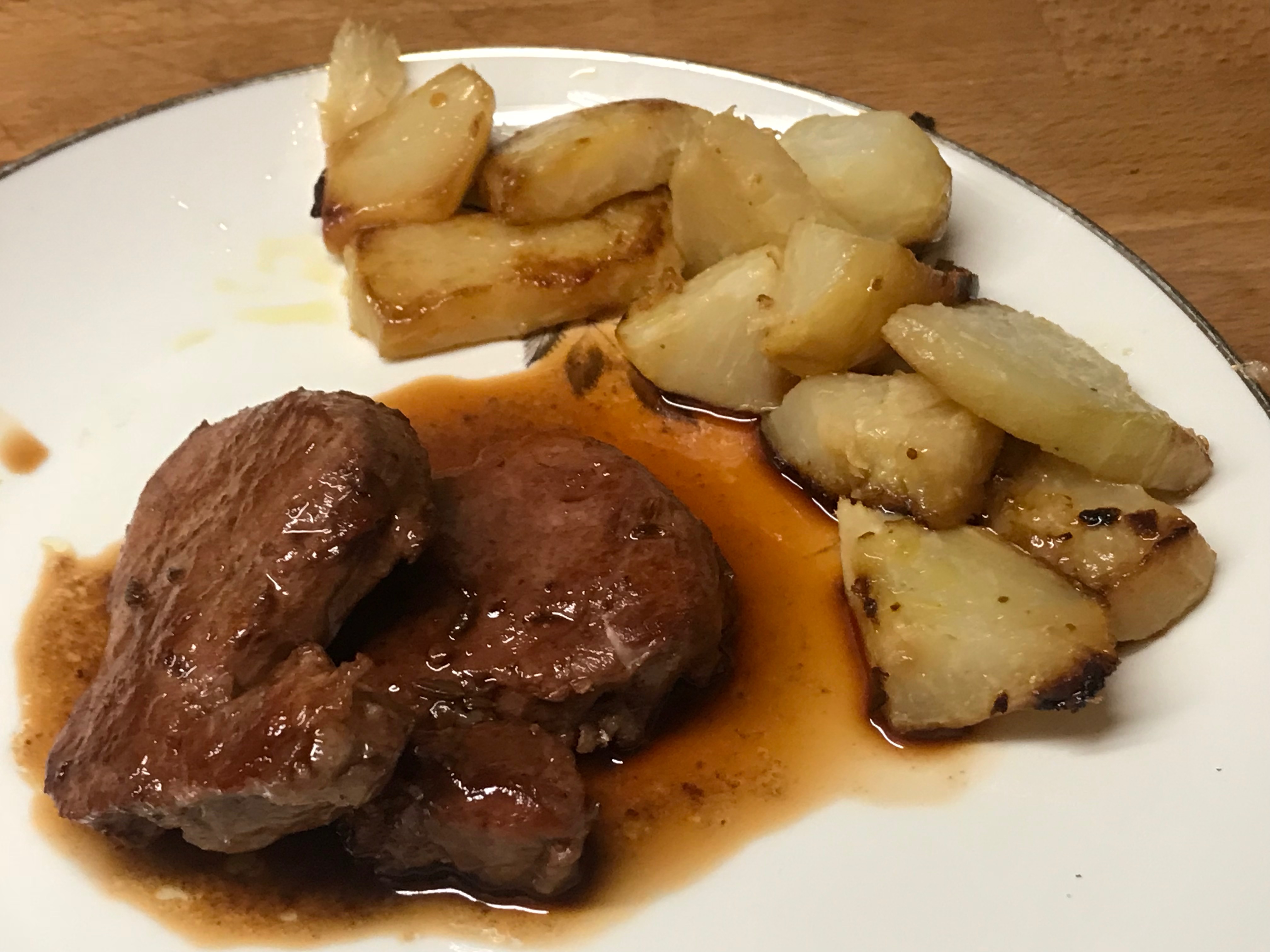
I started thinking and I imagined it as an accompaniment to a pork tenderloin with a red wine sauce. So here is a special recipe for pork fillet and kohlrabi.

In the cellar I had a Gattinara, a Nebbiolo of Vercelli, a land of much good rice and good wines. It had already been for some time that I was trying to pair it with a different dish.

Preparation of pork fillet and kohlrabi:

In a pan I prepared the wine sauce and let the wine cook with a teaspoon of honey and sugar, oil and a sprig of rosemary. Then a pinch of flour.

A magnificent oil from Vetralla was brought to me! It has just been squeezed and this gives it a special fragrance. It still has the senses of the lawn and fresh olives. It is a true joy and this oil of Tuscia automatically reminds me of the Etruscans and makes me feel even more attentive to flavours that have been handed down for millennia.

I do not take the sauce to full reduction as I use it as a slightly liquid sauce. It will serve later with the pork.

The meat was given to me by my friend the butcher: fillet medallions of pure Italian pig raised on the open ground feeding on the fruits of the forest. A true delight with which every dish takes on a special flavour.

I take the fillet medallions and cook them separately on the grill. As soon as cooked, I pass them into the pan with the sauce and raise the gas for a little while.

Serve the medallions on a plate accompanied by the kohlrabi.

It is in the glass that Gattinara shows all his charisma. My friends will be very happy with this evening!

powered by social2s
Vitovska wine from rocky ground complements pork and apples

Walking through the centre of Rome, rummaging through the wine shops, I found a bottle I knew well, but which had ended up in the forgotten bin.

I had enjoyed it a long time ago, an ancient wine that was born in the Karst, that difficult land lashed by the bora in winter and the hot sun in summer. Some say it is of Slovenian origin but here every wine from rocky ground speaks Italian.

Vitovska is an indigenous wine that finds no other similar in the whole Mediterranean and can be enjoyed with raw fish or delicate dishes. It is a DOC wine produced in the hard limestone ground in the provinces of Gorizia and Trieste, it is a very special white wine.

As usual, I have distorted the taste sensations: I have taken a wine from the north and accompany it with foods from my house in the central south.

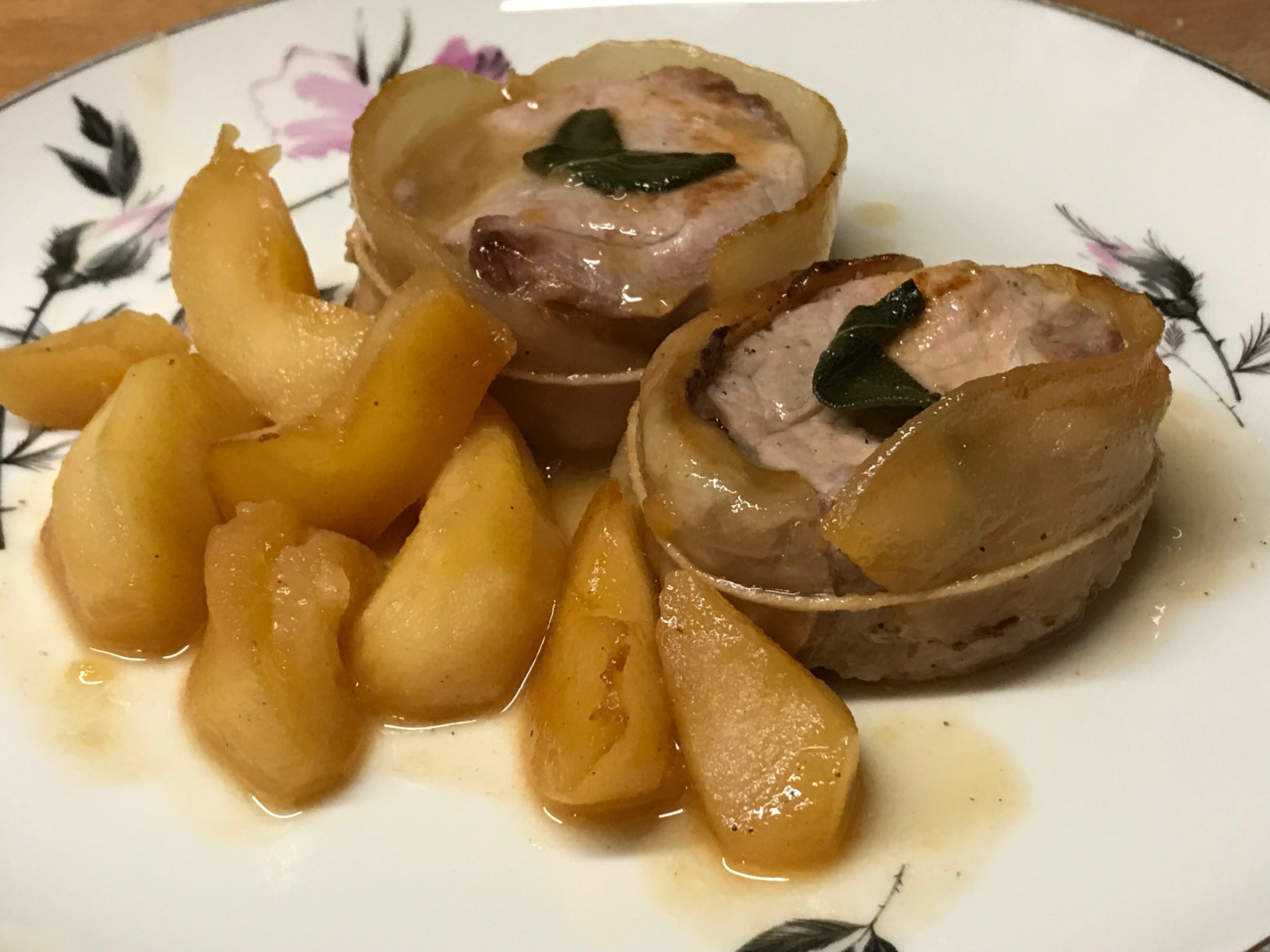
This time I approached the recipe the other way around: I chose the wine and then I imagined a dish to combine with it. As I had for the hands I imagined a pork fillet wrapped with lean lard (salumi), yet not Colonnata salumi because it is too aromatic, and apples.

For this recipe I need a local lard perhaps one with a slight pink vein is perfect. I will be advised by my friendly Norcino butcher who works only really products of Norcia, by now we are accomplices and he understands me instinctively.

Preparation of the recipe for pork and apples

Take a piece of pork fillet, but choose a very lean one. Cut it into discs of about 3 cm in height and wrap each disc with a slice of lard that and tie with kitchen string.

Put everything in a pan with a sage leaf. Someone whiten their teeth with it but I like it with meat. Brown it on both sides then add the apples cut into wedges.

I chose the Anurka apples that were once considered low grade, but which are now back in vogue. The Romans also ate them, Pliny the Elder describes them in his "Naturalis Historia" and they are found on a painting in a house in Pompeii.

For this reason, Campania has declared them a 'National Product', but I have found them all over southern Lazio. Part of these territories were part of the Bourbon Kingdom.

Today they are even more famous for their properties and are found in pharmacy products as a remedy against baldness and vitamin deficiency and high cholesterol. Someone has said they are aphrodisiac. I do not know. But for the recipe, chose real apples and not the pills!

In this period I found apples awaiting me in my trusty market, the Via Trionfale Market: if you are careful, the market rewards you with great quality while saving your wallet.

But let's go back to the recipe: cook for a few minutes, you do not need any spice, blend with plenty of wine, the Vitovska.

It is an inexpensive and delicate dish, given the raw materials, except for the wine. For this wine you have to spend a few euros more, but not many. It will give you great satisfaction.
Good drinking!

powered by social2s
Recipe for Lamb leg stuffed with chicory

Lamb, the prince of meats for all the peasant kitchens of central Italy, is the meat of feasting, from its origin to a thousand dishes, it is also excellent as tartar (raw).

But today it is time to consumption stuffed with chicory.

In Lazio it is the most important dish in all the mountain villages, especially those that border with neighbouring Abruzzo. In fact for millennia the flocks have crossed the paths of migratory herding to reach the fresh high altitude pastures in summer and back to the warm pastures near the sea in winter.

These paths and these migrations have been repeated for so long that Italy has nominated this migratory herding to UNESCO as a World Heritage Site.

Lamb leg stuffed with chicory is a well known alternative with potatoes that always remains a prince of a dish.

Preparation of the recipe for lamb and chicory

The first step all should know. Go to a real butcher and select a nice leg of lamb.

I go to the Via Trionfale market and my butcher also tells me the name of the shepherd who herded the flock. He also tells me what kind of grass the lambs have eaten and I must say that, after a while, I can perceive the difference between the different pastures.

If they are nearby, I ask for lamb of Roiate, the neighbouring village of Subiaco where there is the oldest Sagra dell'Abbacchio del Lazio (Festival of Roast Lamb). Roiate looks like a crib perched on the mountain and for centuries the whole population has depended on sheep farming.

Meanwhile I go to buy the chicory from the shop near the butcher and even here I learn everything about the vegetables that is offered to me.

Now, all the characters of the Via Trionfale Market are becoming stars with my stories and I demand even better!
Preparation:

Bone the leg and open it to form a sheet. If you are not very familiar with the knives, give this part of the preparation to the butcher, who takes away the fun part of the work.

Make a cooking base with the bones and put it aside, we will use it at the end. Meanwhile, clean the chicory, blanch and sauté in a pan with garlic, oil and chilli.
On the sheet of meat we put the fully cooked chicory and roll it up tying it with kitchen twine.

The leg is then cooked in a cocotte (casserole) or in the pan together with the essential rosemary and garlic. Cook it for about twenty minutes, sprinkling it with a little white wine and the base sauce we had prepared.

Serve it in slices, perhaps laid on a slice of brulee Genzano bread. The bread of Genzano is so famous that it has now become a traditional product of Lazio.

And since Lazio is the source and champion of this dish, we drink a cabernet from Atina, a Lazio DOC, fruit of a study by a great winemaker at the end of the 19th century.

powered by social2s
Chicken Cacciatora from Zagarolo

Every town has its own cacciatora and this is a fact. I have been around Italy far and wide and I have not eaten two the same. Above all in central Italy!

But I remember one of them and I still get the taste in my mouth if I close my eyes.

The cook's name is Nonna Rosa, Ciociarian born, transplanted in the early 20th century to Zagarolo, a land of good white wines. Indeed they have just concluded the Grape Festival there which is one of the oldest in Italy (but do not tell Marino) and that involves all the inhabitants.

It is a very strange city: from above it looks like an arrow because it is created by a road lined with houses that then adjoin a cliff. Practically it develops only in length on a tufa ridge and to make a ring they had to make a hole by piercing the mountain.

Halfway along, then, a huge building blocks the path and the central road must create a space on the slopes of the hill. It is Palazzo Rospigliosi, once also the Colonna fortress which has frescoed in it the scenes of the famous battle of Lepanto. Today it houses the Toy Museum and an incredible number of events that take place every week.

It is not a town for those who suffer from vertigo!

Her cacciatora has left me a pungent and appetizing memory: both the chicken and rabbit cacciatora. Strong and austere like that landscape.

How to proceed with the recipe

The first thing is the choice of meat. Do not take meat from a supermarket that does not know anything and just breaks it apart in the pan. For a true cacciatora you need real meat, that of animals raised on the farmyard or in small farms.

As usual I go to the butcher of the Mercato di Via Trionfale. But you should look for the markets near your home and let the experts advise you.

Meanwhile, start with the mortar where you have to grind a couple of anchovies with sage and rosemary. It is the heart of the recipe and to make the beaten ingredients flavourful, dissolve in a couple of tablespoons of vinegar and a little white wine.

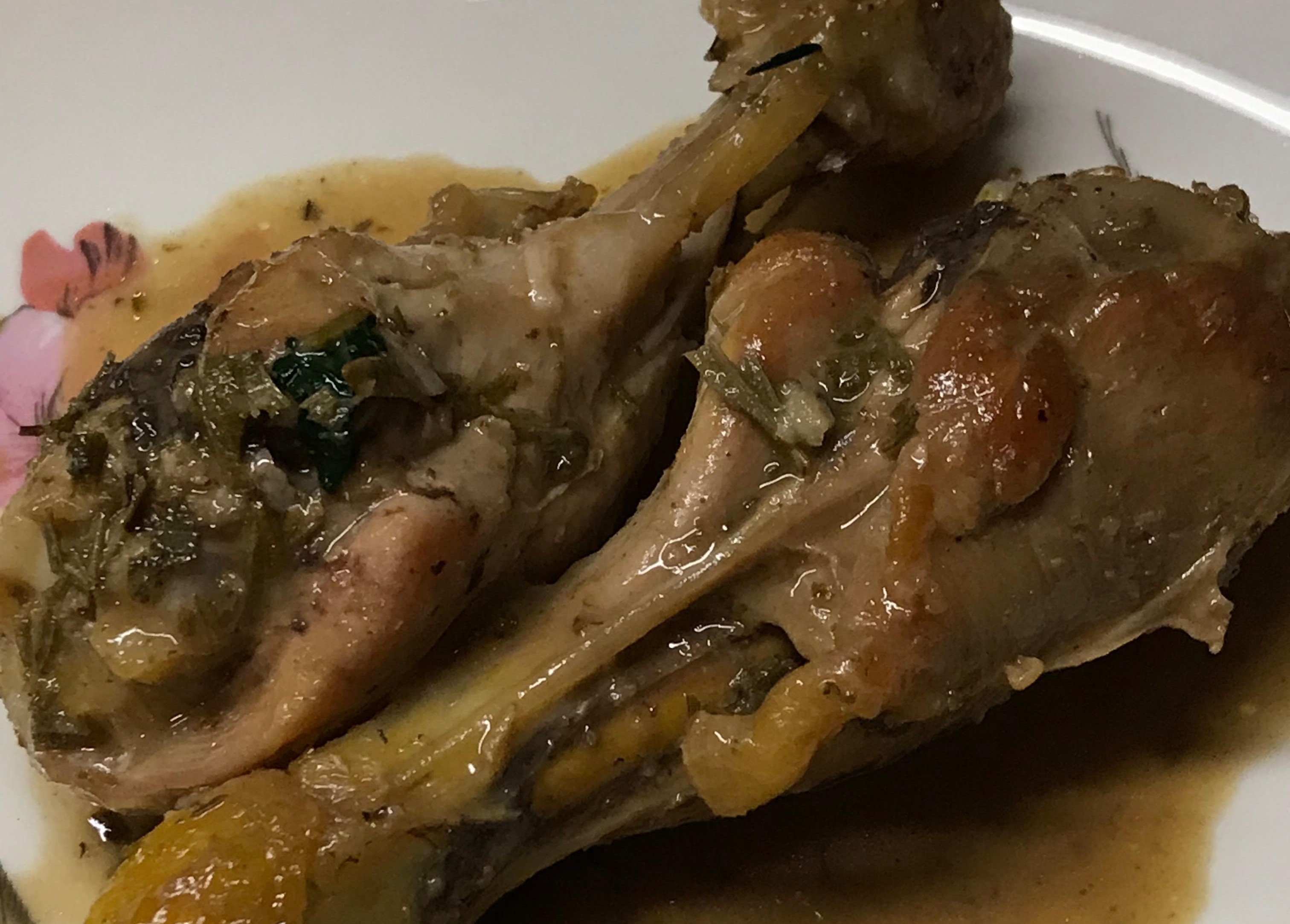
Brown the chicken in an iron skillet with garlic and chilli. When it is almost cooked, the chicken should be blended over high heat with the contents of the mortar.

The cacciatora should be served very hot!

And do not worry about being surprised to soak up the sauce with bread. Only those without a brain are deprived of this immense joy.

The wine to accompany the cacciatora? A trebbiano paints the scene just right.

powered by social2s
It takes a long time to cook the special beef stew with Nepi wine

Nepi, city of water, reveals some actual surprises for those who love wine.

It seems that the name Nepi derives from the word Nepa, which in ancient Etruscan meant 'water' and a powerful waterfall laps the fort of the Borgias and the Farnese. The waters pass through the ancient castle and throw themselves mysteriously into the bottom of the valley, lost from sight, but not the sound and roar of the water.

Nepi is older than Rome and is full of history: first the Gracchi, then came the Borgia and lastly the Farnese. The legend says that the Terme di Nepi belonged to the Gracchi family, sons of the famous Cornelia who called them her jewels (but in the end 'every cockroach looks nice to his mama') and in fact still today they are called Terme dei Gracchi.

Nepi is famous since then for its water and for the hazelnuts, but it also produces some wines that I think are interesting. We should discover the cabernet sauvignon and the sangiovese that Ronci, just outside the city walls, ‘interprets’ very well.

To enjoy it I prepare a nice ‘overcooked’ ... or I prepare stew with a long time to cook and drink a Ronci. I do not know exactly what the order is, but that's okay.

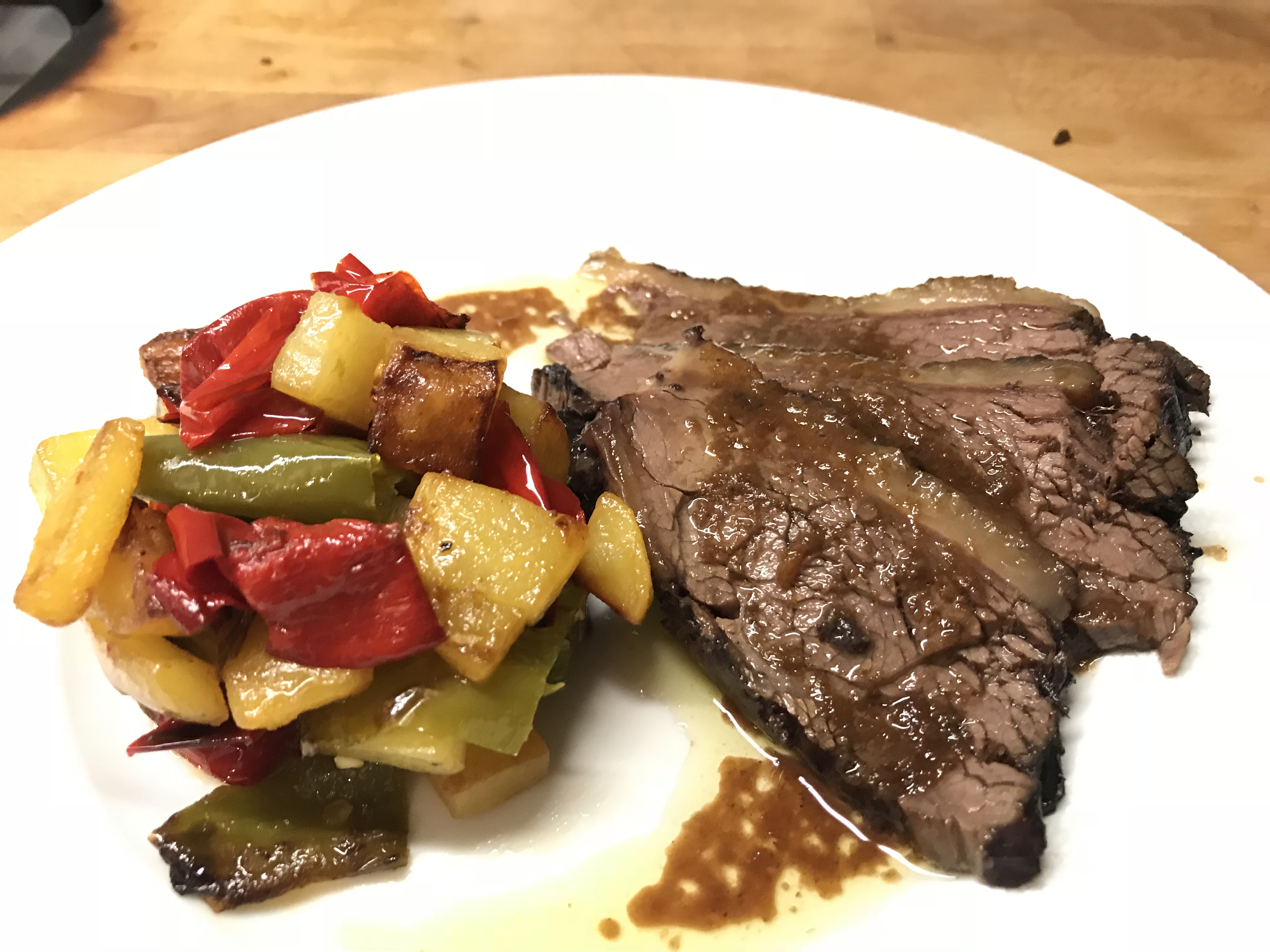
The cut of beef is called Picanha by Brazilians, the widely used cut for churrasco, but here it is the 'codon of beef' (‘front of the chump’) a characteristic piece of meat often with a fat strip on one side. Some call it "tip of the undercoat" but it is recognized among many for its triangular shape and a weight greater than a kilo.

I'm going to choose a cut from Massimiliano the butcher in the Trionfale market in Rome. He knows me and I know that he chooses only the best of Italian meat and never disappoints me.

My recipe:

With a piece like this I make a stew with a very long time to cook: 5-6 hours of cooking must be added to those many hours of marinating. In fact, the 5 hours are only the end of an even longer process that starts with a marinade in Sangiovese with the addition of intense aromas from bay leaves, cloves and garlic.

I leave the marinade in the fridge for 24 hours, for the whole night, while I already enjoy the idea of ​​the result of ‘overcooking’.

Do not confuse this stew with braised meat! That one in comparison is 'fast food' and it takes 4-5 hours to prepare it. For this stew it is different. Once you start the process you follow a sort of ritual that lasts more than a day.

When the meat is ready it floats in the marinade that is then thrown away. Do not try to reuse it or you will be disappointed.

The cooking in the casserole is long and at very low heat. Even lower than you think, like the heat from the flame of a match.

Oil is not needed, we use lard beaten with a knife and melted with onion and carrot. Brown everything well and add the remaining wine.

For the side, add the potatoes and chili capsicum fried in a pan. Always the side dishes should come from the Via Trionfale market.

Then the Ronci and if you really need water, use that of Nepi in the glass bottle.

powered by social2s

Subscribe to Newsletter

Discover a territory through the emotions of the people that have lived it.