Articolo-Coda-di-Rospo-in-Potacchio-3-1024x768.jpg

Sometimes it seems that we forget the Marche region and then we are positively surprised.
Every time it's the first time, and every time we enjoy the incredible beauty.
This summer I'm on vacation in the Riviera delle Palme, in the south of the region on the border with Abruzzo (another treasure trove of flavours).
We are in San Benedetto del Tronto where the Ascoli olives (from the name of the nearby Ascoli Piceno) meet with the Abbruzzo sheep's kebabs.
One of the most beautiful promenades in Italy: a 5 km walk that goes from Porto d'Ascoli (which has been an integral part of the urban centre of San Benedetto del Tronto since the 1960s) to the city centre bordered by a cycle path.
We are at the sea and here fish cuisine is the master. We must remember that San Benedetto del Tronto is the main fishing port of the Marche, whose construction dates back to 1907.
There is a dish that is the symbol of the local cuisine and is the Brodetto alla Sanbenedettese, a sort of fish soup with the peculiarity of the use of vinegar and peppers
Other local recipes that can be tried in the premises of this area are Monkfish Tripe with Cannelloni Beans, and Monkfish in Potacchio.
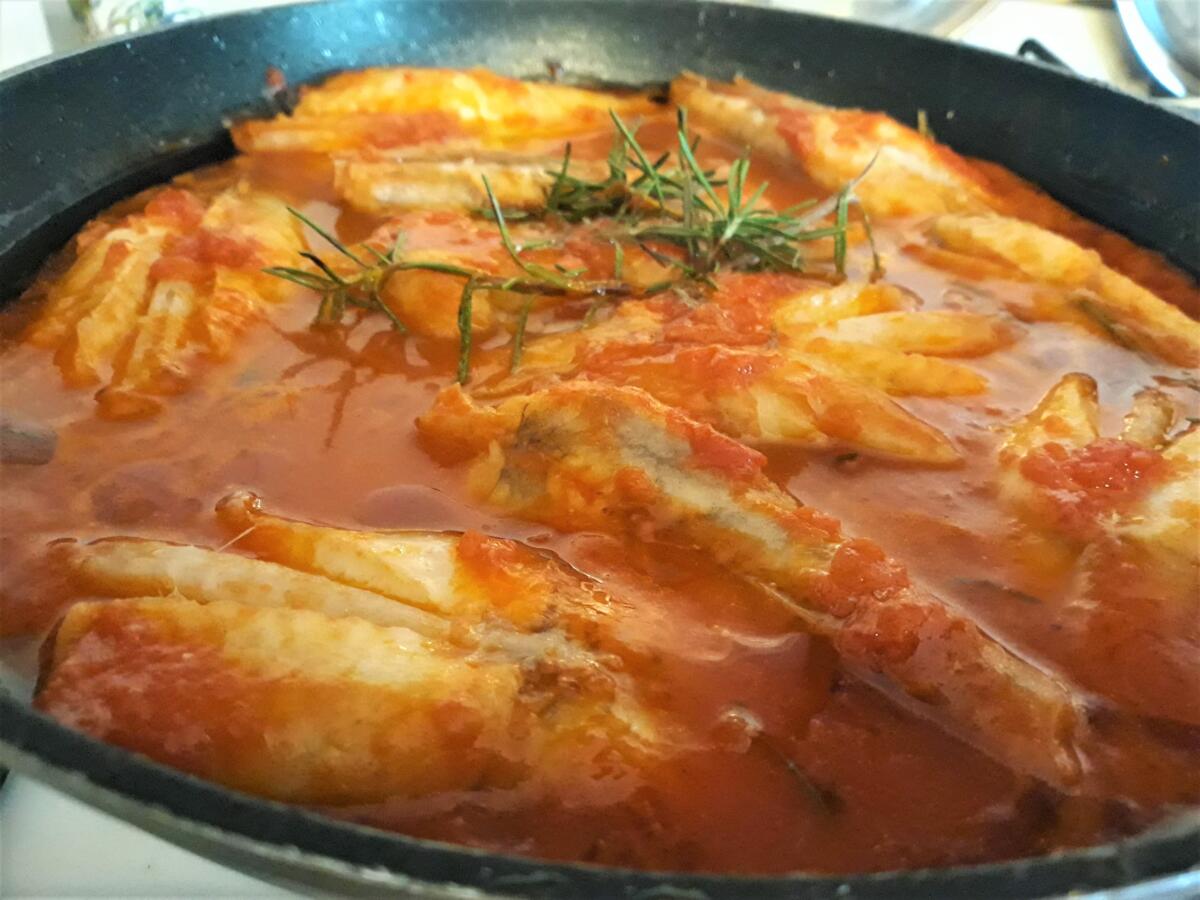
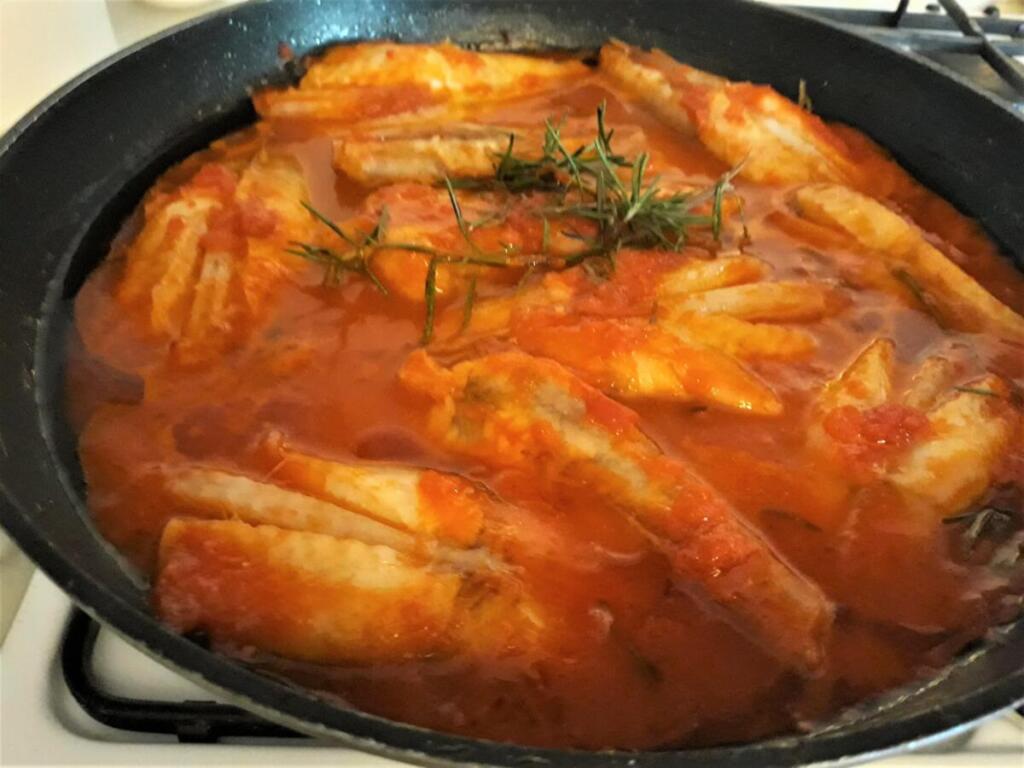
This time I wanted to prepare Monkfish in Potacchio following the recipe of the chef from the La Gioconda restaurant.
First we explain a little dialect from the Marches saying that the ‘potacchio’ is a sauce with tomato that has the particularity of being flavoured with an abundant amount of rosemary.
While the monkfish has nothing to do with princes and princesses it is a fish that is called by various names in the different Italian regions. Also because the fish have the same shape but a different flavour depending on the sea and the seabed in which they live.
Its name derives from a fin which acts as a 'fishing rod' for its prey. And with its big mouth it is capable of swallowing anything.
The Adriatic Sea monkfish has firm flesh and a delicate taste, perfect for this recipe.


Recipe of the Monkfish in Potacchio


Take a pan and prepare a base with garlic, oil and chilli pepper. Leave to flavour and add the sprigs of rosemary and, shortly thereafter, the tomato pulp.
Leave the sauce to cook well and when it is almost cooked, add the monkfish.
It is not allowed to cook very much because this fish has a very tender pulp but prolonged cooking would make it stringy.
With the leftover sauce you can season a pasta and you will have another delicious dish.
The wine? I drank a Passerina from Ciu Ciu, don't forget!

powered by social2s
Ricetta-Vanni-Cicetti-Baccal---e-Ceci-2-1024x768.jpg

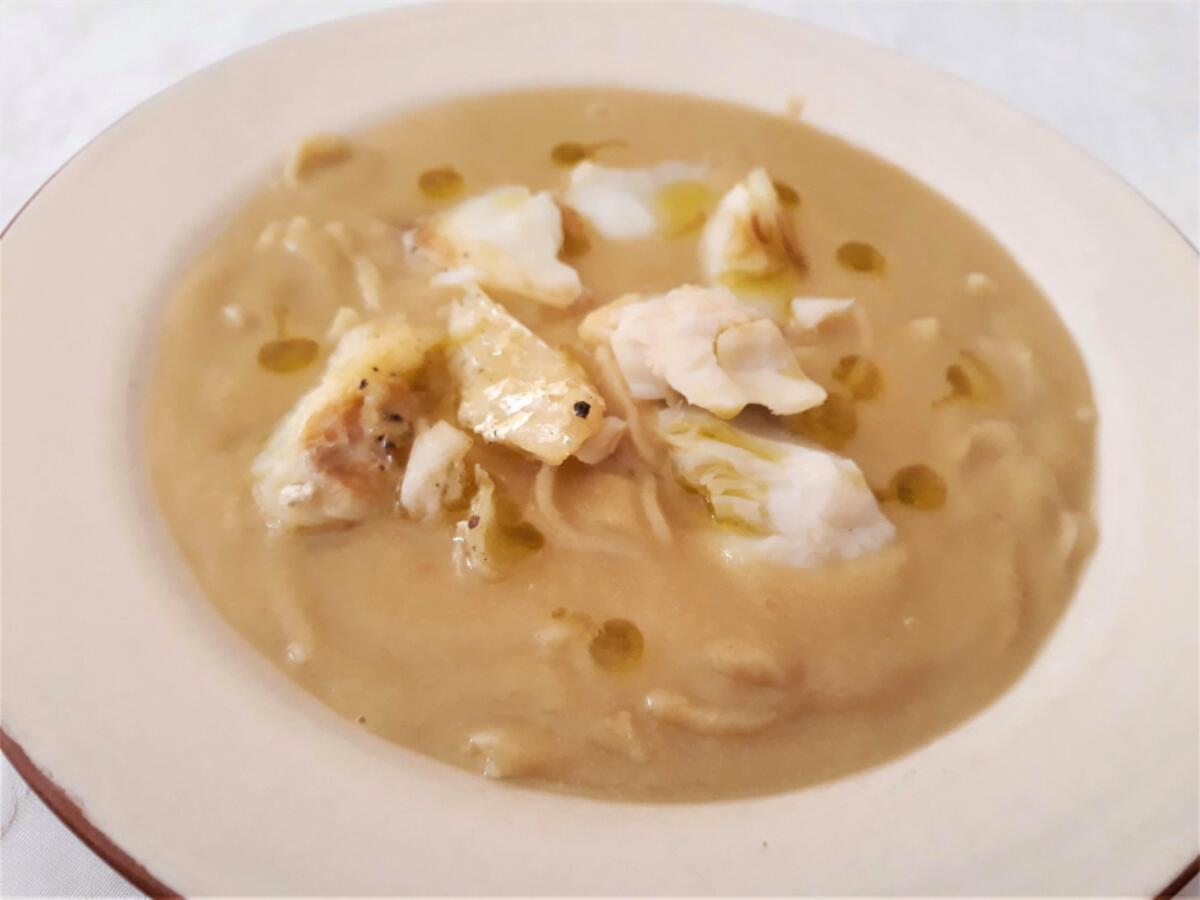
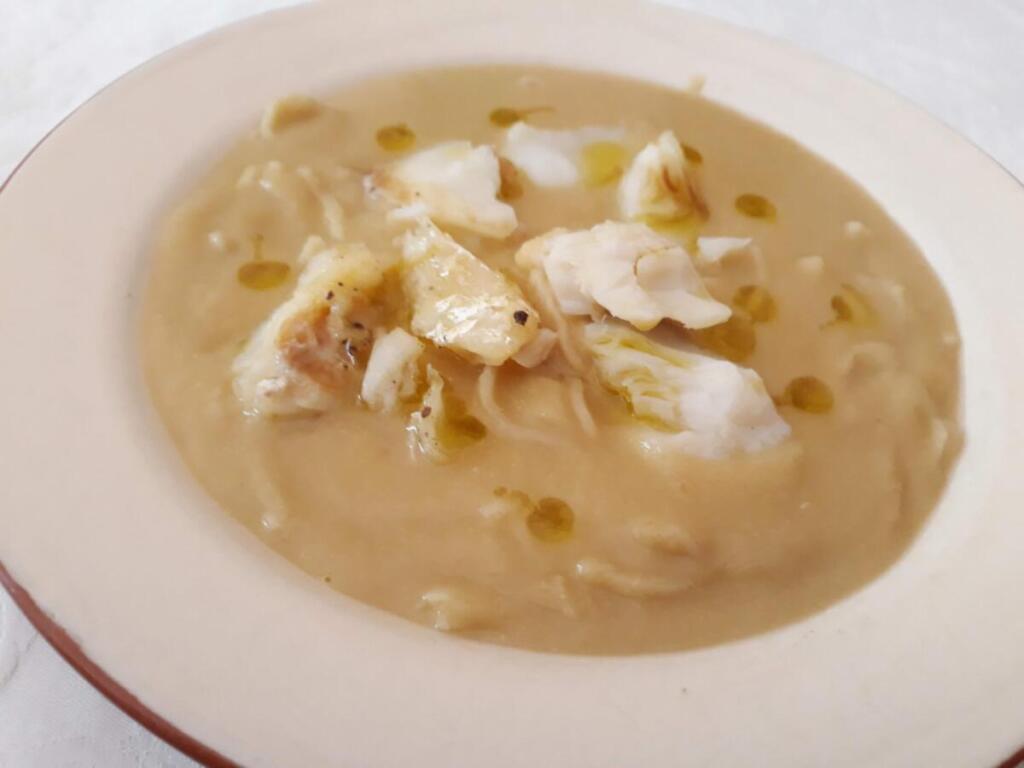
Chickpea cream with noodles and cod, this is the dish that most represents me and that has been haunting my friends for almost thirty years.

It was the end of the 80s when this dish came to light, a recipe that fully represents the period with its creaminess and velvety taste.

At the time I worked in a starred restaurant and, although I was the head chef, I was also often in the kitchen where they taught me the basics for professional and non-home cooking.

And this dish was born precisely out of my need to create something that reminded of catering and not home cooking. So in this dish there was all the knowledge acquired in that period, not only of cooking but also of the dedication of other starred chefs.

In particular, in my recipe there was the desire to emulate a great chef of the time Fulvio Pierangelini with his restaurant il Gambero Rosso in San Vincenzo (LI) who made a cream of chickpeas with prawns, clearly not the same as mine.

My chickpea cream remained anchored in tradition with the use of our traditional products, chickpeas, egg pasta and cod. Over time the recipe has been refined and made more delicate, but I propose here the initial version of which I am fond.

Chickpea cream recipe with tagliolini and cod

First we have to soak the cod for 2 or 3 days, then we can move on to the chickpeas that are soaked for one night.

At this point we can think of starting to cook by boiling the chickpeas that should only be salted at the end.

Prepare egg noodles, kneading the eggs with the flour and rolling out the dough.

Now we start the real cooking and take a pan in which we put garlic, oil and chilli pepper and brown the garlic before adding the chickpeas and letting them flavour.

At this point we add hot water and cook for 15 minutes. Then we remove everything from the heat, remove the garlic, blend the chickpeas and put back on the heat adding hot water.

When everything boils again, then we put in the tagliolini.

In the meantime, break up the cod and sauté it in a pan with a little oil.

When the tagliolini are cooked, we serve in the bowl into which we will add the cod.

With this dish I loved drinking Cervaro della Sala, a wine from Grechetto and Chardonnay grapes that is produced in Umbria in the Castello della Sala estate of the Antinori family.

powered by social2s
Le-ricette-di-nonna-Imma-Libro-200x300.jpg

I should say that the real author of this recipe is my grandmother Immacolata De Lisio, but she has been dead for 35 years, and in her honour I wanted to collect her best recipes. Those that made me dream and that made me wait anxiously the moment we sat at the table.
There was no need to ask my grandmother "what are we eating? How many are we at the table?" because every time she surprised us with something unique.
My grandmother, as a good Neapolitan, had fixed points such as "cooking is a way of taking care of yourself and others". Typically Neapolitan: where the "we" at the table is highly desirable!
Dinner, lunch or even breakfast are moments of fun and hospitality in which food is the element of union. Every day was a party, an occasion to set the table taking care of every detail.
And it doesn't matter if we were alone to eat or if instead the whole family was there with friends and relatives, if from 2 we became 10 or 20 or even 50 people.
I remember the tables on the beach with pots of first courses, and then the second courses, and then the side dishes, the creams ... Not to mention the desserts, the liqueurs and in the afternoon, even the pizzas!
And so, in honour of the queen of the table, I decided to relate Nonna Imma's recipes, because they have been written with love and have been tried by our whole family.
It has transformed cooking into a real art with which to take care of people: do it too. And I reveal to you some secrets and additions that make them truly special.
You must put love on the table laden with food.

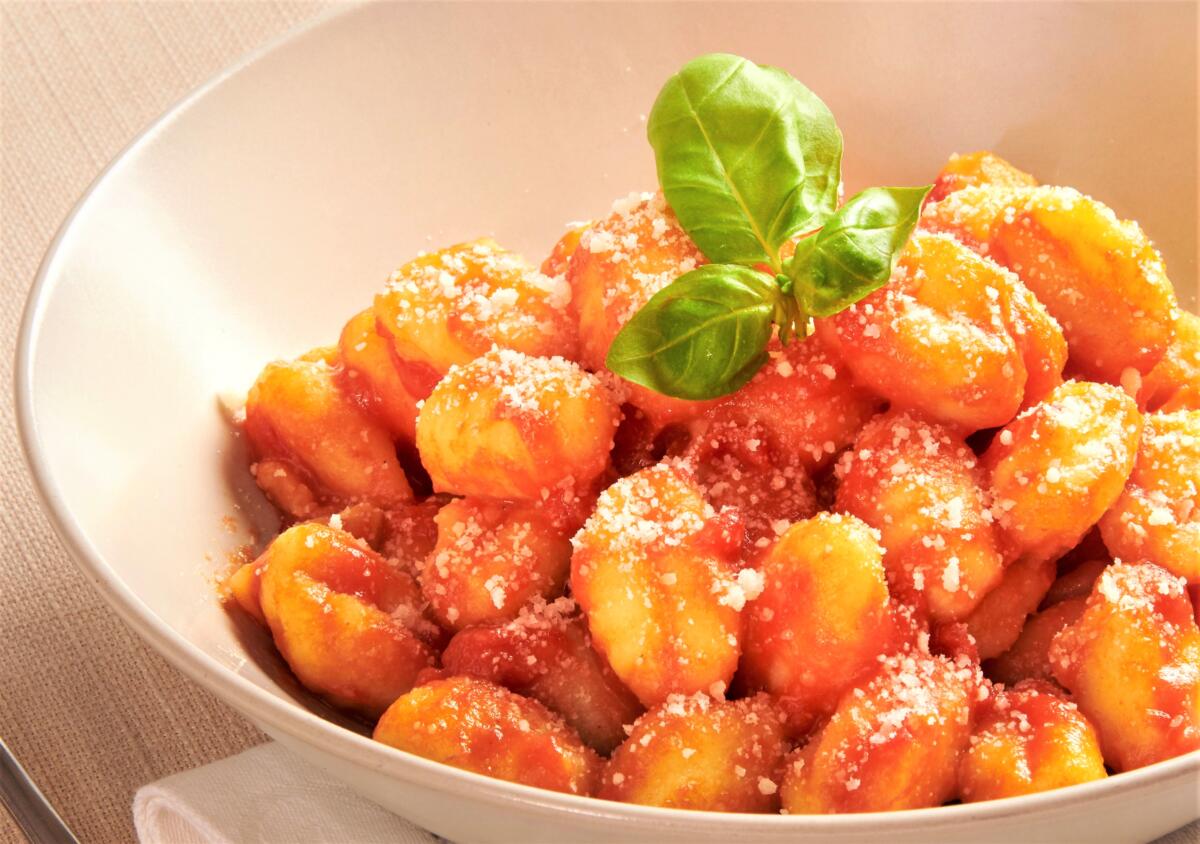
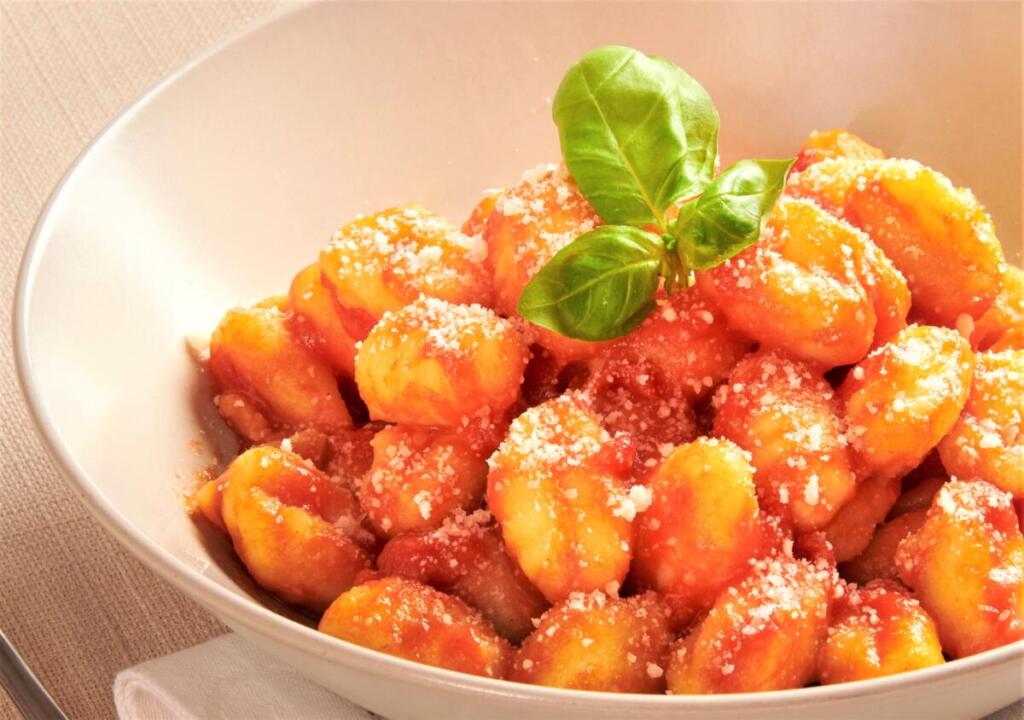
Recipe of Gnocchetti alla Don Raffaele


Ingredients for 5 people:

    • Flour gr. 400,


    • Semolina gr.


    • 150, water gr. 500,


    • 3 tablespoons of oil,


    • Fior di latte mozzarella cheese gr. 150,


    • Parmesan gr. 50,


    • Fresh tomato sauce


Everything starts from boiling water. Take a polsonetto (hemispherical shaped saucepan), or a copper pan with round walls, and boil the water with two tablespoons of oil and salt. If you don't have it you can use a steel pot.
When the water has boiled, throw in the flour and semolina all at once and stir and turn vigorously with a wooden spoon to obtain a nice ball of homogeneous mixture.
Let the mixture cook over a light flame for about 10 minutes until you hear it sizzle. At this point you can pour it on the table and, as soon as it has bearable heat, work it with your hands for 15 minutes adding another spoonful of oil.
Now you are ready to form fingers of the thickness of the breadsticks which you will then cut into many chunks the size of a shelled hazelnut.
Since the pasta does not stick together, I advise you to save time by forming 4-5 rows of ‘fingers’ and cutting them together to obtain the dumplings.
At this point the gnocchi are ready and must be cooked in abundant salted water. When it rises to a boil, throw the dumplings in a couple of times and take them out when, after a few minutes, they will rise to the surface. Use the skimmer and drain them well.
Put a base of sauce (or ragù) and a layer of gnocchi, parmesan and mozzarella in a terracotta saucepan. Then make sauce again and continue with the overlaying until all the ingredients are used up.
Pass over moderate heat and gently turn a few minutes until the fior di latte (mozzarella) begins to hang together. Serve, they are delicate and inviting.
If you prepare a larger quantity of pasta, the cooked gnocchi can be stored in an open container with plastic tissue paper for 4-5 days. Put them in the lower part of the refrigerator and, when serving, pour them for one minute into boiling water. Then add seasoning.
But most importantly, then share them with friends and eat them with joy.
 

powered by social2s
Recipe for Cream of Purgatory Beans and Asparagus, flavours of Alta Tuscia

Another masterpiece of nature cultivated in Alta Tuscia (Upper Tuscia) between Gradoli and Onano: the Round Bean of Purgatory.

This type of bean has risked becoming extinct due to the difficulty of production and the low yield of the plants but, fortunately for us and the chefs, it has managed to create a space between the more prestigious crops.

Many think that the beans come from the discovery of America, while in reality Colombus has brought us only some simpler varieties to grow that have put local production into difficulty.

We go to the supermarket and find 3-4 varieties of beans, while when we travel around Italy, we can find hundreds of more tasty and unique flavours.

Alta Tuscia was an area of ​​Etruscans, and in their kitchen the beans were ground to make sauces to accompany the meat. So we can say that beans have accompanied the growth of populations thanks to their high nutritional value.

In particular in Gradoli, the 14th century City Statutes dedicate a section to the bean which is also the main protagonist of a tradition that has continued since 1600: The Purgatory Lunch.

From the fourteenth century, on Ash Wednesday, the Confraternity of Purgatory, to celebrate the end of the Carnival and the beginning of the fasting period, organises a lunch in memory of the fallen of a revolt against the heavy harassment imposed by the Papacy.

They prayed for the mercy of their souls in Purgatory.

One of the traditional dishes was and is the local bean boiled and seasoned with oil, pepper and salt. This bean therefore takes its name from the Confraternity and from the tradition of the Purgatory Lunch.

In the eighteenth century it was so precious that it was even used as a kind of money: payment for mass and donations made to the faithful.

The purgatory bean is a small white bean with a very thin skin and a delicate flavour that does not need prolonged soaking. An hour is enough and cooking is also short.

Traditionally, they should be boiled by flavouring the water with laurel, sage and garlic and then seasoning with extra virgin olive oil from the area.

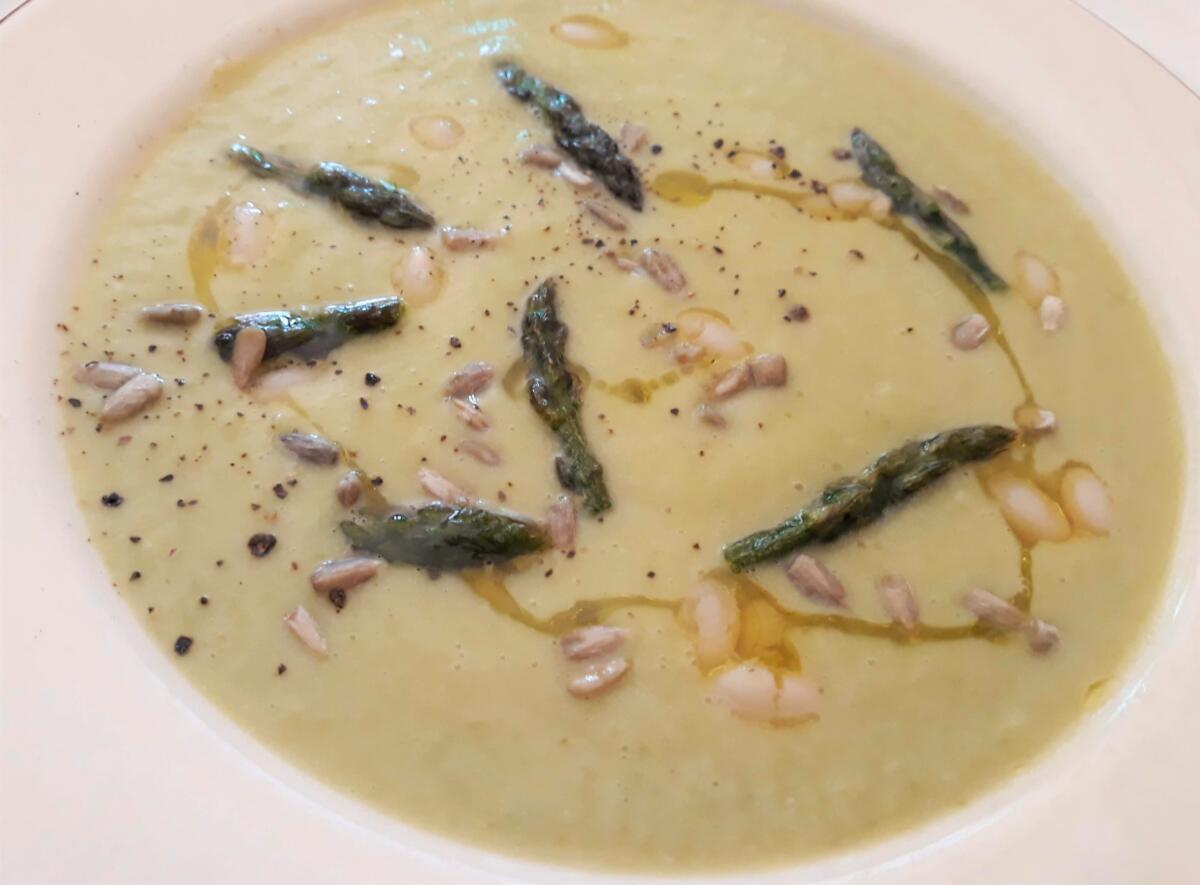
I prepared a cream using beans and asparagus stalks, always grown in Tuscia.
Purgatory Beans and Asparagus Cream Recipe

After boiling the beans, I took the asparagus, and I removed the tips and cut the stalks. In my case there is no need to boil them because I used the asparagine, the long and thin one.

In a saucepan I put the chopped spring onions, the asparagus stalks I browned, then I put in the beans leaving some to put whole on the plate.

I flavoured then extended it with hot water. Once cooked I blended everything creating a perfumed cream.

In another pan I flavoured the asparagus tips with sunflower seeds, fresh thyme, pepper, whole beans and a splash of oil.

To serve, I poured the bean cream into the bowl and added the asparagus tips.

In the glass? A wine from Sergio Mottura, a dry Orvieto is perfect, a combination of Procanico, Verdello and Grechetto grapes that goes perfectly with this dish.

powered by social2s
Ricetta-Erbe-Annamaria-3_2-1024x725.jpeg

For generations in Morcone and in Sannio we have maintained a balanced relationship with nature, learning to know what it could offer us. There is an imposing wealth of knowledge handed down by those who lived in closer contact with nature, such as shepherds, hunters, lumberjacks, etc.

A knowledge that was in danger of getting lost but we are coming back to preserving secular customs and traditions, rediscovering something of the dialect and our wise proverbs. Slowly, young farmers are getting to know the plants that grow in our countryside and how they were used.

Edible wild herbs are an important resource for healthy eating: they are much richer in vitamins and minerals than cultivated vegetables.
They are not the result of human selection but only of natural selection and arise spontaneously where they find the optimal conditions for their growth, without being forced by man.

They only cost a little effort to go looking for them.

I went back to Morcone, to rediscover the dialect names with which my grandmother had taught me to call the individual vegetables and how they were prepared in the kitchen, and also their medicinal properties.

I have already told you about some recipes.

But remember that before learning to recognize herbs, flowers, berries and anything else that is edible, it is good to learn to recognize toxic plants. Always remember not to collect herbs on the edges of busy roads, in parks frequented by dogs or other animals.

Don't pick up anything you don't know and be accompanied by someone who knows them well. Make sure you are not in areas where harvesting is prohibited (e.g. in nature reserves) or that you are collecting species protected by local laws.

And collect the plants in order to always leave others in place.

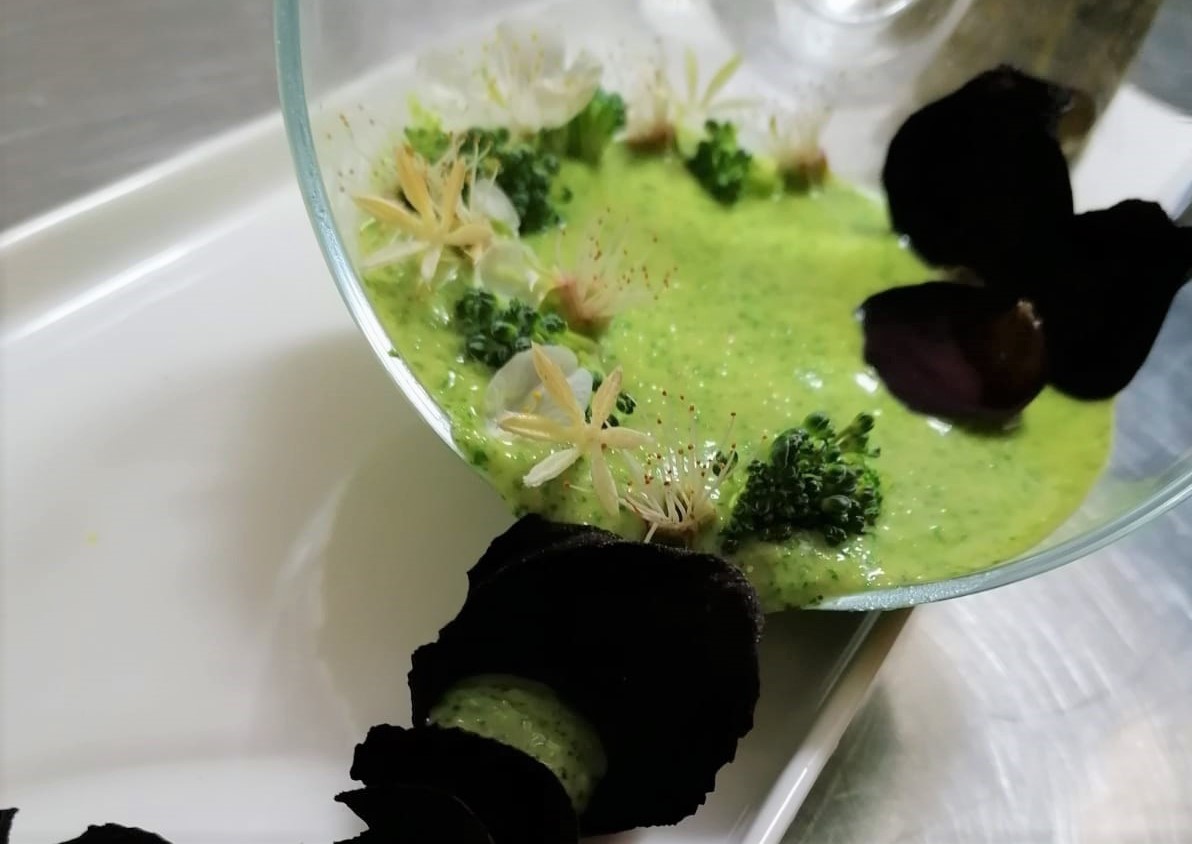
In this recipe today, I want to propose a cream of borage, watercress, water celery and dandelion with broccoli tops for the crunchy part sauteed with oil and garlic.

A vegetarian version of the "Maritata Soup", a soup of the countryside that has ancient origins.

Firstly, cooking of the herbs is done by immersing them in boiling salted water for a few minutes, then they are drained and cooled with cold water and ice. In the case of risotto, omelettes, soups, etc ... the herbs should be squeezed a little.

For the recipe of the Maritata soup, in the old days the broth was prepared using discarded and "poor" meat cuts: feet, bones, pig ears, cotenne and so on. In a more modern versione we use: chicken, beef, sausage. To the broth we add celery, carrots, onions and a boquet of aromatic herbs such as laurel, thyme etc. and everything is cooked for at least three hours, the important part is to take out the froth that come out on top during cooking.

Once the broth is ready, we filter it to take out the extra fat, we separate the meat that we are going to cut into pieces and let it cool on the side. As a next step, we are going to cook the herbs and vegetables in our broth: not just wild herbs like cicory, borage and the cardillo herb, but also beets, endive and kale depending on the season.

At this point we add the vegetables, pre-washed and cut up, and we let them cook for 20 minutes adding the meat back into the pot, and the dish is served with a sprinkling of cheese and a swirl of EVO olive oil.

The soup takes its name "Maritata" (to be married to) from this perfect marriage between tha flavours of the meats and vegetables that we use.
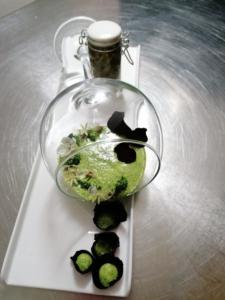
In the preparation of the herb cream I decided instead to use only spontaneous herbs dosed differently according to their characteristics, in order to balance the final result. It is important to maintain the doses to achieve the perfect balance.

I then used the stracciata, a fresh pasta filata cheese obtained from cow's milk that has the shape of 4.5 cm strips and 1 cm thick. The flavour is savoury, delicate, especially in the freshly packaged product, and recalls the taste of milk and live probiotics as a result from its slight fermentation.

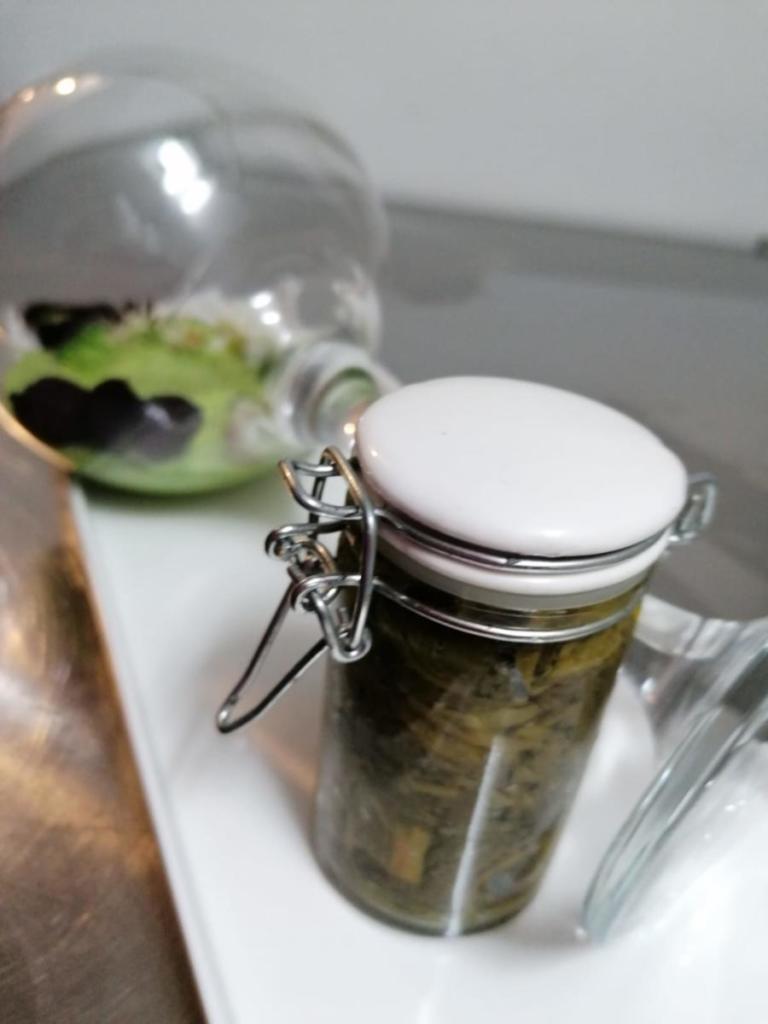
My recipe for this dish (as you can see from the photo) is also to give the possibility to a hypothetical customer to taste the traditional soup in a little jar sterilized and hermetically sealed, which the customer can decide to take home.
This is the idea of ​​the dish I invented.

Wild herb cream soup recipe with stracciata, broccoli tops and dried rose petals
Ingredients:

170 gr of dandelion

250 gr borage

100 gr of watercress

100 gr of water celery

1 shallot

Vegetable broth to taste

80 gr stracciata

80 gr of Apulian broccoli tops

1 clove of garlic

EVO oil

2 potatoes

Salt

 Thoroughly wash the herbs and blanch the borage and dandelion separately for 5 minutes in boiling water. Then immediately cool them with cold water and ice to keep the colour.

Proceed with watercress and celery for one minute. Finally blanch the broccoli tops for 4 minutes, always cooling them at the end, and set them aside.

Brown a shallot for five minutes, add two diced potatoes and about two litres of vegetable broth. Cook for 15 minutes and add the various herbs, leaving to cook for another 10 minutes.

At the end blend everything with an immersion mixer adding the stracciata, olive oil, salt and a pinch of pepper.

Serve the herb cream and add the broccoli tops sautéed in a pan with a clove of garlic, or with croutons. The dried rose petals can be found in herbalist's shops if you cannot make your own with a food dryer. The petals are completely edible, a great source of vitamins and minerals.

powered by social2s
close-up-cuisine-delicious-dining-table-271715-1024x664.jpg

Today, I want to go and discover the customs at the table in the "Land of the Rising Sun", Japan!

Why is it called the "Land of the Rising Sun"?

Japan, in Japanese we say Nihon and we write 日本 ri-ben, 日 ri means day and 本 means origin, therefore "origin of the day" from here we arrive at the "Land of the Rising Sun".

Japanese chopsticks - Hashi

As in China, in Japan you eat with chopsticks, but in Japan you have various types of chopsticks, there are:

Nuribashi are the sticks used daily in the family

Waribashi are the disposable chopsticks we usually find in restaurants

Toribashi are the chopsticks that are used to serve dishes

Saibashi are used for cooking. Unlike the others they are longer and thicker, usually at the base they are joined with a string, so as to hang them.

Generally chopsticks are longer for men and shorter for women, and smaller chopsticks suitable for children can also be found.

As for the Chinese table, also at the Japanese one it is forbidden to place the chopsticks vertically inside the bowl. This is part of a funeral rite and is therefore a bad omen.

With chopsticks, neither people nor things are indicated, food is not skewered with chopsticks, chopsticks are not used to move dishes. Chopsticks never cross because that is bad and, to take food from the shared plate, you must not use the end of the chopsticks with which you eat, but you must turn them upside down.

Customs at the table and more

Japanese etiquette loves table noise. For example, when you eat a soup, the famous "suck" that we hate is very welcome, in Japan this is synonymous with having enjoyed food and therefore it is one of the fundamental rules of Japanese etiquette.

We pour each other drinks and never drink alone, therefore, be careful when the glass of your guests is empty because it will be up to you to fill it.
For the Japanese, it is a symbol of rudeness to eat and drink while walking on the street, stopping and enjoying food and then walking again.

My souvenir for you today

My body remains at home, like that of all of you, but my gaze travels elsewhere and even if your gaze feels frustrated in always looking at the same walls of the house, come with me and we begin to travel with our imagination, because at least the "fantasy" is still free!

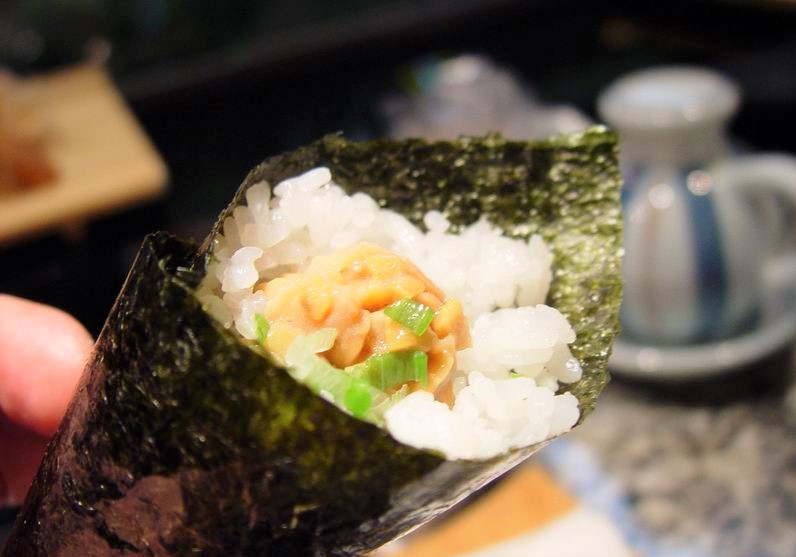
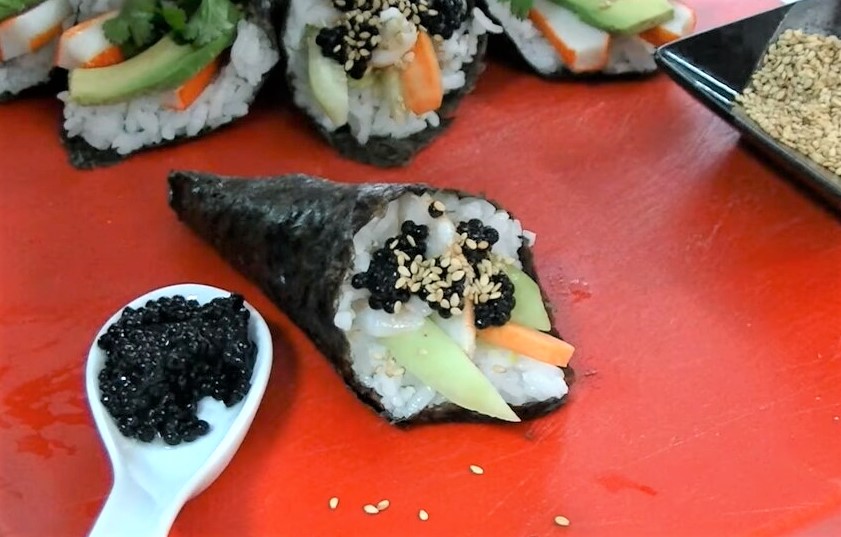
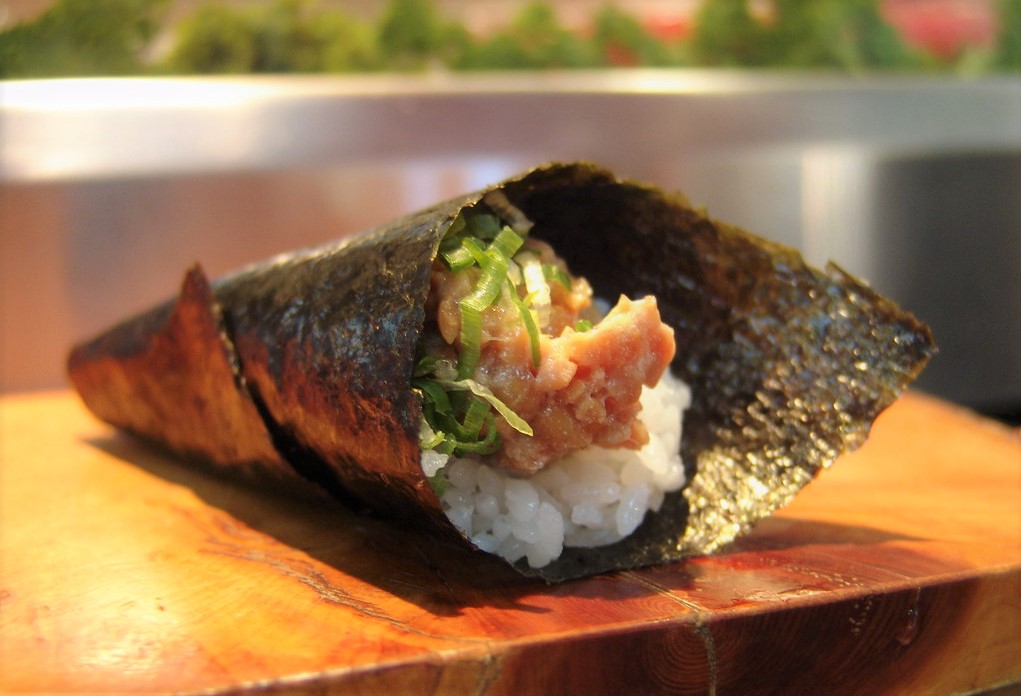
Today I want to enjoy good temaki admiring one of the oldest Japanese temples, the Senso-ji Temple.

Temaki recipe

Ingredients:

40 g sushi rice (per serving)

Mori seaweed

Fresh tuna

Cucumbers

Avocado

Rice vinegar

Salt and sugar

We put the rice in cold water and let it soak for about 10 minutes. We repeat this process twice, then we put the rice to cook in salted water for about 15 minutes. Drain the rice and let it cool.

In a clean saucepan, pour the rice vinegar (2 tablespoons) with the sugar (1 tablespoon) and the salt (1 tablespoon), pour it all into the rice, mix and let it flavour.


In the meantime, take the seaweed sheets and cut them in half so as to create two rectangles, then cut the fresh tuna into strips as well as the cucumber and avocado.
Let's start stuffing!
We take a rectangle of seaweed, starting from the left we put a nice spoonful of rice, strips of tuna, cucumber and avocado. Slowly we try to roll up the seaweed sheet trying to give it a cone shape.
Of course you can enjoy your temaki with soy sauce or wasabi.
Enjoy your meal!

powered by social2s
Riso-e-Rigaglie-Vanni-Cicetti-1-1024x768.jpg

If we talk about peasant cuisine in Rome this dish is the king.

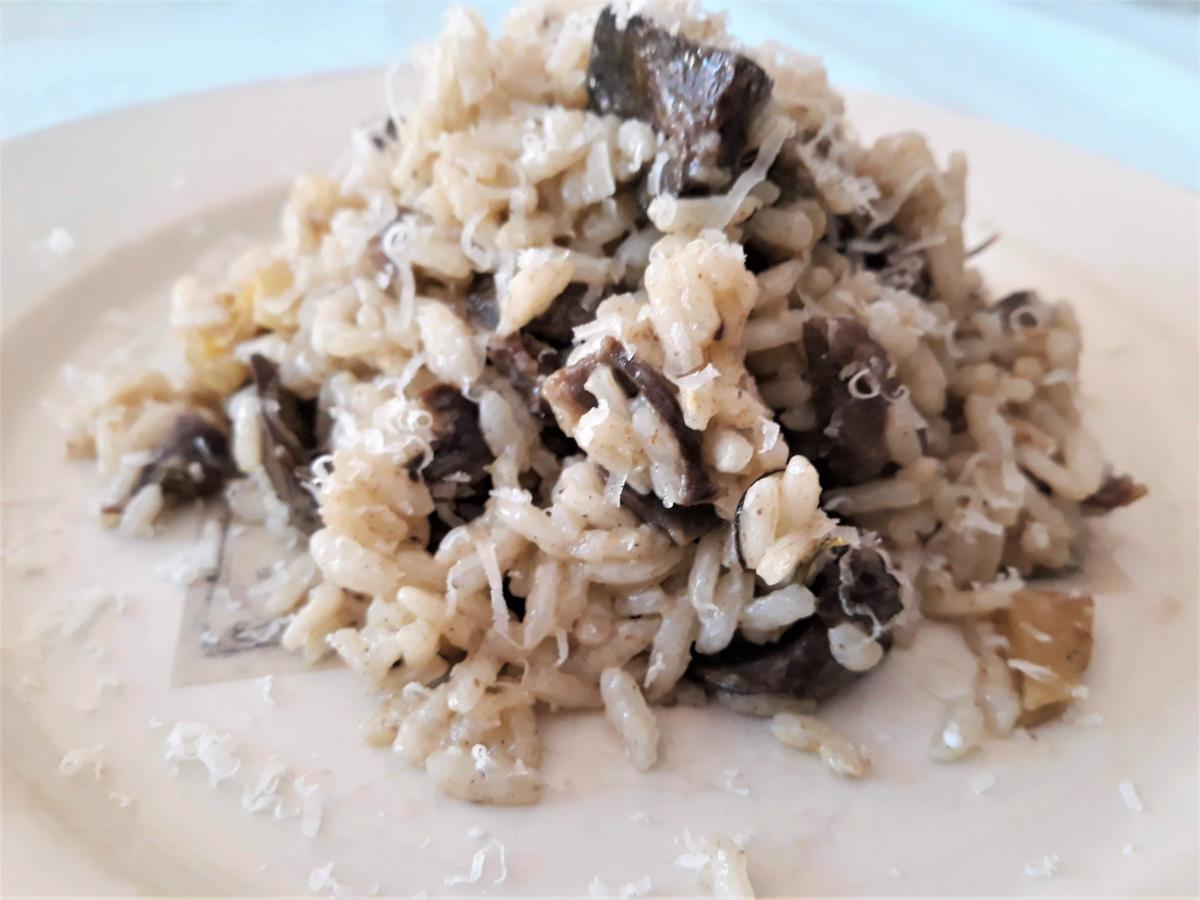
Rice with chicken giblets is an example of the use of all the edible parts of any product. The entrails of the chicken did not need to be bought because they were in the chicken itself and a tasty white ragù was prepared with them.

In other places in Italy it is called "chicken financier" and its history begins in Piedmont in the Middle Ages. Indeed, a first recipe is told by Martino de’ Rossi, called Mastro Martino, in his Book of Culinary Art printed around 1450.

A later version was told in 1800 by Giovanni Vialardi and it is in these years that it takes the name of 'Financier'. In those years, in fact, this dish had entered the tables of the wealthy and financial men who wore jackets called 'financier'.

Another story, however, seeks for the name to be linked to the gifts that the peasants made to the guards, called financiers, in order to enter the city.

There is not much to say, the financier is a complex sauce made with cocks combs, sweetbreads, meat, mushrooms. The Roman version is a simpler version made with the entrails, cocks combs and ‘wattles’ (an appendix that some birds  have on the head hanging from the lower jaw) of the chicken.

Recipe of rice with chicken giblets

Take the entrails of the chicken taking care not to break the bile bag, otherwise it will become completely bitter. Divide and begin to clean them starting from the durello which, after having opened and washed it, is cut into small pieces.

We put the durello in a pan with chopped onion and oil, then heat and brown it. We add a little hot water to help cooking whenever needed.

Then we will put the heart, the cocks comb and finally the liver which cooks faster. All are flavoured with a sprig of rosemary, which we will then remove. We add salt and pepper.

Meanwhile, cook the rice by boiling it in a light chicken or vegetable broth. Two minutes before the end of cooking, we will put the rice in the sauce, flavouring it then, with the flame off, stir in the butter and parmesan.

Here this simple, tasty and inexpensive dish is ready.

In the glass you can pour a young and fruity red. I drank a rosé wine from Syrah grapes produced in Lazio. Syrah or Shiraz is a grape variety that produces excellent wines and the major producers are in Lazio and Tuscany.
 

powered by social2s
Ricetta-Dario-Magno-Asparagi-trentagiorni-1024x768.jpg

I've been locked in my house for a month now.

Accustomed to being around 12 hours a day everywhere, this is crazy. Small jobs, Easter cleaning done. I'm fine until 2033.

The city is spooky in the morning.

Few people around. Those who move do so quickly and greet you with only a nod. Who brings their dog out. There is a row in front of the supermarket. Straight shot. Other dogs or are they the same? How much crap are these dogs ???

I jump in the car and go towards the Trionfale market. A moment of normalcy, an oasis of colour and aromas. Local producers are always at the market and Sandro brought freshly picked asparagus.

Yesterday from the pizzicarolo I found a seasoned robiola cheese with three types of milks (buffalo, goat and sheep). A small casket of 150 gr. A Piedmontese cheese that reveals the French domination of Haute Savoie.

I mix two eggs with a handful of semolina.

The rolling pin slides on the table with rhythmic and ancient gestures, always the same. Of course it is not perfectly round like that of grandma, but it is just as good.

Take the idea of ​​a simple pasta. There are few ingredients.

For the pasta: 

2 very fresh eggs,

200 gr of Cappelli wheat semolina bought on the last trip to Foggia,

Water (that of Rome is very good)

In the meantime, cut the asparagus and put the tips aside. The rest I do the Julienne method.

In the pan, the copper one of the great occasions, I put a nut of clarified butter. As soon as the butter is melted, I add the asparagus and let it cook over very low heat. Every now and then I add a little vegetable broth, they don't have to get dry.

The tips overcooked them in the pasta water and I immediately remove them.

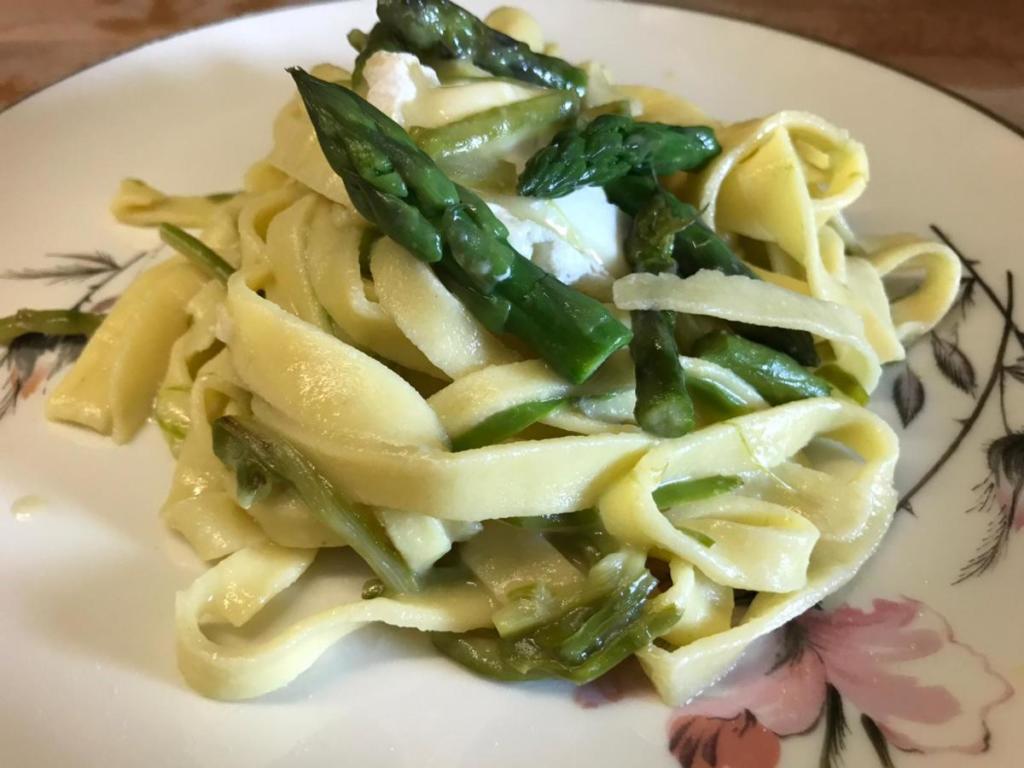
I pour the pasta in a pan and stir adding a few slices of robiola and the asparagus tips.

On the table it shouldn't be cold right away.

A Sauvignon from the Colli Orientali del Friuli, a wine present in all phases.

Happy Easter to all

powered by social2s

Subscribe to Newsletter

Discover a territory through the emotions of the people that have lived it.